
Bastille Day Fireworks, Paris in 2026: A Symphony of Light Above the City of Illumination
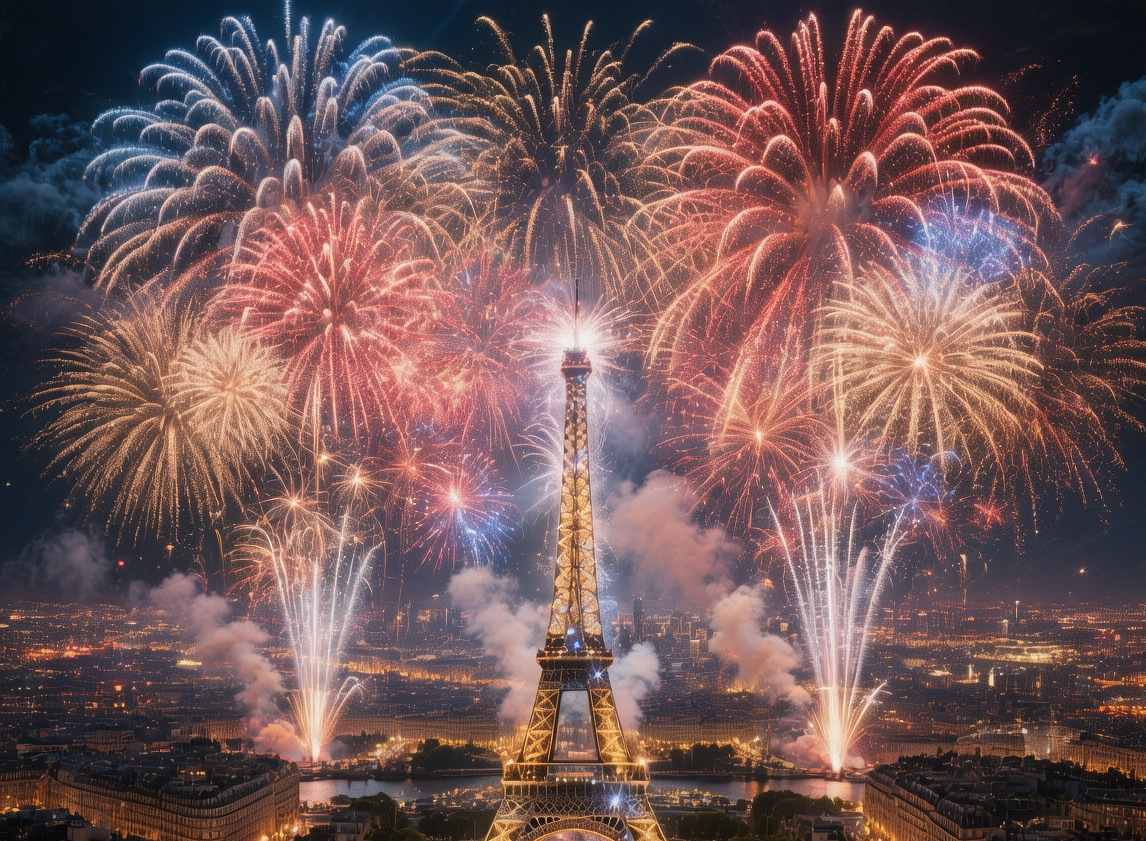
As dusk settles over Paris on July 14, a palpable energy hums through the city—not the frantic pulse of tourism, but the steady rhythm of national memory. Along the Champ de Mars, families spread blankets on grass still warm from the sun, while couples claim spots on Trocadéro's stone steps with the patience of those who understand that true spectacle cannot be rushed. Then, as darkness fully claims the sky, the first firework arcs over the Eiffel Tower—not with explosive fanfare, but with deliberate grace. Golden willows cascade down the iron latticework, followed by bursts of tricolor that paint the tower in fleeting strokes of blue, white, and red. For twenty minutes, 40,000 fireworks transform Gustave Eiffel's masterpiece into a living canvas where history and celebration converge. This is not mere pyrotechnics; it's France's annual reaffirmation of liberté, égalité, fraternité—a moment when the entire city holds its breath beneath a sky alive with light.
Why Experience Bastille Day Fireworks, Paris?
The Bastille Day fireworks represent more than national celebration—they embody France's unique relationship between history, public space, and collective memory. Commemorating the 1789 storming of the Bastille prison that ignited the French Revolution, July 14 (La Fête Nationale) has evolved into Europe's most architecturally integrated fireworks display. Unlike stadium shows or river barges elsewhere, Paris's spectacle uses the Eiffel Tower itself as both launchpad and canvas—a tradition begun in 1979 that transforms iron into ephemeral art. The 35-minute display choreographed to classical and contemporary French music creates a multisensory experience where light, sound, and landmark merge. Crucially, this remains a profoundly democratic event: free, accessible to all, and unfolding across public spaces where bankers and students share the same patch of grass. In an era of commercialized experiences, Bastille Day fireworks endure as authentic civic ritual—where national identity is not sold, but shared beneath open sky.
The Best Time to Experience Bastille Day Fireworks, Paris
For optimal viewing conditions and meaningful engagement with the celebration, arrive at your chosen location by 8:00 PM on July 14—three hours before the 11:00 PM fireworks begin. Paris experiences mild summer evenings (18–24°C / 64–75°F) with lingering twilight that enhances early fireworks colors. The display itself lasts approximately 35 minutes, with peak intensity between 11:15–11:25 PM when synchronized sequences illuminate the entire tower. Avoid attempting to view from the Champ de Mars itself after 9:00 PM—security closures begin at 8:30 PM and the area becomes dangerously overcrowded. Instead, position yourself at secondary viewpoints like Passy Gardens or Bir-Hakeim Bridge by 8:00 PM for comfortable viewing without crush risks. Note that July 13 features the Bal des Pompiers (Firemen's Balls) in fire stations across Paris—a uniquely Parisian prelude to the main celebration that offers intimate cultural immersion without tourist crowds.
Approximate Budget for a 7-Day Trip (2026)
Based on 2025 benchmarks adjusted for 4% inflation (per INSEE and Paris Île-de-France Tourism Office projections), here's a realistic mid-range budget for a Paris itinerary centered around Bastille Day:
- Accommodation: €130–€180 per night for a 3-star hotel in neighborhoods like Passy, Chaillot, or Grenelle—strategically located near fireworks viewpoints with better value than central arrondissements.
- Food: €100–€120 per day—breakfast at bakery (€7), picnic supplies for fireworks viewing (€25), dinner at neighborhood bistro with wine (€55–€70).
- Transportation: €36 for a weekly Navigo Découverte pass (covers all Metro, RER, buses July 12–18). Avoid taxis on July 14—roads close by 7:00 PM.
- Attractions: Bastille Day fireworks: free. Seine river cruise (July 13): €28. Musée Carnavalet (Revolution history): free. Allocate €90 total for other sites.
- Miscellaneous: €60 for champagne for fireworks picnic, artisanal macarons from local pâtisseries, or contributions to neighborhood Bastille Day street parties.
Total Estimated Cost: €1,400–€1,900 for seven days, excluding international flights.
5 Essential Bastille Day Experiences
- Trocadéro Gardens Viewpoint: The classic vantage point offering frontal tower views with fountains in foreground—arrive by 8:00 PM to secure space on elevated terraces away from crowded lower levels.
- Bir-Hakeim Bridge: The elevated metro bridge provides dramatic side-angle views with ironwork framing the tower—a favorite among photographers seeking compositional depth.
- Parc de Passy: An elevated park west of Trocadéro with fewer crowds, mature trees for comfort, and unobstructed sightlines—locals' preferred alternative to main viewpoints.
- Bal des Pompiers (July 13): Fire stations across Paris host public dances the night before Bastille Day—Ménilmontant and Bastille stations offer the most authentic experiences with live music and affordable drinks.
- Champ de Mars Picnic (Pre-Security Closure): Arrive before 6:00 PM to enjoy the park's atmosphere and sunset views—leave before 8:00 PM when authorities begin clearing the area for security protocols.
3 Hidden Gems Most Travelers Miss
- Rue de l'Université Rooftop (7th arrondissement): Several apartment buildings along this street have publicly accessible rooftop terraces (ask concierges politely after 9:00 PM)—offering elevated, crowd-free views with Eiffel Tower framed between Haussmann rooftops.
- Île aux Cygnes Western Tip: The narrow island in the Seine offers a unique perspective looking east toward the tower with water reflections—arrive by 7:30 PM to claim the stone bench at the island's western end.
- Montmartre Vineyard (Clos Montmartre): For those seeking distance from crowds, this hilltop vineyard provides panoramic city views where fireworks appear as delicate sparks against the horizon—a contemplative alternative to central viewing.
Cultural & Practical Tips
- Security Protocol: Expect airport-style screening at Metro exits near viewing zones. Carry minimal bags—backpacks larger than 30cm x 20cm may be denied entry to secured areas.
- Arrival Strategy: Never attempt to reach Trocadéro via Metro after 9:00 PM—stations close due to overcrowding. Walk from Passy or La Muette stations (15–20 minutes) for stress-free access.
- Respectful Participation: Join spontaneous renditions of "La Marseillaise" with solemnity—this is not entertainment but national ritual. Avoid blocking views of elderly residents or families with children.
- Post-Fireworks Exodus: Remain seated for 20 minutes after the finale—immediate movement creates dangerous crowd surges. Metro service resumes gradually after midnight; walking 30+ minutes to peripheral stations avoids 2-hour queues.
- Learn Key Phrases: "Joyeuse Fête Nationale" (Happy National Holiday) and "Puis-je partager votre espace?" (May I share your space?) demonstrate cultural respect during crowded viewing.
Conclusion: Celebrate with Civic Consciousness, Not Just Spectacle
The Bastille Day fireworks endure not as tourist attraction, but as living expression of democratic values—where access remains free, space remains public, and celebration remains collective. As a conscious traveler, your participation carries responsibility: to observe security protocols that protect fellow spectators, to clean your viewing area completely (Paris deploys 500+ sanitation workers overnight to restore public spaces), and to engage with the historical weight of this date beyond its visual splendor. Support neighborhood cafés that stay open late for post-fireworks gatherings rather than chain establishments. Understand that your presence should enhance, not diminish, the authentic Parisian experience of this night. By approaching Bastille Day not as passive spectator but as respectful participant in civic ritual, you honor the revolutionary spirit that birthed this celebration—that liberty flourishes not in isolation, but in shared space beneath a sky brilliant with possibility.