Cabo Finisterre Atlantic Waves Meet Pilgrim Tradition
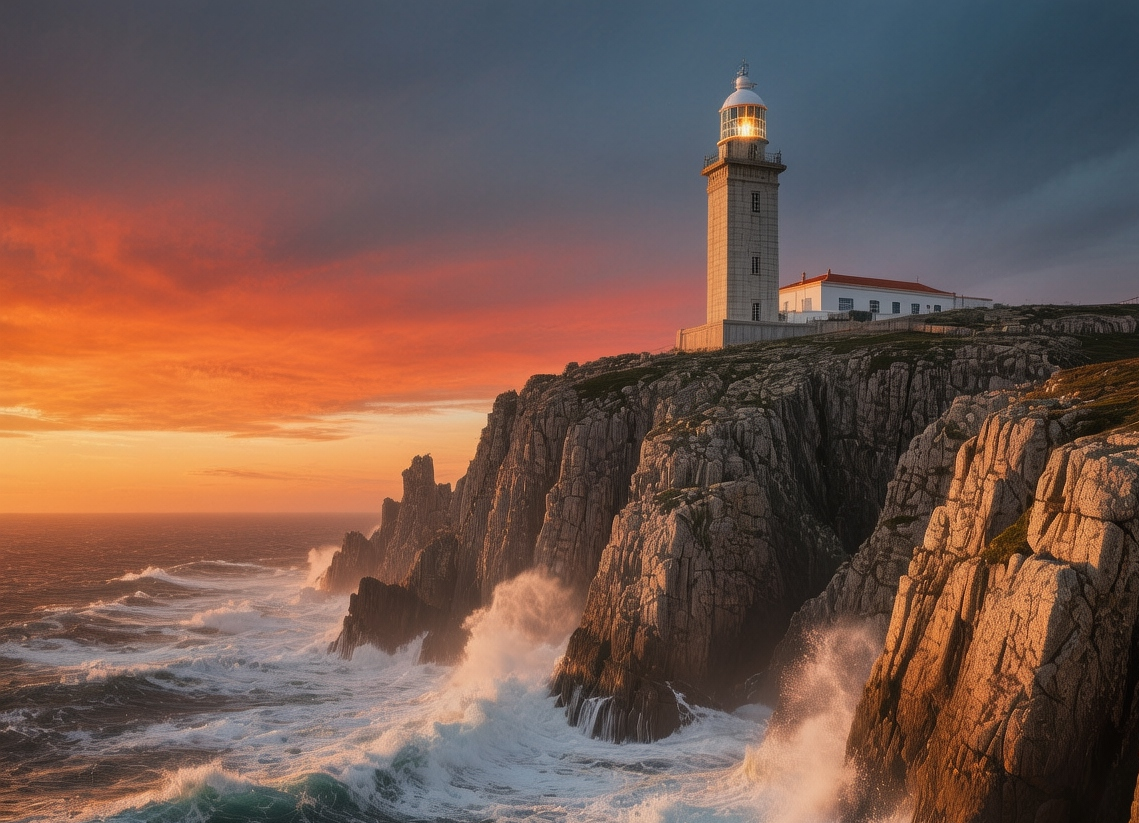
Cabo Finisterre: Where Land Ends and Atlantic Begins
I stand at the edge at ten in the morning. Wind pulls hard and steady. Access to the lighthouse grounds is free. I grip the stone wall and look out — nothing but open ocean stretches west to the horizon. Waves crash against dark cliffs two hundred feet below. Salt spray coats everything. Not everything feels quiet. Tour buses arrive by mid-morning. The approach road fills fast. The small souvenir area near the gate feels overbuilt. Yet this is the end of the known world. For centuries people stood here and thought there was nothing beyond but sea and sky.
Why Cabo Finisterre Matters
Cabo Finisterre sits on Galicia’s westernmost coast. Its name means "end of the earth". The Romans believed this was the western edge of the world — where land ended and the ocean swallowed the sun. Pilgrims have walked here for over a thousand years. After reaching Santiago de Compostela, many continue the final ninety kilometres to stand at this point. The lighthouse built here in the 19th century still guides ships through one of the world’s most dangerous stretches of water. Today the cape faces growing pressure. Visitor numbers rise every year. Infrastructure struggles to keep pace. Some paths show erosion. But the pull remains unchanged. People come here to finish something — a journey, a chapter, a part of themselves.
The Best Time to Experience Finisterre
May through June offers mild days and longer light — 12°C to 20°C (54°F–68°F). Wildflowers carpet the coastal paths. September and early October bring clear skies and golden light — 13°C to 21°C (55°F–70°F). Summer from July to August feels warmest — 15°C to 24°C (59°F–75°F) — but crowds swell thickest. Winter from November to March stays wild and raw — 8°C to 14°C (46°F–57°F). Storms roll in fast. The ocean rages grey and powerful. Weekdays beat weekends. Arrive before 09:00 to watch sunrise at the actual edge with almost no one else there.
Approximate Budget for a 7-Day Trip
- Accommodation: Guesthouse in Finisterre town — 45–75 euros per night. Hostel or pilgrim albergue — 15–30 euros per bed. Coastal cottage — 60–100 euros per night. Santiago base — 50–90 euros per night.
- Food: Fresh seafood lunch — 14–24 euros. Galician dinner — 18–32 euros. Market or tapas meal — 8–14 euros. Bakery — 4–8 euros.
- Transport: Bus from Santiago — 12 euros one way. Car rental — 35–55 euros per day. Parking near lighthouse — 4–6 euros daily. Taxi from town — 8–12 euros one way.
- Attractions: Cape and lighthouse grounds — free. Museum — 3 euros. Guided coastal walk — 10 euros. Boat trip — 25–40 euros.
- Miscellaneous: Windproof layer, water, snacks — 8–15 euros daily.
Total estimated for one person, 7 days: 340–650 euros
Cafes right beside the lighthouse charge noticeably more than those in Finisterre town centre. Walk ten minutes back down the road. You will find better food at fairer prices.
Essential Finisterre Experiences
- Stand at the very edge at sunrise. The sun rises over land but the light falls soft and golden across the cape. The ocean glows deep and endless. It feels like standing at the beginning of the world. Skip this if heavy cloud covers the horizon — the view vanishes completely.
- Walk the cliff path north of the lighthouse. The official viewpoint stays crowded. Walk ten minutes further along the coast. The path follows the edge past coves and sheer rock. You see the lighthouse from the sea side — white and proud against blue.
- Watch waves crash against the rocks below. Stand safely behind the railings. The Atlantic hits hard here — white spray flies high. The power feels tangible. It reminds you how small we truly are.
- Visit the town after the cape. Low white houses, fishing harbour, quiet lanes. The real Finisterre lives here — not at the headland. Eat fresh fish caught that morning. It tastes simple and perfect.
- Walk part of the pilgrim route. Even if you did not walk all the way. The final stretch into town feels gentle and meaningful. It connects you to centuries of travellers.
- Stay for sunset. The sun dips straight into the ocean. The sky turns orange, purple, and deep red. People stand quiet and watch. It feels like a shared promise — something finished, something new beginning.
Hidden Gems Most Travelers Miss
- The small cove just east of the lighthouse. A short steep path leads down. Sand and smooth stones sit sheltered between rocks. Almost no one climbs here. The water looks clear and wild.
- The old cemetery beside the sea. Simple stone markers face the ocean. Fishermen and sailors rest here. It feels peaceful and deeply respectful. Few visitors find their way along this quiet lane.
- The so-called "edge of the world" marker right at the gate. It fills instantly and people queue for photos. Walk fifty metres along the railing. The same view opens wide — empty and entirely yours.
Cultural & Practical Tips
- Wear layers and windproof everything. The cape is fully exposed. Temperatures feel 5 degrees lower than in town. Wind can blow you off balance — hold onto hats and bags.
- Stay behind barriers. The cliffs are steep and unstable. Many people underestimate how close they can safely go. Every year visitors slip or are caught by wind. Respect the edge.
- Arrive early or late. Midday crowds block the best views and fill parking. The most beautiful moments happen at the start and end of the day.
- Do not leave flames or offerings on the rocks. Some pilgrims leave candles or wood. Fire spreads fast on dry grass. The wind makes it dangerous. Leave nothing but footprints.
- Book accommodation months ahead in summer. The Camino route brings thousands. Rooms vanish fast. Spring and autumn offer better value and quieter roads.
- Walk from town if you can. The road is flat and scenic — about four kilometres. It saves parking stress and lets you arrive slowly, just as pilgrims have done for centuries.
Essential Visitor Information
Location & Access: Cabo Finisterre, A Coruña province, Galicia, Spain. 90 km west of Santiago de Compostela — 1 hour 15 minutes by car or bus. 130 km northwest of A Coruña — 1 hour 45 minutes. Bus connects daily from Santiago; walkable via Camino Finisterre route.
Tickets & Booking: Cape grounds — free. No ticket needed. Museum — 3 euros. Reserve accommodation June–September well in advance.
Operating Hours: Always open. Best times — sunrise and sunset. Shops and restaurants generally 10:00 to 21:00.
Visit Duration: Minimum half a day. 1–2 full days lets you explore the cape, walk coastal paths, enjoy the town, and walk part of the Camino without rushing.
Family Suitability: Good for children. Keep close near cliffs — no exceptions. Strollers work on main paths but not on all coastal trails. Restrooms at lighthouse entrance and town centre.
Timing: Best season — May–June and September. Best time of day — 30 mins before sunrise; 30 mins before sunset.
Highlights: Sunrise at the edge, north cliff path, sunset over ocean, town harbour, pilgrim final stretch, wild Atlantic views.
Nearby & Day Trip: Muxía — 20 minutes. Costa da Morte — 30 minutes. Santiago de Compostela — 1 hour 15 minutes. Carnota beach — 40 minutes.
Conclusion: Travel with Journey, Not Just Destination
This is not truly the end of the world. But it feels like it. People come here not just to see a view — they come to leave something behind. Before you turn back, look out at the horizon. What will you carry forward with you from this edge?
Post a Comment