
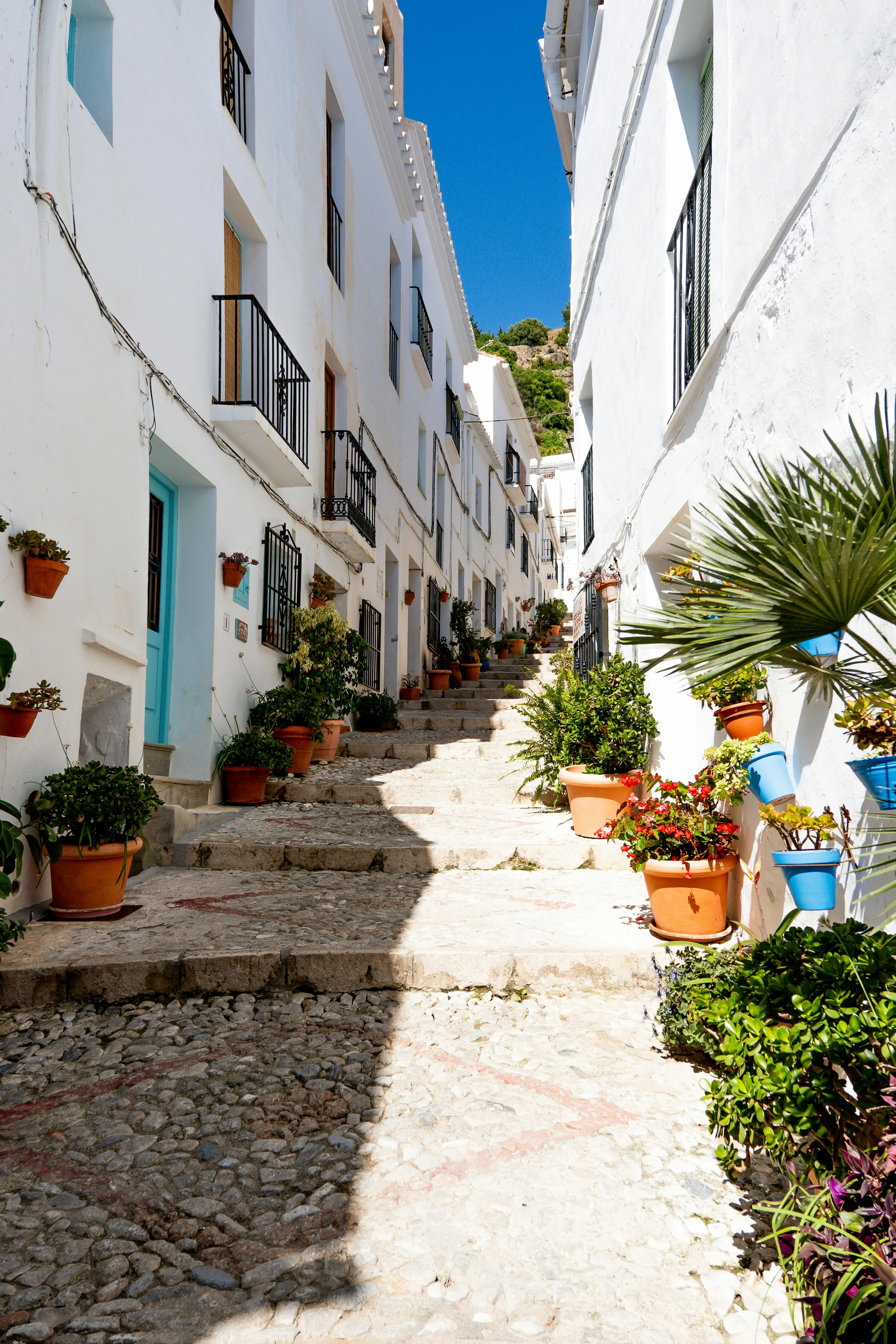
Frigiliana White Village Moorish Alleys Meet Andalusian Sky
The morning sun strikes the whitewashed walls, turning the Frigiliana white village into a glowing beacon against the deep blue of the Andalusian sky. You stand on the cobblestones of the Moorish quarter, where the air smells of jasmine and heated limestone; the narrow alleys—some barely 2 meters wide—create a labyrinth of shade and light. This is not merely a picturesque town but a living museum of Morisco heritage, perched 314 meters above sea level on the slopes of the Sierra de Almijara. You hear the distant chime of church bells; the murmur of tourists tracing the flower pots that adorn every balcony; the silence of the stone absorbing the day's heat. The village is divided into three distinct districts, each telling a story of conquest and coexistence since the 16th century. In 2026, as mass tourism threatens to sanitize historic centers, the Frigiliana white village remains a sanctuary of authenticity—a place where architecture serves climate and culture, demanding you slow down to truly feel the weight of history in every white wall.
Why Frigiliana White Village Embodies Moorish Heritage
The Frigiliana white village represents one of the best-preserved examples of Moorish urban planning in Andalusia, solving the critical need for climate control and defense in a mountainous region. Following the Rebellion of the Alpujarras in 1568 and the subsequent expulsion of the Moriscos in 1570, the village retained its Islamic street layout despite Christian repopulation. The architecture addresses a fundamental engineering challenge: how to maintain cool interiors in a region where summer temperatures exceed 35°C (95°F). The solution lies in the narrow, winding streets that maximize shade, the thick whitewashed walls that reflect sunlight, and the interior patios that promote ventilation.
The village is divided into three distinct districts: the Moorish Quarter (Barrio Alto), the Renaissance District (Barrio Medio), and the New District (Barrio Bajo). The Moorish Quarter, with its steep cobbled alleys and flower-filled balconies, remains largely unchanged since the 16th century. The Palace of the Counts of Buena Vista, built in the 17th century, anchors the Renaissance district, showcasing the transition of power. This integration of history, climate adaptation, and aesthetic beauty makes the Frigiliana white village not merely a tourist attraction but a physical document of cultural resilience. Recognized as one of the Most Beautiful Villages in Spain, the village maintains strict preservation ordinances to protect its whitewashed facade, ensuring that every renovation respects the traditional lime-based paint and architectural proportions.
The Best Time to Experience Frigiliana White Village
For the optimal Frigiliana white village visit, target May 15–June 20 or September 10–October 25, when temperatures range between 20–28°C (68–82°F) and the light is soft enough for photography. The village is accessible 24 hours, but the ideal viewing window is 8:00–9:30 AM when the sun hits the eastern facades directly, illuminating the flower pots without harsh shadows. Evening visits between 7:00–9:00 PM offer cooler temperatures and atmospheric lighting, though many shops close for siesta between 2:00–5:00 PM. Spring coincides with the Festival of the Three Cultures in September, causing accommodation prices to increase 40–60%; book lodging three months in advance if visiting during this period.
Avoid July 15–August 25 unless you tolerate extreme heat and crowds; temperatures regularly exceed 35°C (95°F), making the cobblestone streets radiate intense thermal energy. The lack of shade in the lower district exacerbates the heat. Winter months (December–February) bring mild weather (12–18°C / 54–64°F) but fewer crowds, allowing for contemplative exploration. Some restaurants reduce hours in low season; verify current status at www.frigiliana.es or contact the tourist office at turismo@frigiliana.es (+34 952 539 008). Weekday mornings typically see the lowest visitor density, allowing for clearer photography of the alleys without obstruction from tour buses arriving from Nerja.
Approximate Budget for a 7-Day Trip (2026)
The Frigiliana white village offers excellent value for cultural travelers, with costs generally 20–30% lower than Málaga or Marbella. The following budget assumes mid-range comfort with a focus on local experiences, based on 2026 pricing with approximately 3.5% inflation from 2025 figures. Estimates include stays in Frigiliana or nearby Nerja for easy access to the village and Costa del Sol beaches.
- Accommodation: €70–€140 per night for a double room in a casa rural or boutique hotel in Frigiliana; luxury options with mountain views command €180–€350 per night
- Food: €40–€60 per day—breakfast €5–€8 (café con leche and tostada), lunch €15–€25 (menú del día including migas, salad, and wine), dinner €20–€30 (tapas selection including jamón ibérico and local cheeses)
- Transportation: Bus from Málaga to Nerja: €5 (1 hour 30 minutes); bus from Nerja to Frigiliana: €2 (20 minutes); taxi from Nerja: €15 fixed rate; regional car rental: €40 per day
- Attractions: Frigiliana white village walking: free; Palace of the Counts: €5; Honey Museum (El Ingenio): €6; Church of San Antonio: free; guided village tour: €15
- Miscellaneous: Ceramic souvenirs from €15; local honey (miel de caña) €10–€25 per jar; hornazo pastry €8; artisan leather goods €30–€70; wine from €8
Total estimated cost for 7 days: €900–€1,350 per person (based on double occupancy; solo travelers should add 35–45% for single supplements)
7 Essential Frigiliana White Village Experiences
- Walk the Moorish Quarter: Explore the Barrio Alto with its narrow cobbled alleys and flower-filled balconies. The streets are steep and winding, typical of Islamic urban planning. Visit at 9:00 AM when the light illuminates the white facades. The alleys are only 2 meters wide; step aside to let locals pass. It is the most photographed spot in the Frigiliana white village; arrive early to avoid crowds in your shot. The scent of jasmine is intense in spring.
- Visit the Palace of the Counts: Enter the 17th-century Palacio de los Condes de Buena Vista. The Renaissance courtyard features arches and a central fountain. Visit between 11:00 AM–1:00 PM when lighting accentuates the stone details. The palace houses a museum explaining the village's history. Entry costs €5. It demonstrates the transition from Moorish to Christian rule.
- Taste Miel de Caña: Sample the traditional sugar cane honey at El Ingenio. The factory has operated since 1750 using traditional methods. Visit at 4:00 PM for tastings. The honey is dark and rich, used in local desserts. Expect to pay €10–€25 per jar. This is a living culinary tradition unique to the area.
- View from Cerro de la Horca: Hike to this viewpoint for panoramic views over the village and sea. The climb takes 30 minutes from the center. Visit at 6:00 PM when the sun sets behind the mountains. The view extends to the Mediterranean coast. It reveals the strategic location of the Frigiliana white village.
- Explore the Church of San Antonio: Visit the 17th-century parish church dominating the main square. The Mudéjar bell tower rises 30 meters high. Visit at 10:00 AM when the light illuminates the interior. The architecture blends Gothic and Renaissance styles. Entry is free. It anchors the religious life of the community.
- Shop for Ceramics: Browse the artisan shops selling hand-painted pottery. The designs often feature Moorish patterns and floral motifs. Visit at 3:00 PM when shops reopen after siesta. Prices range €20–€100. It supports the local artisan economy. This reveals the artistic heritage of the village.
- Dine on the Terrace: Eat at a restaurant overlooking the valley. Order migas (fried breadcrumbs) and local wine. Visit at 8:00 PM for dinner when the temperature cools. The atmosphere is relaxed and authentic. Reservations recommended for weekends. This combines culinary tradition with scenic views.
3 Hidden Gems Most Travelers Miss
- El Ingenio (Sugar Cane Honey Factory): Located at Calle Real, 2, this historic factory produces traditional honey. Entry: €6; open 10:00 AM–6:00 PM. It is often overlooked as visitors focus on the streets. The machinery dates to the 18th century. Contact: +34 952 539 008. Visit early morning to see the production process. The tasting room offers unique flavors.
- Hermitage of San Sebastián: A 10-minute walk uphill from the center, this small chapel features stunning views. Entry is free; open 24 hours. It is often overlooked by tourists rushing to the main square. The building dates to the 17th century. Contact: +34 952 539 008. Visit mid-morning when light illuminates the facade. The perspective allows you to see the Moorish quarter below.
- Callejón del Infierno: Located in the Moorish Quarter, this narrow alley is the steepest in the village. Entry is free; open 24 hours. It is often overlooked as visitors stick to the main paths. The cobblestones are original from the 16th century. Contact: N/A. Visit late afternoon when the light is soft. The alley demonstrates the defensive design of the village.
Cultural & Practical Tips
- Respect residential privacy: The Frigiliana white village remains a living neighborhood. Do not peer into private patios or photograph residents without permission. Keep voices low after 10:00 PM. Many streets are only 2 meters wide—step aside to let locals pass.
- Master these phrases: "Buenos días" (BWEH-nos DEE-as) for good morning; "Por favor" (por fah-BOR) for please; "Una caña, por favor" (OO-nah KAH-nyah) to order a small beer; "¿Dónde está...?" (DON-deh es-TAH) to ask where something is located.
- Photography guidelines: Flash photography is prohibited inside churches. Tripods require special permission for commercial shoots. Mobile phones must be silenced in religious sites. Respect "no fotos" signs in private courtyards. Early morning offers the best light without crowds.
- Footwear selection: The cobblestones (adoquines) are uneven and slippery when wet. Wear sturdy shoes with good grip. Avoid high heels. The walk from the bus stop involves 10 minutes of uphill pavement. Comfort is prioritized over style for extensive exploration.
- Hydration strategy: Frigiliana's inland location means dry heat; carry a refillable bottle. Public fountains (fuentes) are available in the plazas. The water is potable. Avoid alcohol during midday heat. You'll save €2–€3 daily and reduce plastic waste. Purchase water from kiosks if fountains are unavailable.
- Weather considerations: The village offers shade but temperatures can feel 3–5°C warmer due to stone thermal mass. Summer evenings remain hot; bring a fan. Winter rain occasionally makes streets slick; carry an umbrella. Wind speeds are lower in the narrow alleys compared to open plazas.
- Bus schedules: Buses from Nerja run hourly but reduce frequency on Sundays. Verify times at the Nerja bus station. Allow an extra 15 minutes for delays during peak season. Taxis are available but cost more.
Conclusion: Travel with Reverence, Not Just Reverie
The Frigiliana white village demands more than casual observation—it asks for contemplation of the layers of history embedded in every white wall, every flower pot, every cobblestone worn by centuries of feet. When you walk these streets in 2026, you're not merely touring a monument; you're walking through a fragile ecosystem of memory where Moorish heritage, Christian adaptation, and modern tourism intersect in delicate balance.
Choose to engage deeply: hire a local guide from the village rather than a large tour company; purchase tickets directly to support preservation efforts; respect the residential nature of the streets. The Frigiliana white village survives not as a museum exhibit but as a living community—and its preservation depends on visitors who recognize the difference between appreciation and consumption.
Slow down. Sit in a plaza after the tour buses depart. Listen to the fountain water flowing through centuries-old channels. Taste the sweetness of local honey from a family shop. The village rewards those who approach it not as a checklist item but as a conversation across time—a dialogue between past and present that continues, like the mountain breeze, in perpetual evolution.