Gaztelugatxe Island Hermitage Stone Steps Meet Basque Legend
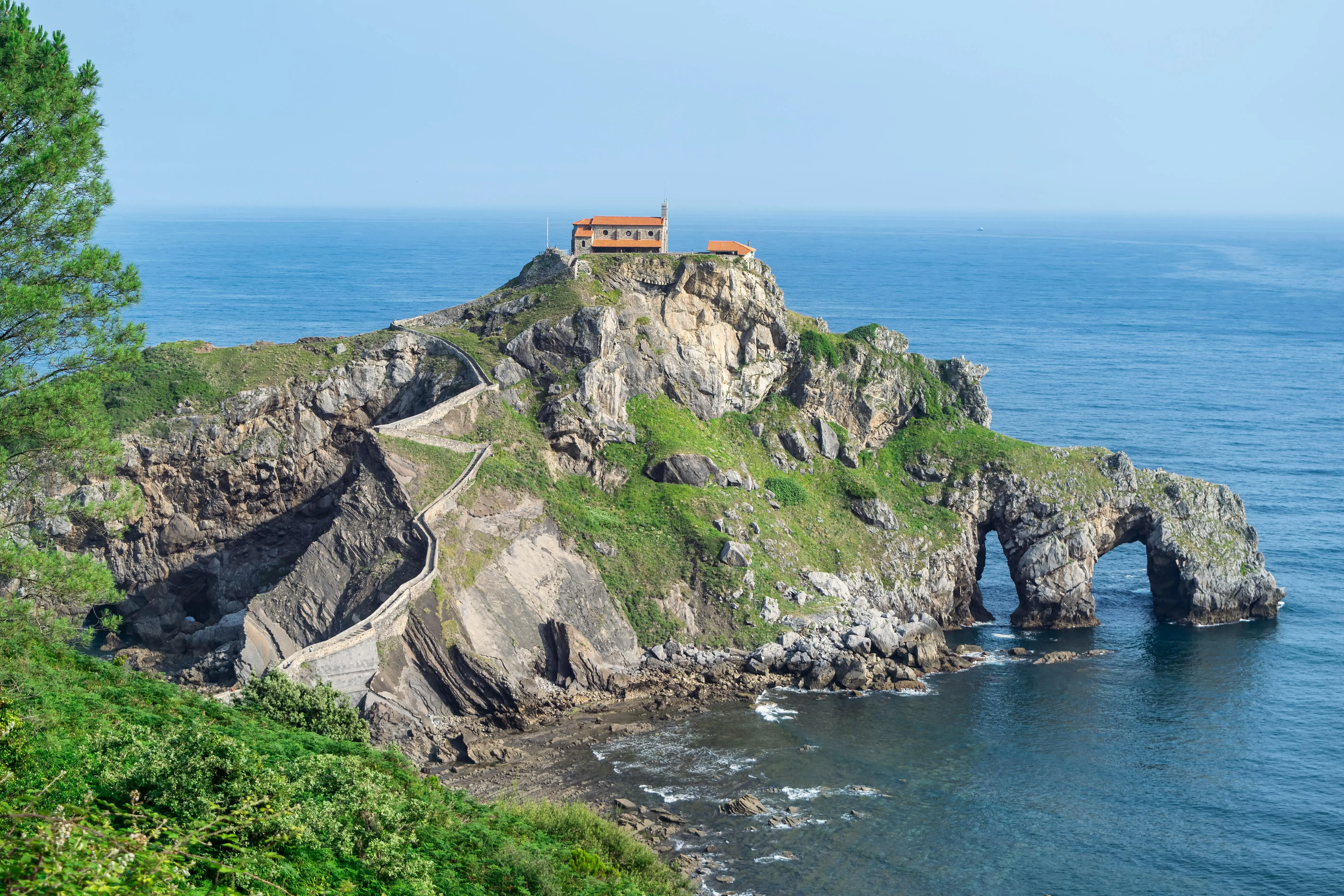
Gaztelugatxe: Where Stone Islet Meets Bay Breeze
I stand at the bottom of the stone steps at ten in the morning. Salt wind blows steady off the water. The path and crossing are free. I look up — two hundred and thirty-one steps wind upward, curving beside the sea. A narrow arched bridge connects the mainland to a rugged islet. At the very top sits a small stone chapel, simple and ancient. Not everything feels easy. The climb is steeper than it looks. Wind can be fierce. Queues form fast on fine days. Some visitors treat the bells like a photo prop. Yet this is one of the Basque Country’s most striking places — raw, quiet, and entirely unforgettable.
Why Gaztelugatxe Matters
Gaztelugatxe lies on the coast of Biscay, in the Basque Country. The islet has carried a chapel since the 10th century, possibly standing on older sacred ground. For locals it is not just a viewpoint — it is a place of pilgrimage, memory, and tradition. People climb the steps to ring the bell three times and make a wish. The stone bridge, the rugged shore, the climb itself — all feel woven into daily life here. That fame brings pressure. Visitor numbers have grown fast. Steps show heavy wear. The approach road and parking struggle to cope. Balancing welcome with protection is an ongoing challenge. Still the bell rings. The sea crashes below. And the islet stands, unchanged at heart.
The Best Time to Experience Gaztelugatxe
May through June brings mild days and longer light — 12°C to 20°C (54°F–68°F). Wildflowers carpet the slopes. September offers warm water and golden afternoons — 14°C to 22°C (57°F–72°F). Summer from July to August feels warmest — 16°C to 25°C (61°F–77°F) — but queues stretch long. Winter from November to March stays quiet and blustery — 8°C to 14°C (46°F–57°F). Storms make the ocean magnificent. Weekdays beat weekends. Arrive before 09:30 to climb the steps with almost no one ahead.
Approximate Budget for a 7-Day Trip
- Accommodation: Guesthouse in Bermeo — 55–85 euros per night. Apartment in Bakio — 60–95 euros per night. Bilbao base — 65–120 euros per night. Campsite nearby — 16–24 euros per person.
- Food: Fresh fish lunch in Bermeo — 16–28 euros. Pintxos crawl — 12–20 euros. Market meal — 7–12 euros. Bakery — 5–9 euros.
- Transport: Car rental — 38–55 euros per day (recommended). Bus from Bilbao — 6 euros one way. Parking at site — 4–6 euros daily. Taxi from Bermeo — 10–15 euros one way.
- Attractions: Gaztelugatxe — free. Bermeo museum — 4 euros. San Juan de Gaztelugatxe interpretation centre — 3 euros. Boat trip — 18–28 euros.
- Miscellaneous: Windproof layer, water, snacks — 8–15 euros daily.
Total estimated for one person, 7 days: 360–670 euros
Drinks and snacks at the car park kiosk cost double what you find in Bermeo or Bakio. Carry water and a small meal. It saves money and you can eat overlooking the sea whenever you choose.
Essential Gaztelugatxe Experiences
- Climb the steps at sunrise. Stone glows soft gold. The sea lies calm and blue. No one else walks ahead. The world feels quiet and yours alone. Skip this if strong wind is forecast — exposed sections become unsafe.
- Ring the bell at the top. Three rings, one wish — the old custom. The sound carries far across the water. It feels simple and meaningful. Do not queue just to pose — let others take their turn.
- Walk the shore path below the approach. You see the bridge and islet rise ahead — framed by waves and rock. It is the best view of all. Most people hurry past it.
- Stand on the chapel terrace. Wind pulls steady. The ocean stretches endless. You see the coast curve away — green cliffs, hidden coves, distant villages. It feels like standing at the edge of the world.
- Walk down at golden hour. Light slants low across the water. Steps turn warm amber. Shadows stretch long. The climb feels gentler on the way back.
- Eat grilled fish in Bermeo afterwards. Fresh from the bay, cooked simple over wood. Served with bread and crisp white wine. It tastes exactly like the sea below the islet.
Hidden Gems Most Travelers Miss
- The small cove just east of the car park. Shingle and clear water. Quiet and sheltered. Almost no one stops here. It feels like a private bay.
- The old coastal path toward Bakio. Leaves the main road and winds along the cliff edge. Wide views, quiet stretches, almost no crowds. You see Gaztelugatxe from further out — small, proud, rising from the waves.
- The so-called "perfect photo spot" right at the bridge end. It fills instantly. Walk twenty metres back along the approach. The same islet appears framed by rock and grass — empty and just as beautiful.
Cultural & Practical Tips
- Arrive very early or late. By 11:00 the queue up the steps slows to a crawl. The first and last hours of the day feel entirely different.
- Wear sturdy, non-slip shoes. Stone steps are uneven and worn smooth. They become treacherous when damp. Flip-flops are unsafe and damaging.
- Respect the quiet. This is a place of pilgrimage as well as a viewpoint. Keep voices low. Do not block the path or linger on the bridge.
- Carry a windproof jacket. Even calm mornings turn blustery at the top. Temperatures feel 3–4 degrees lower than on the mainland.
- Do not leave valuables in sight in your car. The car park is busy and unstaffed. Keep everything hidden or take it with you.
- Book accommodation months ahead in August. Rooms vanish fast. May or September offer better value and thinner crowds.
Essential Visitor Information
Location & Access: Gaztelugatxe, Biscay, Basque Country, Spain. 35 km northeast of Bilbao — 35 minutes by car or bus. 4 km east of Bermeo — 10 minutes by car. 8 km west of Bakio — 12 minutes by car. Access road is narrow and steep in places.
Tickets & Booking: Gaztelugatxe — free. No ticket needed. Reserve accommodation June–September well ahead.
Operating Hours: Always open. Interpretation centre — generally 10:00 to 18:00, closed Mondays.
Visit Duration: Minimum 1.5–2 hours. Half a day lets you climb, walk the shore, and explore Bermeo without rushing.
Family Suitability: Good for older children. Steps are steep and continuous — 231 up, same down. Strollers are not practical. Restrooms at car park and nearby centre.
Timing: Best season — May–June and September. Best time — before 09:30 or 1 hour before sunset.
Highlights: Sunrise climb, chapel bell, shore path view, terrace panorama, golden hour descent, Bermeo fish lunch.
Nearby & Day Trip: Bermeo — 10 mins. Bakio — 12 mins. Bilbao — 35 mins. San Sebastián — 1 hour 15 mins.
Conclusion: Travel with Reverence, Not Just Photo
This islet has stood here long before cameras. People climbed these steps for centuries to seek something deeper than a picture. Before you leave, ring the bell gently. What will you carry forward that matters more than a memory?
Post a Comment