Picos de Europa Mountains Limestone Peaks Meet
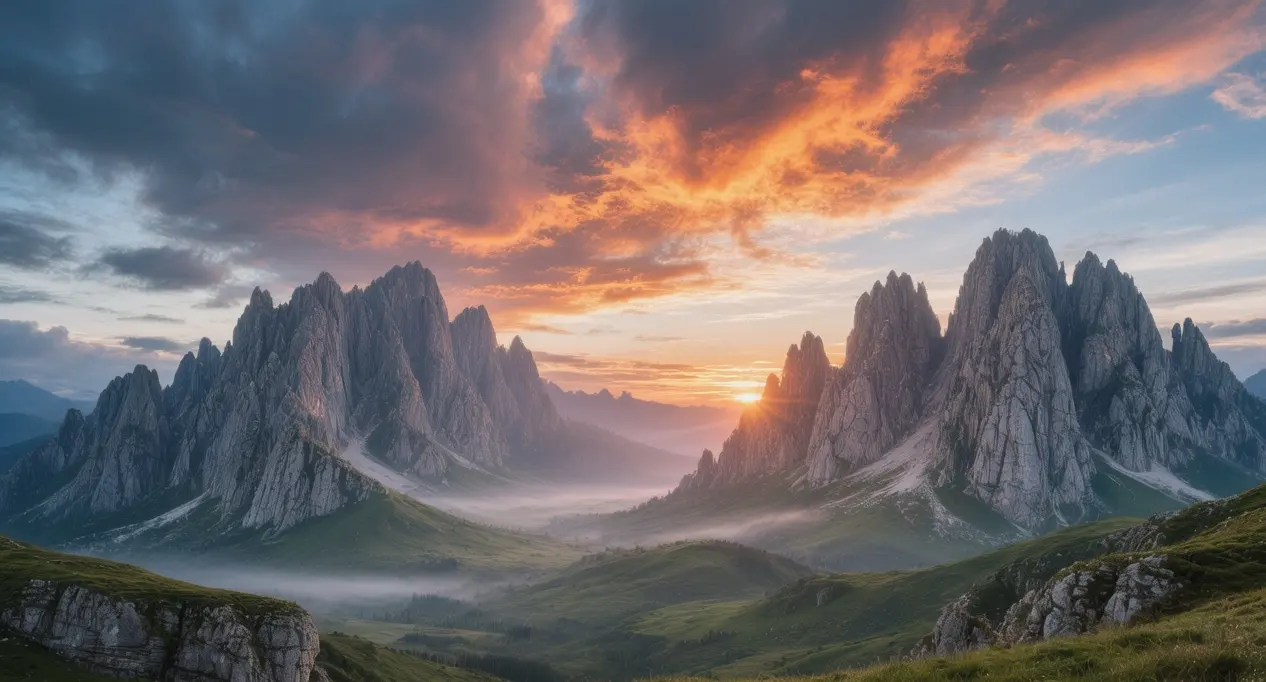
Picos de Europa: Where Limestone Peaks Meet Ancient Valley
I stand on a high ridge at ten in the morning. Wind pulls steady and cool. The mountain trails are free. I look out across jagged limestone summits — grey, gold, sharp against deep blue sky. Valleys drop away steep below — green forest, scattered stone villages, winding rivers silver in sunlight. Not everything stays easy. Weather shifts in minutes. Mist swallows peaks then vanishes. Some high paths lack markers. The narrow access roads fill fast in summer. Yet these mountains stand at the heart of northern Spain — wild, ancient, and deeply alive.
Why Picos de Europa Matters
The Picos de Europa form a rugged limestone massif spanning Asturias, Cantabria, and León. For centuries they stood as a natural fortress — sheltering communities, preserving traditions, and holding one of Europe’s last great wild spaces. Kings rallied here. Shepherds moved flocks across high passes. Miners worked deep galleries. The range became Spain’s first national park in 1918, protecting lakes, gorges, and forest that had stood untouched for millennia. That protection brings pressure. Visitor numbers rise every year. Mountain roads strain under traffic. Popular trails show erosion. Balancing access with preservation grows harder. Still the peaks stand. Shepherds move through the high pastures. And the mountains remain a place where the world feels whole.
The Best Time to Experience Picos de Europa
Late May through June brings blooming cantons and melting snow — 8°C to 18°C (46°F–64°F). High passes open gradually. September and early October offer golden light and clear air — 7°C to 17°C (45°F–63°F). Summer from July to August feels warmest — 11°C to 22°C (52°F–72°F) — but crowds fill every valley. Winter from November to April stays quiet and often snowbound — 0°C to 7°C (32°F–45°F). Only lower trails remain accessible. Weekdays beat weekends. Arrive before 08:30 to walk high ground alone.
Approximate Budget for a 7-Day Trip
- Accommodation: Mountain guesthouse — 50–85 euros per night. Rural stone cottage — 60–110 euros per night. Valley hotel — 75–140 euros per night. Mountain refuge — 15–30 euros per bed.
- Food: Mountain stew lunch — 12–18 euros. Cabrales cheese and cider — 10–16 euros. Seafood in eastern valleys — 14–24 euros. Bakery — 5–9 euros.
- Transport: Car rental — 35–55 euros per day (essential). Mountain bus — 4–8 euros one way. Parking — 3–5 euros daily. Taxi between villages — 15–30 euros.
- Attractions: Trails and viewpoints — free. Cable car — 16–22 euros. Cave visit — 5 euros. Guided high route — 15–25 euros.
- Miscellaneous: Waterproof gear, snacks — 8–15 euros daily.
Total estimated for one person, 7 days: 350–650 euros
Restaurants right beside the main cable car station charge noticeably more than those in the village below. Walk ten minutes downhill. You will find family-run places serving better food at kinder prices.
Essential Picos de Europa Experiences
- Watch sunrise from a high viewpoint. Peaks glow gold then deep amber. Valleys lie filled with mist. The world feels reborn every morning. Skip this if rain or mist is forecast — the view vanishes completely.
- Ride the cable car up the north face. You rise steep through forest then rock. The valley drops away fast. From the top, ridges stretch endless. It feels like stepping onto the roof of the world.
- Walk a high pasture trail. Grassy uplands, stone huts, grazing cattle. The path winds between peaks. You see far and wide. The air stays clear and quiet.
- Explore a deep limestone gorge. Rock walls rise sheer hundreds of metres. A river runs fast and silver far below. The light stays soft and dim. It feels ancient and hidden.
- Eat Cabrales cheese in the village that makes it. Sharp, creamy, bold — aged in mountain caves. Served with crusty bread and tart cider. Nothing tastes more of this land.
- Walk down from high ground at sunset. Light turns warm and soft. Long shadows stretch across the path. The mountains change character — grand, gentle, entirely yours.
Hidden Gems Most Travelers Miss
- The western valleys beyond the main routes. Most visitors stay in the central and eastern areas. Drive further west. Villages sit quiet, trails stay empty, peaks look just as magnificent.
- The old shepherd’s pass between two valleys. Steep in places, unmarked in stretches. It connects stone huts and high meadows. You walk as people have for centuries.
- The so-called "famous viewpoint" right beside the road. It fills instantly. Walk ten minutes uphill along the ridge. The same panorama opens out — empty and just as grand.
Cultural & Practical Tips
- Check weather reports twice daily. Conditions change fast. Clear mornings turn to storms by afternoon. Mist can obscure paths in minutes. Turn back early if unsure.
- Stay on marked trails. Limestone terrain is deceptive — loose rock, sudden drops, sinkholes lie hidden under grass. Shortcuts are dangerous and damage fragile turf.
- Respect grazing land and stone huts. These are working pastures. Close gates behind you. Do not disturb sheep or cattle.
- Carry more water and warm layers than you think you need. Dehydration and hypothermia strike fast at altitude. Always pack extra.
- Drive slowly on mountain roads. Lanes are narrow, unprotected, and bend blind. Pull over to let others pass. Arrival matters less than safety.
- Book accommodation months ahead in August. Rooms vanish fast. May or September offer better value, thinner crowds, and clearer light.
Essential Visitor Information
Location & Access: Northern Spain — spanning Asturias, Cantabria, León. Main gateways: Cangas de Onís, Arenas de Cabrales, Potes, Fuente Dé. Closest cities: Oviedo 1 hour 15 mins, Gijón 1 hour 30 mins, Santander 1 hour 45 mins. Car is strongly recommended.
Tickets & Booking: Trails and park entry — free. Cable car — 16–22 euros round trip. Reserve cable car in summer. Reserve accommodation June–September well ahead.
Operating Hours: Park always open. Cable car generally 10:00–19:00. Some high roads close in winter due to snow.
Visit Duration: Minimum 3 days. 5–7 days lets you explore different valleys, high routes, and villages without rushing.
Family Suitability: Good for all ages on lower trails. High routes are steep and exposed. Strollers work in valleys but not on mountain paths. Restrooms at main car parks and villages.
Timing: Best season — late May–June and September. Best time — before 09:00 or 1 hour before sunset.
Highlights: Sunrise viewpoint, cable car ascent, high pasture walk, limestone gorge, Cabrales cheese, sunset descent.
Nearby & Day Trip: Covadonga Lakes — 30–45 mins. Costa Verde beaches — 45 mins. Oviedo — 1 hour 15 mins. Santillana del Mar & Altamira — 2 hours.
Conclusion: Travel with Respect, Not Just Summit
These peaks do not exist to be conquered. They have stood here long before us and will remain long after. Before you leave, look at the highest ridge. What will you protect so it stands as tall for the next generation?
Post a Comment