
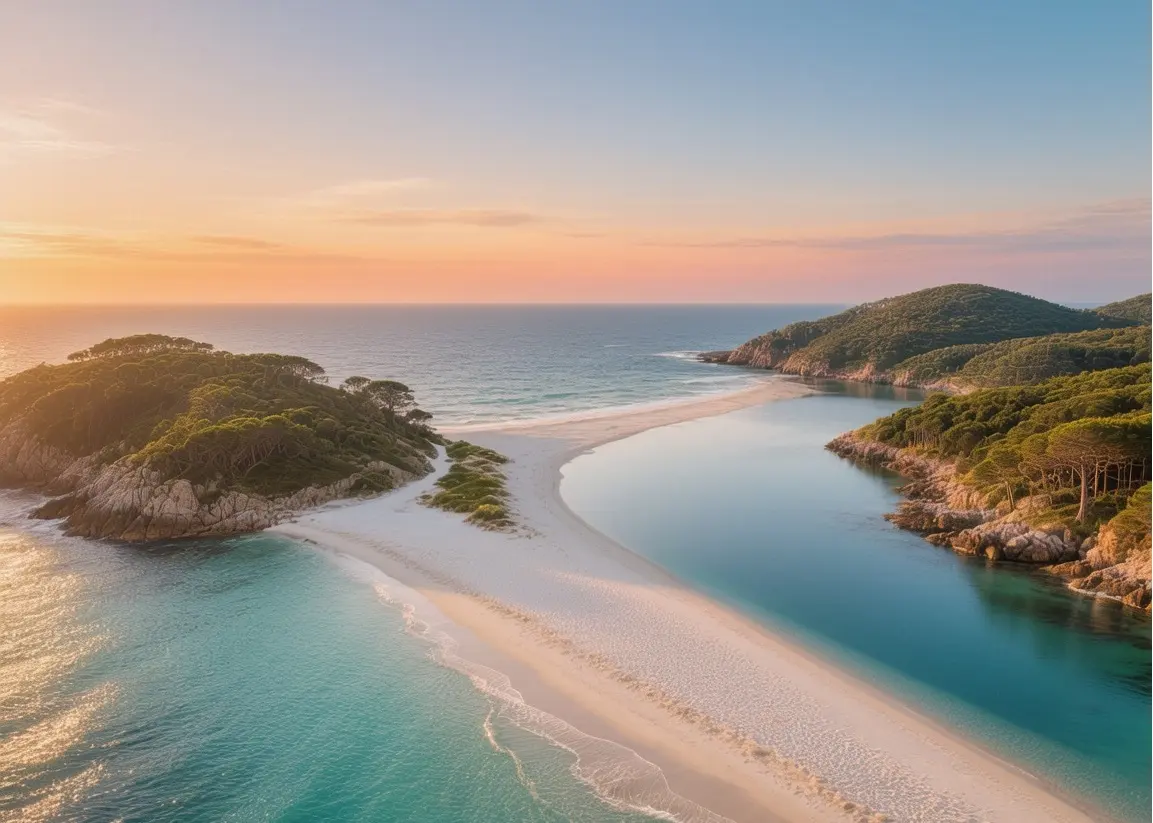
Islas Cíes Beaches Turquoise Waters Meet Protected Paradise
The morning sun glints off crystalline waters as the ferry approaches the archipelago—your breath catches when the white sands of Rodas Beach emerge from the mist, a crescent of pure quartz connecting two granite islands in perfect symmetry. Designated a National Park in 1980 and part of the Atlantic Islands of Galicia National Park since 2002, the Islas Cíes beaches stand as one of Europe's last pristine coastal sanctuaries, where visitor numbers are strictly limited to 2,200 people per day to preserve the delicate ecosystem. You step onto sand so fine it feels like powdered sugar between your toes, while the Atlantic Ocean displays shades of turquoise and emerald that seem impossible in northern Spain. The air smells of salt spray and maritime pine; the silence is profound, broken only by the cries of yellow-legged gulls nesting on the cliffs and the gentle lap of waves against granite boulders. In 2026, as overtourism destroys coastal paradises worldwide, this place matters now more than ever: it represents a successful model of sustainable tourism where access is privilege, not right, demanding that you witness natural beauty without leaving a trace.
Why Islas Cíes Beaches Embodies Coastal Preservation
The Islas Cíes beaches represent far more than a scenic destination—they stand as a global benchmark for how to balance public access with environmental protection in an age of ecological crisis. When the Spanish government declared the islands a National Park in 1980, authorities faced a critical conservation problem: how to protect 433 hectares of fragile coastal ecosystem while allowing citizens to experience this natural treasure. The solution was revolutionary: implementing a strict daily cap of 2,200 visitors, requiring advance permits for all access, and banning overnight stays, motorized vehicles, and camping. This approach solved the immediate threat of uncontrolled tourism while creating a template for sustainable coastal management that has been copied by protected areas across Europe.
The geological specifics reveal the uniqueness of the archipelago: the three islands (Monteagudo, Do Faro, and San Martiño) are composed of Hercynian granite formed over 300 million years ago, with Rodas Beach—a tombolo connecting Monteagudo and Do Faro—formed by wave action depositing white quartz sand over millennia. The beach stretches 1,200 meters in length and reaches depths of only 2 meters even at low tide, creating the shallow turquoise lagoon that has made it famous. The islands serve as a critical nesting ground for the largest colony of yellow-legged gulls (Larus michahellis) in the world, with over 35,000 breeding pairs recorded in 2024. The surrounding waters are part of a Marine Protected Area covering 8,480 hectares, where fishing is strictly regulated to preserve biodiversity. Today, the islands fulfill a dual need: functioning as a living laboratory for marine biology research while serving as an educational destination that receives 180,000 annual visitors. With permits required months in advance during peak season, the Islas Cíes beaches remain ecologically viable through continuous monitoring by the National Park Authority, preserving a dialogue between human curiosity and environmental stewardship that defines responsible tourism in the 21st century.
The Best Time to Experience Islas Cíes Beaches
While the Islas Cíes beaches are accessible from March through October, your experience depends heavily on weather conditions, permit availability, and ferry schedules. For optimal visiting conditions, target June 10–July 5 or September 5–25, when daytime temperatures average 20–25°C (68–77°F) and rainfall is moderate. During these windows, you'll explore the beaches comfortably without the overwhelming crowds of August or the unpredictable weather of spring. The light during these months also enhances the turquoise water colors, creating ideal photography conditions for the famous Rodas Beach.
For the most atmospheric experience, book the first ferry departure (10:00–10:30 AM) when the islands are quiet and wildlife is most active, or the last return ferry (6:00–7:00 PM) which allows you to witness the sunset over the Atlantic. Morning visits offer the clearest water visibility for snorkeling and the best chance to observe seabirds before they disperse. Late summer (September) provides warmer water temperatures (19–21°C / 66–70°F) ideal for swimming while avoiding the peak tourist rush.
Avoid July 25–August 25 and Spanish national holidays (August 15 Assumption Day, Holy Week) when permits sell out within minutes of release and ferry terminals experience long queues. Midday visits during peak season create bottlenecks on the boardwalks and at Rodas Beach. For real-time permit availability and weather alerts,
Approximate Budget for a 7-Day Trip (2026)
The Galicia region offers exceptional value compared to other European coastal destinations, though prices have risen 24% since 2020 due to tourism growth and inflation. This budget assumes moderate comfort—clean, well-located accommodation in Vigo or Cangas; authentic meals at traditional Galician restaurants; and selective paid attractions. Prices reflect 2026 rates with approximately 4% annual inflation factored into estimates. This budget covers a relaxed 7-day stay based in Vigo with multiple day trips to the islands.
Accommodation: €75–€140 per night for a double room in a hotel in Vigo city center or Cangas; budget hostels from €45/night
Food: €40–€70 per day
-
• Breakfast: €5–€9 (café con leche €3, pastry €3.50)
Transportation:
-
• Ferry from Vigo/Cangas to Islas Cíes: €22–€28 round-trip (Mar de Ons, Naviera Mar de Ons)
Attractions:
-
• Islas Cíes permit: Free (but limited availability)
Miscellaneous:
-
• Local wine bottle (Albariño): €12–€20
Total for 7 days (per person, double occupancy): €1,100–€1,700
7 Essential Islas Cíes Beaches Experiences
- Walk Across Rodas Beach: Stroll the 1,200-meter tombolo between 10:30–11:30 AM when the light is perfect. The white sand feels like powder beneath your feet. The turquoise water on both sides creates a surreal landscape. This is the iconic image of the islands and should not be rushed. Allow 30 minutes to absorb the scenery.
- Snorkel at Figueiras Beach: Enter the water near the northern end of Monteagudo island. Access: 20-minute hike from Rodas, open during park hours. The water is crystal clear with visibility up to 15 meters. Insider tip: Bring your own snorkel gear as none is available on the islands. The underwater rock formations are stunning.
- Hike to Lighthouse of O Faro: Climb the 197 steps to the lighthouse on Do Faro island. The 1-kilometer trail is steep but shaded, making it suitable for active visitors. You will see panoramic views of the archipelago. Allow 90 minutes for the round trip. Bring water as there are no services along the trail. The connection between history and landscape is striking here.
- Visit the Visitor Center: Located at the main dock, this facility explains the islands' ecology. Access: Near ferry terminal, open 10 AM–7 PM. Free entry. Insider tip: Watch the documentary on the islands' formation. It provides context for the landscape you're experiencing. The exhibits on seabird conservation are excellent.
- Dine in Vigo: Reserve a table at a restaurant in the Old Town after returning from the islands. Order the local specialty percebes (goose barnacles) while watching the light change on the harbor. Evening dining (9:30 PM) allows you to see the city illuminated against the night sky. The seafood is exceptional, caught daily by the local fleet.
- Observe Seabird Colonies: Visit the designated viewing areas near the cliffs between 11:00 AM–12:00 PM. The 2-kilometer walk is flat and shaded, making it suitable for families. You will see over 35,000 breeding pairs of yellow-legged gulls. Allow 1 hour for observation. Bring binoculars as there are limited viewing platforms. The connection between wildlife and conservation is remarkable here.
- Attend the Summer Concert Series (If Visiting in July): If visiting during special events, witness acoustic concerts held on the beach. The islands fill with music, culture, and nature appreciation. Book permits 3 months in advance as slots fill completely. The sunset performances are spectacular. This event showcases the community spirit that keeps the tradition alive.
3 Hidden Gems Most Travelers Miss
- Praia de Figueiras: While most visitors focus on Rodas, this secluded beach on the northern coast offers privacy and natural beauty. Access: 20-minute hike from Rodas, open during park hours, free. Insider tip: Visit early morning when the tide is low. The isolation is unmatched. It provides context for the natural coastline you're experiencing beyond the famous tombolo. It is often overlooked by those rushing to Rodas.
- Ruta do Faro (Lighthouse Route): Located on Do Faro island, this coastal path offers stunning viewpoints often missed by beachgoers. Access: Start from Rodas Beach, follow marked trail, open daylight hours. Insider tip: The staff provides free maps highlighting less-visited viewpoints. Ask about the wildflower meadows. It provides context for the botanical diversity you're experiencing. It is often overlooked by those focused solely on swimming.
- Praia de San Martiño: A specific beach located on the third island, accessible via a 45-minute coastal path often overlooked by tour groups. This rocky outcrop offers a secluded spot for reflection away from tourist crowds. Access: Follow the signs from the main dock, look for the marked trail. Insider tip: Bring binoculars. Cormorants frequently nest in the cliffs here. Best visited late afternoon when the light hits the water. The views of the Atlantic are breathtaking.
Cultural & Practical Tips
- Permit requirements: Advance reservation is mandatory—permits release 30 days in advance and sell out quickly. Fines up to €500 for violations. Book online at the National Park website. No same-day permits available.
- Dress code for beaches: Swimwear is acceptable on beaches but cover up when hiking. Carry a lightweight scarf even in summer. Remove hats when entering the visitor center.
- Respect the environment: No camping, fires, or overnight stays allowed. Do not feed wildlife. Quiet hours are enforced after 7 PM. Do not remove sand, shells, or rocks. Pack out all trash.
- Essential phrases: "Bos días" (bos DEE-as) = "Good morning" in Galician; "¿Onde está o baño?" (ON-deh es-TA o BA-nyo) = "Where is the bathroom?"; "A conta, por favor" (a KON-ta por fa-BOR) = "The bill, please."
- Weather preparedness: The region experiences rapid weather changes. Bring layers and a waterproof jacket even in summer. Water temperatures average 17–21°C (63–70°F). Winter visits are not possible as the islands close October–March.
- Tipping customs: Round up restaurant bills or leave 5–10% for exceptional service. Not tipping is acceptable but leaving small change shows appreciation. Ferry staff appreciate small change rounded up to the nearest euro.
- Accessibility information: Rodas Beach is wheelchair accessible via boardwalk. The lighthouse trail is not accessible. Contact the National Park office for adapted route maps along the main beach area.
Conclusion: Travel with Reverence, Not Just Checklist Tourism
The Islas Cíes beaches have witnessed millions of years of geological history—granite rising from the sea, waves sculpting sand into paradise, seabirds nesting undisturbed for millennia. When you walk these sands in 2026, you're not just capturing images for your gallery; you're stepping into a living narrative of preservation and privilege. The quartz grains holding this beach never imagined they would support visitors from every corner of the globe; the waves that formed Rodas never conceived their work would become a global icon.
But here's what separates meaningful travel from tourism: these islands don't need your footprint—they need your reverence, your willingness to understand the fragility of coastal ecosystems, to recognize that each visitor adds pressure to a system that cannot expand. In an age of overtourism, Islas Cíes offers a masterclass in restraint—showing us that some wonders demand we subordinate our desire for access to the greater need for protection. Walk the beach, yes, but emerge with something deeper than souvenirs: carry forward a commitment to protect not just this paradise, but all the fragile, irreplaceable treasures that connect us to our shared natural heritage.