
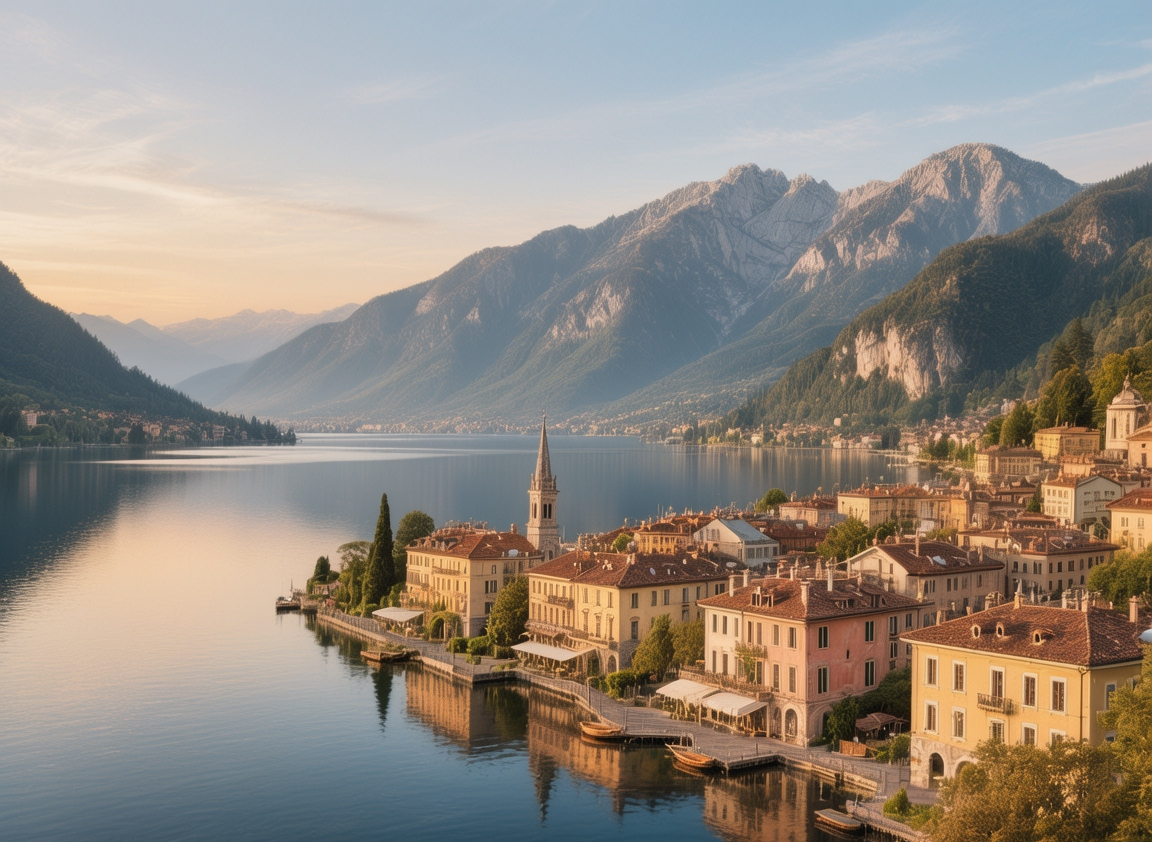
Lake Como – Bellagio, Varenna Alpine Light Meets Timeless Serenity
The first light of dawn spills over the Larian Triangle—turning Lake Como’s surface into liquid silver as mist curls around cypress-crowned peninsulas. In Bellagio, shutters creak open above cobblestone lanes scented with jasmine; in Varenna, fishing boats bob gently against stone quays where Roman traders once docked. Carved by glaciers over 10,000 years ago, this Y-shaped lake stretches 46 kilometers (28.5 miles) from Lecco to Colico, flanked by slopes so steep they’re terraced with dry-stone walls older than the Renaissance. Bellagio, perched at the lake’s nexus, earned the nickname “Pearl of Lake Como” for its panoramic views and botanical gardens; Varenna, quieter and more medieval, clings to cliffs like a secret whispered by the mountains. In 2026, as overtourism strains fragile ecosystems worldwide, Lake Como stands at a crossroads—where every visitor’s choice determines whether these villages remain living communities or dissolve into luxury backdrops.
Why Lake Como – Bellagio, Varenna Embodies Harmonious Coexistence
Lake Como isn’t just scenic—it’s a testament to human adaptation to dramatic geography. Since Roman times, villagers have carved terraces into near-vertical slopes to grow olives, citrus, and silk-producing mulberry trees, using dry-stone walls that prevent erosion and create microclimates. Bellagio, founded as a Roman settlement in the 1st century BCE, became a strategic hub due to its central position on the lake’s three branches. Its historic center, largely pedestrianized, features narrow caruggi (alleyways) and piazzas lined with Liberty-style villas. Varenna, established in the 8th century by fishermen fleeing invaders, retains its medieval core with the 12th-century Castello di Vezio overlooking the water. The lake itself reaches a depth of 410 meters (1,345 feet)—making it Europe’s deepest after Norway’s fjords—and its microclimate allows subtropical plants like camellias and magnolias to thrive. Today, strict building codes prohibit new construction on unstable slopes, preserving a landscape where alpine grandeur and human ingenuity exist in delicate balance. This harmony—between mountain, water, and village—is what makes Lake Como not just beautiful, but enduringly wise.
The Best Time to Experience Lake Como – Bellagio, Varenna
To enjoy mild weather, open gardens, and manageable crowds, target the precise window of May 15–29, 2026. During these weeks, daytime temperatures range from a comfortable 18–24°C (64–75°F)—ideal for lakeside walks, boat excursions, and exploring hillside trails [[23], [26]]. The gardens of Villa Melzi and Villa Monastero are in full bloom, and ferry schedules operate at near-peak frequency. Mornings between 7:30–9:30 AM offer empty streets in Bellagio and serene waterfront access in Varenna before day-trippers arrive. Alternatively, September 12–26, 2026 provides similar conditions with fewer tourists and the added charm of grape harvests in nearby vineyards. Avoid visiting during peak periods: all of July and August, when temperatures exceed 30°C (86°F), ferry queues stretch for hours, and parking is impossible, and major holidays like Italian Ferragosto (August 15) [[28]]. For the most authentic experience, stay overnight—day visitors vanish by 6:00 PM, revealing the lake’s quiet, residential soul. Always verify ferry timetables via the official Navigazione Laghi website (navigazionelaghi.it).
Approximate Budget for a 7-Day Trip (2026)
This budget reflects mid-range 2025 pricing adjusted for Italy’s projected 2026 inflation rate of 1.5% [[37]], offering a realistic estimate for a solo traveler splitting time between Bellagio and Varenna.
- Accommodation: €910–€1,260 total (€130–€180 per night) for a boutique guesthouse or private apartment in Varenna’s historic center or Bellagio’s upper town—offering views without resort prices.
- Food: €490 total (€70 per day). Breakfast at a café (€5 for cappuccino and brioche); lunch of lake fish risotto and polenta (€18); dinner at a family-run trattoria (€42 for missoltini—dried agoni fish—and house red wine).
- Transportation: €85 total. Includes train from Milan (€10 round-trip); ferry pass for 7 days (€45); and local taxi transfers for steep hillside luggage (€30).
- Attractions: €65 total. Villa Melzi Gardens (€10); Villa Monastero (€12); Castello di Vezio (€7); olive oil tasting at Frantoio di Bellagio (€15); and guided lakeside history walk (€21).
- Miscellaneous: €95 total. A hand-painted ceramic tile from Bellagio artisan shop (€35); locally made silk scarf (€25); gelato from Gelateria Dulcis in Varenna (€4); and a reusable tote bag from a local cooperative (€15).
Total Estimated Budget: €1,645–€1,995
6 Essential Lake Como – Bellagio, Varenna Experiences
- Stroll Villa Melzi’s Botanical Gardens at Dawn: Arrive by 8:00 AM to wander paths lined with magnolias, azaleas, and a neoclassical temple overlooking the lake—before crowds arrive and the sun beats down.
- Take the Early Ferry from Varenna to Bellagio: Board the 7:45 AM ferry for misty, crowd-free views of the lake’s eastern arm. The 15-minute ride offers photo opportunities few tourists capture.
- Explore Castello di Vezio’s Eagle’s Nest: Climb the 20-minute trail from Varenna to this 12th-century fortress. At the top, panoramic views stretch across all three branches of the lake—a perspective unchanged for centuries.
- Walk the Sentiero del Viandante: Hike a section of this ancient mule track between Varenna and Abbadia Lariana. The well-marked path offers cliffside vistas and encounters with wild orchids in spring.
- Taste Missoltini in Varenno: At Ristorante Silvio, try this local specialty: agoni fish dried in the sun, grilled, and served with polenta—a tradition dating back to Roman times.
- Watch Sunset from Punta Spartivento: In Bellagio, follow the lakeside path west of the ferry dock to this quiet promontory. As the sun dips behind the Grigna mountains, the water ignites in gold—a moment of pure serenity.
3 Hidden Gems Most Travelers Miss
- Santuario della Madonna di San Martino: Above Bellagio, this 17th-century hilltop sanctuary offers sweeping views and quiet contemplation. Reach it via the “Sentiero dei Mulini” trail—steep but uncrowded—and enjoy homemade lemonade from the caretaker’s stand.
- Oliveto di Bellagio (Olive Grove): Just a 10-minute walk uphill from Bellagio’s center, this working grove produces award-winning oil. Visit in late October for the harvest, or book a private tasting year-round.
- Fiumelatte Cave: Near Varenna, this mysterious river emerges from a limestone cave each spring (typically May 24–October 22) and vanishes just as suddenly. Legend says its milky waters inspired Leonardo da Vinci.
Cultural & Practical Tips
- Use ferries wisely: The “Imbarcazioni” ferry pass (€45 for 7 days) covers unlimited travel between towns—essential for hopping between Bellagio, Varenna, and Menaggio.
- Wear proper walking shoes: Villages are built on steep slopes with uneven cobblestones. Sandals or flip-flops are impractical for daily exploration.
- Respect residential life: These are working communities. Keep noise down after 10:00 PM, and never block doorways or private staircases for photos.
- Learn key phrases: “Dov’è il sentiero per il Castello?” (doh-VEH eel sen-TYEH-roh PEHR eel kah-STEL-loh?) for directions; “Grazie, buona serata” (GRAHT-see-eh BWOH-nah seh-RAH-tah) for evening thanks.
- Carry cash and refillable water: Many small eateries and trailside kiosks don’t accept cards. Public fountains marked “acqua potabile” offer free drinking water.
Conclusion: Travel with Stewardship, Not Just Selfies
In 2026, visiting Lake Como is a privilege—not a right. Your presence directly impacts whether Bellagio and Varenna remain vibrant communities or fade into seasonal photo ops. The €10 garden entry you pay funds terrace restoration; choosing a family-run guesthouse over an Airbnb supports generational residents; carrying out your trash preserves the lake’s clarity for native trout and ospreys. Slow down: sip espresso where fishermen gather, learn the story behind the dry-stone walls, taste oil pressed from olives grown on slopes too steep for machines. By traveling with stewardship—choosing depth over speed, connection over consumption—you help ensure that Lake Como’s alpine beauty continues to shelter real lives, not just reflect tourist lenses. Let your journey be an act of care, and these waters will echo your respect for generations.