Las Fallas Festival Fire Sculptures Meet Valencian Night
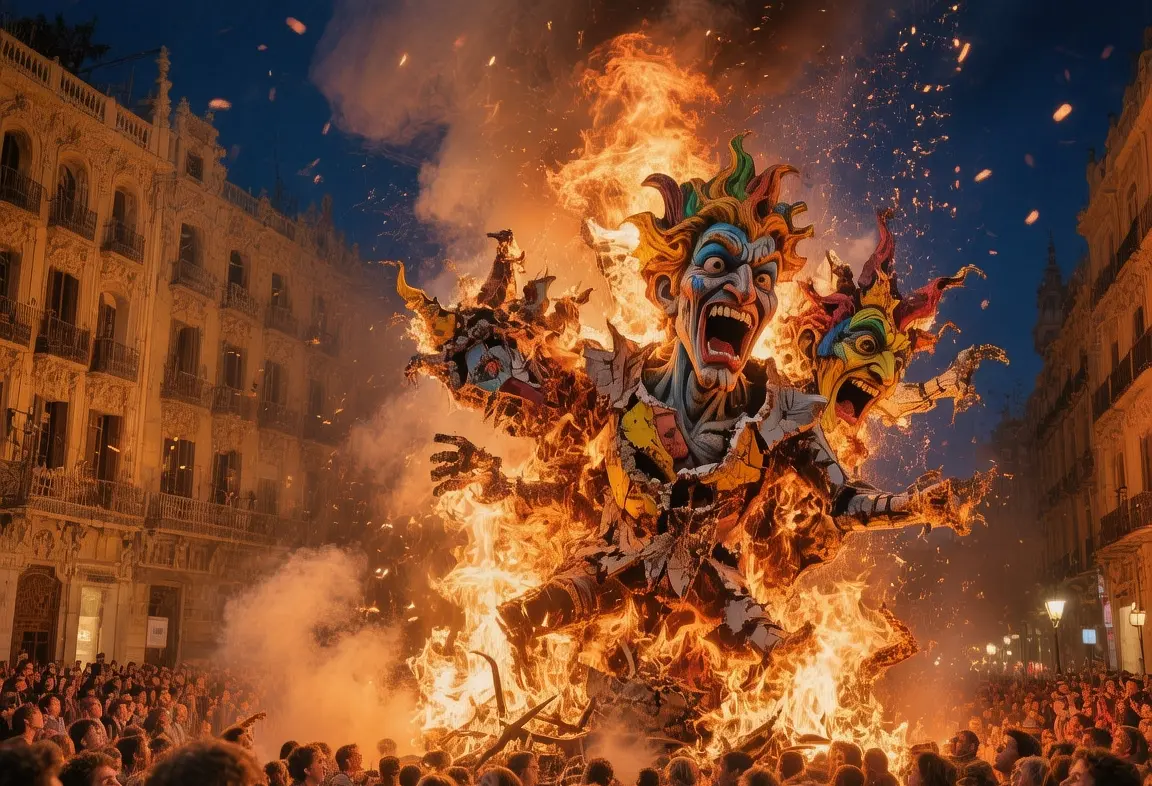
Las Fallas Festival: Where Ephemeral Art Meets Living Tradition
I stand in Plaza del Ayuntamiento at ten minutes to two on a March afternoon. The air smells of gunpowder and orange blossom. A low hum rises from thousands of people packed shoulder to shoulder. Then the first blast hits. It shakes the ground beneath my feet and vibrates in my chest, building in layers until the final seconds make everyone cheer out loud. This is the Mascletà, the daily heart of Las Fallas. For nineteen days each year, Valencia shifts its rhythm to this festival. Streets that feel quiet at night fill with music, fire, and noise that never truly stops. You cannot sleep through it. You learn to move with it.
Why Las Fallas Festival Matters
Las Fallas grew from a simple craft tradition. Centuries ago, carpenters burned their old wooden workbenches and scraps each March 19, the feast day of Saint Joseph. Over time, the piles of debris became dressed figures, then elaborate scenes, and now towering monuments that fill every neighborhood square. Recognized as UNESCO Intangible Cultural Heritage, it remains a living, community-run event. Every neighborhood raises its own funds, elects its own leaders, and competes to build the sharpest, funniest, most pointed commentary in papier-mâché. That vitality comes at a price. The noise is relentless—earplugs are not optional. Crowds strain local infrastructure, and some residential areas feel genuinely overwhelmed by visitors. It is not a polished, packaged show; it is loud, messy, and sometimes chaotic.
The Best Time to Experience Las Fallas Festival
The festival runs March 1 through March 19. Daily Mascletà at 14:00 happens from day one. Temperatures sit between 12°C and 19°C (54°F–66°F) early in the month, rising to 14°C–21°C (57°F–70°F) by mid-March. Rain is possible but usually light and brief. March 1 through 14 lets you see all monuments with smaller crowds. Accommodation costs stay reasonable. The peak period March 15 through 19 brings the full intensity—parades, flower offerings, Night of Fire, and the final burning. Expect temperatures around 15°C–22°C (59°F–72°F) but also double or triple room rates and sold-out blocks. If you want the full experience without total exhaustion, arrive March 14 and leave March 18. You catch the crescendo before the absolute crush.
Approximate Budget for a 7-Day Trip
These figures cover one person sharing accommodation, arriving March 13 and departing March 20.
- Accommodation: €420 – 650. Prices surge mid-festival. A room that costs €60 normally can hit €130–150 per night March 15–19. Book 4–6 months ahead.
- Food & Drink: €20 – 35 daily. Street snacks run €2–5. A full meal sits €15–25. Hot chocolate with buñuelos costs €4–7.
- Transport: €35 – 50. Metro and walking serve you best. A 10-trip card costs €7.60 and beats single tickets. Many bus routes face diversions.
- Events & Extras: €25 – 60. Most main events are free. Museum entry, special viewing spots, and guided walks carry fees.
- Unexpected: €40 – 60. Extended hours, extra snacks, last-minute transport.
Total: €660 – 950
Some central restaurants charge premium menus with no better quality than places two streets away. Skip the places with festival-only fixed-price signs. Walk three blocks off the main square and pay half for equal food.
Essential Las Fallas Festival Experiences
- Daily Mascletà at Plaza del Ayuntamiento — 14:00 sharp. Five to six minutes of rhythmic explosions that build to a shaking finish. Arrive 30–45 minutes early. Stand back if you have heart conditions or sensitive hearing.
- Walk the Neighborhood Fallas — Every district has its own monument. You see different styles and humor as you move across the city. Wear comfortable shoes; you will walk 8–12 kilometers a day. Skip if you cannot manage extended walking.
- Ofrenda de Flores — March 17 and 18. Thousands in traditional dress bring flowers to build a massive cloak for the Virgin Mary in Plaza de la Virgen. The display stays up through the 19th. Go at golden hour for the softest light.
- Nit del Foc — Night of Fire — March 18 after dark. The largest fireworks show over the old Turia riverbed. Smoke lingers thick; stand upwind. Arrive early—space fills fast.
- La Cremà — The Final Burning — March 19 from 22:00 onward. Smaller children’s monuments burn first; the largest fall after midnight. Heat reaches you far from the flames. It is spectacular and sad all at once.
- Despertà — The Morning Wake-Up — Dawn, March 16 through 19. Neighbors throw firecrackers from balconies. You do not choose to watch this; it wakes you up. It is loud, short, and unmistakably local.
Hidden Gems Most Travelers Miss
- The maritime district of El Cabanyal holds its own quieter Fallas. The art feels personal, the crowds thin, and the evening gatherings feel like neighborhood parties rather than tourist shows.
- Museo Fallero preserves the single ninot voted for rescue each year. You see centuries of craftsmanship and understand what is lost to the flames. It sits just outside the absolute center.
- Plaza de la Virgen at 9:00 AM on March 17 offers the flower offering processions before the midday crush. The atmosphere feels gentle and reverent. Do not mistake the main viewing stands for the real experience; paid seats block the best spontaneous vantage points.
Cultural & Practical Tips
- Wear earplugs everywhere. The noise exceeds safe levels repeatedly. Locals of all ages use them; you will not look out of place.
- Do not expect to sleep before 2:00 AM. Parades, music, and celebrations run late. Book accommodation with double glazing if you value rest.
- Respect the monuments. They are fragile and protected. Do not climb, touch, or lean on them. Security guards actively enforce this.
- Carry small change. Public restrooms and many small vendors do not take cards. ATMs run out of cash in busy zones.
- Do not plan tight schedules. Streets close without warning, transport shifts, and crowds slow everything down. Leave gaps between plans.
- Watch your footing at night. Ash, debris, and wet patches make walking surfaces uneven near burning sites.
Essential Visitor Information
Location & Access: Valencia, eastern Spain. Main center is 10 kilometers from Manises Airport. Three options: metro line 3 or 5 from airport to central stations in 25 minutes; high-speed train from Madrid in roughly 2 hours; train from Barcelona in roughly 3 hours.
Tickets & Booking: Most core events are free and open to all. Special viewing platforms cost €15–40. Museum entry €2–4. Accommodation must be booked months in advance for March 15–19.
Operating Hours: Festival runs March 1–19. Mascletà daily at 14:00. Main events March 15–19 with peak action late evening through early morning. Individual neighborhood times vary.
Visit Duration: Minimum 3 days. 5–7 days lets you see the full arc without rushing.
Family Suitability: Suitable for older children and teens. The noise can distress young kids; bring protection. Stroller access is difficult in dense crowds. Restrooms are scarce outside main venues.
Timing: Best season is March. Best times of day: before 11:00 AM for quiet viewing; 13:15 for Mascletà positioning; after sunset for night events.
Highlights: Daily Mascletà, neighborhood Fallas route, Ofrenda de Flores, Nit del Foc, La Cremà.
Nearby & Day Trip: Parque Natural de la Albufera 20 minutes south offers quiet contrast. Xativa with its hilltop castle sits 45 minutes inland. Cullera beaches and castle stand 40 minutes south. Sagunto’s Roman ruins and fortress lie 30 minutes north. All make feasible same-day trips.
Conclusion: Travel with Awareness, Not Just Noise
Las Fallas leaves nothing behind. The art burns, the smoke clears, and the streets empty. What stays is the bond of people building something together then letting it go. It is a lesson in making things that matter even when they do not last. When you visit, do not chase every scheduled event. Pick one neighborhood, watch how they gather, and stay late enough to see what happens when the crowds thin. That is where the real festival lives.
Post a Comment