
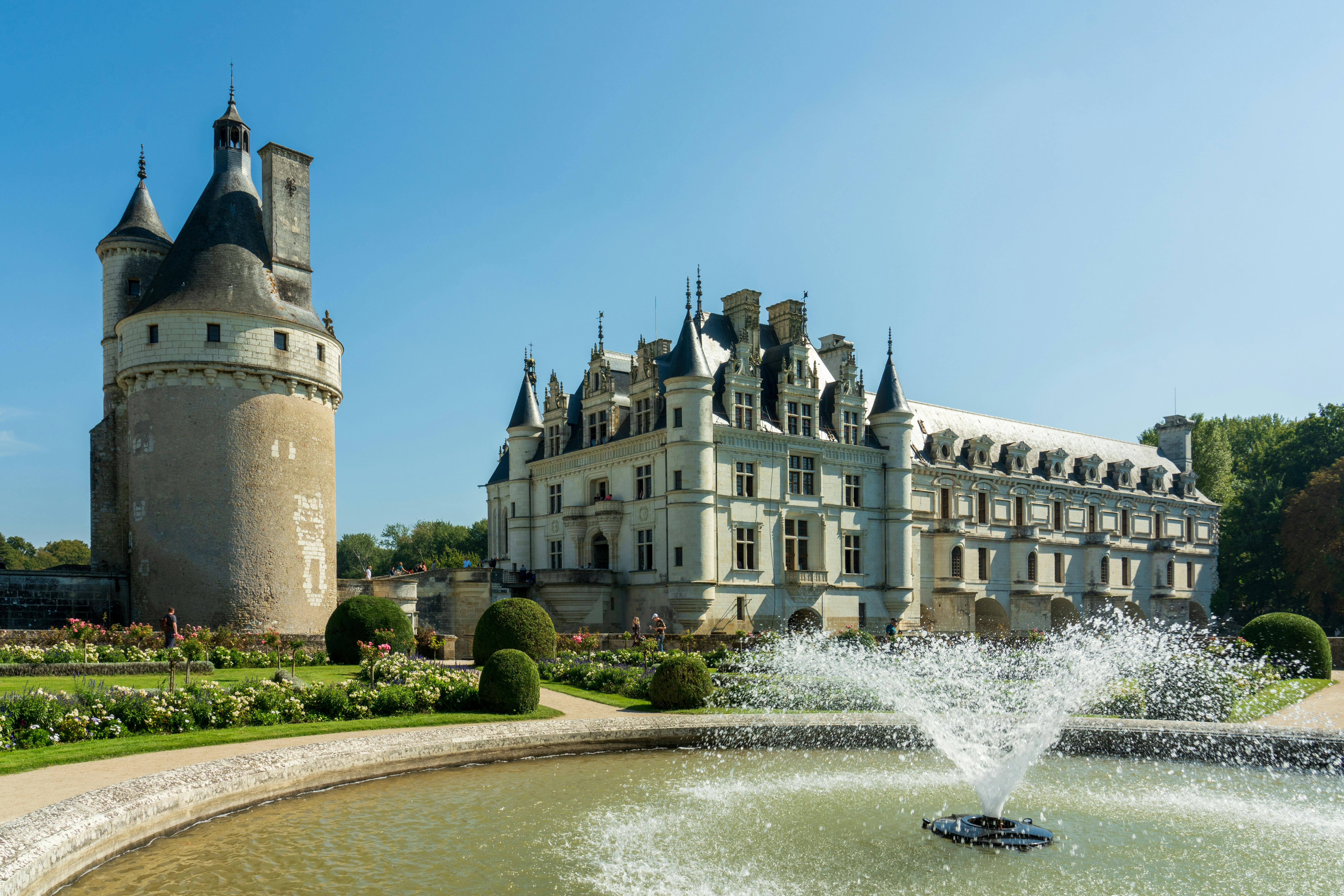
Loire Valley Castles – Chenonceau & Amboise : A Journey Through Renaissance Grandeur and River Light
The Loire Valley doesn't announce its castles with fanfare—they emerge gradually from the landscape as you follow the river's gentle curves. First, a slate roof piercing the morning mist. Then, the symmetrical façade of Chenonceau appearing to float across the Cher River, its arches mirrored perfectly in still water. Further upstream, Amboise rises from vineyard-covered slopes, its royal apartments overlooking the very valley where Leonardo da Vinci spent his final years. This is not a collection of isolated monuments but a living cultural landscape where Renaissance ambition harmonizes with agricultural rhythm. In 2026, the Loire Valley castles remain Europe's most accessible immersion into 16th-century courtly life—not as frozen museums, but as breathing estates where history flows as steadily as the river itself.
Why Explore Loire Valley Castles?
The Loire Valley castles represent more than architectural splendor—they embody a pivotal moment when French nobility shifted from fortress-building to pleasure-seeking. Following the Hundred Years' War, kings and courtiers transformed defensive strongholds into luminous Renaissance residences inspired by Italian aesthetics. Chenonceau, the "Ladies' Château," was shaped by extraordinary women: Diane de Poitiers created its iconic river-spanning gallery and formal gardens, while Catherine de' Medici expanded it after seizing it from her rival. Amboise served as a royal nursery where François I hosted Leonardo da Vinci, whose tomb resides in the château's Saint-Hubert Chapel. Unlike Versailles' overwhelming scale, these castles offer intimate encounters with history—where you can stand in the queen's bedchamber, walk the very gallery where Mary Stuart danced, and understand how architecture reflected shifting power dynamics between crown, court, and emerging nation-state.
The Best Time to Visit Loire Valley Castles
For optimal conditions—blossoming gardens, manageable crowds, and ideal photography light—visit between May 10 and June 5. Daytime temperatures average 16–22°C (61–72°F), Chenonceau's gardens burst with 150,000 tulips and irises, and the river reflects soft morning light without harsh glare. Mornings before 9:00 AM offer near-solitude in castle courtyards and the best light for photographing Chenonceau's river reflections. September 15–30 provides a second excellent window: warm days, departing crowds, and vineyards turning gold along the Loire banks. Avoid July 15–August 15 when temperatures exceed 30°C (86°F), parking lots fill by 10:00 AM, and interior spaces become uncomfortably warm. Note that many châteaux close certain wings for conservation work in January–February—verify openings at valdeloire.fr before winter travel.
Approximate Budget for a 7-Day Trip (2026)
Based on 2025 benchmarks adjusted for 4% inflation (per INSEE and Centre-Val de Loire Tourism Board projections), here's a realistic mid-range budget:
- Accommodation: €100–€150 per night for a family-run guesthouse in Amboise, Chenonceaux village, or Blois (essential for early castle access).
- Food: €85–€100 per day—breakfast at your lodging, lunch of rillettes and goat cheese (€18–€22), dinner featuring Loire Valley wines with dishes like fouées (puff pastry) and rillons (€40–€50).
- Transportation: Car rental essential for castle-hopping (€45–€60/day). Fuel costs: ~€70/week. Trains reach Tours from Paris (58 minutes, €35–€65 one-way), but rural castles require taxis/buses.
- Attractions: Château de Chenonceau entry: €16. Château d'Amboise entry: €15. Clos Lucé (da Vinci house): €17. Guided garden tour: €12. Allocate €120 total.
- Miscellaneous: €50 for Vouvray wine, tarte Tatin ingredients from local markets, or artisanal saffron from Loire Valley producers.
Total Estimated Cost: €1,100–€1,600 for seven days, excluding international flights.
5 Main Attractions
- Château de Chenonceau: The architectural marvel spanning the Cher River, featuring Diane de Poitiers' geometric gardens on one bank and Catherine de' Medici's floral labyrinth on the other—a testament to feminine influence in Renaissance politics.
- Château d'Amboise: Royal residence where Charles VIII and François I shaped French Renaissance style, with underground passages connecting to the town and panoramic views of the Loire Valley from its ramparts.
- Clos Lucé: Leonardo da Vinci's final home, where interactive exhibits demonstrate his engineering genius alongside preserved studios and gardens featuring life-sized models of his inventions.
- Chenonceau Gardens: Two distinct Renaissance gardens reflecting their creators' personalities—Diane's orderly symmetry versus Catherine's exuberant floral displays—best experienced at different times of day.
- Loire River Promenade (Amboise): The shaded path along the riverbank connecting Amboise château to Clos Lucé, offering perspectives of both estates and opportunities to observe local fishermen at work.
3 Hidden Gems Most Travelers Miss
- Chapelle Sainte-Radegonde (Chinon): A 6th-century troglodyte chapel carved into the cliff face beneath Chinon fortress, featuring 12th-century frescoes rarely visited—access via a discreet stone staircase near Place Jeanne d'Arc.
- Vignoble du Château de Chenonceau: The estate's working vineyard on the north bank (opposite main entrance), where visitors can taste Chenonceau-labeled wines at a rustic tasting room—ask staff for directions near the parking lot.
- Le Jardin de la Tonnelle (Amboise): A hidden garden behind Rue Victor Hugo (look for an unmarked iron gate between No. 14–16) featuring 16th-century espaliered fruit trees and a quiet bench with château views without crowds.
Cultural & Practical Tips
- Book Castle Entries Online: Reserve timed tickets 2–3 weeks ahead via chenonceau.com and chateau-amboise.com—same-day availability rarely exists May–September, especially for Chenonceau.
- Respect Residential Spaces: Parts of Amboise remain private residences. Never photograph through windows or enter areas marked "Privé"—staff politely enforce boundaries.
- Learn Key Phrases: "Bonjour," "Merci," and "Où sont les jardins secrets?" (Where are the secret gardens?) show respect in this historically significant region.
- Parking Strategy: Chenonceau's main lot fills by 9:30 AM. Alternative: park at the "Relais Chenonceau" shuttle lot (€3) 1km away with frequent buses.
- Support Local Producers: Purchase wine directly from domaines rather than castle gift shops. Look for "Vigneron Indépendant" signs along D751 for authentic tastings.
Conclusion: Travel with Historical Curiosity, Not Just a Checklist
The Loire Valley castles endure not because they were preserved behind glass, but because they remain woven into regional life—where vineyard workers pass through Renaissance courtyards, children play on ramparts that once defended kings, and gardeners tend parterres using 16th-century techniques. As a conscious traveler, your role is to engage with this continuity. Sit quietly in Chenonceau's gallery and imagine Catherine de' Medici navigating court intrigue. Walk Amboise's ramparts at dusk when day-trippers have departed. Support the vignerons whose families have cultivated these slopes for generations rather than mass-produced souvenirs. By approaching these castles not as monuments to be checked off, but as living chapters in an ongoing story, you help ensure their stones continue to shelter not just history, but humanity—for those who understand that true grandeur lies not in scale, but in the intimate spaces between river, light, and time.