
Musée d'Orsay, Paris : Light, Time, and Artistic Revolution Converge
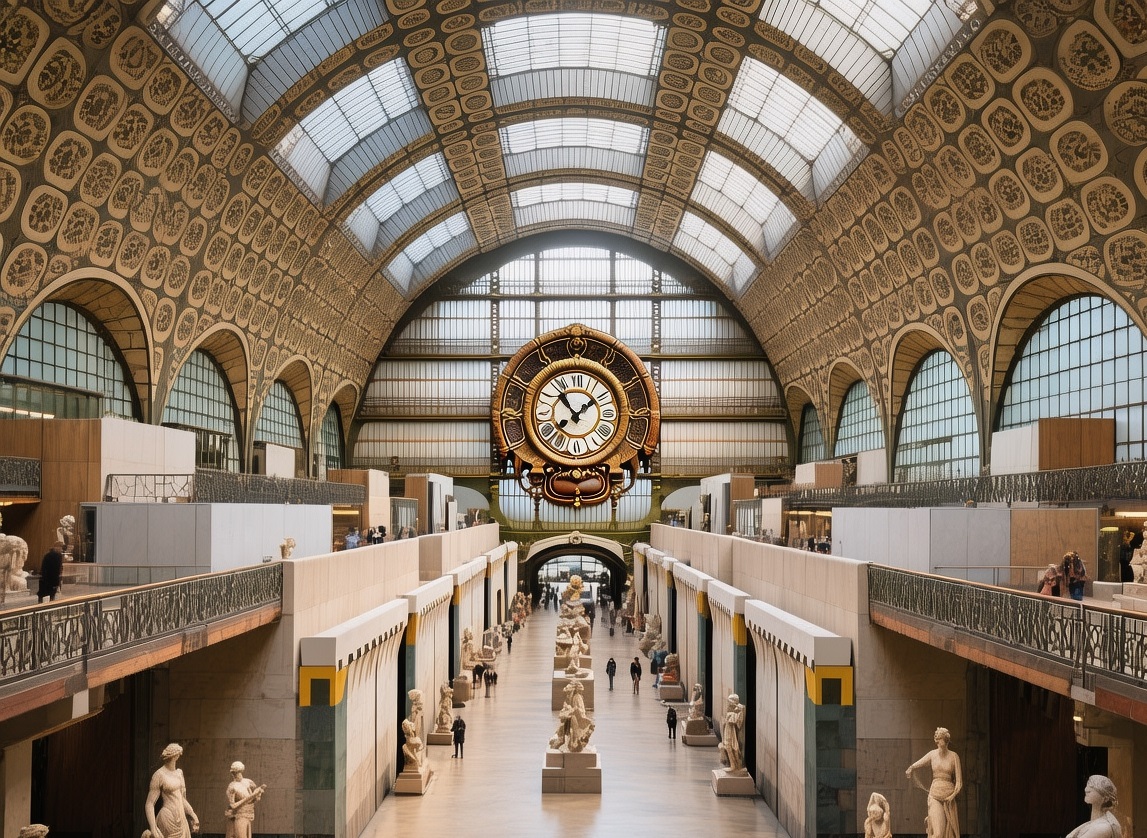
The first encounter with Musée d'Orsay doesn't happen in a gallery—it occurs through glass. As you ascend the escalator toward the museum's western end, the world transforms: the Seine River glides beneath you, Parisian rooftops stretch toward Montmartre, and the entire city becomes a living Impressionist painting viewed through the museum's monumental 1900 railway station clock. Then you turn inward, and time collapses. Before you hangs Van Gogh's turbulent "Starry Night Over the Rhône," its cobalt swirls vibrating with emotional intensity. To your left, Monet's water lilies dissolve form into pure chromatic sensation. To your right, Degas' dancers capture movement in pastel dust. Housed within a Beaux-Arts masterpiece saved from demolition in the 1970s, this museum doesn't merely display art—it orchestrates dialogue between architecture, light, and the revolutionary period (1848–1914) when artists shattered academic conventions to paint modern life as they experienced it. In 2026, Musée d'Orsay remains not a repository of dead masters, but a resonant space where every brushstroke still pulses with the urgency of creation.
Why Musée d'Orsay, Paris Transcends Ordinary Museum Experience
Musée d'Orsay represents more than an art collection—it embodies a radical reimagining of cultural preservation. Born from the controversial 1978 decision to transform Paris's derelict Gare d'Orsay railway station into a museum, its very architecture honors the period it celebrates: the soaring 138-meter nave, restored wrought-iron trusses, and monumental clock faces create a luminous container perfectly suited to Impressionist and Post-Impressionist works that themselves celebrated modernity, light, and industrial transformation. Unlike the Louvre's encyclopedic sprawl, d'Orsay offers focused immersion in art's most explosive 65 years—from Courbet's gritty realism challenging academic idealism to Gauguin's primitivism rejecting European conventions. Its genius lies in contextual intimacy: Rodin's sculptures occupy spaces scaled to human encounter; Van Gogh's self-portraits hang in rooms where natural light shifts hourly, echoing his chromatic experiments; and the museum's deliberate refusal to over-curate allows visitors to discover connections organically. This is where art history feels not studied, but lived.
The Best Time to Experience Musée d'Orsay, Paris
For optimal conditions—natural light on paintings, manageable crowds, and contemplative atmosphere—visit on a Wednesday or Friday between 9:30 and 11:00 AM from April 15 to June 10. These weekday mornings offer the museum's magical confluence: soft northern light filtering through the nave's glass roof illuminates Impressionist canvases as their creators intended, while crowds remain thin enough to experience Van Gogh's "Church at Auvers" or Manet's "Olympia" without jostling. Crucially, arrive precisely at opening (9:30 AM Tuesday–Sunday; 9:00 AM Thursday for late hours until 21:45) to experience the Impressionist galleries on Level 5 in near-solitude—a 45-minute window before tour groups arrive. Avoid weekends and French school holidays when queues exceed 75 minutes and interior spaces become uncomfortably congested. For photography without flash (strictly prohibited), position yourself in the central nave between 2:00–4:00 PM when afternoon sun streams through the western clock face, casting dramatic shadows across marble floors while illuminating sculptures with Rembrandt-like warmth.
Approximate Budget for a 7-Day Trip (2026)
Based on 2025 benchmarks adjusted for 4% inflation (per INSEE and Paris Île-de-France Tourism Office projections), here's a realistic mid-range budget for a Paris itinerary centered on artistic immersion:
- Accommodation: €115–€165 per night for a boutique hotel in Saint-Germain-des-Prés or Odéon—neighborhoods within 15-minute walk of the museum with authentic literary/artistic heritage.
- Food: €95–€110 per day—breakfast at bakery (€7), lunch of quiche and salad at museum café (€22–€28), dinner featuring seasonal French cuisine at neighborhood bistros (€50–€65).
- Transportation: €36 for a weekly Navigo Découverte pass (covers RER C line to Musée d'Orsay station—literally beneath the museum—or Metro Solférino).
- Attractions: Musée d'Orsay entry: €16. Temporary exhibition supplement: €5. Orangerie Museum (Water Lilies): €12.50. Allocate €100 total for related sites.
- Miscellaneous: €50 for art books from museum bookstore, reproduction postcards of favorite works, or donations to conservation efforts via the Orsay Foundation.
Total Estimated Cost: €1,250–€1,750 for seven days, excluding international flights.
5 Essential Musée d'Orsay Experiences
- Impressionist Galleries (Level 5): The museum's crown jewel—Monet's Rouen Cathedral series, Renoir's "Bal du moulin de la Galette," and Cézanne's card players displayed in rooms flooded with natural light from the station's original glass roof.
- Van Gogh Collection: The world's finest assembly of Van Gogh's French-period works including "Starry Night Over the Rhône" and four self-portraits revealing his psychological evolution—best viewed mid-morning when light enhances his vibrant palette.
- Grand Nave Sculpture Gallery: Rodin's "Gates of Hell" and Carpeaux's "Dance" displayed beneath the restored iron trusses—a powerful dialogue between industrial architecture and human form.
- Western Clock Face: The iconic timepiece offering framed views of Montmartre and Sacré-Cœur—position yourself here at 3:30 PM when sun ignites the glass while illuminating adjacent Pointillist works.
- Decorative Arts Galleries (Level 2): Often overlooked Art Nouveau rooms featuring Lalique glass, Guimard metro entrances, and furniture that contextualize Impressionism within broader design revolution.
3 Hidden Gems Most Travelers Miss
- North Balcony Quiet Corner (Level 3): Behind Gallery 36 (Courbet works), a discreet bench faces north-facing windows with perfect, shadow-free light on Monet's "Gare Saint-Lazare" series—favored by art students for sketching.
- Clock Café Terrace: Skip crowded main café. Reserve table at Café Campana beneath the western clock (book 48h ahead via museum website) for Seine views while enjoying coffee where Proust might have lingered.
- Photography Collection (Level 0): The museum's exceptional but rarely visited photography archive—request access at information desk for 15-minute viewing of Nadar's portraits or Atget's Paris streets that influenced the Impressionists.
Cultural & Practical Tips
- Book Timed Entry Online: Reserve tickets 3–4 weeks ahead via musee-orsay.fr—select Wednesday/Friday 9:30 AM slots. Print confirmation or download QR code; security lines move faster with pre-booking.
- Strategic Navigation: Enter via Rue de Lille entrance (less crowded than main doors). Immediately ascend to Level 5 Impressionist galleries before crowds arrive, then descend chronologically to experience art's evolution.
- Photography Ethics: Flash strictly prohibited—UV radiation degrades pigments. Tripods banned. Best handheld shots captured between 10:00–11:30 AM when natural light minimizes need for high ISO.
- Respect Contemplative Space: Maintain quiet in galleries. Never touch frames or lean against walls—vibrations damage century-old canvases. Step aside to allow others viewing access.
- Contextual Preparation: Download free museum app's "Masterpieces" audio guide before arrival—20-minute thematic tours deepen engagement without overwhelming detail.
Conclusion: Engage with Art as Conversation, Not Consumption
Musée d'Orsay endures not as trophy room for famous names, but as invitation to witness artistic courage—the moment Monet chose light over line, Van Gogh traded realism for emotional truth, and Degas captured movement where others saw stillness. As a conscious traveler, your presence should honor this revolutionary spirit: spend 10 minutes with a single painting rather than 10 seconds with fifty. Sit on provided benches and let compositions reveal themselves gradually. Support conservation through official channels rather than touching frames for selfies. Purchase catalogues from the museum bookstore to sustain educational programs. Most importantly, carry the museum's lesson beyond its walls: that beauty emerges not from perfection, but from honest engagement with the world as we find it—flawed, fleeting, and luminous. By approaching d'Orsay not as checklist but as conversation across time, you ensure these revolutionary works continue speaking not to crowds, but to souls.