
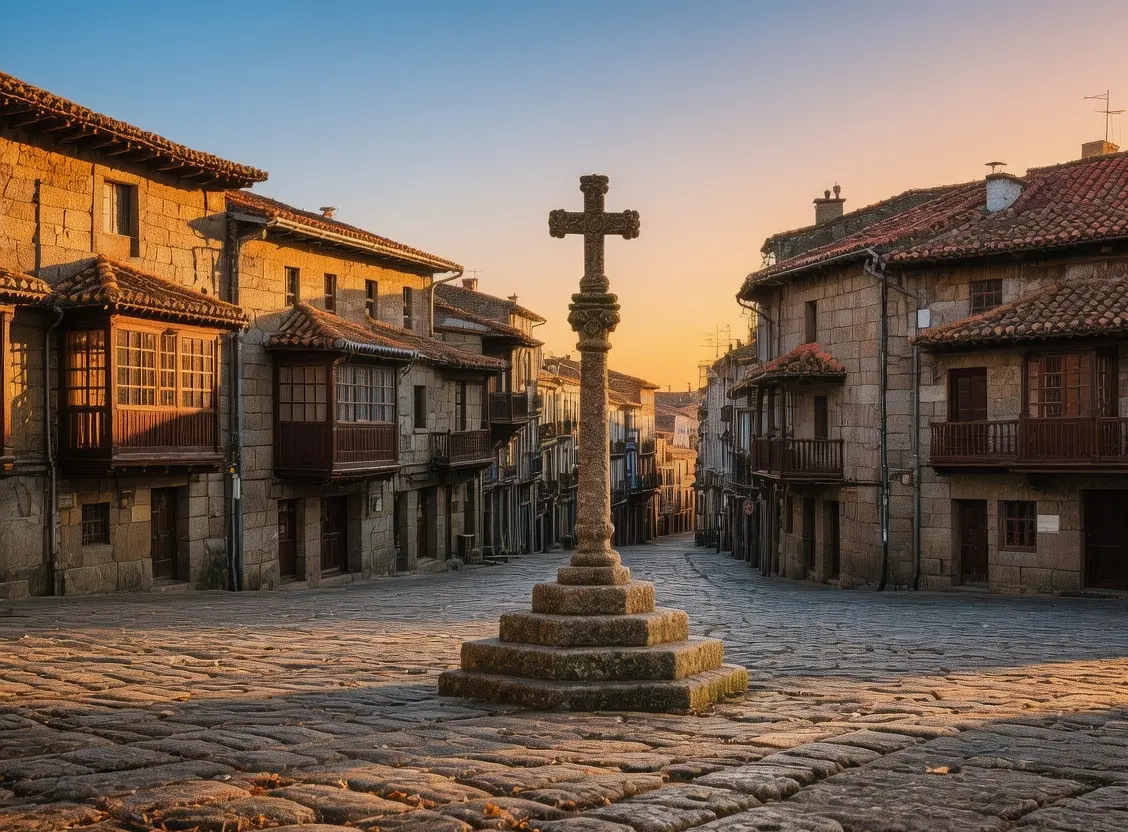
Pontevedra Old Town Medieval Stone Meets Urban Harmony
The silence is the first thing that strikes you as you cross the boundary into the zone—no engine hums, no horns blare, only the rhythmic click of heels on granite cobblestones worn smooth by eight centuries of passage. Established as a Roman settlement in the 1st century AD and revitalized as a pedestrian paradise in 1999, the Pontevedra old town stands as a global benchmark for urban livability, where 300,000 square meters of historic streets belong exclusively to walkers. You stand in the Praza da Leña, surrounded by pazo manor houses built from local stone in the 16th century, while the scent of roasting chestnuts drifts from a nearby tavern and the Lérez River whispers softly in the distance. The light is soft and diffuse, filtering through the characteristic Galician mist that keeps the hydrangeas blooming in every courtyard. In 2026, as cities worldwide choke on traffic and pollution, this place matters now more than ever: it represents a successful rebellion against the automobile, demanding that you experience history at a human pace, proving that the past is not a museum exhibit but a living, breathing space reclaimed for its people.
Why Pontevedra Old Town Embodies Urban Renaissance
The Pontevedra old town represents far more than a collection of medieval streets—it stands as a revolutionary case study in how to restore dignity to a historic center suffocating under modern pressure. When the city council launched the "Metropolis" model in 1999, officials faced a critical urban planning problem: how to reverse the decay of a 1,200-year-old core that had become a thoroughfare for transit traffic. The solution was audacious: banning all non-resident motorized vehicles from the historic center, removing parking spaces, and prioritizing pedestrians and cyclists above all else. This approach solved the immediate need for safety and noise reduction while triggering an economic renaissance that increased commercial activity by 40% within the first decade. The architecture, primarily granite Baroque and Gothic structures dating from the 15th to 18th centuries, was preserved not by cordoning it off but by filling it with life.
The engineering specifics reveal the sophistication of the redesign: the streets utilize permeable granite paving that allows rainwater drainage while providing a smooth surface for the 50,000 daily pedestrians who traverse the zone. The Basilica of Santa María la Mayor, constructed between 1520 and 1550, features a plateresque facade carved from stone that has withstood the humid Atlantic climate for nearly 500 years without significant erosion. The city implemented a network of 120 surveillance cameras to ensure safety without police presence, resulting in a 90% reduction in accidents involving pedestrians since 2000. Today, the district fulfills a dual need: functioning as a vibrant residential neighborhood with 15,000 inhabitants while serving as a protected heritage site that receives 400,000 annual visitors. With strict conservation laws enforced by the Galician Heritage Council, the Pontevedra old town remains architecturally cohesive, preserving a dialogue between medieval history and modern sustainability that defines the 21st-century urban ideal.
The Best Time to Experience Pontevedra Old Town
While the streets of the Pontevedra old town remain accessible year-round, your experience depends heavily on the maritime climate of the Rías Baixas and the local festival calendar. For optimal visiting conditions, target May 15–June 20 or September 10–October 15, when daytime temperatures average 18–24°C (64–75°F) and rainfall is moderate. During these windows, you'll explore the plazas comfortably without the heavy rains of winter or the humidity of summer. The light during these months also enhances the grey granite, creating ideal photography conditions for the stone facades and crosses.
For the most atmospheric experience, arrive between 9:00–10:30 AM when the locals are shopping in the markets and the streets are quiet, or during golden hour (8:30–10:00 PM in summer, 6:30–8:00 PM in winter) when the sun sets behind the Basilica. Early morning visits offer the clearest air for viewing the architectural details without crowd reflections. Winter months (December–February) bring colder temperatures of 8–14°C (46–57°F) and frequent rain, which dramatically reduces crowds but requires warm clothing and umbrellas for outdoor viewing. The town looks magical under grey skies, though some outdoor cafés may close.
Avoid July 25–August 25 and Spanish national holidays (Semana Santa/Easter Week, August 15 Assumption Day) when daily visitor numbers spike and accommodation prices increase by 50-70%. Midday visits during peak season create bottlenecks in the narrow Calle de la Cruz. For real-time weather and event schedules,
Approximate Budget for a 7-Day Trip (2026)
Pontevedra offers exceptional value compared to major Spanish cities, though prices have risen 22% since 2020 due to tourism growth and inflation. This budget assumes moderate comfort—clean, well-located accommodation; authentic meals at traditional Galician restaurants; and selective paid attractions. Prices reflect 2026 rates with approximately 4% annual inflation factored into estimates. This budget covers a relaxed 7-day stay based in Pontevedra with day trips to nearby beaches and vineyards.
Accommodation: €70–€130 per night for a double room in a historic hotel in the Old Town; budget hostels from €40/night
Food: €35–€60 per day
-
• Breakfast: €4–€7 (café con leche €2.50, toast with tomato €3.50)
Transportation:
-
• Train from Madrid to Pontevedra: €45–€65 one-way (Renfe, 5 hours)
Attractions:
-
• Basilica of Santa María la Mayor: €5 adults, €3 students
Miscellaneous:
-
• Local wine bottle (Albariño): €12–€20
Total for 7 days (per person, double occupancy): €950–€1,450
7 Essential Pontevedra Old Town Experiences
- Walk the Praza da Leña: Stroll through this iconic square between 9:00–10:00 AM to avoid crowds. The granite cross glows in the morning light, and the cobblestones are dew-covered. The sound of church bells echoes through the empty streets. This is the best time to photograph the stone facades without tourists in the frame.
- Visit the Basilica of Santa María la Mayor: This 16th-century Gothic masterpiece houses intricate stone carvings on its facade. Access: Praza da Ferrería, open 10 AM–2 PM and 4–7 PM, €5 entry. Insider tip: Look for the figures of sailors and merchants carved into the stone. It provides context for the maritime history you're experiencing. The acoustics during quiet moments are remarkable.
- Explore the Ruins of San Domingos: Located in a public square, these Gothic ruins are open to the sky. Access: Praza das Ruínas, open 24 hours, €4 entry. Insider tip: Visit at sunset when the light hits the stone arches. It provides context for the religious history you're experiencing. The acoustics inside the ruins are unique.
- Walk the Lérez River Promenade: Stroll along the riverbank adjacent to the old town. Although urban, the viewpoint offers the best panoramic vista of the city skyline glowing red in the evening light. Visit at sunset when the stone glows orange. It is a popular spot for photographers, so arrive 20 minutes early to secure a position.
- Dine on Galician Specialties: Reserve a table at a restaurant near the Praza da Ferrería. Order the local specialty empanada gallega (savory pie) while watching the light change on the stone facades. Evening dining (9:30 PM) allows you to see the plaza illuminated against the night sky. The seafood is exceptional, caught daily by the local fleet.
- Visit the Museo de Pontevedra: Located in two 18th-century palaces, this museum showcases Galician art and history. The 1-kilometer walk from the Basilica is flat and shaded, making it suitable for families. You will see medieval goldwork and modern art. Allow 2 hours for the visit. Bring water as there are limited services along the trail. The connection between art and history is striking here.
- Attend the Feast of the Pilgrim Virgin (If Visiting in August): If visiting during the second week of August, witness the traditional festivities honoring the patron saint. The streets fill with music, religious statues, and thousands of pilgrims. Book accommodation 6 months in advance as hotels fill completely. The fireworks display over the river is spectacular. This event showcases the community spirit that keeps the tradition alive.
3 Hidden Gems Most Travelers Miss
- Convento de San Francisco: While most visitors focus on the Basilica, this 13th-century convent houses a beautiful cloister often overlooked. Access: Calle de San Francisco, open 10 AM–2 PM and 4–7 PM, €3 entry. Insider tip: The Gothic arches date back to 1250 and are rarely photographed. Visit early morning to see the light filtering through the courtyard without the midday rush. The preservation is remarkable for its age.
- Ponte do Burgo (Burgo Bridge): Located at the edge of the old town, this medieval bridge marks the entrance to the city. Access: End of Calle de la Peregrina, open 24 hours. Insider tip: The stone structure dates back to the 12th century. It provides context for the pilgrim route you're experiencing. The views of the river are stunning. It is often overlooked by those focused solely on the plazas.
- Jardines de O Burgo: A specific park located near the bridge, accessible via a path often overlooked by tour groups. This green space offers a secluded spot for reflection away from tourist crowds. Access: Follow the signs from the Old Town, look for the marked trail. Insider tip: Bring binoculars. Herons frequently hunt in the river here. Best visited late afternoon when the light hits the water. The views of the old town are breathtaking.
Cultural & Practical Tips
- Photography etiquette: Tripods require permission from city security—fines up to €500 for violations. Street photography of locals requires verbal consent; a simple "¿Puedo?" (PWEH-doh) shows respect. Flash photography is prohibited inside the Basilica to protect the artwork.
- Dress code for churches: Shoulders and knees must be covered to enter the Basilica of Santa María la Mayor. Carry a lightweight scarf even in summer. Remove hats when entering religious spaces.
- Respect pedestrian zones: No motorized vehicles are allowed in the old town. Park in designated areas outside the walls. Quiet hours are enforced in residential areas after 10 PM. Do not touch the historic stonework.
- Essential phrases: "Bos días" (bos DEE-as) = "Good morning" in Galician; "¿Onde está o baño?" (ON-deh es-TA o BA-nyo) = "Where is the bathroom?"; "A conta, por favor" (a KON-ta por fa-BOR) = "The bill, please."
- Weather preparedness: The region experiences frequent rain year-round. Nights can be 10°C cooler than days. Bring layers and a waterproof jacket. Winter visits require sturdy shoes for potentially slick cobblestones near the churches.
- Tipping customs: Round up restaurant bills or leave 5–10% for exceptional service. Not tipping is acceptable but leaving small change shows appreciation. Taxi drivers appreciate small change rounded up to the nearest euro.
- Accessibility information: The old town is mostly flat and wheelchair accessible due to pedestrianization. Some churches have steps. Contact the tourism office for adapted route maps along the main plazas.
Conclusion: Travel with Reverence, Not Just Checklist Tourism
The Pontevedra old town has witnessed nearly 2,000 years of human history—Roman soldiers marching, medieval pilgrims praying, modern citizens reclaiming the streets. When you walk these plazas in 2026, you're not just capturing images for your gallery; you're stepping into a living narrative of urban resilience and community. The granite walls holding these buildings never imagined they would support tourists from every corner of the globe; the masons who carved these arches never conceived their work would become a global model for livability.
But here's what separates meaningful travel from tourism: this town doesn't need your footprint—it needs your reverence, your willingness to understand the complexity of urban preservation, to recognize that each visitor adds wear to structures that cannot be easily replaced. In an age of overtourism, Pontevedra offers a masterclass in balance—showing us that some wonders demand we subordinate our desire for access to the greater need for protection. Walk the streets, yes, but emerge with something deeper than souvenirs: carry forward a commitment to protect not just this town, but all the fragile, irreplaceable treasures that connect us to our shared human history.