
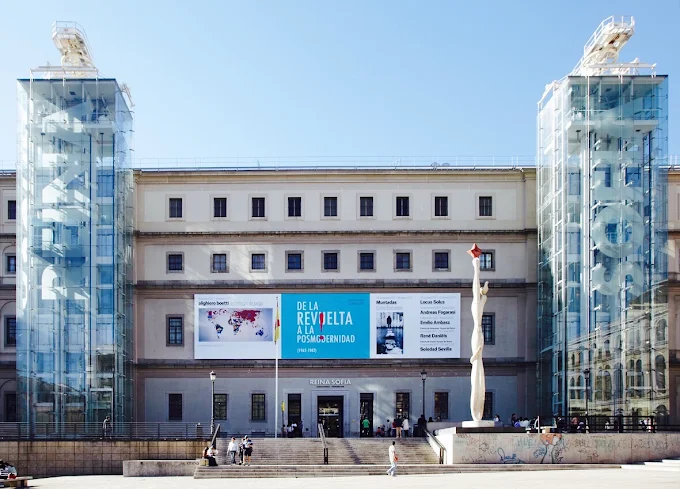
Reina Sofía Museum, Madrid Modern Masterpieces Meet Historic Stone
The silence in Room 2.06 is heavy—almost physical—as you stand before the 3.5 by 7.8 meter canvas that changed the history of art forever. You are in the Reina Sofía Museum, Madrid, a complex that merges an 18th-century neoclassical hospital with 21st-century architectural ambition. The air smells of polished concrete and old paper; the light filters through the glass canopy of the Jean Nouvel expansion, casting geometric shadows on the floor. This is not merely a gallery but a sanctuary of memory, housing over 21,000 works that chronicle the trauma and triumph of the 20th century. You hear the hushed whispers of visitors interpreting Picasso's Guernica; the distant hum of the Atocha train station nearby; the click of cameras (without flash) capturing the fractured forms of Dalí. In 2026, as digital reproductions saturate our screens, the Reina Sofía Museum, Madrid remains a vital anchor of the original—a place where the scale of suffering and the height of creativity demand a physical presence that pixels cannot replicate.
Why Reina Sofía Museum Embodies Artistic Memory
The Reina Sofía Museum, Madrid represents the definitive collection of Spanish modern art, solving the critical need to preserve and contextualize the avant-garde movements that defined the 20th century. Originally built as the Hospital General de San Carlos in 1781 by architects Francesco Sabatini and Ventura Rodríguez, the building served the sick for two centuries before its transformation. The museum officially opened in 1992, consolidating Spain's modern art collections which were previously scattered across various institutions. The architectural expansion by Jean Nouvel, completed in 2005, added 12,000 square meters of exhibition space, creating a dialogue between the historic brick facade and the modern red steel and glass structure.
The collection's depth is unparalleled in Spanish modernism: it holds the complete archive of Picasso's Guernica studies, over 100 works by Salvador Dalí, and the definitive collection of Joan Miró. The engineering of the Nouvel building features a complex system of climate-controlled zones to protect sensitive materials like paper and canvas from Madrid's fluctuating humidity. With over 21,000 artworks in its inventory, though only 4,000 are displayed at any time, the Reina Sofía Museum, Madrid functions not merely as a repository but as a research center. This concentration of genius makes it a pilgrimage site for art historians, where the evolution of abstraction, surrealism, and political art is traced through the very brushstrokes that defined the medium.
The Best Time to Experience Reina Sofía Museum
For the optimal Reina Sofía Museum, Madrid visit, target April 10–June 5 or September 20–November 15, when temperatures range between 15–25°C (59–77°F) and the light in the galleries is clearest. The museum opens at 10:00 AM Monday, Wednesday, and Saturday; 10:00 AM to 9:00 PM Tuesday and Thursday through Saturday. Arrive 15 minutes before opening to enter with the first group, as school tours converge by 11:00 AM. Free entry hours—Monday and Wednesday 7:00–9:00 PM, Saturday 2:30–9:00 PM, Sunday 10:00 AM–2:30 PM—draw significant crowds; purchase tickets in advance to bypass queues. Sunset light through the western windows of the Nouvel building—specifically 5:00–6:30 PM in winter—creates dramatic shadows across the sculpture terraces.
Avoid July 15–August 25 unless you tolerate heat and crowds; temperatures regularly exceed 35°C (95°F), making the queue outdoors uncomfortable despite air-conditioned interiors. The museum is busiest during Art Week (ARCO) in February; accommodation prices surge 40–60% during this period. Winter months (December–February) bring fewer tourists but shorter daylight hours for traveling to the site. Verify current exhibition schedules at www.museoreinasofia.es or contact the information desk at informacion@museoreinasofia.es (+34 917 741 000). Tuesday mornings typically see the lowest visitor density, allowing for contemplative viewing of the masterpieces without obstruction from crowds.
Approximate Budget for a 7-Day Trip (2026)
Madrid offers excellent value for cultural travelers, though costs fluctuate during major events like ARCO or San Isidro Festival. The following budget assumes mid-range comfort with a focus on local experiences, based on 2026 pricing with approximately 3.5% inflation from 2025 figures. Estimates include stays near the historic center for easy access to the Reina Sofía Museum, Madrid.
- Accommodation: €80–€150 per night for a double room in a boutique hotel or renovated apartment in Centro, Atocha, or Lavapiés neighborhoods; luxury options near the museum command €200–€400 per night
- Food: €45–€65 per day—breakfast €5–€9 (café con leche and churros con chocolate), lunch €15–€25 (menú del día including cocido madrileño, salad, and wine), dinner €25–€35 (tapas selection including calamari and jamón ibérico)
- Transportation: Train from Barcelona Sants to Madrid Atocha: €50–€80 high-speed AVE (2.5 hours); Metro single ticket: €1.50 or €18.50 10-trip pass; taxi from airport: €35 fixed rate; bike rental: €15 per day
- Attractions: Reina Sofía Museum, Madrid entry: €12; Prado Museum: €16; Thyssen-Bornemisza: €13; Retiro Park boat rental: €6; Royal Palace: €13
- Miscellaneous: Art books from €20; local wine €8–€20 per bottle; horchata drink €3; artisan leather goods €30–€70; guided museum tour €25
Total estimated cost for 7 days: €1,050–€1,450 per person (based on double occupancy; solo travelers should add 35–45% for single supplements)
7 Essential Reina Sofía Museum Experiences
- Stand Before Guernica: Enter Room 2.06 in the Sabatini Building to face Picasso's 1937 masterpiece. The painting measures 3.5 by 7.8 meters; stand 5 meters back to see the full composition of grief. Visit at 10:00 AM opening time to experience the space before crowds obscure the view. Notice the monochromatic palette of black, white, and grey; the perspective is a puzzle that shifts as you move. Allow 30 minutes to observe the details of the weeping mother and the fallen soldier. This is the anchor of the Reina Sofía Museum, Madrid; do not rush past it.
- Explore Dalí's Port Lligat: Locate The Great Masturbator and Woman with a Head of Roses in the Surrealist galleries. The dreamlike imagery requires close inspection of the fine brushwork. Visit between 2:00–4:00 PM when lighting accentuates the glaze. The paintings date from the late 1920s, marking Dalí's entry into the movement. Audio guides explain the symbolism of the crutches and ants. This collection defines the Spanish contribution to Surrealism.
- Examine Miró's The Farm: Find the pivotal work The Farm (1921–1922) in the early modernist section. The intricate details of rural life are rendered with obsessive precision. Visit when sunlight streams through the windows to illuminate the colors. The painting measures 129 by 146 centimeters. It demonstrates the transition from realism to abstraction. Do not touch the protective glass; oils damage the surface.
- Walk the Nouvel Building: Stroll through the modern extension designed by Jean Nouvel. The red steel and glass structure contrasts with the historic brick of the hospital. Visit in late afternoon when the sun angles through the skylights. The space houses temporary exhibitions and the library. Entry is free in the common areas. This provides a peaceful retreat from the crowded painting halls.
- Visit the Photograph Archive: Explore the collection of historical photography documenting the Civil War and Francoist era. The images are rotated frequently to preserve the light-sensitive paper. Visit at 11:30 AM when the guide explains the context. The archive contains over 10,000 images. It is one of the most comprehensive in the Reina Sofía Museum, Madrid; allow 20 minutes to decode the imagery.
- Attend Evening Openings: During summer months, special night openings occur with reduced crowds. The galleries are illuminated artificially, creating a mystical atmosphere distinct from daytime. Tickets cost €12 and must be booked in advance. Events run at 7:00 PM and 8:30 PM. The temperature drops significantly after sunset; bring a light jacket. This experience emphasizes the art over the tourism, appealing to serious viewers.
- Trace the Liberation Collection: Walk through the galleries featuring art from the post-war period and the Transition to democracy. The works reflect political freedom and social change. Visit at 1:00 PM when the light wells illuminate the staircases. The space houses 1970s and 80s paintings and video art. The architecture itself is worth studying. It reveals the museum's ongoing evolution beyond the Civil War core.
3 Hidden Gems Most Travelers Miss
- The Library and Documentation Center: Located in the Nouvel Building, this research library holds over 100,000 volumes on modern art. Entry is free; open 10:00 AM–9:00 PM. It is often overlooked as visitors focus on the galleries. The reading room features floor-to-ceiling windows. Contact: +34 917 741 000. Visit early morning for private guided tours that access restricted archives. The connection tunnel allows seamless access from the museum.
- The Garden Terraces: Tucked on the upper levels of the Nouvel Building, these outdoor spaces offer views over the Atocha neighborhood. Entry included with ticket; open 10:00 AM–6:00 PM. It is quieter than the main halls. The landscaping features native Spanish plants. Look for the sculpture installations that rotate seasonally. It provides context for the transition to modernism.
- Café Nouvel: Located inside the museum extension, this café features a terrace with views of the glass facade. Entry requires museum ticket; open 10:00 AM–6:00 PM. It is often overlooked by tourists rushing to eat outside. The menu features modern Spanish dishes at museum prices. Look for the architectural details above the counter. It provides a restful pause without exiting the security perimeter. The coffee is superior to typical museum fare.
Cultural & Practical Tips
- Security checks: Expect airport-style security screening at the entrance. Large backpacks and suitcases are not permitted; use the left luggage facility at Atocha station or your hotel. Allow an extra 15 minutes for security processing during peak hours.
- Master these phrases: "Buenos días" (BWEH-nos DEE-as) for good morning; "Por favor" (por fah-BOR) for please; "Una entrada, por favor" (OO-nah en-TRAH-dah) to buy a ticket; "¿Dónde está el baño?" (DON-deh es-TAH el BA-nyo) to find the restroom.
- Photography guidelines: Flash photography is prohibited inside the museum to protect artwork. Tripods require special permission from the administration (+34 917 741 000). Mobile phones must be silenced. Respect "no fotos" signs in temporary exhibition areas.
- Free entry times: Monday and Wednesday 7:00–9:00 PM, Saturday 2:30–9:00 PM, Sunday 10:00 AM–2:30 PM offer free admission but draw large crowds. Arrive 45 minutes early to queue. Students under 25 and children under 18 enter free with ID all day. Seniors over 65 receive discounted rates (€6).
- Hydration strategy: Madrid's inland location means dry heat; carry a refillable water bottle. Public fountains (fuentes) are available in the Retiro Park nearby. The water is potable and sourced from local springs. You'll save €2–€3 daily and reduce plastic waste.
- Ticket strategy: Purchase tickets online at least 48 hours in advance during peak season (April–June, September–October). On-site queues can exceed 60 minutes. Combined passes with Prado offer savings. Verify times on the official website before arriving.
- Weather considerations: The museum offers climate control but queues are outdoors; wear a hat and sunscreen during summer months. Winter evenings can be chilly; bring a light jacket even if the day is warm. Rain is rare but possible in November; the stone surfaces become slick when wet.
Conclusion: Travel with Reverence, Not Just Reverie
The Reina Sofía Museum, Madrid demands more than casual observation—it asks for contemplation of the layers of history embedded in every brushstroke, every frame, every gallery wall carved by hands long turned to dust. When you walk these halls in 2026, you're not merely touring a monument; you're walking through a fragile ecosystem of memory where political trauma, artistic genius, and modern tourism intersect in delicate balance.
Choose to engage deeply: hire a local guide from the Lavapiés neighborhood rather than a large tour company; purchase tickets directly to support preservation efforts; respect the silence of the halls that house national treasures. The Reina Sofía Museum, Madrid survives not as a museum exhibit but as a living archive—and its preservation depends on visitors who recognize the difference between appreciation and consumption.
Slow down. Sit in the Garden Terraces after the tour buses depart. Listen to the fountain water flowing through centuries-old channels. Taste the sweetness of a churro from a nearby café. The museum rewards those who approach it not as a checklist item but as a conversation across time—a dialogue between past and present that continues, like the light on the canvases, in perpetual motion.