
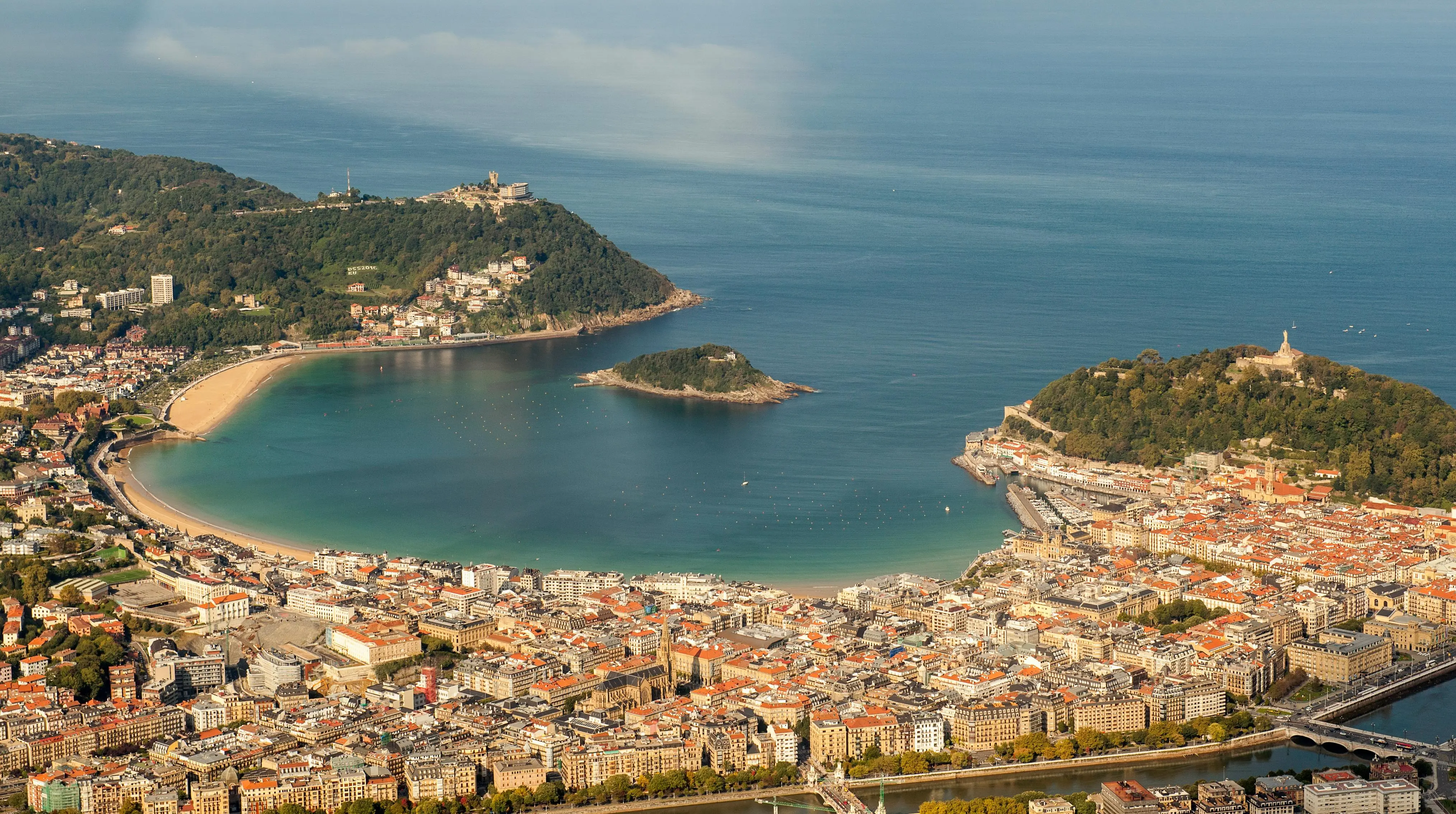
San Sebastián La Concha Beach Atlantic Waves Meet Basque Elegance
The tide recedes slowly across the white sand as dawn breaks over the Bay of Biscay—your toes sink into the cool grains while the rhythmic crash of Atlantic waves provides a steady heartbeat to the morning. Stretching 1,350 meters in a perfect crescent shape, San Sebastián La Concha beach is often cited as the most beautiful urban beach in Europe, a reputation earned through a century of meticulous care and royal patronage. You stand before the iconic white-and-green Queen's Bathhouse, built in 1897, where aristocrats once dipped beneath the waves under strict segregation. The air is crisp, carrying the scent of salt spray and distant woodsmoke from the chimneys of Urgull Mountain. In 2026, as coastal erosion threatens shorelines globally, this place matters now more than ever: it represents a rare harmony between urban density and natural beauty, demanding that you witness a landscape where the city does not conquer the sea but embraces it.
Why San Sebastián La Concha Beach Embodies Coastal Elegance
The San Sebastián La Concha beach represents far more than a swimming spot—it stands as a masterpiece of 19th-century urban planning and Belle Époque sophistication. When Queen Maria Cristina of Spain chose San Sebastián as her summer residence in 1887, the city faced a critical identity problem: how to transform a fishing village into a royal playground without losing its Basque soul. The solution was the development of the Centro district and the formalization of the beach promenade, creating a structured elegance that persists today. The beach's unique shape, protected by the Igeldo and Urgull headlands, creates a calm bay with minimal currents, solving the safety concerns that plagued wilder Atlantic coasts.
The engineering specifics reveal the dedication to preservation: the sand is regularly replenished and sifted to maintain a depth of 2 meters at low tide, ensuring a soft surface for the 50,000 daily visitors in peak season. The iconic railing along the promenade, designed in the early 1900s, features a distinctive wave pattern that has become a symbol of the city. The Queen's Bathhouse (Balneario de la Reina) utilizes wooden pilings driven deep into the seabed to withstand winter storms that can generate waves up to 10 meters high. Today, the beach fulfills a dual need: functioning as a public recreational space while serving as the anchor for a tourism economy that generates over €1 billion annually for the region. With strict building height limits enforced around the bay, San Sebastián La Concha beach remains visually unspoiled, preserving a dialogue between nature and architecture that defines the Basque Country.
The Best Time to Experience San Sebastián La Concha Beach
While the sands of San Sebastián La Concha beach are accessible year-round, your experience depends heavily on the maritime climate of the Basque Country and the tourism calendar. For optimal visiting conditions, target June 10–25 or September 15–30, when daytime temperatures average 20–24°C (68–75°F) and rainfall is moderate. During these windows, you'll explore the promenade and swim comfortably without the heavy rains of winter or the overwhelming crowds of summer. The light during these months also enhances the emerald water, creating ideal photography conditions for the bay's curve.
For the most atmospheric experience, arrive between 7:00–8:30 AM when locals are walking their dogs and the sand is pristine, or during golden hour (8:30–10:00 PM in summer, 6:30–8:00 PM in winter) when the sun sets behind the Igeldo headland. Early morning visits offer the clearest air for viewing the Santa Clara Island. Winter months (December–February) bring colder temperatures of 10–14°C (50–57°F) and frequent storms, which dramatically reduces crowds but requires warm clothing for outdoor viewing. The beach looks dramatic against a stormy sky, though swimming is discouraged due to strong rip currents.
Avoid July 25–August 20 and Spanish national holidays (Semana Santa/Easter Week, August 15) when daily visitor numbers exceed 60,000 and accommodation prices double. Midday sun during peak season creates bottlenecks on the narrow promenade. For real-time water quality and flag status, check the official tourism office at .
Approximate Budget for a 7-Day Trip (2026)
San Sebastián is one of Spain's most expensive destinations, though prices have risen 25% since 2020 due to tourism growth and inflation. This budget assumes moderate comfort—clean, well-located accommodation; authentic meals at local pintxos bars; and selective paid attractions. Prices reflect 2026 rates with approximately 4% annual inflation factored into estimates. This budget covers a relaxed 7-day stay based in San Sebastián with day trips to the Basque Coast.
Accommodation: €120–€250 per night for a double room in a boutique hotel in the Centro or Gros districts; budget hostels from €60/night
Food: €50–€80 per day
-
• Breakfast: €5–€9 (café con leche €3, tortilla de patatas €5)
Transportation:
-
• Train from Madrid to San Sebastián: €50–€70 one-way (Renfe, 5 hours 30 minutes)
Attractions:
-
• Funicular de Igeldo: €6 round-trip
Miscellaneous:
-
• Local wine bottle (Txakoli): €12–€20
Total for 7 days (per person, double occupancy): €1,200–€1,800
7 Essential San Sebastián La Concha Beach Experiences
- Walk the Promenade at Sunrise: Stroll along the Paseo de la Concha between 7:00–8:00 AM to avoid crowds. The iconic railing glows in the morning light, and the sand is raked smooth. The sound of waves is soothing without the daytime noise. This is the best time to photograph the curve of the bay without tourists in the frame.
- Swim in the Calm Bay: Enter the water near the Zurriola bridge where the depth is gradual. Spend 45 minutes floating in the gentle waves protected by the headlands. The water temperature averages 20°C (68°F) in summer. The contrast between the cool Atlantic and the warm sun creates a unique sensory experience. Lifeguards are on duty from June to September.
- Ride the Funicular de Igeldo: This historic cable car climbs 287 meters up the mountain overlooking the beach. Access: Paseo del Funicular, open 10 AM–8 PM, €6 round-trip. Insider tip: Visit late afternoon when the light hits the bay. Bring a jacket as it is windy at the top. The viewpoint provides the best panorama of the entire shell-shaped beach.
- Explore Santa Clara Island: Take a boat from the pier near the Queen's Bathhouse to this small island in the middle of the bay. Access: Boats depart hourly 10 AM–7 PM, €4 round-trip. Insider tip: Hike to the lighthouse for a 360-degree view. It provides the best opportunity for photography without the crowds on the main beach. The plants are changed seasonally, so it looks different every visit.
- Dine on Pintxos in Parte Vieja: Reserve a table at a bar in the Old Town near the basilica. Order the local specialty gilda (anchovy, olive, pepper) while watching the light change on the street facades. Evening dining (9:30 PM) allows you to see the city illuminated against the night sky. The cod dishes are also exceptional, a Basque staple since the fishing fleets returned.
- Surf at Zurriola Beach: Located on the other side of the river, this beach offers stronger waves for surfing. The 2-kilometer walk from La Concha is flat and shaded, making it suitable for all visitors. You will see surfers practicing year-round. Allow extra time to watch the lessons. The connection between sport and ocean is striking here.
- Visit the Queen's Bathhouse: If visiting in summer, access the wooden terrace of the historic Balneario. The 1897 structure is a landmark of wooden architecture. Book tickets online in advance as slots fill completely. The guided tours explain the royal history. This event showcases the community spirit that keeps the history alive.
3 Hidden Gems Most Travelers Miss
- Peine del Viento (Wind Comb): While most visitors focus on the beach, this steel sculpture by Eduardo Chillida is embedded in the rocks 2 kilometers west. Access: Paseo de la Concha west end, open 24 hours, free. Insider tip: Visit during high tide when waves crash through the steel tubes. Bring a jacket as it is windy. The sound of the wind and water creates a natural symphony.
- Mercado de la Bretxa (Gastronomic Area): Located near the entrance to the old town, this market houses a modern gastronomic zone on the upper floor. Access: Calle Easo, open 8 AM–8 PM. Insider tip: The staff speaks excellent English and provides free maps highlighting less-visited stalls. Ask about the kokotxas (hake cheeks). It provides context for the culinary culture you're experiencing beyond the tourist traps.
- Palacio de Miramar Gardens: A specific viewpoint located near the royal palace, accessible via a public path often overlooked by tour groups. This manicured lawn offers a secluded spot for reflection away from tourist crowds. Access: Follow the signs from Ondarreta beach, look for the marked trail. Insider tip: Bring binoculars. Cormorants frequently dive in the bay here. Best visited late afternoon when the heat subsides and the light hits the water.
Cultural & Practical Tips
- Photography etiquette: Tripods require permission from city security—fines up to €500 for violations. Street photography of locals requires verbal consent; a simple "¿Puedo?" (PWEH-doh) shows respect. Flash photography is prohibited inside museums to protect the artwork.
- Dress code for venues: Shoulders and knees should be covered for church visits in Parte Vieja. Carry a lightweight scarf even in summer. Remove hats when entering religious spaces.
- Respect pintxos culture: Do not take multiple pintxos from a bar without paying. Keep your napkins or toothpicks to count what you ate. Order at the bar, not tables. Quiet hours are enforced in residential areas after 10 PM.
- Essential phrases: "Egun on" (EH-goan ON) = "Good morning" in Basque; "¿Dónde está el baño?" (DON-deh es-TAH el BA-nyo) = "Where is the bathroom?"; "La cuenta, por favor" (la KWEEN-ta por fa-BOR) = "The bill, please."
- Weather preparedness: The region experiences frequent rain year-round. Nights can be 10°C cooler than days. Bring layers and a waterproof jacket. Winter visits require sturdy shoes for potentially slick streets near the promenade.
- Tipping customs: Round up restaurant bills or leave 5–10% for exceptional service. Not tipping is acceptable but leaving small change shows appreciation. Taxi drivers appreciate small change rounded up to the nearest euro.
- Accessibility information: The promenade is fully wheelchair accessible with ramps. The Old Town is cobblestoned and steep, making wheelchair access challenging. Contact the tourism office for adapted route maps along the beach.
Conclusion: Travel with Reverence, Not Just Checklist Tourism
The San Sebastián La Concha beach has witnessed nearly 150 years of transformation—royal carriages turning into bicycles, fishing nets drying beside sunbathers, a village becoming a cosmopolitan hub. When you walk these sands in 2026, you're not just capturing images for your gallery; you're stepping into a living narrative of elegance and resilience. The waves crashing against the seawall never imagined they would lap at the feet of tourists from every corner of the globe; the architects who designed the promenade never conceived their work would become an icon of leisure.
But here's what separates meaningful travel from tourism: this beach doesn't need your footprint—it needs your reverence, your willingness to understand the complexity of coastal preservation, to recognize that each visitor adds wear to structures that cannot be easily replaced. In an age of overtourism, San Sebastián offers a masterclass in balance—showing us that some wonders demand we subordinate our desire for access to the greater need for protection. Walk the promenade, yes, but emerge with something deeper than souvenirs: carry forward a commitment to protect not just this beach, but all the fragile, irreplaceable treasures that connect us to our shared human history.