
Santiago de Compostela Cathedral Pilgrim Faith Meets Baroque Stone
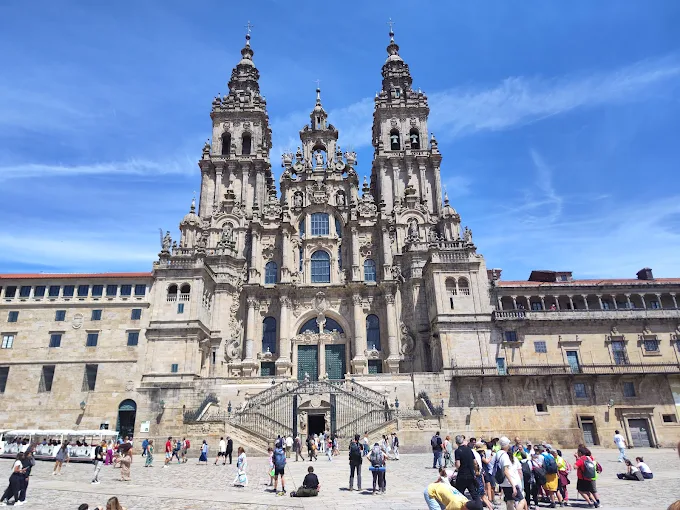
The scent of frankincense hangs heavy in the air—a thick, resinous cloud that has drifted through the nave of the Santiago de Compostela Cathedral since the 12th century. You stand in the Plaza del Obradoiro, 55 meters below the twin towers of the Baroque facade, watching the granite glow amber as the Galician sun dips behind the horizon. The sound of the botafumeiro swinging echoes faintly; the murmur of pilgrims embracing at the endpoint of their journey mixes with the tolling of the bells. This is the terminus of the Camino de Santiago, a 780-kilometer path walked by over 300,000 people annually, culminating at the tomb of Saint James the Great. You touch the cold stone of the Portico de la Gloria, carved by Master Mateo in 1188, feeling the wear of millions of hands tracing the columns. In 2026, as spiritual tourism surges globally, the Santiago de Compostela Cathedral remains a sanctuary of authentic devotion—a place where architecture serves faith, demanding you slow down to honor the centuries of footsteps that paved the way.
Why Santiago de Compostela Cathedral Embodies Spiritual Architecture
The Santiago de Compostela Cathedral represents the ultimate destination of medieval Christendom, solving the critical need for a monumental shrine to house the relics of Saint James. Construction began in 1075 under Bishop Diego Peláez and King Alfonso VI, utilizing Romanesque architecture to create a fortress of faith capable of withstanding both time and invasion. The engineering is robust: walls measuring up to 2 meters thick, constructed from local granite, support a barrel-vaulted nave that spans 97 meters in length. The structure was designed to accommodate massive flows of pilgrims, with wide aisles and ambulatories allowing circulation around the high altar without disrupting the liturgy.
The facade you see today, the Obradoiro, was added between 1738 and 1750 by Fernando de Casas Novoa to protect the original Romanesque entrance from weathering. This Baroque shell rises 74 meters high, framing the 12th-century Portico de la Gloria within. The integration of styles—Romanesque structure, Gothic cloisters, Baroque exterior—makes the Santiago de Compostela Cathedral a living timeline of architectural evolution. The crypt beneath the high altar houses the relics discovered in 1879, confirmed by Pope Leo XIII in 1884. This layering of history and faith makes it not merely a church but a physical document of European spirituality, where every stone tells a story of penance, miracle, and arrival.
The Best Time to Experience Santiago de Compostela Cathedral
For the optimal Santiago de Compostela Cathedral visit, target May 15–June 20 or September 10–October 25, when temperatures range between 14–22°C (57–72°F) and the rainfall is moderate. The Cathedral opens at 7:00 AM for mass and 9:00 AM for tourists; arrive at 8:30 AM to enter with the first tourist group before the midday rush. Sunset in the Plaza del Obradoiro—specifically 8:00–9:30 PM in summer—offers dramatic lighting on the granite facade, though the square remains busy until late. Spring coincides with Easter, causing accommodation prices to increase 50–70%; book lodging four months in advance if visiting during Holy Week.
Avoid July 15–August 25 unless you tolerate crowds and rain; this is peak pilgrimage season, with daily arrivals exceeding 2,000 walkers. The narrow streets become congested, and accommodation prices surge. Winter months (December–February) bring cold weather (8–14°C / 46–57°F) and heavy rain, but fewer tourists allow for contemplative exploration. The Holy Door opens only during Jubilee years (when July 25 falls on a Sunday); verify current status at www.catedraldesantiago.es or contact the pilgrim office at info@catedraldesantiago.es (+34 981 583 548). Weekday mornings typically see the lowest visitor density, allowing for clearer photography of the Portico without obstruction from crowds.
Approximate Budget for a 7-Day Trip (2026)
Galicia offers excellent value for cultural travelers, with costs generally 20–30% lower than Madrid or Barcelona. The following budget assumes mid-range comfort with a focus on local experiences, based on 2026 pricing with approximately 3.5% inflation from 2025 figures. Estimates include stays in the historic center for easy access to the Santiago de Compostela Cathedral.
- Accommodation: €70–€130 per night for a double room in a pensión or boutique hotel in the Old Town; luxury paradores with square views command €180–€350 per night
- Food: €40–€60 per day—breakfast €5–€8 (café con leche and filloas), lunch €15–€25 (menú del día including pulpo a feira, salad, and Albariño wine), dinner €20–€30 (tapas selection including empanada and rexo)
- Transportation: Train from Madrid Chamartín to Santiago: €60 high-speed AVE (3 hours 30 minutes); local bus within Santiago: €1.20 per ride or €3.50 daily pass; taxi from airport: €25 fixed rate; regional car rental: €40 per day
- Attractions: Santiago de Compostela Cathedral entry: €7; Museum: €6; Rooftop tour: €12; Pilgrim Office: free; guided city tour: €15
- Miscellaneous: Scallop shell souvenirs from €5; local Albariño wine €8–€20 per bottle; queimada liqueur €12; artisan jewelry €25–€60; compostela certificate: free
Total estimated cost for 7 days: €900–€1,350 per person (based on double occupancy; solo travelers should add 35–45% for single supplements)
7 Essential Santiago de Compostela Cathedral Experiences
- Embrace the Saint at the Altar: Enter the nave and queue to hug the statue of Saint James behind the high altar. The tradition dates back centuries; pilgrims place their hands on the saint's shoulders. Visit at 10:00 AM opening time to experience the ritual before crowds obscure the view. The statue is dressed in royal robes and a silver halo. Allow 20 minutes for the queue. This is the spiritual anchor of the Santiago de Compostela Cathedral; do not rush the moment.
- View the Portico de la Gloria: Examine the Romanesque masterpiece carved by Master Mateo in 1188. The tympanum depicts Christ in Majesty surrounded by the 24 elders. Visit between 2:00–4:00 PM when lighting accentuates the stone details. Restoration work preserved the original polychrome traces. Audio guides explain the biblical iconography. This collection defines the pinnacle of Romanesque sculpture.
- Visit the Crypt of St. James: Descend beneath the high altar to the vault containing the relics. The stone sarcophagus is visible through a metal grate. Visit at 11:30 AM when the guide explains the 1879 discovery. The space is small but rich in history. Audio guides available in six languages for €3. Allow 15 minutes to appreciate the details. This is the physical proof of the pilgrimage's purpose.
- Walk the Cloisters: Stroll through the Gothic and Renaissance cloisters adjacent to the nave. The stone arches frame a peaceful garden courtyard. Visit in late afternoon when the sun softens the granite colors. The cloisters house the Cathedral Museum. Entry is included with the ticket. This provides a physical sense of the monastic life. The acoustics are serene; speak softly.
- Watch the Botafumeiro: Witness the giant incense burner swinging from the transept crossing. It measures 1.6 meters high and weighs 80 kilograms. Visit on specific religious feast days or by special request (€450). The smoke fills the cathedral, creating a mystical atmosphere. It demonstrates the liturgical grandeur of the space. Verify schedule at the tourist office.
- Climb the Rooftops: Ascend to the roof for panoramic views over the Old Town. The walkway offers close-up views of the towers and domes. Visit at 5:00 PM when the light is best. The tour lasts 45 minutes and requires guided access. Tickets cost €12. It reveals the architectural complexity hidden from below. This shows the engineering of the Baroque facade.
- Attend the Pilgrim Mass: Sit in the nave during the 12:00 PM daily mass. The liturgy includes a mention of the day's arriving pilgrims. Visit at 11:45 AM to secure a seat. The atmosphere is solemn and international. It is free to attend. This reveals the living function of the cathedral. Listen for the languages of the pilgrims.
3 Hidden Gems Most Travelers Miss
- Monastery of San Martín Pinario: Located 200 meters northeast at Plaza de la Inmaculada, this 16th-century Benedictine monastery features a stunning church. Entry: €6; open 10:00 AM–6:00 PM. It is often overlooked as visitors focus on the Cathedral. The altarpiece is one of the largest in Spain. Contact: +34 981 583 548. Visit early morning for photography without crowds. The museum houses religious art.
- Galician Center of Contemporary Art (CGAC): A 5-minute walk south from the square at Valle-Inclán, this modern building contrasts with the old stone. Entry is free; open 11:00 AM–8:00 PM. It is often overlooked by tourists rushing to the Cathedral. The architecture by Álvaro Siza is award-winning. Contact: +34 981 546 619. Visit mid-morning when light illuminates the galleries. The exhibitions feature Galician artists.
- Church of Santa María Salomé: Located 300 meters west at Rúa do Vilar, this 12th-century church is dedicated to the saint's mother. Entry: €3; open 10:00 AM–6:00 PM. It is often overlooked by tourists rushing to the Plaza. The Romanesque portal is intricately carved. Contact: +34 981 583 548. Visit late afternoon when the light is soft. The perspective allows you to see the Cathedral in the distance.
Cultural & Practical Tips
- Respect the sanctuary: The Santiago de Compostela Cathedral is an active place of worship. Do not enter during mass if you are just sightseeing. Shoulders and knees must be covered. Fines for inappropriate dress can reach €50. Security monitors the entrance. Keep the site clean; use provided bins.
- Master these phrases: "Buen Camino" (BWEHN Kah-MEE-noh) to greet pilgrims; "Por favor" (por fah-BOR) for please; "¿Cuánto cuesta?" (KWAN-toh KWES-tah) to ask price; "La cuenta, por favor" (lah KWEN-tah) to request the bill.
- Photography guidelines: Flash photography is prohibited inside to protect artwork. Tripods require special permission from the administration (+34 981 583 548). Mobile phones must be silenced. Respect "no fotos" signs during religious services.
- Hydration strategy: Galicia's climate is humid; carry a refillable bottle. Public fountains (fuentes) are available in the plazas. The water is potable and sourced from mountain springs. You'll save €2–€3 daily and reduce plastic waste. Purchase water from kiosks if fountains are unavailable.
- Footwear selection: The ground consists of cobblestones and granite steps. Wear sturdy walking shoes with good grip. The stone can be slippery when wet (common in Galicia). Avoid high heels. Comfortable walking shoes essential for exploring the Old Town. The cobblestones can be uneven.
- Weather considerations: The region is known for rain; carry a compact umbrella even in summer. Winter evenings can be chilly due to humidity; bring a waterproof jacket. The stone surfaces become slick when wet. Dress in layers.
- Security awareness: While the area is safe, pickpockets operate near crowded pilgrim areas. Keep bags zipped and valuables secure. Do not leave phones on café tables. Allow an extra 15 minutes for security processing during peak festival seasons. Report suspicious activity to local police.
Conclusion: Travel with Reverence, Not Just Reverie
The Santiago de Compostela Cathedral demands more than casual observation—it asks for contemplation of the layers of history embedded in every granite block, every relic, every arch carved by hands long turned to dust. When you walk this nave in 2026, you're not merely touring a monument; you're walking through a fragile ecosystem of memory where medieval devotion, Baroque artistry, and modern pilgrimage intersect in delicate balance.
Choose to engage deeply: hire a local guide from the Old Town rather than a large tour company; purchase tickets directly to support preservation efforts; respect the silence of the sanctuary that has hosted millions of seekers. The Santiago de Compostela Cathedral survives not as a museum exhibit but as a living spiritual center—and its preservation depends on visitors who recognize the difference between appreciation and consumption.
Slow down. Sit in the Plaza del Obradoiro after the tour buses depart. Listen to the bells ringing through the Galician mist. Watch the sunset paint the granite in shades of gold and grey. The Cathedral rewards those who approach it not as a checklist item but as a conversation across time—a dialogue between ancient faith and modern wonder that continues, like the Camino itself, in perpetual motion.