
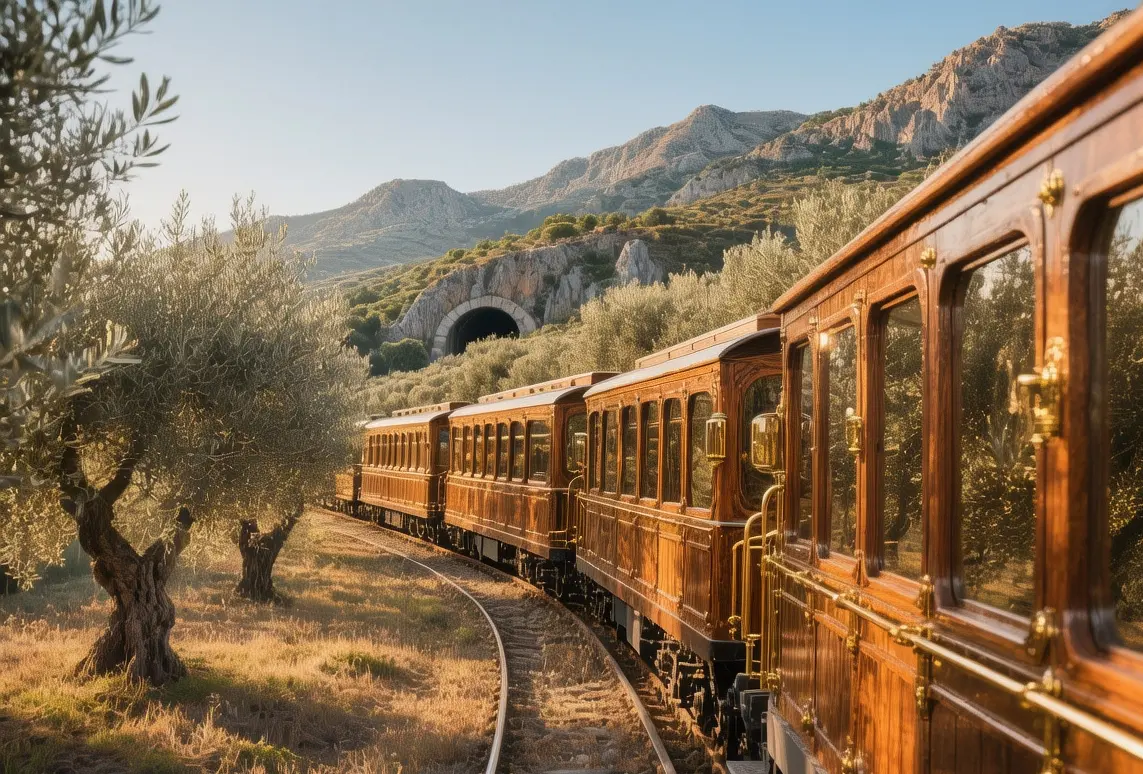
Sóller Vintage Train Wooden Carriages Meet Mountain Tunnels
The whistle blows—a sharp, nostalgic cry that echoes through the valley, signaling the departure of the Sóller Vintage Train from Palma's Estació del Nord. You step onto the polished wooden platform of Carriage 14, where the scent of varnished wood and old leather fills the air, transporting you back to 1912. The engine hums to life, electric now but retaining the soul of steam, as the landscape shifts from urban sprawl to the rugged beauty of the Serra de Tramuntana. This is not merely a commute but a journey through time, traversing 27 kilometers of track that pierce the mountain range through 13 dark tunnels. You feel the gentle sway of the carriage as it climbs the 3% gradient; the light flickers as you enter the darkness of Tunnel 1, emerging moments later into the blinding sun of the orange groves. In 2026, as high-speed rail prioritizes efficiency over experience, the Sóller Vintage Train remains a sanctuary of slow travel—a place where the rhythm of the wheels dictates the pace, demanding you surrender to the journey rather than rushing to the destination.
Why Sóller Vintage Train Embodies Engineering Heritage
The Sóller Vintage Train represents a masterpiece of early 20th-century engineering, solving the critical need to connect the isolated valley of Sóller with the capital, Palma. Before its inauguration on April 14, 1912, the town was accessible only by a treacherous mountain pass or by sea, hindering the export of its famous oranges and lemons. The solution was a railway that defied the geography: 27 kilometers of track climbing 140 meters in elevation, requiring the excavation of 13 tunnels through the limestone heart of the Serra de Tramuntana. The engineering challenge was immense: gradients of up to 3% required powerful locomotives, while the narrow curves demanded specialized bogies that remain in use today.
The rolling stock is equally significant: the train retains its original wooden carriages, built from mahogany and teak, with brass fittings and hand-cranked windows. These carriages, some over 110 years old, are maintained by a dedicated team of craftsmen who preserve the joinery and upholstery using traditional techniques. The line was electrified in 1929, but the aesthetic remains unchanged, creating a living museum that operates daily. This integration of industrial heritage, agricultural necessity, and tourism makes the Sóller Vintage Train not merely a transport link but a cultural artifact. The density of historical infrastructure per kilometer is unmatched in the Balearics, with every tunnel and bridge telling a story of the struggle to tame the mountain. This concentration of heritage makes it a pilgrimage site for railway enthusiasts, where the evolution of transport is traced through the very wood that frames the view.
The Best Time to Experience Sóller Vintage Train
For the optimal Sóller Vintage Train experience, target April 15–June 10 or September 15–October 25, when temperatures range between 18–26°C (64–79°F) and the orange blossoms or harvest provide a fragrant backdrop. The train departs Palma at 10:00 AM and 12:00 PM daily; arrive 30 minutes early to secure a seat on the right-hand side for the best views of the mountains. The return journey from Sóller leaves at 12:45 PM and 4:30 PM. Spring coincides with the orange blossom season in March and April, causing demand to surge 50%; book tickets two months in advance if visiting during this period.
Avoid July 15–August 25 unless you tolerate extreme heat and crowds; temperatures regularly exceed 32°C (90°F), and the carriages can feel warm despite the windows being open. The train reaches full capacity, and queues at Palma station can exceed 45 minutes. Winter months (December–February) bring mild weather (12–18°C / 54–64°F) but shorter daylight hours, limiting the visibility of the landscape. Some services reduce frequency in low season; verify current schedules at www.trendesoller.com or contact the station office at info@trendesoller.com (+34 971 752 051). Weekday mornings typically see the lowest visitor density, allowing for clearer photography of the carriages without obstruction from tour groups.
Approximate Budget for a 7-Day Trip (2026)
Mallorca offers a range of options, though the Sóller region commands premium prices due to its popularity. The following budget assumes mid-range comfort with a focus on heritage and nature, based on 2026 pricing with approximately 3.5% inflation from 2025 figures. Estimates include stays in Sóller or Port de Sóller for easy access to the Sóller Vintage Train station.
- Accommodation: €120–€250 per night for a double room in an agroturismo or boutique hotel in Sóller; luxury fincas command €400–€800 per night
- Food: €50–€80 per day—breakfast €8–€12 (café con leche and ensaïmada), lunch €20–€35 (restaurant meal including arròs brut and salad), dinner €30–€50 (seafood paella and local wine)
- Transportation: Flight to Palma de Mallorca Airport: €100–€250 round-trip; Sóller Vintage Train ticket: €25 one-way / €45 round-trip; Tram to Port: €8 round-trip; rental car: €50 per day
- Attractions: Train Museum: €5; Botanical Garden: €7; Church of Sant Bartomeu: free; Guided heritage tour: €30; Boat trip from Port: €40
- Miscellaneous: Orange products from €10; local wine €10–€25 per bottle; souvenirs €15; artisan ceramics €40–€100; map guide €15
Total estimated cost for 7 days: €1,500–€2,500 per person (based on double occupancy; solo travelers should add 35–45% for single supplements)
7 Essential Sóller Vintage Train Experiences
- Ride the Wooden Carriages: Board the historic train at Palma Estació del Nord. Sit in the original wooden seats with brass handles. Visit at 10:00 AM departure to experience the full journey. The ride takes 1 hour. Allow time to explore the station before departure. This is the iconic Sóller Vintage Train experience; do not miss the tunnel passages.
- Photograph Tunnel 1: Capture the moment the train enters the first tunnel. The contrast of light and dark is dramatic. Visit when the sun is high for best interior shots. The tunnel is 1,000 meters long. It demonstrates the engineering feat of the line.
- Visit the Train Museum: Explore the small museum inside Sóller station. The exhibits include tickets, uniforms, and tools from 1912. Visit at 2:00 PM when the crowds thin. Entry costs €5. It provides context for the railway's history.
- Walk to Port de Sóller: Take the vintage tram from the train station to the port. The journey takes 20 minutes through orange groves. Visit at 4:00 PM for the return trip. Tickets cost €8 round-trip. It adds a coastal dimension to the trip.
- Explore the Orange Groves: Walk the paths surrounding the station. The scent of blossom is intense in spring. Visit at 11:00 AM when the light filters through the leaves. The groves are the reason the train was built. It reveals the agricultural heritage.
- Dine at Station Café: Eat at the café inside Palma station before departure. The Art Nouveau architecture is stunning. Visit at 9:00 AM for breakfast. The pastries are traditional. It sets the mood for the journey.
- Watch the Departure: Stand on the platform as the train pulls away. The sound of the whistle is nostalgic. Visit at 12:00 PM for the second departure. The steam effect (from ventilation) is visible. It creates a cinematic moment.
3 Hidden Gems Most Travelers Miss
- The First Class Carriage: Located at the front of the train, this carriage features plush velvet seats and original lamps. Entry: Included with First Class ticket (€50); open departure times. It is often overlooked as visitors buy standard tickets. The atmosphere is more intimate. Contact: +34 971 752 051. Book in advance for special occasions. The perspective allows you to see the driver's cabin.
- Sóller Station Garden: A small courtyard behind the station building features tropical plants and a fountain. Entry is free; open daylight hours. It is often overlooked by tourists rushing to the town. The shade is welcome in summer. Contact: N/A. Visit mid-morning when light illuminates the tiles. The perspective allows you to see the station architecture from behind.
- Tunnel 13 Viewpoint: Located near the end of the line, this spot offers a view of the final tunnel entrance. Entry is free; accessible via short walk from station. It is often overlooked as visitors stay on the train. The engineering is visible. Contact: N/A. Visit late afternoon when the light is soft. The perspective allows you to see the mountain penetration.
Cultural & Practical Tips
- Booking strategy: The Sóller Vintage Train sells out frequently in summer. Book tickets online at least 2 weeks in advance. Walk-up tickets are subject to availability. Prices increase during peak season. Verify availability at www.trendesoller.com.
- Master these phrases: "Buenos días" (BWEH-nos DEE-as) for good morning; "Por favor" (por fah-BOR) for please; "¿Cuánto cuesta?" (KWAN-toh KWES-tah) to ask price; "La cuenta, por favor" (lah KWEN-tah) to request the bill.
- Photography guidelines: Flash photography is permitted inside carriages but be mindful of other passengers. Tripods are difficult to use due to space. Respect privacy when photographing locals. Early morning offers the best light without crowds. The golden hour lasts approximately 30 minutes.
- Seating choice: For the best views from Palma to Sóller, sit on the left side of the train. The mountain scenery is more dramatic on this side. From Sóller to Palma, sit on the right. This maximizes the visual experience.
- Motion sickness: The train winds through 13 tunnels and many curves. If prone to motion sickness, take medication beforehand. The journey takes 1 hour. Fresh air from open windows helps. Carry water.
- Weather considerations: The train is not fully air-conditioned; windows open for ventilation. Summer temperatures inside can exceed 30°C (86°F). Bring a fan. Winter temperatures are mild; bring a light jacket. Rain is rare but possible in November; the tracks can be slick.
- Security awareness: While the area is safe, keep valuables secure on the train. Do not leave bags unattended on platforms. Allow an extra 15 minutes for boarding procedures. Report suspicious activity to station staff.
Conclusion: Travel with Reverence, Not Just Reverie
The Sóller Vintage Train demands more than casual transit—it asks for contemplation of the delicate balance between industrial heritage and natural beauty. When you ride these carriages in 2026, you're not merely traveling between towns; you're participating in a fragile ecosystem where wooden joinery, mountain tunnels, and sustainable tourism intersect in delicate balance.
Choose to engage deeply: respect the historic carriages that require careful maintenance, support the local economy that depends on the railway, and understand that this line is a living museum, not just a transport link. The Sóller Vintage Train survives not as a theme park ride but as a functional heritage asset—and its preservation depends on visitors who recognize the difference between appreciation and consumption.
Slow down. Listen to the rhythm of the wheels after the journey ends. Watch the light shift through the tunnel mouths. The train rewards those who approach it not as a checklist item but as a conversation between past and present—a dialogue between the engineers of 1912 and modern travelers that continues, like the tracks, in perpetual motion.