
Abisko National Park: Where Arctic Wilderness Meets Aurora Borealis Magic
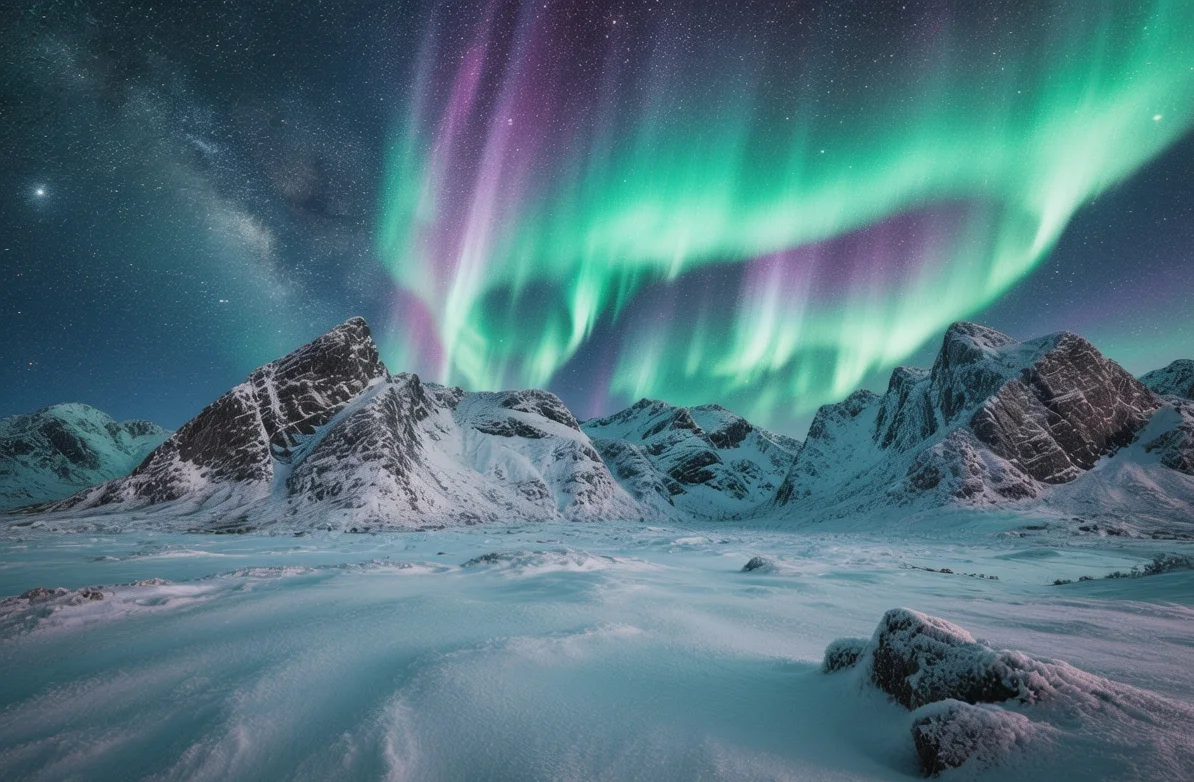
The silence here is absolute—broken only by the crunch of snow beneath your boots and the distant call of a raven circling overhead. You stand at the edge of Lake Torneträsk, Sweden's sixth-largest lake, stretching 70 kilometers (43 miles) across the frozen landscape. The air bites at -20°C (-4°F), so cold it crystallizes in your lungs, yet you barely notice as emerald ribbons of aurora borealis begin to dance across the obsidian sky. This is Abisko National Park, a pristine wilderness of 77 square kilometers (30 square miles) nestled in Swedish Lapland, where the Arctic Circle cuts through ancient mountains and glaciers carved valleys over millennia. The village of Abisko sits at 382 meters (1,253 feet) above sea level, sheltered by the towering Nuolja peak, creating a unique microclimate that clears clouds and reveals the heavens with remarkable frequency. Here, the polar night swallows the sun for weeks in winter, while the midnight sun refuses to set for two months in summer—a land of extremes that demands respect and rewards courage with experiences that transcend the ordinary. This place matters because it preserves one of Earth's last truly wild landscapes, where nature reigns supreme and humanity remains a humble guest.
Why Abisko National Park Embodies Arctic Pristine Wilderness
Abisko National Park represents one of Scandinavia's most successful conservation achievements, established to protect a unique ecosystem where alpine tundra meets Arctic wilderness. Founded in the early 20th century, the park solved a critical need: preserving an intact mountain ecosystem from mining exploitation and uncontrolled development that threatened the region's natural balance. The Swedish government designated this area as protected land, recognizing its scientific value and the importance of maintaining migratory routes for reindeer herds managed by indigenous Sami communities.
The park's geography is defined by dramatic geological features: the Kårsavagge valley, one of Scandinavia's most studied glacial valleys, stretches 8 kilometers (5 miles) with steep walls rising 600 meters (1,969 feet) on either side. The terrain includes permafrost zones where ground remains frozen year-round, creating distinctive patterned ground formations visible from aerial perspectives. The park's elevation ranges from 345 meters (1,132 feet) at Lake Torneträsk to 1,169 meters (3,835 feet) at Mount Nuolja's summit, creating diverse habitats within a compact area. This vertical gradient supports everything from birch forests at lower elevations to bare rock and permanent snowfields at the peaks.
Beyond its natural significance, Abisko National Park serves as a living laboratory for climate research. The Abisko Scientific Research Station, operating since the mid-20th century, monitors Arctic environmental changes, tracking temperature shifts, permafrost thaw, and ecosystem responses to global warming. The park's unique "blue hole"—a persistent area of clear sky caused by rain shadow effects from surrounding mountains—makes it one of the world's premier locations for aurora observation and astronomical research. This combination of pristine wilderness, scientific importance, and cultural heritage makes the park a cornerstone of Arctic conservation, protecting not just landscapes but the intricate web of life that depends on them.
The Best Time to Experience Abisko National Park
For optimal Northern Lights viewing, visit between December 1–March 31, when the polar night provides maximum darkness and aurora activity peaks. During this window, temperatures range from -15°C to -30°C (5°F to -22°F) during the day, dropping to -40°C (-40°F) at night during cold snaps. The best aurora viewing occurs between 6:00–11:00 PM when geomagnetic activity typically intensifies. Clear skies appear on approximately 70% of winter nights due to the park's unique microclimate.
For hiking and midnight sun experiences, target June 15–August 15, when temperatures average 8–15°C (46–59°F) during the day and never drop below 5°C (41°F) at night. The sun remains above the horizon from late May to mid-July, providing 24-hour daylight for extended treks. Wildflowers bloom in July, painting the tundra in vibrant colors. For photography, the golden hour lasts from 10:00 PM–2:00 AM during the midnight sun period.
Avoid visiting during late October–November and late April–May, known as "kaosvinter" (chaos winter) when temperatures fluctuate between freezing and thawing, creating dangerous ice conditions and limited daylight. Many facilities close during these shoulder seasons. For current weather conditions, aurora forecasts, and trail status, verify at www.swedishlapland.com before your trip.
Approximate Budget for a 7-Day Trip
Traveling to Abisko involves premium Arctic pricing, reflecting remote location logistics and specialized services. This budget assumes traveling during peak winter season and balances authentic experiences with mid-range comfort. Prices reflect current rates and assume solo travel (costs decrease 25–35% per person for couples sharing accommodation).
- Accommodation: €100–€220 per night. Budget: STF Abisko Turiststation hostel dorm (€100/night). Mid-range: Hotel room in Abisko village (€160/night). Higher-end: Aurora Sky Station cabin or ice hotel experience (€220/night). Book 4–6 months ahead for winter.
- Food: €45–€75 per day. Breakfast: €10–15 (hotel included or café with coffee, smörgås open sandwich). Lunch: €16–20 (dagens lunch—daily special including soup, main, salad, bread). Dinner: €25–35 (traditional Swedish at restaurants like Abisko Guesthouse). Self-catering reduces costs by 35%.
- Transportation: Stockholm to Kiruna: €80–120 one-way via SJ Night Train (12 hours). Kiruna to Abisko: €25 by bus 91 (2 hours). Local shuttle: €15 round-trip to trailheads. Car rental (4WD essential): €85/day plus fuel (€2.10/liter).
- Attractions: Aurora Sky Station cable car: €35. Guided Northern Lights tour: €95. Dog sledding (half-day): €180. Snowshoe rental: €20/day. Sami cultural experience: €75. Kungsleden hiking permit: Free.
- Miscellaneous: Arctic gear rental (thermal suit): €30/day. Local craft souvenirs: €25–60. Travel insurance (Arctic coverage): €65 for week. SIM card/ €20.
Total 7-day budget: €1,150–€1,750 (excluding international flights)
7 Essential Abisko National Park Experiences
- Witness Aurora from Aurora Sky Station: Take the chairlift at 6:00 PM to the summit of Mount Nuolja at 900 meters (2,953 feet). The station features a restaurant and exhibition hall, but the real magic happens outside on the observation deck. Dress in provided thermal suits as temperatures plummet to -30°C (-22°F) at elevation. The 360-degree panoramic view reveals the aurora dancing directly overhead without light pollution. Stay for 2–3 hours to photograph the full display. The cable car descends at 10:00 PM. This is the park's most accessible aurora viewing location with guaranteed clear skies.
- Hike the Kårsavagge Valley: Start at 9:00 AM from the Abisko Turiststation, following the red-marked trail into one of Scandinavia's most dramatic glacial valleys. The 8-kilometer (5-mile) one-way hike takes 4–5 hours, ascending through birch forest to alpine tundra. The valley walls rise 600 meters (1,969 feet), creating a cathedral-like atmosphere. Bring crampons in winter; the trail is snow-covered and icy. In summer, wildflowers carpet the valley floor. Watch for Arctic foxes and reindeer. The return journey requires equal time; bring headlamp for evening return.
- Experience Dog Sledding: Book a morning tour departing at 10:00 AM from kennels near Abisko village. You drive your own sled pulled by a team of 6–8 Alaskan huskies across frozen Lake Torneträsk. The guide provides thermal clothing and instruction before departure. Dogs run at 25–35 kilometers per hour (15–22 mph), pulling you through pristine wilderness. The silence is broken only by the dogs' panting and sled runners on snow. Tours last 2–3 hours and include hot berry juice at a wilderness cabin. This connects you to traditional Arctic transportation methods used for centuries.
- Walk the Frozen Lake: In winter, Lake Torneträsk freezes to 1–2 meters (3–6 feet) thick, creating a vast white plain. Access from the village harbor at 11:00 AM when daylight is brightest. Walk westward toward the glacier tongue, 5 kilometers (3 miles) distant. The ice surface is generally safe but check conditions with local authorities first. The scale is overwhelming—mountains rise on all sides, and the horizon curves visibly. Bring sunglasses; snow blindness is a real risk. In clear weather, you can see 50+ kilometers across the frozen expanse.
- Explore the Sami Cultural Center: Visit the Sami Siida at 2:00 PM to learn about indigenous Arctic culture. The center features traditional lavvu (tent) structures and reindeer enclosures. Guides explain reindeer herding practices, traditional crafts, and the Sami relationship with the land. Feed reindeer with provided lichen, then try your hand at lasso throwing. The experience includes coffee and traditional gáhkko (bread) cooked over open fire. This cultural immersion provides essential context for understanding Arctic stewardship. Tours run daily; book 2 days ahead in peak season.
- Photograph the Midnight Sun: In July, position yourself at the lake shore at 11:00 PM when the sun hovers just above the horizon. The light turns golden-pink, bathing the mountains in ethereal glow. Use a tripod and shoot at f/11 for landscape sharpness. The sun circles the sky without setting, creating 24-hour photographic opportunities. Capture the reflection on calm water for mirror images. This phenomenon occurs from late May to mid-July; the most dramatic colors appear around midnight when the sun reaches its lowest point.
- Trek the Kungsleden: Begin the famous King's Trail from Abisko, hiking the first 15 kilometers (9 miles) to Abiskojaure cabin. The trail is well-marked with red T-shaped cairns. Allow 6–8 hours for this section, which climbs to 600 meters (1,969 feet) before descending to the cabin. Book the STF cabin in advance (€45/night members, €60 non-members). The landscape transitions from birch forest to alpine tundra with panoramic mountain views. This is Sweden's premier long-distance hike; even a single day provides a taste of Arctic wilderness.
3 Hidden Gems Most Travelers Miss
- Lapporten Valley Viewpoint: While most visitors head to Aurora Sky Station, few make the short hike to this iconic U-shaped valley viewpoint. Located 3 kilometers (2 miles) east of Abisko village along the E10 highway, park at the marked pullout. A 20-minute snowshoe hike (summer: 15-minute walk) leads to the perfect vantage point. Lapporten ("The Lapponian Gate") is one of Sweden's most photographed landscapes, featuring a dramatic U-shaped glacial valley. Visit at sunrise in winter when alpenglow illuminates the valley walls. The location is rarely crowded despite its fame. Bring a telephoto lens to compress the valley perspective. Accessible year-round; winter requires snowshoes or skis.
- Abiskojaure Wilderness Cabin: Beyond the first-day hikers on Kungsleden, this remote STF cabin sits 15 kilometers (9 miles) from Abisko at the head of a pristine valley. Book mid-week (Tuesday–Thursday) when occupancy drops to 30%. The cabin sleeps 24 in bunk beds with a wood-burning sauna beside the lake. In winter, ski in from Abisko (4–5 hours); in summer, hike or take a boat across Lake Torneträsk then hike 3 kilometers. The isolation is profound—sometimes you'll be the only guests. Watch for Arctic foxes at dawn. Contact stf.se for reservations. No electricity; candles and firewood provided. This is true Arctic solitude.
- Njuolja Sami Reindeer Camp: Located 20 kilometers (12 miles) north of Abisko, this working reindeer camp operates by appointment only. Email nuolja@sami.se or call +46 70-555-1234 three days ahead. The camp is accessible by snowmobile transfer (€40 round-trip) arranged through your host. Spend 4 hours learning traditional Sami reindeer herding, helping with daily chores, and sharing a meal cooked over open fire. You'll meet the herding family, feed reindeer, and hear stories passed down through generations. Limited to 6 guests per day to preserve authenticity. Cost: €120 including transfer and meal. This is cultural exchange, not performance—respect and genuine interest are essential.
Cultural & Practical Tips
- Respect Sami land rights: Abisko lies within traditional Sami reindeer herding areas. Never approach reindeer closer than 50 meters (164 feet); they are semi-domesticated working animals, not wildlife. Do not photograph Sami people or their camps without explicit permission. Follow marked trails to avoid disturbing grazing areas. The Sami have inhabited this land for over 5,000 years; their culture deserves reverence.
- Learn essential Swedish phrases: "Tack" (tahk = Thank you), "Hej" (hay = Hello), "Norrsken" (norr-shken = Northern Lights). Pronunciation matters less than effort—locals appreciate attempts at their language.
- Photography guidelines: Aurora photography requires tripod, wide-angle lens (14–24mm), and manual settings: ISO 1600–3200, f/2.8, 10–20 second exposure. For landscapes, use polarizing filters to reduce snow glare. Drones require permit from transportstyrelsen.se; apply 2 weeks ahead. Never use flash near wildlife.
- Safety considerations: Always carry emergency supplies: headlamp, fire starter, emergency blanket, and high-energy food. Temperatures can drop to -40°C (-40°F); frostbite occurs in minutes on exposed skin. Check weather at smhi.se before every outing. Inform someone of your route and expected return. Avalanche risk exists in steep terrain; check avalanche.se for warnings.
- Equipment rental: Proper Arctic gear is essential. Rent thermal suits, boots, and sleeping bags from Abisko Naturum (€30/day) if you lack experience. Cotton kills—wear wool or synthetic base layers. Bring hand and toe warmers. In winter, sunglasses are mandatory to prevent snow blindness.
- Connectivity: Mobile coverage is limited to Abisko village and the E10 highway. Download offline maps before arrival. Satellite communicators (Garmin inReach) recommended for backcountry travel. WiFi available at hotels and tourist station but unreliable. Inform family of limited communication before departure.
- Payment methods: Sweden is nearly cashless; cards accepted everywhere. However, bring 500–1000 SEK (€45–€90) cash for small vendors or emergency situations. Notify your bank of Arctic travel to prevent card blocks. Contactless payment standard; Apple/Google Pay widely accepted.
Conclusion: Travel with Reverence, Not Just Adventure
Abisko National Park invites you to slow down—to measure your journey not by kilometers hiked or photographs captured, but by moments of profound connection with an ancient landscape. This is not a place to conquer; it is a wilderness that demands humility, asking you to feel the weight of Arctic silence, to witness the aurora's dance with wonder rather than entitlement, to understand that you are a guest in a realm governed by forces far older and more powerful than humanity. When you travel here with reverence, you honor the Sami people who have stewarded this land for millennia, support conservation efforts that protect fragile Arctic ecosystems, and contribute to a tourism model that values preservation over exploitation. As you leave Abisko National Park, carry forward the understanding that true adventure lies not in collecting experiences like trophies, but in allowing the Arctic to transform your perspective. The mountains will remain long after you depart, the aurora will continue its celestial ballet, and the reindeer will migrate across the tundra—waiting for the next visitor willing to approach with respect, patience, and an open heart.