
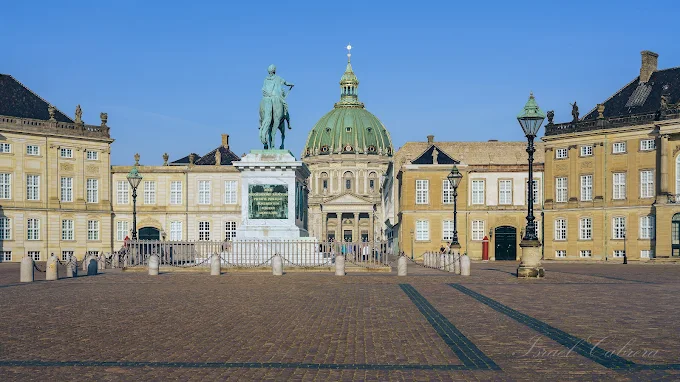
Amalienborg Palace: Where Royal Ceremony Meets Copenhagen Harbor
Early morning light filters through the mist rising from the Øresund Strait, casting a soft silver glow across the octagonal plaza where four identical rococo palaces stand in perfect symmetry—each façade painted in pale yellow with white pilasters and green copper roofs that have weathered centuries of Baltic winds. You approach the courtyard as the rhythmic crunch of boots on gravel grows louder: the Royal Life Guards, clad in bearskin hats and dark blue uniforms, march with precise 75-centimeter strides toward the palace where the Danish monarch resides. The air carries the faint scent of harbor salt mixed with freshly baked pastries from nearby cafés, while seagulls circle overhead and bicycle bells chime in the distance—Copenhagen's gentle soundtrack. This is Amalienborg Palace, not a single building but a harmonious ensemble of four palaces surrounding a 47-meter-wide octagonal square, designed by architect Nicolai Eigtved in the mid-18th century and serving as the Danish royal family's primary residence since 1794. In an era where monarchy often feels distant or ceremonial, Amalienborg matters because it remains vibrantly alive: a working palace where tradition meets daily life, where visitors can witness the changing of the guard at 11:30 AM and then stroll the same cobblestones where kings and queens have walked for over two centuries.
Why Amalienborg Palace Embodies Danish Royal Heritage
Amalienborg Palace represents far more than a royal residence—it is a masterclass in rococo architecture and a living symbol of Denmark's constitutional monarchy, where history and modernity coexist with graceful intention. The complex comprises four nearly identical palaces—Christian VII's Palace, Christian VIII's Palace, Christian IX's Palace, and Frederick VIII's Palace—arranged around an octagonal plaza measuring precisely 47 meters across, with an equestrian statue of King Frederick V at its center, cast in bronze and weighing approximately 3,500 kilograms. Designed by Nicolai Eigtved and completed in 1760, the palaces were originally built for noble families but transformed into royal residences after Christiansborg Palace burned in 1794, solving a critical need: providing secure, elegant housing for the monarchy within Copenhagen's urban fabric while maintaining public accessibility.
The architectural details reveal extraordinary craftsmanship: each palace features symmetrical façades with pilasters of Bornholm sandstone, tall sash windows with decorative keystones, and mansard roofs covered in patinated copper that has oxidized to distinctive verdigris green. Inside Christian VIII's Palace—open to the public as the Amalienborg Museum—visitors encounter opulent rococo interiors with gilded moldings, silk wall coverings, and chandeliers containing over 200 crystal prisms each. The palace complex fulfills a profound cultural function: it democratizes access to royal heritage while preserving the dignity of the monarchy. Technically, the site demonstrates remarkable conservation science: climate-controlled display cases maintain 45–55% relative humidity to protect 18th-century textiles, while LED lighting with less than 50 lux illumination prevents fading of delicate fabrics and pigments. Since opening sections to the public in the early 20th century, Amalienborg has welcomed millions of visitors, making it not merely a royal symbol but a bridge between Denmark's past and present—a place where ceremonial tradition and contemporary life intersect with quiet elegance.
The Best Time to Experience Amalienborg Palace
Timing transforms a visit to Amalienborg from observational to immersive. The optimal window arrives May 20 through June 12, when daylight extends until 10:00 PM, temperatures range between 14–20°C (57–68°F), and the courtyard remains vibrant without peak-season crowds. During this period, the Changing of the Guard ceremony at 11:30 AM unfolds under clear Scandinavian skies, with the royal band's brass instruments gleaming in soft sunlight and the guards' bearskin hats casting dramatic shadows across the cobblestones.
For atmospheric photography, September 15 through October 8 offers golden autumn light that bathes the pale-yellow façades in warm tones from 3:30–5:00 PM, while temperatures of 8–14°C (46–57°F) keep outdoor exploration comfortable. Arrive at 11:00 AM sharp to secure optimal viewing positions for the guard ceremony, positioning yourself near the palace entrance where you can observe both the marching guards and the royal standard flying above—indicating whether the monarch is in residence.
Avoid July 10–August 20 when cruise ship season brings peak tourist volumes, creating crowds that can obscure views of the ceremony and limit photography opportunities. Similarly, December 18 through January 6 sees reduced daylight (sunset around 3:30 PM) and occasional ceremony cancellations due to severe weather, though the palace's Christmas decorations provide charming atmosphere for exterior photography.
For current ceremony schedules, museum hours, and royal event updates, consult the authoritative source: www.kongehuset.dk/en. The official website of the Danish Royal House provides real-time information about palace openings, special exhibitions, and accessibility services. Copenhagen's maritime climate means weather can shift rapidly—always check the forecast before visiting, and remember that the palace museum maintains comfortable temperatures year-round, making it an ideal refuge during unpredictable Scandinavian weather.
Approximate Budget for a 7-Day Trip
Copenhagen ranks among Europe's more expensive capitals, but strategic planning enables comfortable exploration. This breakdown reflects mid-range travel with quality accommodations, authentic dining, and comprehensive sightseeing, based on current pricing in Danish Kroner (DKK) with Euro conversions (1 EUR ≈ 7.45 DKK).
Accommodation:
• Budget hostel (shared room, Indre By/Østerbro): 300–450 DKK (€40–60) per night
• Mid-range hotel (3-star, city center near Amalienborg): 1,000–1,500 DKK (€134–201) per night
• Boutique hotel (4-star, Nyhavn vicinity): 1,700–2,400 DKK (€228–322) per night
Food:
• Breakfast: 80–120 DKK (€11–16) — Danish pastry and coffee at local bakery
• Lunch: 140–200 DKK (€19–27) — smørrebrød or hot dog from street vendor
• Dinner: 250–350 DKK (€34–47) — traditional Danish meal at mid-range restaurant
• Daily food total: 470–670 DKK (€63–90)
Transportation:
• Copenhagen Card (72-hour unlimited transport + attractions): 1,099 DKK (€148)
• Single metro/bus ticket: 24 DKK (€3.20)
• Airport to city center (metro line M2): 36 DKK (€4.80)
• Bicycle rental (daily): 100–150 DKK (€13–20)
• Walking to Amalienborg from city center: Free (800 meters from Central Station)
Attractions:
• Amalienborg Palace Museum: 120 DKK (€16) adult; free under 18
• Amalienborg included in Copenhagen Card: Free with card purchase
• Changing of the Guard ceremony: Free viewing
• Frederik's Church (Marble Church): Free
• National Museum of Denmark: Free
• Nyhavn canal tour: 129 DKK (€17)
Miscellaneous:
• Souvenir postcards: 15–25 DKK (€2–3) each
• Danish design items: 300–800 DKK (€40–107)
• Coffee to go: 35–45 DKK (€5–6)
• Royal-themed guidebook: 150 DKK (€20)
Total 7-Day Budget (Mid-Range): 8,000–10,700 DKK (€1,074–1,436)
7 Essential Amalienborg Palace Experiences
- Changing of the Guard Ceremony: Arrive at the octagonal courtyard by 11:15 AM to secure optimal viewing positions near Christian VIII's Palace. The ceremony begins precisely at 11:30 AM when the Royal Life Guards march from their barracks at Rosenborg Castle, covering 1.2 kilometers through Copenhagen streets before entering Amalienborg Square. Watch as the guards—distinguished by their 45-centimeter-tall bearskin hats—execute precise military drills while the royal band plays traditional Danish marches. If the royal standard flies above the palace, the monarch is in residence and the ceremony includes additional formalities. The entire event lasts 20 minutes; remain respectful and avoid blocking pathways for palace staff.
- Amalienborg Museum Exploration: Enter Christian VIII's Palace to discover four opulent rococo salons showcasing royal life across two centuries. Begin in the Reception Hall with its gilded ceiling medallions and crystal chandeliers, then proceed to the Writing Room where monarchs penned state documents. Allow 45–60 minutes to appreciate the intricate details: silk wall coverings woven in Lyon, porcelain from the Royal Copenhagen manufactory, and portraits by court painters. Audio guides (available in eight languages for 40 DKK) provide rich historical context. Photography is permitted without flash; use natural light from the tall windows to capture the rooms' elegance.
- Rococo Architecture Study: Walk the perimeter of the octagonal plaza to appreciate the architectural harmony that defines Amalienborg. Note the symmetrical façades with their pale-yellow stucco, white Bornholm sandstone pilasters, and green copper roofs that have oxidized to distinctive verdigris. The central equestrian statue of Frederick V—cast by French sculptor Jacques-François-Joseph Saly and unveiled in 1771—serves as the plaza's focal point. Visit during late afternoon (3:30–5:00 PM) when angled sunlight creates dramatic shadows that emphasize the buildings' three-dimensional form. Bring binoculars to study the ornate window frames and sculpted keystones that reward close observation.
- Frederik's Church Visit: After exploring Amalienborg, walk 200 meters north to Frederik's Church (the Marble Church), Copenhagen's rococo masterpiece with Scandinavia's largest church dome spanning 31 meters in diameter. Enter the free-admission sanctuary to admire the white marble interior, intricate altar carvings, and panoramic city views from the dome's gallery (accessible for 30 DKK, 11:00 AM–4:00 PM weekends). The church's neoclassical design complements Amalienborg's rococo elegance, creating a harmonious architectural dialogue. Allow 30 minutes for exploration; climb the 330 steps to the dome gallery for breathtaking views of the palace complex and harbor beyond.
- Royal Standard Photography: Capture the symbolic heart of Danish monarchy by photographing the royal standard flying above Christian IX's Palace. When the flag is raised, the monarch is in residence; when lowered, the palace is unoccupied. Position yourself at the plaza's southeastern corner for optimal framing of the flag against the palace façade and sky. Use a telephoto lens (70–200mm) to isolate the flag's details: the white cross on red field with the royal coat of arms. Visit during weekday mornings (9:00–11:00 AM) when lighting is soft and crowds are minimal. Respect palace security by maintaining distance from restricted areas.
- Harbor View Walk: Extend your Amalienborg experience by strolling the waterfront promenade that connects the palace to the Little Mermaid statue. Begin at the palace's eastern side and follow the harbor path northward, passing modern architecture like the Opera House and Black Diamond library. The 1.5-kilometer walk takes 20–25 minutes at a leisurely pace and provides continuous views of Copenhagen's maritime activity. Stop at the Langelinie Pavilion for coffee with harbor views, or continue to the Little Mermaid for a complete royal-to-folklore journey. This route reveals how Amalienborg integrates with Copenhagen's evolving waterfront identity.
- Evening Golden Hour Return: Return to Amalienborg Square during the "golden hour"—the hour before sunset when light turns warm and directional. Position yourself near the central statue to frame the palace façades with the setting sun illuminating the pale-yellow stucco and copper roofs. Use a tripod for low-light shots of architectural details, and experiment with long exposures to capture the motion of clouds against the palace's static grandeur. The plaza's octagonal shape creates unique compositional opportunities; walk the perimeter to discover varied perspectives. Respect other visitors by keeping your shoot brief in crowded areas, and avoid using flash near palace windows.
3 Hidden Gems Most Travelers Miss
- The Palace Gardens' Secret Path: Behind Christian VII's Palace lies a small, walled garden accessible via a discreet gate on the palace's northern side (open to museum ticket holders, 10:00 AM–3:00 PM weekdays). This tranquil space features heritage roses, boxwood hedges trimmed in 18th-century patterns, and a marble bench where royal family members occasionally sit for private moments. The garden remains overlooked because signage is minimal and the entrance appears private, yet it offers the perfect vantage point for photographing the palace's rear façade reflected in still pond water. Visit during weekday afternoons when natural light filters through the linden trees, creating dappled patterns on the gravel paths. Allow 15–20 minutes to appreciate this intimate counterpoint to the palace's formal grandeur.
- The Royal Guard Museum: Located in the basement of the Guard House at Amalienborg's southwestern corner, this small museum showcases the history of the Royal Life Guards through uniforms, weapons, and ceremonial artifacts dating to 1658. Access via the courtyard entrance (free with palace museum ticket, open 10:00 AM–4:00 PM daily). Exhibits include original bearskin hats, ceremonial swords, and photographs of guard ceremonies across centuries. The museum remains overlooked because it lacks prominent signage and occupies a modest space, yet it provides extraordinary insight into the traditions that animate Amalienborg's daily life. Allow 20–30 minutes to explore; staff often share personal stories about guard service that enrich understanding of the ceremony you witness above.
- Frederiksgade's Architectural Alley: Walk one block east of Amalienborg along Frederiksgade to discover a quiet street lined with 18th-century townhouses that once housed royal courtiers and government officials. This 300-meter stretch features perfectly preserved rococo façades with ornate doorways, wrought-iron lanterns, and hidden courtyards visible through arched passages. Visit between 9:00–11:00 AM when morning light illuminates the sandstone details and the street remains nearly empty except for local residents. The alley remains overlooked because it lacks major attractions, yet it offers authentic context for understanding Amalienborg's historical neighborhood. Pause at number 18 to admire the original 1760 doorway with its carved royal monogram—a subtle reminder of the palace's enduring presence in Copenhagen's urban fabric.
Cultural & Practical Tips
- Ceremony Etiquette: When viewing the Changing of the Guard, maintain respectful silence during the formal portions of the ceremony. Avoid stepping into the guards' marching path or using flash photography near the royal standard. Danes value orderly observation; a simple "Undskyld" (OON-skyld, "Excuse me") suffices when navigating crowded viewing areas.
- Photography Guidelines: Photography is permitted throughout the palace courtyard and museum for personal use, but flash and tripods require staff approval. Avoid photographing palace staff or security personnel without permission. For exterior shots, the best lighting occurs during golden hour (7:30–8:30 PM summer; 3:30–4:30 PM winter). Respect the royal residence by keeping noise levels considerate near palace windows.
- Weather Preparedness: Copenhagen's maritime climate means conditions change rapidly. Even in summer, temperatures can drop 5°C (9°F) after sunset. Always carry a windproof layer. The palace museum maintains comfortable temperatures year-round, but the courtyard can feel chilly in shoulder seasons—dress in layers for outdoor ceremony viewing.
- Transportation Access: Amalienborg Palace sits at Amalienborg Slotsplads, accessible by metro to Kongens Nytorv Station (3-minute walk) or buses 1A, 2A, and 26. From Copenhagen Airport, take the metro to Kongens Nytorv (18 minutes, 36 DKK). If cycling, use the dedicated bike lanes on Bredgade; bike parking is available near the palace entrance (free with helmet lock).
- Ticket Strategy: Purchase museum tickets online via the official website to avoid entrance queues. The Copenhagen Card includes free Amalienborg entry plus unlimited public transport—calculate if your itinerary justifies the 1,099 DKK cost. Children under 18 enter free; students and seniors receive discounted admission with valid ID. Audio guides enhance understanding of the royal collections.
- Accessibility Information: The palace museum's ground floor is wheelchair-accessible via a side entrance; request assistance at the main ticket desk. Upper floors require climbing narrow rococo staircases not suitable for mobility devices. Accessible restrooms are available near the entrance. The courtyard features level cobblestones suitable for wheelchairs and strollers throughout.
- Seasonal Considerations: Amalienborg transforms subtly across seasons: spring brings blooming tulips in nearby gardens; summer offers extended museum hours and outdoor concerts; autumn features golden foliage framing the palace; winter provides atmospheric photography opportunities with occasional frost. Check the official website for special exhibitions and temporary closures, as programming shifts based on royal events and conservation needs.
Conclusion: Travel with Reverence, Not Just Checklists
Amalienborg Palace endures not because it houses dazzling regalia—though it does—but because it invites us to witness the delicate balance between tradition and modernity, ceremony and daily life. In an age of hurried tourism and digital distraction, this octagonal ensemble asks us to pause: to watch the guards' precise marches not as spectacle but as living heritage, to trace the rococo details not as decoration but as expressions of cultural values, to feel the weight of history not as burden but as connection.
Responsible travel here means more than purchasing a ticket—it means engaging with Amalienborg as a working palace worthy of respect. Support the preservation of this heritage by following photography guidelines and respecting ceremonial boundaries. Choose to learn: read the informative placards, join a guided tour, or simply sit quietly in the courtyard and observe how royal life intersects with Copenhagen's rhythm. When you witness the Changing of the Guard, remember it represents not just pageantry but continuity—a thread linking past, present, and future.
Most importantly, allow yourself to feel wonder without rushing to the next attraction. Let the palace's atmosphere settle over you. Notice how morning light transforms the pale-yellow façades. Watch how locals greet the guards with quiet familiarity. Amalienborg was created to embody dignity and accessibility—and both require time, attention, and openness. As you exit through the palace gates, carry forward not just photographs but the quiet certainty that beauty, carefully preserved and generously shared, remains one of humanity's most profound legacies. Return to the world a little more attentive, a little more curious, a little more willing to seek depth over speed in all your travels.