Egeskov Castle: Where Renaissance Grandeur Meets Danish Garden Splendor
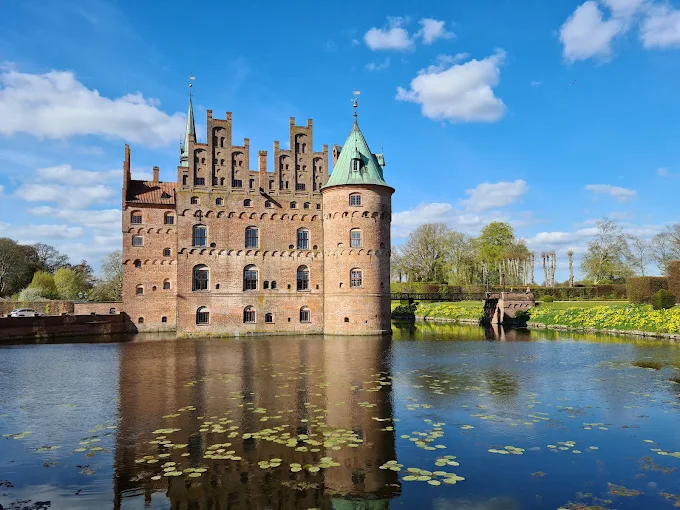
Egeskov Castle: Where Renaissance Walls Meet Forest Canopies
I stand at the moat edge just after ten in the morning. Still water holds the castle whole, red brick and pale stone mirrored perfectly. I paid 265 DKK for admission. The drive from Odense took forty minutes. I walked across the stone bridge. Carp spread just below the surface. Sunlight warms the thick walls. Built on oak piles driven into the lakebed in 1554, the building sits steady as a mountain. A guide at the entrance explained the foundations still hold firm after nearly five hundred years. I stepped inside and felt the air cool instantly. Floors creak underfoot. Portraits look down from every wall. No one rushes here. The place moves at the pace of centuries.
Why Egeskov Castle Matters
Frands Brockenhuus built Egeskov in 1554. Denmark stood in religious turmoil then. Noble families needed homes that were comfortable and secure. The double-house design gave both — two connected towers, thick walls, a wide moat, and only one narrow bridge in. It stands as Denmark's best-preserved Renaissance water castle. Descendants still live here. The estate remains a working family seat as well as a public attraction. Gardens, museums, and woodland trails spread across the grounds. Few places combine authentic residential feel with such extensive visitor facilities.
It is not a quiet museum. In summer, school groups and family visitors fill the spaces. Noise carries easily in the stone corridors. Photography is banned inside the main building. Some visitors find that frustrating. The ticket price also feels steep compared to other sites. Winter closure from November through March means you cannot see it in the quiet off-season months.
The Best Time to Experience Egeskov Castle
Late May through early September offers the fullest experience. Daytime temperatures sit between 14°C and 21°C (57°F–70°F). Formal gardens bloom fully. The treetop walk and outdoor play areas stay open. July and early August see the most visitors. Arrive before 10:30 AM to beat crowds. Book tickets online to save 20 DKK per person.
April, early May, and September balance pleasant weather and fewer people. Temperatures hover around 9°C–15°C (48°F–59°F). Spring brings blossom to the trees. Autumn turns the arboretum red and gold. October stays open but days grow shorter. The castle closes at 4:00 PM then. November through March the entire site shuts completely. Plan your visit between late March and late October only.
Approximate Budget for a 7-Day Trip
- Accommodation: 3,500 DKK – 5,600 DKK. Guesthouse or B&B near Kværndrup sits lower. Staying in Odense gives more options at 700–950 DKK per night. Staying in Faaborg combines castle visit with harbor and island trips.
- Food & Drink: 1,680 DKK – 2,800 DKK. Lunch at the on-site brasserie costs 110–185 DKK. Dinner in nearby towns runs 170–290 DKK per person. Packing a picnic saves nearly half the food budget.
- Transport: 770 DKK – 1,540 DKK. Car rental from Odense starts around 350 DKK daily plus fuel. Train to Kværndrup then walk or taxi costs about 130 DKK round trip. Local bus service runs but is infrequent.
- Attractions & Entry: 1,590 DKK – 1,855 DKK. Full castle ticket 265 DKK online or 285 DKK on the day. Return visits and extra exhibits may cost more if you spread visits across the week.
- Miscellaneous: 490 DKK – 840 DKK. Covers coffee, snacks, souvenirs, and parking.
Total estimated budget: 8,030 DKK – 12,635 DKK per person for 7 days.
One thing to watch: buying tickets at the gate costs 20 DKK more per person than online. Book ahead to save. Also, the castle restaurant charges premium rates. Bring your own lunch and eat at one of the picnic areas. It costs less and you can sit beside the moat.
Essential Egeskov Castle Experiences
- Tour the castle interiors. Walk through the great hall, family rooms, and tower chambers. Notice the furniture, tapestries, and painted ceilings. Information cards explain simply without overcrowding. Skip this if you dislike crowds — it fills fast on summer afternoons.
- Explore the vintage vehicle museum. One of Northern Europe's largest collections. Classic cars, motorcycles, and tractors span over a century. Exhibits sit in separate buildings across the estate. Allow at least an hour here.
- Walk the formal gardens. Rose beds, herb borders, and tree-lined avenues stretch toward the forest. Each section follows a different design. Look for the herb garden near the moat — scents change with the sun.
- Climb the treetop walk. A raised path winds through the canopy twenty meters above ground. It connects two forest sections. The view over the castle and lake unfolds unexpectedly. It is fully accessible but may feel exposed to those afraid of heights.
- Find your way through the hedge maze. High walls twist and turn. The center sits on a raised mound. You see the castle between branches when you find the right path. It takes twenty to forty minutes depending on luck.
- Walk the arboretum trail. Trees from across the world grow in a former woodland. Labels identify each species. The ground slopes gently. It feels quieter and wilder than the formal gardens.
Hidden Gems Most Travelers Miss
- The old ice house near the moat. Partially buried and covered in ivy. It kept food cool before refrigeration. Few visitors walk this far along the edge. It sits just past the rose garden.
- Overrated spot: the main courtyard viewpoint. Every tour group stops here. Walk five minutes to the far side of the moat. The reflection looks clearer and you avoid the crowd.
- The agricultural museum. Housed in a separate building away from the main flow. It shows how the estate worked and evolved over generations. Simple, honest, and often empty.
- The small chapel inside the castle. Tucked away on an upper floor. Plain wood paneling and soft light. It feels peaceful compared to the busier rooms. Most people walk straight past the door.
- The western woodland path. It runs parallel to the main driveway but deeper among trees. Wildflowers line the edges. It loops back to the car park without passing any exhibits.
Cultural & Practical Tips
- Book tickets online before you travel. It costs less and guarantees entry. Peak summer days sometimes sell out. You do not want to arrive and find the day is fully booked.
- No photography inside the castle. This rule applies strictly. Staff monitor rooms and will ask you to stop. Respect it so everyone can enjoy the visit without distraction.
- Wear comfortable walking shoes. The estate spreads wide. Paths cover grass, gravel, and occasional cobblestones. You will walk five kilometers or more in a full day visit.
- Do not underestimate the size. Many people plan two hours and leave rushing. Give yourself four to five hours minimum to see everything without hurrying.
- Bring water and sun protection. The gardens and treetop walk offer limited shade. The restaurant lines grow long at midday. Having your own drink saves waiting and spending.
- Last entry is one hour before closing. You will not see everything if you arrive then. Aim to be through the gates by 1:00 PM at the latest.
Essential Visitor Information
Location & Access: Egeskov Gade 22, 5772 Kværndrup, Funen. Three ways to arrive: car from Odense via Route 9 (40 minutes); train to Kværndrup then walk 2.5 km or take local bus; bus route 920 drops directly at the gate. Free parking available.
Tickets & Booking: Full access — Castle, Park, Museums, Treetop Walk — 265 DKK online, 285 DKK on day. Children 4–12: 160 DKK online, 180 DKK on day. Under 4 free. Park-only ticket available at reduced rate. Booking ahead recommended June–August.
Operating Hours: Daily 10:00 AM–5:00 PM March 28 – October 25. Extended to 6:00 PM in July and August. Closed November through March.
Visit Duration: Minimum 3 hours. 5–6 hours lets you see all exhibits and walk gardens at relaxed pace. Plan a full day with family.
Family Suitability: Excellent. Adventure play area, maze, and treetop walk suit children. Stroller access is good outdoors but limited inside the castle. Restrooms and changing facilities available.
Timing: Best season: late May or September. Best time: before 10:30 AM. Weekdays stay quieter than weekends.
Highlights: Main castle interiors, moat reflections, vintage vehicle museum, treetop walk, formal gardens and maze.
Nearby & Day Trip: Faaborg Harbor 20 km south. Odense 40 km north. Ærø Island via ferry from Svendborg. Møn White Cliffs reachable with early start.
Conclusion: Travel with Depth, Not Just Sight
Egeskov Castle shows you more than architecture. It shows you continuity. One family has lived here for centuries. Walls have stood through war, change, and quiet days alike. You do not need to know every historical fact to feel the weight of time here. Walk slowly. Look closely at the reflections. Stay until the day-trippers leave. What detail will you remember most when you cross the bridge back?
Post a Comment