Lindholm Høje: Where Ancient Viking Graves Meet Nordic Hillside Silence
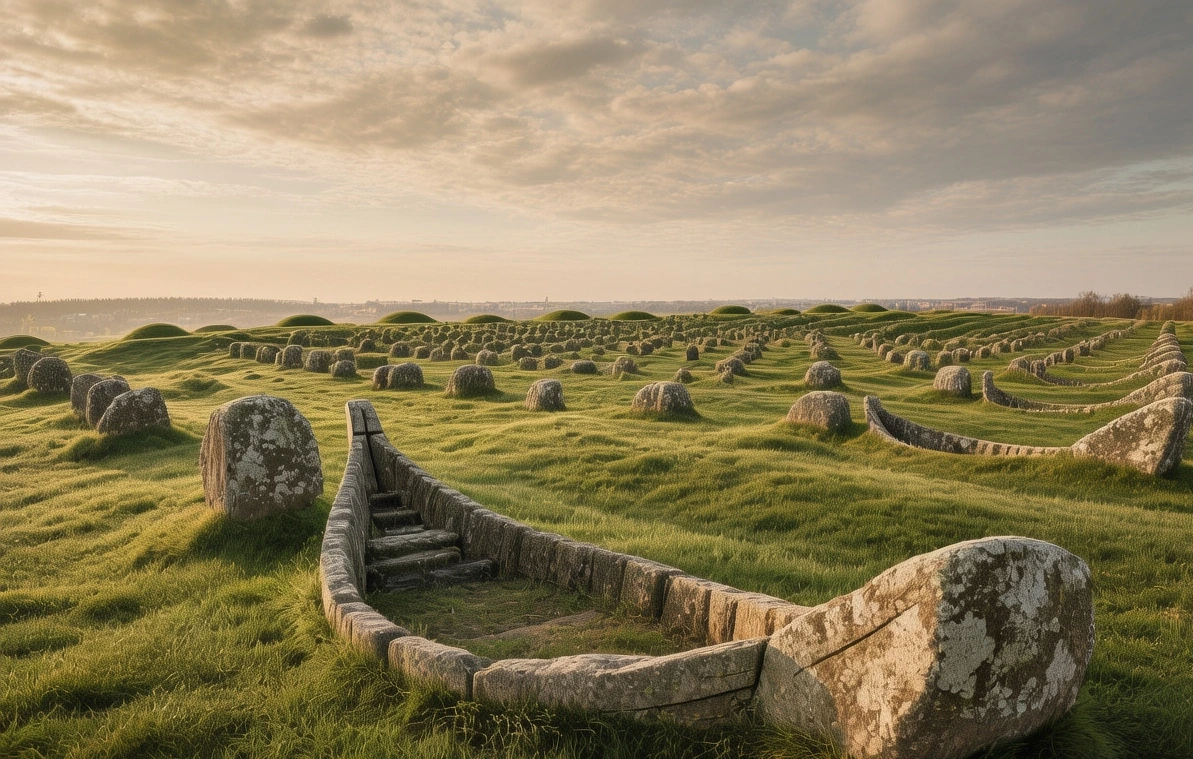
Lindholm Høje: Where Stone Graves Meet Fjord Light
I walk the slope just after nine in the morning. Stones lie scattered across the green slope — circles, triangles, ships outlined in rock. Each marks a grave. I paid nothing to step onto the hill. The museum ticket cost 110 DKK. The bus ride from central Aalborg took twelve minutes. I stand at the highest point. The Limfjord stretches wide and still below. Aalborg's rooftops glint in the distance. Wind moves through the grass. No voices carry here. I count rows of stones stretching down toward the water. Some are small and faint. Others stand bold and clear. People laid them out between 400 and 1000 CE. They looked at this same view. They buried their dead where the land meets the water. That quiet connection still holds.
Why Lindholm Høje Matters
Lindholm Høje is Scandinavia's largest preserved burial ground from the Iron and Viking Ages. Nearly seven hundred graves were uncovered here during excavations in the 1950s. Sand had covered and protected them for centuries. The oldest graves date to around 400 CE. The newest go to about 1000 CE. Stone settings show how people were buried — circles for some, triangles or ship shapes for others. The site also holds traces of the settlement where those people lived. Farms, workshops, and longhouses once stood on the slope. The museum nearby gathers finds from the dig — tools, jewelry, pottery, and weapons. Together the hill and the building tell one continuous story across six hundred years of life and death.
It is not a reconstructed village with costumed reenactors every day. Some visitors expect more activity. They find the open hill quiet and empty. Much remains unmarked. You need imagination to see the longhouses beneath the grass. Parts of the outdoor site slope steeply and suit able walkers best. The museum sits modern and functional — some find its design plain compared to the ancient landscape outside.
The Best Time to Experience Lindholm Høje
Late May through early September offers the longest days and mildest weather. Daytime temperatures sit between 13°C and 20°C (55°F–68°F). The grass stays green and pathways dry. The Viking Market runs the last weekend in June — lively but crowded. Arrive before 10:00 AM on any day to walk the graves without company.
April, early May, and September suit slower visits. Temperatures hover around 8°C–14°C (46°F–57°F). Spring brings wildflowers across the slope. Autumn turns the surrounding trees gold. Fewer people visit. You often have the hill to yourself. October through March sees shorter days and cooler conditions — 1°C–6°C (34°F–43°F). The museum closes an hour earlier. The outdoor site stays accessible but wind and rain can make walking unpleasant. Check forecasts before traveling in winter.
Approximate Budget for a 7-Day Trip
- Accommodation: 3,850 DKK – 5,950 DKK. Guesthouse or B&B in Nørresundby sits lower. Hotel in central Aalborg runs 750–950 DKK per night. Staying here places you close to other North Jutland sites.
- Food & Drink: 1,750 DKK – 2,870 DKK. Lunch at Café Lindholm costs 105–175 DKK. Dinner in Aalborg runs 180–295 DKK per person. Buying bread, cheese, and smoked fish from local markets cuts food spending nearly in half.
- Transport: 700 DKK – 1,400 DKK. Local bus from Aalborg 36 DKK one way. Car rental starts around 380 DKK daily plus fuel. Bicycle rental works well — the ride from Aalborg takes twenty minutes and follows flat paths.
- Attractions & Entry: 330 DKK – 550 DKK. Burial site free. Museum ticket 110 DKK per adult. Children under 18 enter free. Other nearby sites carry similar or lower fees.
- Miscellaneous: 490 DKK – 840 DKK. Covers coffee, snacks, souvenirs, and small purchases.
Total estimated budget: 7,120 DKK – 11,610 DKK per person for 7 days.
One thing to watch: the café at the museum charges premium rates. A full lunch here costs 60 DKK more than at places a short walk away. Bring a simple meal, sit on the slope, and eat with the graves and fjord view. It costs nothing and feels entirely right.
Essential Lindholm Høje Experiences
- Walk the full burial slope. Start near the museum and follow paths down and across the site. Notice how stone shapes change — circles and triangles earlier, longer ship outlines later. Keep children close — some edges drop away without barriers. Skip if you have serious balance trouble — ground slopes unevenly.
- Visit the museum before or after walking. Exhibits explain who was buried here and what they carried. Reconstructions show clothing, houses, and daily work. Go first to set context or go after to deepen what you saw outside. Both ways work well.
- Stand at the highest point at sunset. Low light grazes the stones and softens every edge. The fjord turns gold. Most people leave long before this. You often share the hill with no one else.
- Follow the settlement outlines. Low mounds and stone lines mark where buildings stood. Signs explain layout and use. It takes practice to see the shapes clearly. Walk slowly and let your eyes adjust.
- Attend the Viking Market if visiting in June. Craft stalls, demonstrations, and reenactors fill the lower area. It brings the past to life vividly. Go early — it grows busy by midday.
- Walk the eastern edge toward the water. Fewer visitors reach this section. The view down the fjord opens wide. Smaller, quieter grave groupings sit here. It feels peaceful and private.
Hidden Gems Most Travelers Miss
- The western slope path. Most people stay on the main central route. The western side runs quieter and holds fainter, older grave arrangements. You will likely walk alone.
- Overrated spot: the main viewpoint marker at the top. Every tour group stops here. Walk fifty yards north along the ridge. The view covers the same stretch of fjord with no crowd.
- The old road trace below the museum. A faint track curves along the base of the hill. It predates the modern site layout. No sign marks it. It feels like walking an old boundary.
- Quiet morning light between 9:00 and 10:00 AM. The site opens fully but most visitors arrive after 11:00. That first hour holds special stillness.
- The woodland loop behind the museum. Trees shelter birds and small wildlife. It connects to local paths leading toward Nørresundby. No graves here — just calm green space.
Cultural & Practical Tips
- Do not step on or move stones. Each one marks a grave. Restoring disturbed markers takes time and care. Walk only on marked paths and grassy areas.
- Monday closure catches many people out. The museum never opens then. Plan your visit for Tuesday through Sunday to avoid a wasted trip.
- Wear sturdy non-slip shoes. The grassy slope becomes slippery when damp. Gravel paths shift underfoot. Smooth-soled shoes make walking harder than it needs to be.
- Do not expect extensive shade. The hill stands mostly open. Sun and wind reach you everywhere. Bring hat, water, and sun protection even on mild days.
- Give yourself enough time. Many people plan one hour and leave rushing. Two hours minimum lets you walk the slope and see the museum without hurrying. Three hours feels relaxed.
- Dogs are welcome on the outdoor site but not inside the museum. Keep them on a short leash. Owners after you may be stepping carefully.
Essential Visitor Information
Location & Access: Vendilavej 11, 9400 Nørresundby, Aalborg. Three ways to arrive: bus from central Aalborg (10–15 minutes); bicycle via dedicated paths (20 minutes); car — free parking at site entrance, 10-minute drive from Aalborg city center.
Tickets & Booking: Burial site and outdoor paths free. Museum 110 DKK adult, under 18 free, students/groups 95 DKK. Booking ahead not required. Buy tickets at museum entrance.
Operating Hours: Museum — Tuesday–Sunday 10:00 AM–5:00 PM April–October; 10:00 AM–4:00 PM November–March. Always closed Monday. Outdoor site accessible daily year-round during daylight hours.
Visit Duration: Minimum 2 hours for slope and museum. 3 hours lets you walk every path and read exhibits fully. Half a day if you combine with nearby forest or harbor.
Family Suitability: Good. Children welcome and entry free. Uneven grass and slopes make strollers difficult outdoors. Museum interior has lift access. Restrooms and café available.
Timing: Best season: May or September. Best time: before 10:00 AM or late afternoon toward sunset. Weekdays stay quieter than weekends.
Highlights: Stone grave arrangements, highest point fjord view, settlement remains, museum finds, sunset light across the slope.
Nearby & Day Trip: Aalborg city center 5 km away. North Jutland coast 30 km north. Rebild National Park 45 km east. Skagen reachable as full-day trip.
Conclusion: Travel with Depth, Not Just Sight
Lindholm Høje does not shout. It waits quietly. People lived, worked, and died here across six centuries. They left stones and stories written in the land. You do not need to be a historian to feel the weight of time on this hill. Walk slowly. Touch no stones. Stand still long enough to hear the wind alone. What will you carry away from this quiet meeting place of past and present?
Post a Comment