
Egeskov Castle: Where Renaissance Grandeur Meets Danish Garden Splendor
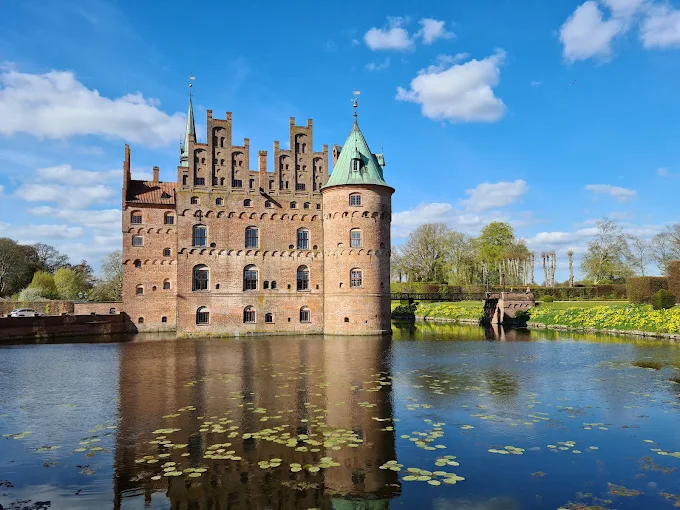
Golden afternoon light spills across the moat's still waters as you approach Denmark's most spectacular Renaissance water castle—Egeskov awakens with the gentle lap of water against ancient brick foundations, the distant chirping of songbirds in manicured gardens, and the soft footsteps of visitors crossing the drawbridge into a world where five centuries of history breathe through every timber beam and carved stone. You breathe air scented with blooming roses and freshly cut grass, feel the cool shade of centuries-old oak trees, and watch sunlight filter through the castle's distinctive red-brick towers that rise forty meters above the surrounding landscape, their copper spires gleaming against the Funen sky. This architectural masterpiece, constructed in 1554 by Frands Brockenhuus on a foundation of oak pilings driven deep into marshland, spans approximately 3,500 square meters of preserved Renaissance interiors, while its sixty-five hectares of gardens showcase everything from formal Baroque parterres to whimsical hedge mazes and vintage automobile collections [[15]][[22]]. Children chase butterflies through rose gardens; couples stroll beneath arching linden trees; the scent of heritage blooms mingles with the promise of discovery around every corner. But Egeskov Castle matters because it preserves not just a building, but an entire world of Danish heritage—where architecture, nature, and culture converge to create an immersive journey through time that reminds us how beauty, craftsmanship, and stewardship can endure across generations.
Why Egeskov Castle Embodies Renaissance Preservation Excellence
Egeskov Castle represents the pinnacle of Renaissance architectural preservation, solving a fundamental need to protect one of Europe's most complete water castles while creating a living cultural destination where history, horticulture, and hospitality converge. When Frands Brockenhuus commissioned the castle in 1554, he faced a profound challenge: how to build a defensible residence on unstable marshland while creating a statement of noble power that would endure for centuries [[15]][[20]]. His visionary solution—driving thousands of oak pilings into the soft earth to create a stable foundation, then constructing thick brick walls up to two meters wide—established an engineering legacy that has allowed Egeskov to survive floods, fires, and the passage of time largely intact.
The castle's design showcases Renaissance engineering artistry at its finest: a double moat system that provided both defense and drainage, thick brick walls with internal timber framing that absorbed structural stress, and distinctive stepped gables adorned with sandstone ornaments that demonstrated wealth and craftsmanship [[18]][[24]]. The interior preserves authentic period details: carved oak paneling, vaulted ceilings with original frescoes, and fireplaces that once warmed noble chambers. Egeskov fulfilled a dual purpose: militarily, it served as a fortified residence during Denmark's turbulent Reformation era; culturally, it evolved into a showcase of aristocratic life, housing collections of vintage automobiles, antique furniture, and historical artifacts that span five centuries. Technical preservation efforts include climate-controlled exhibition spaces maintaining 19°C (66°F) and 45% humidity to protect sensitive artifacts, sustainable landscaping that preserves heritage plant varieties, and ongoing foundation monitoring that ensures the oak pilings continue to support the structure after nearly five centuries [[22]]. Today, managed by the Ahlefeldt-Laurvig-Bille family who have owned Egeskov since 1784, the castle stands as a testament to how private stewardship can preserve public heritage, how architecture can harmonize with landscape, and how a single estate can anchor regional identity through centuries of change.
The Best Time to Experience Egeskov Castle
Timing your visit to Egeskov Castle profoundly influences both atmospheric immersion and seasonal offerings. The optimal window falls between May 29 and June 25, when Funen enjoys extended daylight—sunset occurs around 9:50 PM—and temperatures range from 14°C to 21°C (57°F to 70°F), creating ideal conditions for exploring castle interiors, garden pathways, and outdoor exhibitions [[68]][[72]]. During this period, the castle's famous rose gardens reach peak bloom, outdoor vintage car displays operate at full capacity, and summer crowds remain manageable before peak season. For photographers, visit between 6:30–8:30 AM when soft morning light illuminates the castle's red-brick façade with minimal crowds, or 7:30–9:30 PM for dramatic golden-hour reflections on the moat waters.
The castle operates seasonally, typically opening from mid-April through mid-October, with daily hours of 10:00 AM–6:00 PM in summer and reduced hours in shoulder seasons. For current opening dates, event schedules, and ticket reservations, visit the official Egeskov Castle website at www.egeskov.dk or the national tourism portal at www.visitdenmark.com [[52]][[85]]. Avoid visiting during late November through early February, when temperatures drop to -3°C to 4°C (27°F to 39°F), daylight shrinks to seven hours, and many garden areas close for winter conservation. Also steer clear of Danish school holidays (week 7 in February, week 42 in October) when family crowds increase. Standard admission costs DKK 265 for adults (€35), DKK 135 for children ages 5–17 (€18), with children under 5 admitted free [[24]]. The castle café, with moat views, is particularly rewarding between 2:00–4:00 PM when afternoon light enhances the panoramic garden vistas.
Approximate Budget for a 7-Day Trip
Exploring Egeskov Castle and central Funen requires moderate budgeting, as Denmark maintains higher price points than many European destinations. However, strategic planning—including staying in nearby Kværndrup or Odense and utilizing regional transit—can optimize your experience. The following breakdown reflects mid-range preferences with cultural immersion priorities.
- Accommodation: €68–€120 per night for a double room in Kværndrup or Odense (15-minute drive to castle); budget B&Bs €35–€55 per night; castle-adjacent heritage hotels €135+ per night
- Food: €39–€68 per day total
- Breakfast: €6–€10 (Danish pastry and coffee from local bakery)
- Lunch: €12–€19 (smørrebrød or garden-fresh salad at castle café)
- Dinner: €19–€33 (mid-range restaurant featuring Funen specialties like pork roast or North Sea fish)
- Castle café option: €7–€11 for soup, sandwich, and coffee
- Transportation:
- Regional train (DSB) from Copenhagen to Odense: €34 one-way, 1.5 hours via InterCity
- Local bus to Egeskov: €4 per ride (Line 912); bicycle rental €10 per day
- Car rental for Funen exploration: €45 per day including fuel
- Train to nearby towns (Svendborg, Nyborg): €6–€12 per trip
- Attractions:
- Egeskov Castle admission: €35 (DKK 265) adults; €18 children [[24]]
- Guided castle tour upgrade: €8 additional
- Hans Christian Andersen Museum (Odense): €26
- Funen Village open-air museum: €14
- Vintage car exhibition access: Included with admission
- Miscellaneous:
- Garden-themed souvenirs and local crafts: €10–€45
- Audio guide rental: €4
- Photography permit for professional use: €26
Total estimated budget for 7 days: €870–€1,310 per person (excluding international flights)
7 Essential Egeskov Castle Experiences
- Cross the Drawbridge at Opening: Arrive at 10:00 AM and experience the castle's dramatic entrance as the drawbridge lowers and you step onto the historic causeway. The moat's still waters reflect the red-brick towers; listen for the creak of ancient timbers and the gentle lap of water against stone. Allow 20 minutes for this ceremonial approach; the morning light enhances photographic opportunities and the atmosphere feels particularly magical before crowds gather.
- Explore the Renaissance Interiors: Enter the castle's preserved chambers where carved oak paneling, vaulted ceilings, and period furnishings evoke noble life across five centuries. Visit between 10:30 AM–12:00 PM when natural light from mullioned windows illuminates intricate details. Allow 60 minutes for full appreciation; the Knight's Hall, noble bedrooms, and chapel showcase authentic craftsmanship that has survived largely unchanged since the 1500s [[22]].
- Wander the Formal Gardens: Step into the meticulously maintained Baroque parterres, rose gardens, and hedge mazes that surround the castle. Visit between 2:00–4:00 PM when afternoon light enhances the colors of heritage roses and the geometry of boxwood hedges. Allow 45 minutes for the full circuit; the scent of blooming flowers and the sound of fountains create a sensory journey through Danish horticultural tradition.
- Discover the Vintage Collections: Explore the castle's extraordinary exhibitions of vintage automobiles, motorcycles, and aircraft housed in restored farm buildings. Visit between 1:00–3:00 PM when lighting is optimal for appreciating restored details. Allow 40 minutes; the collection includes over 100 vehicles spanning a century of transportation history, from early steam cars to classic European sports models.
- Photograph the Moat Reflections: Position yourself along the castle's eastern façade between 7:00–9:00 AM when morning light creates perfect reflections of towers and gables in the still moat waters. Use a polarizing filter to manage reflections; a tripod is helpful for low-light stability. The iconic view—red brick against blue water with copper spires reaching skyward—captures Egeskov's timeless beauty.
- Enjoy Garden-to-Table Dining: Reserve a terrace table at the castle café between 12:00–2:00 PM for authentic Funen flavors. Order seasonal dishes featuring ingredients from the castle's own gardens (€16–€24), then enjoy your meal while watching visitors stroll the pathways. The café's menu emphasizes local, organic ingredients; the atmosphere—moat views, garden scents—extends the castle experience into gastronomy.
- Attend a Seasonal Festival: Check www.egeskov.dk for special events—summer concerts, medieval markets, Christmas celebrations—that transform the castle grounds with live entertainment and traditional crafts. These gatherings typically occur on weekends from June through August; arrive early for optimal positioning. The experience combines living history, artisan demonstrations, and community celebration in a uniquely atmospheric setting.
3 Hidden Gems Most Travelers Miss
- The Castle's Secret Garden: Tucked behind the main formal gardens, a small walled enclosure features heritage herbs, medicinal plants, and heirloom vegetables grown using traditional methods. Most visitors overlook this tranquil space because it lacks prominent signage. Access: From the rose garden, follow the path marked "Urtehave"; open daily 10:00 AM–4:00 PM (May–September); included with admission. Best visited between 11:00 AM–1:00 PM when garden volunteers provide informal explanations. The garden's interpretive panels explain how Renaissance households used plants for cooking, healing, and dyeing—creating a tangible connection to daily life five centuries ago.
- The Foundation Viewing Area: Near the castle's southern tower, a discreet glass panel offers glimpses of the oak pilings that have supported Egeskov since 1554—a rare opportunity to witness the engineering marvel that has preserved the castle for nearly five centuries. Most tourists walk past without noticing this educational feature. Access: Located along the moat-side path; viewing hours 10:00 AM–3:00 PM daily; free with admission. Best visited between 1:00–3:00 PM when natural light illuminates the ancient wood. Observing the preserved oak timbers—still solid after centuries underwater—reveals the craftsmanship and foresight of Renaissance builders.
- The Aviary and Bird Garden: Beyond the main garden circuit, a restored historic aviary houses native Danish bird species in a naturalistic setting that echoes the castle's historical menageries. Most visitors focus on architecture without exploring this living exhibit. Access: Follow signs from the hedge maze; open daily 10:00 AM–5:00 PM (summer); included with admission. Best visited between 10:00 AM–12:00 PM when birds are most active. The aviary's native species—goldfinches, greenfinches, and bullfinches—create a soundscape that connects visitors to the natural world that has surrounded Egeskov for centuries.
Cultural & Practical Tips
- Photography Guidelines: Photography for personal use is permitted throughout Egeskov Castle's public spaces and gardens, but flash and tripods may be restricted indoors to protect historic furnishings—observe signage. The moat reflections and garden vistas are ideal for photography; visit during golden hour for optimal light. Respect other guests' privacy when capturing candid moments.
- Language: While signage and staff are English-friendly, learning Danish phrases enhances your experience: tak (tahk = thank you), undskyld (oon-skool = excuse me), hej (hi = hello/goodbye). Danish pronunciation features soft consonants and melodic intonation.
- Dress Code: Comfortable walking shoes are essential—exploring castle interiors and garden pathways involves varied surfaces including cobblestones, gravel, and grass. Layer clothing; Funen weather can shift quickly, with coastal breezes dropping temperatures 5°C. Bring a lightweight rain jacket year-round.
- Accessibility: Egeskov Castle's historic architecture presents challenges: many interior areas require climbing stairs, and garden paths include gravel and gentle slopes. The ground-floor exhibition spaces are wheelchair accessible; request assistance at the entrance for specialized needs. Alternative viewing areas provide good perspectives for visitors with mobility limitations.
- Weather Considerations: Funen's inland location means variable weather. Check the forecast before visiting; rain enhances the atmospheric quality of the moat and gardens but may limit outdoor exploration. Summer (June–August) offers the most reliable conditions; spring and fall provide fewer crowds but pack layers for variable temperatures.
- Combining with Copenhagen: Egeskov Castle is a 2-hour train ride from Copenhagen Central Station via Odense. Purchase a Funen Card for unlimited transport and attraction discounts. Consider spending 2–3 nights in the Odense/Egeskov area to fully explore the castle alongside Hans Christian Andersen attractions and Funen's countryside.
- Respectful Engagement: Egeskov is a private estate open to the public. Respect marked paths, never climb on historic structures or garden features, and support preservation by purchasing from castle shops that fund conservation efforts. The family stewards value visitors who engage thoughtfully with the estate's heritage while honoring its continued role as a living home.
Conclusion: Travel with Reverence, Not Just Sightseeing
Egeskov Castle invites more than passive observation—it demands engagement with the layered narratives embedded in brick, timber, and soil: the vision of Renaissance builders who engineered a fortress on marshland, the dedication of generations who preserved beauty through change, and the ongoing stewardship that keeps heritage alive for future visitors. When you stand on that drawbridge watching towers reflect in still moat waters, you're not merely touring a historic site; you're connecting with a model for sustainable preservation, a testament to how private care can serve public wonder, and a reminder that the most meaningful places honor both past and future. This isn't a place to rush through, checklist in hand, snapping photos before racing to the next attraction. Slow down. Feel the cool stone beneath your palm; listen to the fountain's gentle murmur in the rose garden; contemplate how oak pilings driven in 1554 still support these walls today. Travel here with curiosity about how places shape identity and how identity gives meaning to places. Support preservation by respecting the estate, choosing experiences that employ local guides, and sharing not just images but understanding. The most transformative journeys leave you not just with memories of what you saw, but with deeper appreciation for continuity—and Egeskov Castle, with its seamless fusion of Renaissance grandeur and living heritage, offers precisely that invitation to those willing to wander, to wonder, and to simply connect across time.