
Lindholm Høje: Where Ancient Viking Graves Meet Nordic Hillside Silence
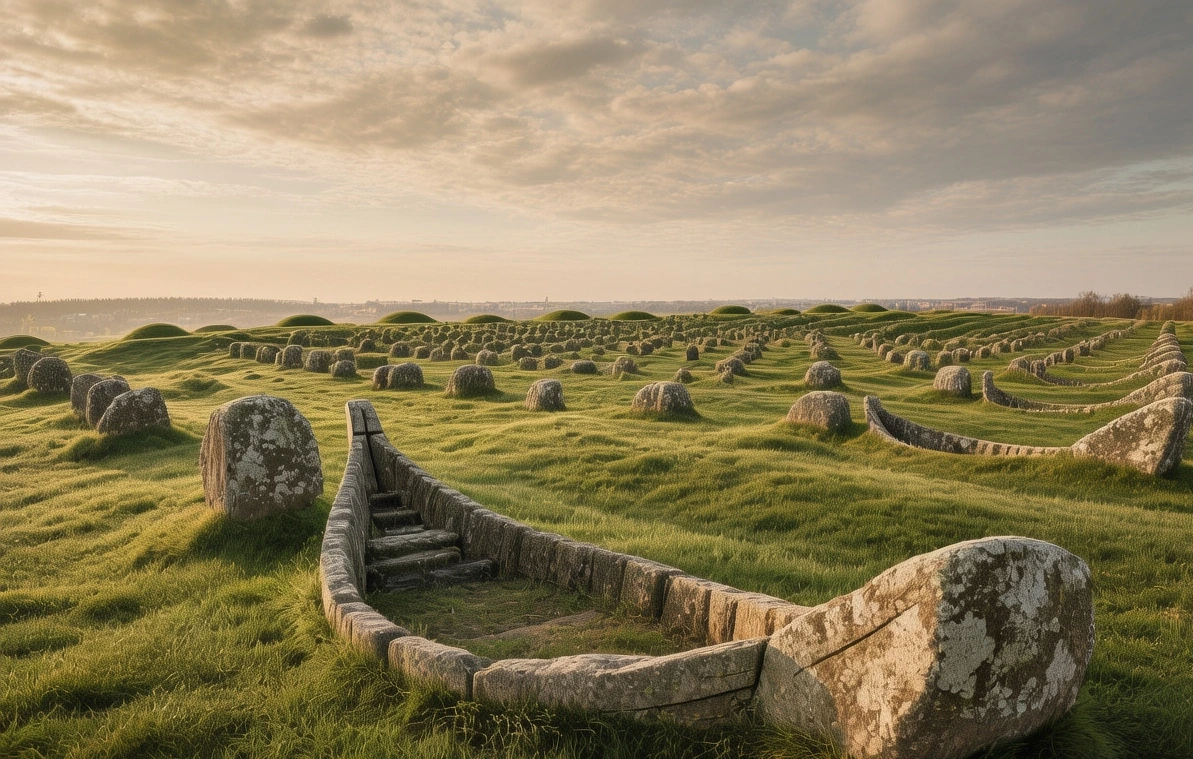
Golden afternoon light spills across seven hundred weathered stones as you stand atop Denmark's most significant Viking burial ground—Lindholm Høje awakens with the whisper of wind through ancient grass, the distant call of gulls from the Limfjord below, and the profound silence that settles over a landscape where over seven hundred graves tell stories of a civilization that shaped Northern Europe. You feel the weight of fifteen centuries beneath your feet, see the distinctive ship-shaped stone settings that mirror Viking beliefs about the journey to Valhalla, and watch the afternoon sun cast long shadows across burial mounds that have guarded their secrets since the Migration Period. This forty-thousand-square-meter archaeological treasure, preserved on a south-facing hillside overlooking the Limfjord near Nørresundby, contains graves dating from approximately 400 to 1050 AD, making it one of Scandinavia's largest and most important Viking Age cemeteries [[15]][[22]]. The stones—carefully arranged by grieving families over six centuries—create patterns that speak of social hierarchy, spiritual beliefs, and maritime culture. But Lindholm Høje matters because it offers an unfiltered connection to our ancestors: not reconstructed or reimagined, but preserved exactly as left, allowing the stones themselves to whisper tales of warriors, farmers, and families who once looked upon the same fjord waters, believed in the same gods, and dreamed the same dreams beneath the same northern stars.
Why Lindholm Høje Embodies Viking Age Heritage
Lindholm Høje represents the pinnacle of Viking Age archaeological preservation, solving a fundamental need to protect and interpret one of Scandinavia's most significant burial sites while creating an immersive experience that bridges the gap between ancient ritual and modern understanding. When systematic excavations began in 1952 under the direction of the National Museum of Denmark, archaeologists faced a profound challenge: how to preserve over seven hundred graves spanning six centuries of continuous use while making this sacred landscape accessible and meaningful to contemporary visitors [[15]][[20]]. The solution was visionary: preserve the site exactly as discovered, with stones left in their original positions, creating an authentic window into Viking Age burial practices and social structure.
The burial ground's layout reveals remarkable archaeological detail: the oldest graves from the Germanic Iron Age (400-750 AD) cluster at the hill's summit, while younger Viking Age graves (750-1050 AD) spread across the lower slopes, demonstrating how burial practices evolved over time [[18]][[24]]. The site features both burial mounds—raised earth circles marking important individuals—and the iconic stone ships, where stones arranged in elongated oval patterns mimic the shape of Viking vessels, reflecting beliefs about the deceased's journey to the afterlife. Technical preservation efforts include erosion control through native grass planting, protective fencing that prevents damage while maintaining visual access, and climate monitoring that tracks weathering patterns on the ancient stones. The adjacent Viking Museum, built into the hillside to minimize visual impact, houses artifacts excavated from the graves: jewelry, weapons, tools, and everyday objects that provide context for the stone markers above. Lindholm Høje fulfilled a dual purpose: archaeologically, it preserved irreplaceable evidence of Viking Age society; culturally, it created a tangible connection to Scandinavian heritage that resonates with visitors seeking authentic encounters with the past. Today, managed by the National Museum of Denmark, the site stands as a testament to how archaeological preservation can honor the dead while educating the living, how landscape can serve as historical document, and how stones arranged by grieving hands over a millennium ago can still speak to the human condition.
The Best Time to Experience Lindholm Høje
Timing your visit to Lindholm Høje profoundly influences both atmospheric immersion and practical accessibility. The optimal window falls between May 28 and June 25, when northern Jutland enjoys extended daylight—sunset occurs around 10:00 PM—and temperatures range from 14°C to 21°C (57°F to 70°F), creating ideal conditions for exploring the hillside burial ground and adjacent museum [[68]][[72]]. During this period, the grass covering the burial mounds is lush and green, wildflowers bloom among the ancient stones, and summer crowds remain manageable before peak season. For photographers, visit between 6:00–8:00 AM when soft morning light illuminates the stone ships with minimal crowds, or 8:00–10:00 PM for dramatic golden-hour shots where long shadows emphasize the contours of burial mounds against the Limfjord backdrop.
The site operates year-round with seasonal hours: summer season (June–August) opens 10:00 AM–6:00 PM daily; winter hours (November–February) reduce to 10:00 AM–4:00 PM. For current opening times, special events, and exhibition information, visit the official Lindholm Høje Viking Museum website at www.nordmus.dk or the national tourism portal at www.visitdenmark.com [[52]][[85]]. Avoid visiting during late November through early February, when temperatures drop to -3°C to 4°C (27°F to 39°F), daylight shrinks to seven hours, and snow or ice can make the hillside paths slippery and hazardous. Also steer clear of Danish school holidays (week 7 in February, week 42 in October) when family crowds increase. Standard admission costs DKK 95 for adults (€13), DKK 50 for children ages 6–17 (€7), with children under 6 admitted free [[24]]. The museum café is particularly rewarding between 2:00–4:00 PM when afternoon light enhances the panoramic Limfjord views from the hillside.
Approximate Budget for a 7-Day Trip
Exploring Lindholm Høje and the Aalborg region requires moderate budgeting, as Denmark maintains higher price points than many European destinations. However, strategic planning—including staying in Aalborg center and utilizing regional transit—can optimize your experience. The following breakdown reflects mid-range preferences with cultural immersion priorities.
- Accommodation: €68–€122 per night for a double room in Aalborg center (15-minute drive to Lindholm Høje); budget hostels €32–€52 per night; waterfront hotels €135+ per night
- Food: €40–€70 per day total
- Breakfast: €7–€11 (Danish pastry and coffee from local bakery)
- Lunch: €13–€21 (smørrebrød or Viking-themed meal at museum café)
- Dinner: €20–€36 (mid-range restaurant featuring New Nordic or traditional Jutland cuisine)
- Museum café option: €8–€13 for soup, sandwich, and coffee
- Transportation:
- Regional train (DSB) from Copenhagen to Aalborg: €38 one-way, 4 hours via InterCity
- Local bus to Lindholm Høje: €3 per ride (Line 11 or 12); bicycle rental €10 per day
- Aalborg Card (24-hour): €36 includes unlimited transport and attraction discounts
- Train to nearby towns (Hjørring, Frederikshavn): €7–€14 per trip
- Attractions:
- Lindholm Høje admission: €13 (DKK 95) adults; €7 children [[24]]
- Guided tour upgrade: €7 additional
- Aalborg waterfront attractions: €10–€20
- Ut zon Center: €13
- Viking Festival access (summer): Included with admission
- Miscellaneous:
- Viking-themed souvenirs and replicas: €10–€48
- Audio guide rental: €4
- Photography permit for professional use: €25
Total estimated budget for 7 days: €860–€1,300 per person (excluding international flights)
7 Essential Lindholm Høje Experiences
- Walk Among the Stone Ships at Sunrise: Arrive at opening time (10:00 AM) and head directly to the largest stone ship settings near the hillside's center. These elongated oval arrangements of stones—some measuring up to twenty meters long—mirror Viking ships and reflect beliefs about the deceased's journey to Valhalla. Allow 30 minutes for this contemplative circuit; the morning light casts shadows that emphasize the stones' placement and the care taken by ancient hands. Listen for the wind moving through grass that has grown over these graves for over a millennium.
- Explore the Viking Museum: Descend into the hillside museum where excavated artifacts provide context for the burial ground above. Visit between 11:00 AM–1:00 PM when natural light illuminates display cases containing jewelry, weapons, tools, and everyday objects recovered from the graves. Allow 60 minutes for full appreciation; interactive exhibits explain burial practices, social structure, and the archaeological methods used to uncover and preserve the site [[22]].
- Climb to the Hilltop Viewpoint: Ascend to the highest point of the burial ground for panoramic views across the Limfjord toward Aalborg. Visit between 2:00–4:00 PM when afternoon light reveals the full extent of the seven hundred graves spread across the hillside. The viewpoint offers perspective on why Vikings chose this south-facing slope: commanding views of the fjord, proximity to trade routes, and spiritual significance. Allow 20 minutes; the climb is moderate but rewards with understanding of the site's strategic and symbolic importance.
- Attend a Viking Festival or Demonstration: Check www.nordmus.dk for seasonal events—Viking markets, craft demonstrations, and historical reenactments that bring the burial site's history to life. These gatherings typically occur on weekends from June through August; arrive early for optimal positioning. The experience combines living history, traditional crafts, and community celebration in a uniquely authentic setting where the past literally surrounds you.
- Photograph the Burial Mounds at Golden Hour: Return to the site between 7:00–9:00 PM when soft evening light illuminates the grass-covered mounds and creates long shadows that emphasize their circular forms. Focus on the interplay between ancient stones and natural landscape; a wide-angle lens captures the sweep of the hillside against the Limfjord backdrop. Use a polarizing filter to manage sky reflections; the golden-hour atmosphere—fewer visitors, magical lighting—creates exceptional photographic opportunities.
- Follow the Archaeological Trail: Walk the marked path that winds through different sections of the burial ground, observing how grave types and arrangements vary across the site. The trail includes interpretive signs explaining the differences between Migration Period graves (summit) and Viking Age graves (slopes). Visit between 10:30 AM–12:00 PM when lighting is optimal for reading informational panels. Allow 45 minutes; the trail reveals how burial practices evolved over six centuries of continuous use.
- Enjoy Coffee with a View: Reserve a table at the museum café between 2:00–4:00 PM for the perfect pause. Order house-blend coffee (€5) and Danish pastry (€5), then watch sunlight filter across the ancient burial ground while modern Aalborg sparkles across the fjord. The café's menu emphasizes seasonal, locally sourced ingredients; the atmosphere—panoramic windows, hillside setting—extends the museum experience into gastronomy.
3 Hidden Gems Most Travelers Miss
- The Smallest Stone Ship: Tucked away on the hillside's eastern edge, a diminutive stone ship setting—barely five meters long—often escapes notice as visitors focus on the larger, more dramatic arrangements. This intimate grave likely belonged to a child or person of modest means, offering a poignant reminder that the burial ground served all members of Viking society. Access: Follow the eastern trail markers from the main path; accessible during regular hours; included with admission. Best visited between 11:00 AM–1:00 PM when the space is least crowded. The small scale creates a powerful emotional connection to individual lives lost over a millennium ago.
- The Museum's Conservation Laboratory: Behind the main exhibition areas, a glass-walled viewing area offers glimpses into the museum's active conservation lab, where specialists clean, preserve, and study artifacts excavated from the burial ground. Most visitors overlook this educational peek because it lacks prominent signage. Access: Located near the museum's rear entrance; viewing hours 10:00 AM–3:00 PM daily; free with admission. Best visited between 1:00–3:00 PM when conservation staff are most active. Observing meticulous restoration work reveals the science and artistry behind preserving millennium-old iron, bronze, and organic materials.
- The Ancient Field System: Beyond the burial ground's perimeter, faint traces of Viking Age agricultural terraces and field boundaries remain visible in the hillside grass, demonstrating how the living farmed alongside the dead. Most tourists focus solely on the graves without noticing these subtle landscape features. Access: Follow the outer perimeter path; visible year-round; free. Best observed between 10:00 AM–12:00 PM when low-angle light reveals the faint earthworks. These agricultural remnants complete the picture of Viking life: not just warriors and burial rituals, but farmers, families, and communities working the land that sustained them.
Cultural & Practical Tips
- Photography Guidelines: Photography for personal use is permitted throughout Lindholm Høje, but drones require special permission from the National Museum—contact +45 96 31 11 00 in advance. The stone ships and hillside views are ideal for photography; visit during golden hour for optimal light. Respect the sacred nature of the burial ground—avoid climbing on stones or walking directly over grave markers.
- Language: While signage and staff are English-friendly, learning Danish phrases enhances your experience: tak (tahk = thank you), undskyld (oon-skool = excuse me), hej (hi = hello/goodbye). Danish pronunciation features soft consonants and melodic intonation.
- Dress Code: Sturdy walking shoes are essential—the hillside paths include grass, gravel, and uneven terrain. Layer clothing; coastal winds can drop temperatures 5°C quickly even in summer. Bring a windproof jacket year-round; the exposed hillside offers little shelter from weather.
- Respectful Behavior: Lindholm Høje is an active archaeological site and sacred burial ground. Speak quietly, stay on marked paths, never move or climb on stones, and supervise children closely. The site's philosophy values preservation and respect—treat these ancient graves as you would any cemetery.
- Weather Considerations: The hillside's exposed location means rapid weather shifts. Check the forecast before visiting; fog can obscure Limfjord views, while rain makes grass paths slippery. Summer (June–August) offers the most reliable conditions; spring and fall provide dramatic skies but pack layers for variable temperatures.
- Combining with Copenhagen: Lindholm Høje is a 4-hour train ride from Copenhagen Central Station via Aalborg. Purchase an Aalborg Card for unlimited transport and attraction discounts. Consider spending 2–3 nights in the Aalborg area to fully explore Lindholm Høje alongside the waterfront, Utzon Center, and nearby Viking sites.
- Accessibility: The burial ground includes grass paths and gentle slopes that may challenge wheelchairs; the museum is fully accessible. Alternative viewing areas provide good perspectives for visitors with mobility limitations. Request assistance in advance for specialized needs.
Conclusion: Travel with Reverence, Not Just Curiosity
Lindholm Høje invites more than casual tourism—it demands reverence for the seven hundred souls who rest beneath these stones, for the families who arranged each rock with grieving hands, for the civilization that believed death was not an end but a journey across water to halls of honor. When you walk among these ancient graves watching sunlight play across weathered stones, you're not merely visiting an archaeological site; you're standing in a place where fifteen centuries of human hope, fear, love, and loss converge, where the boundary between past and present dissolves into the whisper of wind through grass. This isn't a place to rush through, checklist in hand, snapping photos before racing to the next attraction. Slow down. Feel the weight of time beneath your feet; listen to the silence that has settled over these graves for over a millennium; contemplate how the same stars that watched Viking funeral pyres still shine above the Limfjord tonight. Travel here with humility, with understanding that you walk among ancestors, with respect for the sacred ground that holds their final rest. Support preservation by following marked paths, by speaking quietly, by sharing not just images but the profound lesson of Lindholm Høje: that we are all temporary, that our lives matter, and that the stones we leave behind—whether literal or metaphorical—will whisper our stories to future generations long after we've joined the silence. The most transformative journeys leave you not just with memories of what you saw, but with deeper questions about mortality, meaning, and legacy—and Lindholm Høje, with its ancient stones and enduring silence, offers precisely that invitation to those willing to listen.