
Gävle Goat Tradition: Where Yule Folklore Meets Pyrotechnic Tension
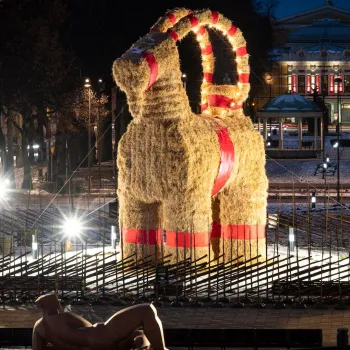
The afternoon light fades at 3:00 PM on the first Sunday of Advent, casting long shadows across Rådhusesplanaden square in central Gävle. You stand behind the double fence—installed not to keep visitors out, but to protect the 10-meter-tall, 3-tonne straw goat that dominates the plaza—and listen: the murmur of the crowd, the click of cameras, the distant wail of a fire engine on standby. Before you rises Gävlebocken, the Gävle Goat, its curved horns wrapped in red ribbons and illuminated by thousands of LED lights that transform the straw structure into a golden beacon against the December darkness. This is no mere Christmas decoration; it is a symbol of Swedish resilience, a target for international arsonists, and a tradition that has captured global imagination since 1966. The goat embodies the paradox of the holiday season—creation and destruction, hope and vigilance, community celebration and criminal mischief. Here, straw serves as both medium and metaphor—fragile yet enduring, simple yet spectacular, beloved yet besieged.
Why Gävle Goat Tradition Embodies Defiant Celebration
The Gävle Goat solves the problem of how to mark the Advent season with something more memorable than tinsel and lights. In 1966, advertising consultant Stig Gavlén proposed a giant version of the traditional Swedish Yule goat—julbocken—to draw shoppers to the Söder district during the holiday season . The first goat, erected on December 1, 1966, measured 13 meters long and 7 meters tall, constructed from straw, pine, and rope by the Gävle fire department under the direction of Gavlén's brother Jörgen, then the fire chief .
The tradition nearly ended before it began. On New Year's Eve 1966, that first goat burned to the ground—the perpetrator was caught and convicted, but a pattern emerged that would define the tradition . Since then, 43 out of 60 goats have been destroyed or damaged by fire, car collisions, theft, or—most bizarrely—pecking by jackdaws attracted to seed-rich straw . The town has responded with escalating security: 24-hour CCTV surveillance, double fences, guards from criminal rehabilitation programs, flameproofing chemicals, and even a webcam that streams live to thousands of online viewers . Despite the destruction, the Southern Merchants' Association and the Natural Science Club of Vasa School continue building two goats annually—one large, one small—financed by municipal funds and private donations . The goat has twice appeared in the Guinness Book of Records and draws tens of thousands of visitors each December .
The Best Time to Experience Gävle Goat Tradition
For the full Gävle Goat experience, visit between November 27 and December 23, when the goat stands illuminated at Rådhusesplanaden square (since 2022; previously at Slottstorget) and the town pulses with holiday energy . Temperatures during this period range from -5°C to 5°C (23°F–41°F), with approximately 6–7 hours of daylight . The inauguration ceremony on the first Sunday of Advent—typically November 27–December 3—draws the largest crowds and features speeches, music, and the ceremonial lighting of the goat's LED displays .
December 13, Saint Lucia Day, offers a particularly atmospheric visit, when the town hosts traditional processions with singers in white gowns and candle crowns—a Swedish custom that complements the goat's pagan origins . The period between December 20–30 presents the highest drama, as historical data shows most arson attacks occur in this window; visiting during this time means you might witness the goat's fiery end—or celebrate its survival .
Avoid early November, when the goat has not yet been erected, and January 2–10, when the goat is dismantled regardless of its condition . The Christmas markets close by December 23, and the town returns to normalcy shortly after New Year's.
For inauguration dates, live webcam access, and holiday event schedules, visit the official tourism website: visitgavle.se/en/gavle-goat
Approximate Budget for a 7-Day Trip
Gävle offers reasonable accommodation costs compared to Stockholm, though December prices rise due to holiday demand. Budget travelers can experience the goat tradition without excessive expense, though early booking is essential.
- Accommodation: €75–€120 per night for mid-range hotels (Clarion Hotel Winn, Elite Grand Hotel Gävle) in the city center near the goat; €45–€75 for budget hotels and B&Bs; €35–€55 for hostels . December rates run 20–30% higher than August low season (€78 average) .
- Food: €50 per day—breakfast €10 (hotel buffet or café pastry with coffee), lunch €15 (Christmas market julbord or herring plate), dinner €25 (moose stew or baked ham at a traditional restaurant). The fika tradition means afternoon coffee and saffron buns (€8) is practically mandatory.
- Transportation: Train from Stockholm to Gävle: €35–€50 (SJ or Norrtåg, approximately 1.5 hours). Local buses within Gävle: €3 per ride. Walking to Rådhusesplanaden from the train station: 10 minutes free.
- Attractions: Viewing the Gävle Goat: free; County Museum Gävleborg: €8; Christmas markets: free entry; guided walking tours: €15–€25; Gävle Symphony Orchestra holiday concert: €25–€45.
- Miscellaneous: Small straw Yule goats at Christmas markets: €8–€15; Gävle Goat merchandise: €12–€25; locally made gingerbread: €10; warm mulled wine glögg at market: €5.
Total for 7 days: €750–€1,150 per person (mid-range), excluding international flights.
6 Essential Gävle Goat Tradition Experiences
- Attend the Inauguration Ceremony: Arrive at Rådhusesplanaden by 2:00 PM on the first Sunday of Advent to witness the official unveiling. The ceremony includes speeches by the Goat Committee, performances by local choirs, and the dramatic moment when thousands of LED lights illuminate the straw structure for the first time. The crowd's collective gasp as the goat glows gold against the winter twilight creates an unforgettable communal moment .
- Watch the Live Webcam from a Café: If you cannot visit in person, or want to monitor the goat's status before arriving, access the 24-hour live stream at visitgavle.se starting November 28 each year . Better yet, sit in a warm café on Drottninggatan with your laptop, sipping glögg while watching the webcam—joining thousands of global viewers in goat vigilance.
- Visit Both Goats: Since 1986, two Yule goats have been built annually—the large Southern Merchants' goat at Rådhusesplanaden and a smaller version by the Natural Science Club of Vasa School, typically located near the school grounds. The smaller goat often meets its end first, serving as a canary in the coal mine for the larger structure's fate .
- Explore the Christmas Markets: Wander the holiday stalls that surround the goat throughout December, selling traditional Swedish crafts, straw ornaments, smoked fish, and warm beverages. The markets operate daily 11:00–19:00 until December 23. Sample pepparkakor (ginger snaps) and lussekatter (saffron buns) while shopping for hand-woven textiles .
- Photograph the Goat at Blue Hour: Arrive at Rådhusesplanaden between 14:30–15:30 to capture the goat during the brief blue hour when the sky deepens to indigo and the LED lights create maximum contrast. The double fence creates foreground interest, while the surrounding bare trees frame the structure. Tripods are permitted outside the fence perimeter.
- Visit the County Museum Gävleborg: Located near the goat's former site at Slottstorget, this museum houses furniture, art, and industrial history exhibits that contextualize the Gävle Goat within broader Swedish Christmas traditions. Don't miss the giant gingerbread house displays that often accompany the holiday season .
3 Hidden Gems Most Travelers Miss
- The Original Slottstorget Site: Most visitors flock to Rådhusesplanaden where the goat now stands, but few walk the 500 meters to Slottstorget—the goat's original location from 1966–2021. The square retains a historical marker noting the tradition's origins, and the adjacent Gävle Castle (Gävle Slott) offers a medieval backdrop that predates the goat by centuries. Visit at dawn when the square is empty and imagine the first goat rising here in 1966.
- The Fire Station Connection: The Gävle fire station stands just 100 meters from Rådhusesplanaden—close enough that firefighters can respond within seconds if the goat ignites. Most tourists never notice this proximity, but it explains why the goat often survives long enough to be photographed even when burning. The station's proximity is no accident; Jörgen Gavlén, who designed the first goat, was fire chief .
- The Natural Science Club's Workshop: While the large goat dominates attention, the smaller goat built by Vasa School students receives minimal publicity. Contact the school at +46 26-17 80 00 to inquire about viewing the construction process in late November—students often work on the structure after classes, and witnessing teenagers weaving straw onto the wooden frame offers insight into how the tradition perpetuates itself through generations.
Cultural & Practical Tips
- Understand the legal context: Burning the goat is arson—a criminal offense carrying up to 3 months imprisonment under Swedish law . The town officially condemns the burnings, though they have undeniably increased global awareness. Do not participate in or encourage destruction; enjoy the tradition as a spectator.
- Learn essential Swedish: Hej (hey) for hello, Tack (tahk) for thank you, God jul (good yool) for Merry Christmas. The local pronunciation of Gävle is "Yeh-vleh" with a soft initial consonant.
- Dress for Arctic darkness: December days in Gävle offer only 6 hours of light, and temperatures hover near freezing. Pack warm layers, waterproof boots for snowy pavements, and a head torch for navigating dimly lit streets. The goat viewing area has no shelter—bring umbrellas for snow or rain.
- Photography guidelines: The goat photographs best during blue hour (14:30–15:30) when artificial and natural light balance. The double fence creates challenges for clean shots—bring a zoom lens to compress the perspective and blur the foreground barrier. Flash photography is permitted but unnecessary given the LED illumination.
- Respect the vigil: Local volunteers and security guards protect the goat 24/7. Do not attempt to touch the structure, climb the fence, or interfere with security measures. The guards—often from criminal rehabilitation programs—take their duties seriously .
- Book accommodation early: December 1–23 fills quickly due to the goat's popularity. Reserve at least one month in advance, and consider staying in nearby Sandviken or Valbo if Gävle proper is full .
Conclusion: Travel with Hope, Not Just Expectation
The Gävle Goat tradition endures because it refuses to surrender to cynicism—because a town of 100,000 residents continues building a flammable monument knowing it will likely burn, continues celebrating a symbol that vandals repeatedly destroy, continues believing that this year, perhaps, the goat will survive to see the new year. When you stand before Gävlebocken, you participate in this defiant optimism.
Approach this tradition not as a spectacle of anticipated destruction, but as a testament to community persistence. The straw that forms the goat's body was harvested from local fields; the ribbons that adorn its horns were tied by volunteer hands; the lights that illuminate its form were hung by municipal workers who return each year despite previous disappointments. Travel here not to witness fire, but to honor the refusal to stop building—understanding that some traditions matter not because they last, but because we choose to begin them again each December, believing, against all evidence, that this time will be different.