Hammershus Castle Ruins: Where Medieval Fortress Meets Baltic Coastal Majesty
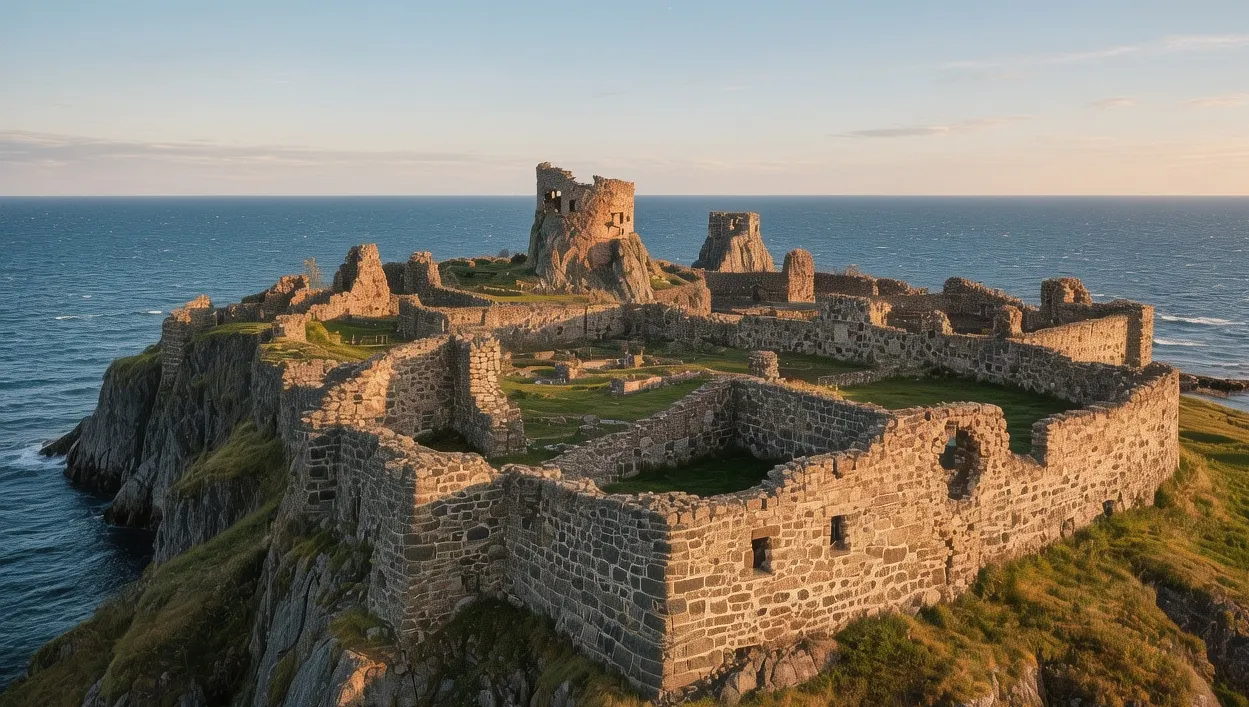
Hammershus Castle Ruins: Where Medieval Stone Meets Baltic Shores
I stand at the northern tip of Bornholm just after dawn. Wind carries salt spray straight into my face. Grass bends low across the rocky headland. Before me, walls of grey stone stretch toward the horizon. Some stand tall. Others lie in heaps half overgrown. This is Hammershus. It sits higher than any other fortress in Denmark. No modern buildings crowd it. No loud speakers blare. Just the sea, the wind, and centuries of history worn into every surface. I visited on a Tuesday in late May. Entry cost 65 DKK per adult. The walk up from the nearest parking area took me twenty minutes. My legs burned slightly by the top. The view made every step worth it.
Why Hammershus Castle Ruins Matters
Built in the 13th century, Hammershus guarded the sea lanes between Denmark, Sweden, and Germany. Kings and bishops fought over it repeatedly. It changed hands many times. By the 18th century, people stripped much of its stone for building elsewhere. What remains today tells a quieter, truer story than any restored castle can. You see where walls thickened for defense. Where fireplaces once warmed great halls. Where cracks opened and were never fully repaired.
One thing to know: it is not a polished attraction. There are no reconstructed tapestries or furnished rooms. Some visitors find that disappointing. They expect to step back into a fully furnished past. Instead you find empty doorways and open sky above. For me, that is part of its power. But it is fair to say it will not appeal to everyone.
The Best Time to Experience Hammershus Castle Ruins
Late May through early September offers the mildest conditions. Daytime temperatures sit between 15°C and 22°C (59°F–72°F). Nights cool to 10°C–13°C (50°F–55°F). Summer brings longer days. You can explore until late without rushing. It also brings crowds. July and early August see the most visitors. Arrive before 9:00 AM to share the ruins with only a handful of others.
Spring and early autumn suit slower travel. April, May, and September see fewer people. Temperatures hover around 10°C–15°C (50°F–59°F). Wind picks up in autumn. Rain falls more often. Winter offers near-total quiet, but many facilities close. Paths can ice over and become slippery. Check local conditions before setting out between December and March.
Approximate Budget for a 7-Day Trip
- Accommodation: 3,500 DKK – 5,600 DKK. A simple double room with breakfast runs toward the lower end. Comfortable coastal lodging sits higher. Book well ahead in July.
- Food & Drink: 1,750 DKK – 2,800 DKK. Café lunches cost 110 DKK–160 DKK each. Dinner at a mid-range restaurant runs 180 DKK–260 DKK per person. Buying groceries from local markets cuts this by nearly half.
- Transport: 800 DKK – 1,400 DKK. Renting a bicycle works well here. It costs roughly 100 DKK–150 DKK per day. Car rental offers more flexibility but costs more.
- Attractions & Entry: 450 DKK – 700 DKK. Hammershus entry is 65 DKK. Other sites on Bornholm carry similar fees.
- Miscellaneous: 600 DKK – 900 DKK. Covers coffee, snacks, small purchases, and unexpected needs.
Total estimated budget: 7,100 DKK – 11,400 DKK per person for 7 days.
One thing to watch: the café closest to the ruins charges premium prices. A simple sandwich can cost 95 DKK. Pack your own lunch and eat on the rocks overlooking the sea. It costs far less and tastes better.
Essential Hammershus Castle Ruins Experiences
- Walk the outer perimeter. Follow the path along the cliff edge. You see the fortress from every angle. Waves crash far below. Keep small children close. There are no fences in some sections.
- Climb to the highest point. The old watchtower base sits at the center. From here you see across forest to the Baltic. On clear days you can glimpse Sweden.
- Explore the lower courtyard. Foundations show where homes and workshops once stood. Notice how the layout guided visitors through narrow, easily defended gateways. Skip this area if you have trouble walking over uneven ground.
- Touch the weathered stone walls. Most areas allow close approach. You feel the rough surface worn smooth in places by centuries of hands.
- Watch light change across the walls. Late afternoon sun turns grey stone warm gold. Shadows lengthen and reveal every curve and crack. Stay at least until sunset if you can.
- Walk the forest path back down. It runs through dense pine and wild rose. It takes longer than the main road but feels quieter and cooler.
Hidden Gems Most Travelers Miss
- The small spring well inside the walls. It still holds water. It supplied the fortress through sieges. It sits low and partly hidden behind a ruined wall.
- Slotslyngen path below the main structure. It winds along the shoreline. You see arches and foundations from below. You will likely have stretches of it entirely to yourself.
- Overrated spot: the so-called "Queen’s Chamber." It is no more special than other sections. It draws crowds simply because of the name. You can safely spend more time elsewhere.
- Coastal viewpoint 10 minutes east along the trail. No sign marks it. It frames the ruins against open water perfectly.
Cultural & Practical Tips
- Wear sturdy, non-slip shoes. Stone surfaces become slippery when damp. Uneven ground covers nearly the whole site.
- Do not climb on unstable walls. Some sections are fragile. Falling stones can hurt you or damage what remains.
- Bring water and sun protection. The top is fully exposed. You find almost no shade up there.
- Do not expect indoor exhibits or restrooms right at the main ruin. Facilities sit near the parking area, a fair walk away. Plan accordingly.
- Respect quiet. Voices carry far on the headland. Many visitors come to think and look. Loud groups spoil the experience for everyone.
- Do not pick wildflowers or remove stones. Leave everything exactly as you found it.
- Buy tickets at the entrance or use the official machine. Scammers do not operate here, but unofficial resellers occasionally overcharge visitors.
Essential Visitor Information
Location & Access: Hammershus sits at the northern tip of Bornholm, roughly 7 kilometers north of Allinge. From Rønne, drive 35 kilometers north. Three ways to arrive: car via paved roads to the main parking area; bicycle on marked coastal paths; or bus from Allinge with limited daily runs. The final approach is on foot.
Tickets & Booking: 65 DKK per adult. Children under 18 enter free. Booking ahead is not required for most visits. Groups of 10 or more should notify staff in advance.
Operating Hours: Daily from 10:00 AM. Closing changes by season: 4:00 PM October through April, 6:00 PM May and September, 7:00 PM June through August. Closed some public holidays.
Visit Duration: Minimum 1 hour. Plan for 2 hours to walk all paths and sit quietly.
Family Suitability: Children welcome. Terrain suits older children best. Strollers with large wheels work; standard strollers will struggle. No playground at the site.
Timing: Best season: May or September. Best time: before 9:30 AM or after 5:00 PM. You avoid crowds and get softer light.
Highlights: Northern gatehouse, central tower foundation, coastal wall walk, lower courtyard, spring well.
Nearby & Day Trip: Allinge-Sandvig fishing village 7 km away. Hammersø lake 3 km south. Madsebakke cliffs 4 km east. Full-day trips to Christiansø run from nearby ports.
Conclusion: Travel with Depth, Not Just Sight
Hammershus does not give you polished rooms or royal stories acted out. It gives you time and space to think. About who walked here before. What they feared. What they hoped for. It asks you to fill in the gaps yourself. Leave the loudest attractions behind. Arrive early. Stay late. Walk slowly. What will you notice first when you step through those ancient gates?
Post a Comment