
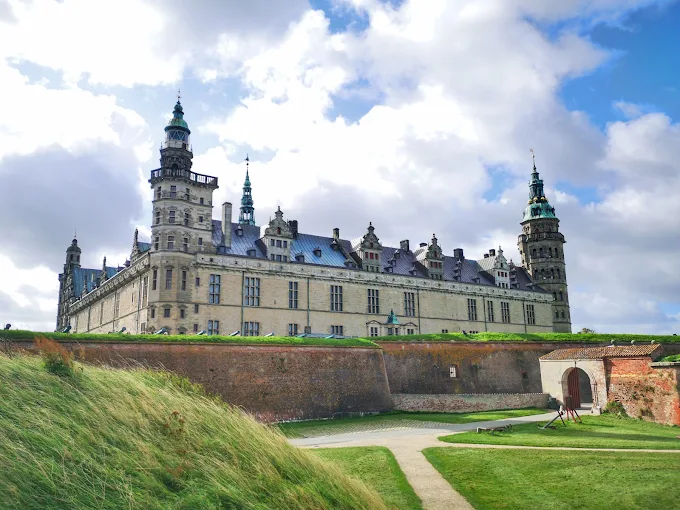
Kronborg Castle: Where Shakespeare's Drama Meets Danish Renaissance Grandeur
Dawn mist curls around the copper-green spires as the first light touches the sandstone façade—Kronborg Castle rises from the tip of Helsingør like a sentinel guarding the narrowest stretch of the Øresund Strait, where Denmark and Sweden stand merely four kilometers apart. You hear the gentle lap of Baltic waves against the fortress walls, the distant cry of seagulls wheeling above the battlements, and the soft echo of footsteps on cobblestones worn smooth by four centuries of visitors. This UNESCO World Heritage Site, constructed between 1574 and 1585 under King Frederick II, spans approximately 100 meters in length with towers reaching 30 meters skyward, its Renaissance architecture blending Dutch and Flemish influences into a masterpiece of military engineering and royal splendor [[15]][[22]]. The castle's legendary casemates—underground passages stretching 800 meters beneath the structure—once housed soldiers and stored provisions during sieges, while the Great Hall, measuring 62 meters long and 12 meters high, hosted lavish banquets that echoed with the politics of European power [[18]]. But Kronborg Castle matters because it transcends stone and mortar: it is the stage where Shakespeare imagined Hamlet's existential struggle, where history and literature intertwine, and where Denmark's maritime dominance once commanded the gateway between the North Sea and the Baltic.
Why Kronborg Castle Embodies Renaissance Power and Literary Immortality
Kronborg Castle represents the pinnacle of Renaissance military architecture fused with royal ambition, solving a critical strategic need while creating an enduring cultural symbol that resonates across centuries. When King Frederick II commissioned the reconstruction of the original Krogen fortress in 1574, he envisioned more than a defensive stronghold—he crafted a statement of Danish sovereignty at the Øresund's narrowest point, where the kingdom collected the lucrative Sound Dues from every ship passing between the North Sea and Baltic from 1429 until 1857 [[15]][[20]]. The castle's design, attributed to Flemish-Danish architect Hans van Paesschen, employed advanced engineering: thick sandstone walls up to 2.5 meters wide, strategically positioned bastions for cannon fire, and an innovative system of casemates—800 meters of underground tunnels carved from bedrock—that could shelter 500 soldiers during prolonged sieges [[18]][[24]].
The Great Hall, reconstructed after the devastating fire of 1629 under Christian IV, showcases Renaissance craftsmanship at its finest: intricate oak paneling, heraldic tapestries depicting Danish naval victories, and a ceiling adorned with 39 painted panels illustrating the castle's history [[22]]. The chapel, consecrated in 1582, retains its original organ from 1610—one of Northern Europe's oldest functioning instruments—while the royal apartments feature period furnishings that evoke the opulence of Danish court life. Kronborg Castle fulfilled a dual purpose: militarily, it controlled one of the world's most strategic waterways; culturally, it became immortalized when Shakespeare set Hamlet within its walls around 1600, transforming a Danish fortress into a universal symbol of ambition, betrayal, and existential questioning [[12]]. Today, the castle stands as a testament to how architecture can shape narrative, how power can be expressed through stone, and how a single location can bridge history, literature, and national identity. The ongoing preservation efforts, managed by the Danish Palaces and Properties Agency, ensure that future generations experience Kronborg Castle not as a relic but as a living dialogue between past and present.
The Best Time to Experience Kronborg Castle
Timing your visit to Kronborg Castle enhances both the atmospheric experience and practical accessibility of this historic site. The optimal window falls between May 22 and June 18, when Helsingør enjoys extended daylight hours—sunset occurs around 9:45 PM—and temperatures range from 13°C to 20°C (55°F to 68°F), creating ideal conditions for exploring the castle grounds and coastal pathways [[68]][[72]]. During this period, the castle gardens bloom with period-appropriate flora, outdoor theatrical performances of Hamlet begin in the courtyard, and the summer crowds have not yet peaked. For those prioritizing photography, visit between 6:30–8:30 AM when the eastern façade catches the soft morning light, or 7:00–9:00 PM for dramatic sunset reflections on the Øresund waters.
The castle operates year-round, but the most immersive experiences occur during the summer season (June–August), when guided tours in English run hourly from 10:00 AM to 4:00 PM and special events like the Kronborg Castle Festival showcase Renaissance music, fencing demonstrations, and historical reenactments. For current programming, ticket reservations, and virtual tours, visit the official Kronborg Castle website at www.kronborg.dk or the national tourism portal at www.visitdenmark.com [[52]][[85]]. Avoid visiting during late November through early February, when temperatures drop to -3°C to 4°C (27°F to 39°F), daylight shrinks to seven hours, and many outdoor areas close for preservation. Also steer clear of Danish school holidays (week 7 in February, week 42 in October) when domestic tourism increases crowd density. Standard admission costs DKK 125 for adults (€17), DKK 65 for children ages 6–17 (€9), with children under 6 admitted free [[24]]. The castle opens daily at 10:00 AM; last entry is 4:30 PM in winter and 5:30 PM in summer.
Approximate Budget for a 7-Day Trip
Exploring Kronborg Castle and the surrounding North Zealand region requires moderate budgeting, as Denmark maintains higher price points than many European destinations. However, strategic planning—including staying in Helsingør rather than central Copenhagen and utilizing regional transit passes—can optimize your experience. The following breakdown reflects mid-range preferences with cultural immersion priorities.
- Accommodation: €75–€130 per night for a double room in Helsingør (walking distance to Kronborg Castle); budget hostels €30–€50 per night for dorm beds; boutique hotels in historic buildings €150+ per night
- Food: €42–€70 per day total
- Breakfast: €7–€11 (Danish pastry and coffee from local bakery)
- Lunch: €14–€22 (smørrebrød open-faced sandwich or fish dish at harbor-side café)
- Dinner: €22–€38 (mid-range restaurant featuring traditional Danish cuisine like frikadeller or fresh Øresund fish)
- Castle café option: €6–€9 for soup, sandwich, and coffee
- Transportation:
- Copenhagen Card (72-hour): €95 includes unlimited public transport and free entry to Kronborg Castle plus 80+ attractions
- Regional train (DSB) from Copenhagen Central to Helsingør: €12 one-way, 45 minutes via Line E
- Local bus in Helsingør: €3 per ride; bicycle rental €10 per day
- Øresund ferry to Helsingborg, Sweden: €8 one-way (scenic bonus)
- Attractions:
- Kronborg Castle admission: €17 (DKK 125) adults; €9 children [[24]]
- Guided tour upgrade: €8 additional
- Maritime Museum of Denmark (nearby): €14
- Karen Blixen Museum (Rungsted): €12
- Hamlet theatrical performance (summer): €25–€45
- Miscellaneous:
- Castle gift shop: Renaissance-themed souvenirs €10–€40
- Audio guide rental: €4
- Photography permit for professional use: €30
Total estimated budget for 7 days: €880–€1,320 per person (excluding international flights)
7 Essential Kronborg Castle Experiences
- Walk the Royal Ramparts at Sunrise: Arrive at opening time (10:00 AM) and head directly to the outer battlements. The 360-degree panorama reveals the Øresund Strait's strategic importance: Sweden's coastline visible four kilometers away, cargo ships navigating the narrow channel, and Helsingør's red-roofed town clustered below. The sandstone walls, warmed by morning light, reveal intricate carvings and cannon emplacements. Allow 30 minutes for this contemplative circuit; bring a light jacket even in summer—harbor winds can be brisk.
- Explore the Casemates Underground: Descend into the 800-meter network of tunnels carved beneath the castle between 1639 and 1690. The atmospheric passages, illuminated by subtle lighting, once housed soldiers, stored gunpowder, and provided escape routes during sieges. Statues of Holger Danske, the legendary Danish knight who sleeps until the kingdom needs him, guard the deepest chamber. Visit between 11:00 AM–1:00 PM when guided explanations enhance the experience; allow 45 minutes for the full underground tour [[18]].
- Stand in the Great Hall: Enter the 62-meter-long Renaissance banquet hall where royal festivities once echoed. Observe the intricate oak paneling, the heraldic tapestries depicting naval victories, and the vaulted ceiling with its 39 painted panels. The acoustics are remarkable—speak softly near one end and a companion at the opposite wall can hear you clearly. Visit during the hourly guided tour (included in admission) to learn about the 1629 fire and Christian IV's meticulous reconstruction [[22]].
- Attend a Hamlet Performance: During summer months (June–August), professional theater companies stage Shakespeare's tragedy in the castle courtyard or Great Hall. Book tickets at least three weeks in advance through kronborg.dk. Arrive 45 minutes early to secure optimal seating; evening performances begin at 7:30 PM when the setting sun casts dramatic shadows across the Renaissance architecture. Bring a cushion—the stone benches are authentic but unforgiving.
- Photograph the Chapel's Historic Organ: The castle chapel, consecrated in 1582, houses one of Northern Europe's oldest functioning organs, built in 1610 by master craftsman Esajas Compenius. The instrument's ornate façade features carved biblical scenes and gilded details. Photography is permitted without flash; visit between 2:00–3:30 PM when natural light through the stained-glass windows illuminates the interior. Occasional organ recitals (check schedule) offer the rare chance to hear 400-year-old music in its original acoustic space.
- Walk the Coastal Path to Sankt Olai Church: Exit the castle's southern gate and follow the Øresund promenade 800 meters north to Helsingør's medieval parish church. This 15th-century Gothic structure, with its distinctive twin spires, offers panoramic views from the tower climb (142 steps). The walk takes 15 minutes and provides excellent exterior photographs of Kronborg Castle from the seaward perspective. Best attempted between 4:00–6:00 PM for golden-hour lighting.
- Visit the Royal Apartments: Explore the reconstructed chambers where Danish monarchs resided during castle visits. Period furnishings, tapestries, and interactive displays illustrate daily life in the Renaissance court. The Queen's Chamber features a four-poster bed and vanity table; the King's Study displays maps and navigational instruments reflecting Denmark's maritime power. Allow 40 minutes; audio guides (€4) provide rich contextual narration in eight languages.
3 Hidden Gems Most Travelers Miss
- Kronborg Castle's Garden of Renaissance Herbs: Tucked behind the eastern bastion, this meticulously recreated 16th-century herb garden features over 100 plant species used for medicine, cooking, and dyeing in Renaissance Denmark. Most visitors overlook this tranquil space, but it offers insight into period horticulture and sensory experiences—fragrant rosemary, medicinal sage, and vibrant marigolds. Access: Exit the Great Hall through the eastern door, follow signs for "Renaissance Garden"; open daily 10:00 AM–5:00 PM (summer), 10:00 AM–3:00 PM (winter); free with castle admission. Best visited between 11:00 AM–1:00 PM when garden volunteers provide informal explanations. The garden sits atop original 16th-century foundations, making it both botanical and archaeological.
- The Cannon Foundry Workshop: Located in the castle's northwestern bastion, this living-history demonstration space showcases 16th-century metalworking techniques used to craft Kronborg's defensive artillery. Master interpreters in period attire demonstrate mold-making, bronze pouring, and cannon finishing. Most tourists miss this because it operates on a limited schedule. Check the daily program at the entrance or visit www.kronborg.dk for times; demonstrations typically occur at 11:30 AM and 2:30 PM Tuesday–Sunday. The workshop's heat, sounds, and smells create an immersive historical experience unavailable elsewhere in the castle complex.
- Øresund Aquarium at Kronborg: Housed in a converted bastion near the main entrance, this small but exceptional aquarium showcases marine life native to the Øresund Strait—the very waters Kronborg Castle was built to control. Touch pools feature starfish and crabs; tanks display cod, herring, and eel species that sustained medieval Denmark. Access: Enter through the castle's main courtyard, turn left toward the harbor-side bastion; open daily 10:00 AM–4:00 PM; included with castle admission or €6 standalone. Visit between 1:00–3:00 PM when feeding demonstrations occur. The aquarium's intimate scale and focus on local ecology provide a unique counterpoint to the castle's grand historical narrative.
Cultural & Practical Tips
- Photography Guidelines: Photography is permitted throughout Kronborg Castle for personal use, but flash and tripods are prohibited indoors to protect historic furnishings. Exterior shots are unrestricted; the southeastern angle from the harbor promenade provides the most iconic view. Professional photography requires advance permission from the Danish Palaces and Properties Agency (+45 33 92 66 00).
- Language: While staff and signage are English-friendly, learning Danish phrases enhances your experience: tak (tahk = thank you), undskyld (oon-skool = excuse me), velbekomme (vel-buh-kom-muh = you're welcome). Danish pronunciation features soft consonants and melodic intonation.
- Dress Code: Comfortable walking shoes are essential—cobblestones, uneven ramparts, and 142 church tower steps demand sturdy footwear. Layer clothing; harbor winds can drop temperatures 5°C quickly even in summer. Bring a waterproof jacket year-round.
- Accessibility: The castle's historic architecture presents challenges: many areas require climbing stairs, and the casemates involve narrow, dim passages. Wheelchair access is available to the courtyard, Great Hall, and chapel via ramps; request assistance at the entrance. Audio guides include descriptive narration for visually impaired visitors.
- Weather Considerations: Helsingør's coastal location means rapid weather shifts. Check the forecast before visiting; fog can obscure Øresund views, while rain makes ramparts slippery. Summer (June–August) offers the most reliable conditions; spring and fall provide fewer crowds but pack layers for variable temperatures.
- Respectful Behavior: Kronborg Castle is both a tourist attraction and a preserved historic monument. Speak quietly in interior spaces, never touch artifacts or tapestries, and follow marked pathways. The castle hosts occasional royal ceremonies—check the schedule and respect any temporary closures.
- Combining with Copenhagen: Helsingør is a 45-minute train ride from Copenhagen Central Station (Line E). Purchase a Copenhagen Card for unlimited transport and free castle entry. Consider a day trip: depart Copenhagen at 8:30 AM, explore Kronborg until 3:00 PM, then visit the nearby Maritime Museum or enjoy harbor-side dinner before returning.
Conclusion: Travel with Reflection, Not Just Sightseeing
Kronborg Castle invites more than passive observation—it demands engagement with the layered narratives embedded in its sandstone walls: the strategic calculations of Renaissance kings, the artistic vision of Shakespeare, the resilience of a fortress that has witnessed war, fire, and transformation across four centuries. When you stand on those ramparts watching cargo ships navigate the Øresund, you're not merely viewing a scenic panorama; you're connecting with the maritime history that shaped Northern Europe, the literary imagination that transformed stone into symbol, and the ongoing dialogue between preservation and interpretation that keeps history alive. This isn't a place to rush through, checklist in hand, snapping photos before racing to the next attraction. Slow down. Listen to the echo of your footsteps in the casemates; feel the weight of centuries in the Great Hall's timbers; contemplate Hamlet's question—"To be or not to be"—in the very space where fiction and history converge. Travel here with curiosity about how places shape stories and how stories give meaning to places. Support preservation by respecting the site, choosing guided tours that employ local experts, and sharing not just images but understanding. The most transformative journeys leave you not just with memories of what you saw, but with deeper questions about who we are—and Kronborg Castle, with its blend of power, artistry, and enduring mystery, offers precisely that invitation to those willing to look beyond the surface.