
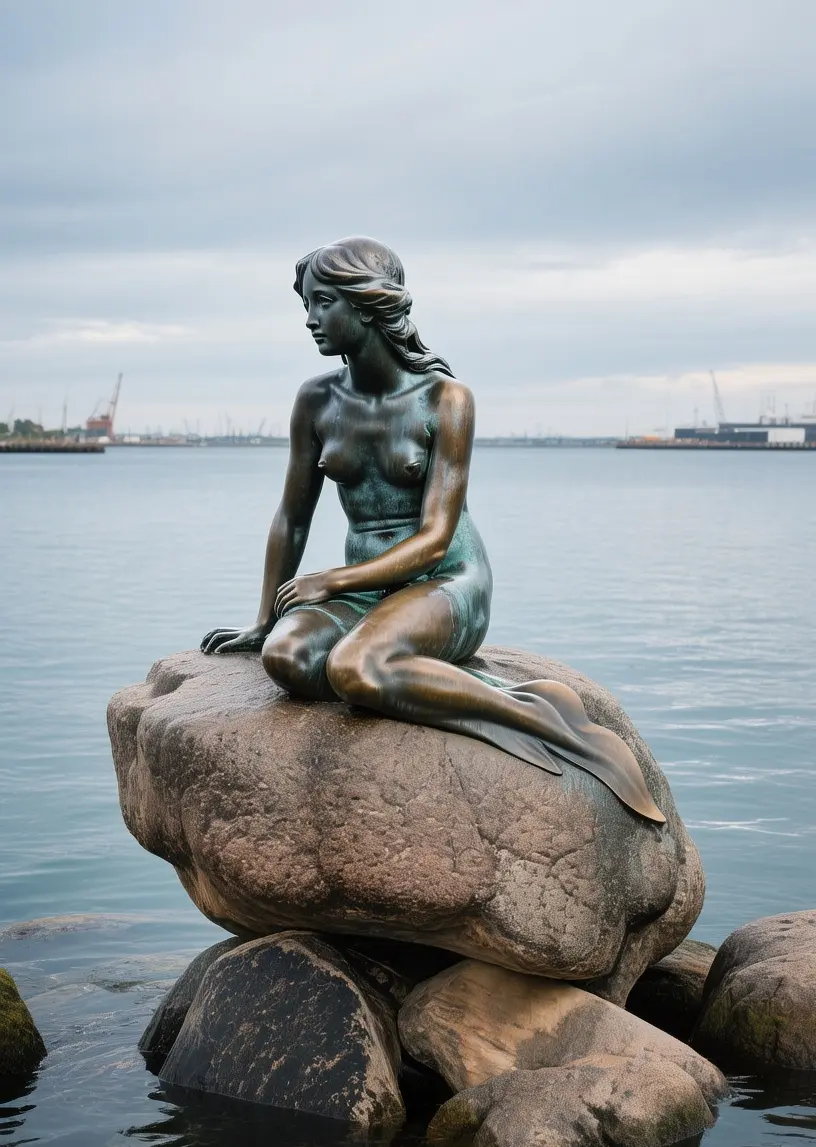
Little Mermaid: Where Bronze Poetry Meets Copenhagen Harbor
Dawn breaks over the Øresund Strait, casting a pale silver light across the granite rock where she sits—smaller than you imagined, yet somehow more powerful. The Little Mermaid statue, just 1.25 meters tall, gazes eternally seaward while gentle waves lap against the stone base and seagulls cry overhead. You approach along the Langelinie promenade, a tree-lined walkway where morning joggers pass silently and the air carries the briny scent of the harbor mixed with distant coffee from nearby cafés. This bronze figure, cast in 1913 and inspired by Hans Christian Andersen's melancholic fairy tale, has endured over a century of storms, vandalism, and millions of visitors—yet she remains, contemplative and unmoved. The water around her rock shimmers with shades of jade and steel, reflecting both the sky above and the weight of stories told about sacrifice, unrequited love, and transformation. In a world of towering monuments and grandiose sculptures, this modest figure matters precisely because of her vulnerability—she embodies the quiet courage of longing, the beauty of waiting, and the enduring power of Danish storytelling that has captivated hearts across generations.
Why the Little Mermaid Embodies Copenhagen's Soul
The Little Mermaid statue represents far more than a tourist photo opportunity—she is Copenhagen's most recognizable symbol, a bronze embodiment of Danish cultural identity that has watched over the harbor for over a century. Sculpted by Edvard Eriksen and unveiled on August 23, 1913, the statue stands on a granite base designed by architect Andreas Clemmensen, positioned at the Langelinie promenade where the freshwater of the Baltic Sea meets the saltwater of the Kattegat strait. The figure measures precisely 1.25 meters (4.1 feet) in height and weighs approximately 175 kilograms (386 pounds), cast in bronze using the lost-wax technique that preserves every delicate detail of Eriksen's artistic vision.
The statue solves a profound cultural need: it provides a tangible connection to Hans Christian Andersen's literary legacy while offering Copenhagen a symbol that balances melancholy with hope. Unlike triumphant monuments celebrating military victories or political power, the Little Mermaid embodies introspection and emotional depth—qualities deeply embedded in Danish culture. The sculpture depicts the moment from Andersen's 1837 fairy tale when the mermaid, having traded her voice for legs, sits on the shore watching the prince who will never love her, facing the choice between killing him to save herself or dissolving into sea foam. This narrative of selfless love resonates with hygge—the Danish philosophy of finding contentment in life's bittersweet moments.
Technically, the statue represents remarkable craftsmanship. Edvard Eriksen used his wife, Eline Eriksen, as the model for the body, while the head was modeled after ballerina Ellen Price, who performed in the Royal Danish Ballet's production of Andersen's tale. The bronze casting required multiple iterations to achieve the smooth, fluid lines that suggest both human form and aquatic grace. The granite rock base, quarried from Danish stone, provides stability against the harsh maritime climate where winter storms send waves crashing over the figure and freezing spray coats her in ice. Despite being decapitated twice, having an arm sawn off, and enduring various other acts of vandalism, the statue has been meticulously restored each time, demonstrating Copenhagen's commitment to preserving this cultural touchstone. The Little Mermaid fulfills a unique role: she is both intimate and iconic, small enough to approach yet monumental in meaning, making her the perfect ambassador for a city that values understated elegance over ostentatious display.
The Best Time to Experience the Little Mermaid
Timing transforms a simple visit into a memorable encounter with this iconic statue. The optimal window arrives May 15 through June 10, when daylight extends until 10:00 PM, temperatures range between 14–19°C (57–66°F), and the tourist crowds remain manageable before the peak summer influx. During this period, the surrounding park blooms with spring flowers, creating a verdant frame for the bronze figure, while the harbor water takes on a brilliant turquoise hue under clear Scandinavian skies.
For photographers and solitude-seekers, the 6:00–8:00 AM window offers magical conditions: soft dawn light illuminates the statue from the east, creating dramatic shadows across the granite base while the promenade remains nearly empty except for local joggers and dog walkers. The autumn alternative—September 20 through October 15—provides equally compelling conditions with temperatures of 10–15°C (50–59°F) and golden-hour light that bathes the bronze in warm tones from 5:30–7:00 PM.
Avoid July 1–August 15 when cruise ship season peaks and tour groups create crowds of 50–100 people competing for photos, making quiet contemplation impossible. Similarly, December 20 through January 5 brings harsh winter conditions with temperatures dropping to -2 to 3°C (28–37°F), frequent rain or snow, and only 6–7 hours of daylight—though the statue does present a dramatic sight when coated in ice.
For current conditions, event schedules, and harbor area information, consult the official resource: www.visitcopenhagen.com. The website provides real-time updates on construction, special events at nearby Kastellet fortress, and public transportation changes that might affect your visit. Remember that Copenhagen's maritime weather can shift rapidly—always check the forecast before heading to the waterfront, and dress in layers regardless of season.
Approximate Budget for a 7-Day Trip
Copenhagen ranks among Europe's pricier capitals, but strategic planning enables comfortable exploration. This breakdown reflects mid-range travel with quality accommodations, authentic dining, and comprehensive sightseeing, based on current pricing in Danish Kroner (DKK) with Euro conversions (1 EUR ≈ 7.45 DKK).
Accommodation:
• Budget hostel (shared room, Østerbro/Nørrebro area): 280–400 DKK (€38–54) per night
• Mid-range hotel (3-star, city center): 950–1,400 DKK (€128–188) per night
• Boutique hotel (4-star, Nyhavn vicinity): 1,600–2,200 DKK (€215–295) per night
Food:
• Breakfast: 70–100 DKK (€9–13) — Danish pastry and coffee at local bakery
• Lunch: 120–180 DKK (€16–24) — smørrebrød or hot dog from street vendor
• Dinner: 220–320 DKK (€30–43) — traditional Danish meal at mid-range restaurant
• Daily food total: 410–600 DKK (€55–81)
Transportation:
• Copenhagen Card (72-hour unlimited transport + attractions): 1,099 DKK (€148)
• Single metro/bus ticket: 24 DKK (€3.20)
• Airport to city center (metro line M2): 36 DKK (€4.80)
• Bicycle rental (daily): 100–150 DKK (€13–20)
• Walking to Little Mermaid from city center: Free (3.5 km)
Attractions:
• Little Mermaid statue: Free
• Tivoli Gardens entrance: 145 DKK (€19)
• National Museum of Denmark: Free
• Nyhavn canal tour: 129 DKK (€17)
• Kastellet fortress tour: Free
• Rosenborg Castle: 120 DKK (€16)
Miscellaneous:
• Souvenir postcards: 15–25 DKK (€2–3) each
• Danish design items: 300–800 DKK (€40–107)
• Coffee to go: 35–45 DKK (€5–6)
• Beer at café: 60–80 DKK (€8–11)
Total 7-Day Budget (Mid-Range): 7,800–10,500 DKK (€1,047–1,409)
7 Essential Little Mermaid Experiences
- Sunrise Contemplation: Arrive at the statue between 6:00–7:30 AM during summer months to witness the dawn light transform the bronze from dark silhouette to gleaming sculpture. The eastern exposure means the first rays strike the mermaid's face directly, creating a luminous effect that photographers prize. Stand quietly on the promenade and observe how the morning mist rises from the water, how the seagulls circle overhead, and how the harbor gradually awakens with fishing boats and pleasure craft. This solitary moment—before tour buses arrive—allows you to connect with the statue's melancholic beauty without distraction. Bring a thermos of coffee and sit on one of the nearby benches to absorb the peaceful atmosphere.
- Langelinie Promenade Walk: Extend your visit by walking the full 2-kilometer length of the Langelinie promenade, a tree-lined waterfront path that connects the Little Mermaid to Kastellet fortress and the city center. Begin at the statue and head south, passing the Gefion Fountain (depicting Norse mythology), the Church of Our Saviour's distinctive spiral spire visible in the distance, and numerous modern sculptures installed along the route. The walk takes 30–40 minutes at a leisurely pace and provides continuous harbor views. Stop at the Langelinie Pavilion restaurant for lunch around 12:00–1:00 PM, where you can dine with panoramic water views while watching sailboats navigate the channel.
- Photographic Perspectives: Capture the statue from multiple angles to tell a complete visual story. The classic frontal shot from the promenade works best at midday when overhead light minimizes shadows. For artistic variation, position yourself on the rock platform to the statue's left (accessible when water levels are low—check tide tables) for a three-quarter view that shows both the figure and the harbor behind her. The most dramatic shots occur during blue hour (9:30–10:30 PM in summer) when artificial lighting illuminates the bronze against a deep indigo sky. Use a tripod and 2-second exposure to smooth the water's surface while keeping the statue sharp. Respect other visitors by keeping your shoot brief during busy periods.
- Kastellet Fortress Exploration: After visiting the mermaid, walk 400 meters south to Kastellet, a perfectly preserved 17th-century star-shaped fortress that surrounds a charming village of red-roofed buildings, windmills, and a church. Enter through the King's Gate (free admission) and explore the ramparts where you can walk the complete perimeter in 45 minutes. The fortress provides elevated views back toward the Little Mermaid statue, offering a unique perspective of her position relative to the harbor entrance. Visit the Garrison Church, built in 1704, and observe the working windmill that still grinds grain using traditional methods. This combination of military history and peaceful green space reveals Copenhagen's layered past.
- Hans Christian Andersen Literary Trail: Connect the Little Mermaid to her literary origins by visiting sites associated with Andersen's life in Copenhagen. From the statue, take bus 25 or walk 2.5 kilometers to Nyhavn, where Andersen lived at three different addresses (numbers 18, 20, and 67) between 1834 and 1865. Continue to Rosenborg Castle gardens, where Andersen walked and found inspiration, then visit the Round Tower (Rundetårn), which he climbed 28 times. End at the Hans Christian Andersen Museum near City Hall Square. This 3–4 hour journey contextualizes the statue within the author's broader legacy and reveals how Copenhagen shaped his fairy tales.
- Harbor Swimming Experience: During summer months (June–August), when water temperatures reach 17–20°C (63–68°F), join locals swimming at nearby harbor baths. The most convenient is Svanemølle Beach, located 800 meters north of the Little Mermaid along the coast. This artificial beach features a wooden swimming platform, diving boards, and changing facilities. Swim toward the statue from the water for a unique perspective—though respect the protected area around the rock where swimming is prohibited. The experience connects you physically to the mermaid's element and provides the refreshing thrill of Baltic Sea swimming that Copenhageners cherish. Visit between 11:00 AM–4:00 PM for warmest water and lifeguard coverage.
- Evening Harbor Cruise: Book a canal tour departing from Nyhavn or Christiansborg that passes the Little Mermaid during sunset hours (8:00–9:30 PM in summer). The 60-minute Stromma Grand Tour (129 DKK) or budget Netto-Bådene option (60 DKK) provides commentary in multiple languages while navigating past the statue from the water—a perspective few land-based visitors experience. As the boat approaches Langelinie, the setting sun creates golden reflections on the bronze, and you'll understand why the statue faces eternally seaward, watching ships depart and arrive. Bring a windbreaker even on calm evenings; the harbor breeze cuts through light clothing. This floating viewpoint completes your understanding of the mermaid's relationship to Copenhagen's maritime identity.
3 Hidden Gems Most Travelers Miss
- Gefion Fountain Mythology: Located just 300 meters from the Little Mermaid along the Langelinie promenade, the Gefion Fountain depicts the Norse goddess plowing Zealand from Swedish soil with her four sons transformed into oxen. Created by Anders Bundgaard and unveiled in 1908, this massive sculptural group receives a fraction of the Little Mermaid's visitors despite being equally significant to Danish cultural identity. The fountain's dramatic bronze figures—showing straining muscles, flowing water, and dynamic movement—contrast beautifully with the mermaid's quiet stillness. Visit between 7:00–9:00 AM when morning light illuminates the western-facing sculpture and creates spectacular water spray effects. The fountain's base contains inscriptions explaining the creation myth of Denmark, providing context often missed by hurried tourists. Spend 15–20 minutes studying the details: the goddess's determined expression, the oxen's powerful forms, and the intricate water channels that create cascading effects.
- Langelinie Pavilion's Secret Terrace: The Langelinie Pavilion restaurant, situated 200 meters south of the Little Mermaid, features a hidden upper terrace accessible via a side staircase that most diners overlook. This elevated platform provides unobstructed views of both the statue and the harbor entrance where ships pass continuously. Request a table on the "øvre terrasse" (upper terrace) when booking by calling +45 35 26 26 26, or simply walk up the exterior stairs during lunch hours (11:30 AM–2:00 PM) when the space operates as a café with lighter fare. Order a traditional Danish smørrebrød (145–185 DKK) and a Carlsberg beer (65 DKK) while watching container ships navigate the narrow channel. The terrace remains relatively unknown because it lacks signage and the main restaurant entrance faces away from the water. This insider spot offers the perfect combination of views, local atmosphere, and reasonable prices that typical tourist traps lack.
- Churchill Parken's Sculpture Garden: Walk 600 meters inland from the Little Mermaid to discover Churchill Parken, a sprawling green space containing over 30 modern sculptures created between 1945 and 1970 that commemorate Denmark's World War II resistance. The park's centerpiece is the "Danmark-statuen" (Denmark Statue) by Siegfried Wagner, depicting a winged female figure symbolizing freedom. Unlike the crowded mermaid, this park receives mostly local visitors—joggers, dog walkers, and families having picnics—creating a peaceful atmosphere for art appreciation. Access the park via Classensgade entrance and follow the sculpture trail marked by small bronze plaques explaining each work. The park remains overlooked because it lacks the waterfront location and fairy-tale association of the Little Mermaid, yet it provides crucial context for understanding modern Danish identity and the values of resistance, freedom, and democracy that shaped post-war Copenhagen. Visit during weekday afternoons (2:00–4:00 PM) when the angled sunlight creates dramatic shadows across the bronze and stone sculptures.
Cultural & Practical Tips
- Respectful Photography: While the Little Mermaid is public property and photographing her is unrestricted, be mindful of other visitors waiting for their turn. Limit your photo session to 5–10 minutes during busy periods (10:00 AM–4:00 PM), and never climb on the statue or the rock base—this is strictly prohibited and enforced by harbor police. The statue has suffered multiple vandalism incidents, and authorities maintain surveillance cameras in the area. For the best photos without crowds, arrive before 8:00 AM or after 7:00 PM.
- Danish Greetings: When interacting with locals near the statue or at nearby cafés, use the greeting "Goddag" (GOH-dah, "Good day") rather than "Hello"—it's more formal and appreciated. If someone helps you with directions, respond with "Mange tak" (MAHN-geh tahk, "Many thanks"). Danes value politeness but appreciate brevity; a simple nod and smile suffices in passing.
- Weather Preparedness: The Langelinie waterfront experiences stronger winds than the city center due to unobstructed exposure to the Øresund Strait. Even on warm summer days, temperatures can feel 3–5°C cooler at the statue. Always carry a windproof jacket, and in winter months (November–March), wear waterproof boots as waves frequently splash over the promenade. Check the Danish Meteorological Institute's marine forecast before visiting if you plan to walk the rocks.
- Transportation Options: Reach the Little Mermaid by taking bus 25 from Nørreport Station (15-minute ride, 24 DKK) and disembarking at "Langelinie" stop. Alternatively, walk 35 minutes from Nyhavn along the scenic waterfront promenade—this route passes Kastellet and provides continuous harbor views. Cycling is highly recommended; rent a city bike for 120 DKK/day and use the dedicated bike lanes that run parallel to the promenade. Parking is limited; if driving, use the paid lot at Langelinie Pavilion (30 DKK/hour).
- Accessibility Information: The promenade leading to the statue is fully wheelchair-accessible with smooth paved surfaces and gentle gradients. However, the rock platform where the statue sits is not accessible due to uneven granite surfaces and water barriers. Viewing from the promenade provides excellent visibility, and several benches along the route offer resting points. Accessible restrooms are available at Langelinie Pavilion (open 8:00 AM–8:00 PM daily).
- Safety Considerations: The area is generally safe at all hours, but exercise normal caution after dark when lighting is limited between the statue and Kastellet. Pickpocketing occasionally occurs in summer crowds—keep bags zipped and wallets in front pockets. Swimming near the statue is prohibited due to boat traffic and strong currents, but designated swimming areas exist 800 meters north at Svanemølle Beach during summer months (lifeguards on duty 11:00 AM–7:00 PM).
- Seasonal Events: On August 23, the statue's unveiling anniversary, small commemorative gatherings occur with speeches and flower-laying ceremonies—visitors are welcome to observe respectfully. During Copenhagen Culture Night (second Friday in October), the statue receives special illumination and guided tours depart hourly from 6:00–10:00 PM. The harbor freezes occasionally in severe winters (January–February), creating a dramatic ice sculpture effect, though visiting during these conditions requires extreme caution due to slippery surfaces.
Conclusion: Travel with Reverence, Not Just Selfies
The Little Mermaid endures not because she photographs well—though her silhouette against the harbor sky has become one of the world's most recognizable images—but because she embodies something profoundly human: the courage to face transformation, the grace to accept loss, and the quiet dignity of waiting without guarantee. In an era of instant gratification and curated perfection, this small bronze figure reminds us that beauty often emerges from sacrifice, that longing itself has value, and that some journeys end not in triumph but in transcendence.
Responsible travel here means approaching the statue with more than a checklist mentality. It means taking time to read Hans Christian Andersen's original tale—darker and more complex than Disney's adaptation—and understanding why this story resonates so deeply with Danish culture. It means respecting the space as both a cultural monument and a working harbor, keeping noise levels considerate, and leaving no trace of your visit beyond photographs. When you stand before her, resist the urge to rush to the next attraction. Sit on the nearby benches. Watch how the light changes across the bronze. Observe the ships passing in the channel, the gulls circling overhead, the way Copenhageners walk their dogs along the promenade without stopping, treating this international icon as simply part of their daily landscape.
This is how places remain meaningful—when visitors become temporary participants in ongoing stories rather than extractive consumers of scenery. The Little Mermaid has watched over this harbor for over a century, witnessing wars and peace, occupation and liberation, countless sunrises and storms. She will continue long after your visit ends. Honor her by slowing down, by looking deeply, by carrying forward not just a photograph but a moment of genuine connection with the quiet poetry of this bronze figure who gazes eternally toward the horizon, teaching us that sometimes the most powerful monuments are those that sit quietly and wait.