Møn White Cliffs: Where Dramatic Chalk Formations Meet Baltic Sea Majesty
Møn White Cliffs: Where Ancient Chalk Meets Dark Sky Reserve
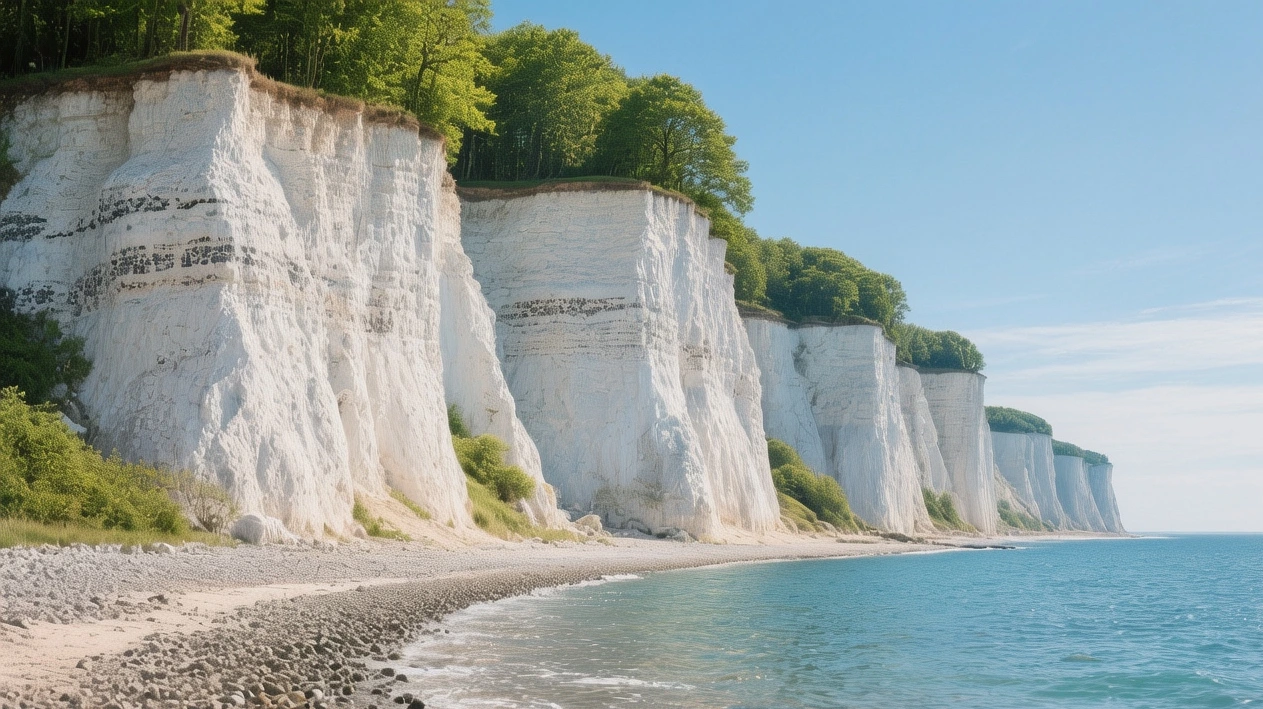
I stand at Dronningestolen at eight in the morning. White chalk drops one hundred and twenty-eight meters straight to the sea. The Baltic stretches blue and endless below. I paid 45 DKK for parking near the GeoCenter. The boardwalk and cliff top trails cost nothing. A light breeze carries the sharp clean scent of beech and salt. Sunlight hits the chalk face and reflects back bright enough to make me squint. I walked the wooden boardwalk north. It runs level and wide. Underfoot it feels solid. Every few steps the view opens wider. I saw no more than six other people in the first hour. Most arrive closer to midday. The early quiet stays with me still.
Why Møn White Cliffs Matters
Møn White Cliffs — Møns Klint — stretches six kilometers along the island's eastern coast. The chalk formed seventy million years ago from microscopic sea creatures that settled on a tropical seabed. Glaciers lifted and folded the layers eleven thousand years ago. Then the sea and wind carved the cliffs we see today. At one hundred and twenty-eight meters, these are Denmark's highest cliffs. The ancient beech forest behind them includes trees four hundred years old. Rare orchids grow in the meadows above. The area also holds Dark Sky Reserve status — one of the few places in Denmark where you can still see the Milky Way clearly on a moonless night.
It is not a pristine untouched wilderness. Landslides happen regularly. Large sections of the cliff face show bare disturbed rock where chunks have fallen away. Some visitors find these scarring unsightly. They expect a smooth unbroken white wall from end to end. The GeoCenter building sits prominently near the main entrance. Its modern concrete design divides opinion — some find it intrusive against the natural landscape. You also cannot walk the full six kilometers continuously; unstable ground closes sections without warning.
The Best Time to Experience Møn White Cliffs
Late May through early September offers the mildest conditions and longest daylight. Daytime temperatures sit between 14°C and 21°C (57°F–70°F). Nights cool to 9°C–12°C (48°F–54°F). The wooden staircase to the beach stays open. Wildflowers cover the meadows above the cliffs. July and August see the most visitors. Arrive before 9:00 AM to find parking and walk without crowds.
April, early May, and September balance pleasant weather and fewer people. Temperatures hover around 10°C–16°C (50°F–61°F). Spring brings fresh green leaves to the beech forest. Autumn turns the canopy gold and amber. October through March brings shorter days, stronger wind, and occasional rain. Temperatures drop to 2°C–7°C (36°F–45°F). The beach staircase may close due to ice or storm damage. Winter gives you nearly empty trails and excellent dark-sky viewing, but you must check conditions before traveling. The visitor centre operates reduced hours.
Approximate Budget for a 7-Day Trip
- Accommodation: 3,500 DKK – 5,600 DKK. Guesthouse or B&B in Stege sits at the lower end. Coastal holiday cottage runs 800–1,100 DKK per night. Staying in Copenhagen and day-tripping adds travel time but wider lodging options.
- Food & Drink: 1,750 DKK – 2,800 DKK. Café lunch near the cliffs costs 100–170 DKK. Dinner at a local restaurant runs 180–290 DKK per person. Buying bread, cheese, and fresh fish from village markets cuts food spending nearly in half.
- Transport: 840 DKK – 1,540 DKK. Car rental from Copenhagen starts around 400 DKK daily plus fuel. Public transport takes longer — train to Vordingborg then bus to Møn costs roughly 150 DKK one way. Bicycle rental works well locally at 110–160 DKK per day.
- Attractions & Entry: 450 DKK – 800 DKK. Cliff trails and beach access free. GeoCenter 155 DKK per adult. Guided fossil walks and Forest Tower visit carry separate fees.
- Miscellaneous: 560 DKK – 910 DKK. Covers parking, coffee, snacks, and small purchases.
Total estimated budget: 7,100 DKK – 11,650 DKK per person for 7 days.
One thing to watch: guided tours from Copenhagen charge premium rates — often 450 DKK or more per person just for transport and guide. You can drive yourself for less than half that price. The boardwalk and trail signage are clear enough that you do not need a guide to enjoy the site.
Essential Møn White Cliffs Experiences
- Walk the cliff-top boardwalk to Dronningestolen. The wide wooden path runs gently north from the GeoCenter. It suits all walking abilities. Dronningestolen — the Queen's Chair — marks the highest point. Keep small children close; there are no barriers along the edge.
- Descend the staircase to the beach. Almost five hundred steps lead down to the shoreline. White chalk and flint stones cover the sand. Fossil hunting works best at low tide. Skip this if you have knee or hip trouble — the climb back up is steep.
- Explore the GeoCenter. Exhibits explain seventy million years of geology and local history. The building itself sits partly embedded in the hillside. Go here after your walk so the outdoor experience sets your perspective.
- Walk the beech forest trails. Paths wind through ancient trees behind the cliffs. Sunlight filters through branches. Wild orchids bloom in the meadows from late May through June. Stay on marked paths to protect rare plants.
- Watch sunset from the southern viewpoints. The low sun turns white chalk warm gold. The Baltic glows deep orange. Most people leave well before this time. You often have the spot nearly to yourself.
- Experience the Dark Sky Reserve. On clear moonless nights, the Milky Way stretches bright across the sky. Use red light only; white flashlights ruin night vision. Check the moon phase calendar before planning this visit.
Hidden Gems Most Travelers Miss
- Klintholm Havn — a small fishing harbor three kilometers south. The shoreline here offers lower quieter views of the cliffs from the water. Few day-trippers walk this far.
- The western forest loop. Most people stay near the cliff edge. The inland trail winds through older denser beech. Wilder and quieter, it circles back to the main parking area.
- Overrated spot: the main viewpoint platform at Dronningestolen. Every tour group stops here. Walk five minutes farther north along the edge for identical views with almost no one else.
- Stege Town — the island's main settlement. Cobbled streets, half-timbered houses, and a medieval church. It sits ten minutes by car from the cliffs and offers relaxed slower-paced dining.
- Liselund Park — a romantic landscaped garden with ponds, follies, and old trees. It lies five kilometers north of the cliffs. The grounds feel peaceful and entirely different from the coastal landscape.
Cultural & Practical Tips
- Do not pick flowers or remove plants. The area is protected. Several orchid species here grow nowhere else in the region. Even seemingly common wildflowers may be rare.
- Stay behind marked safety lines. Erosion happens constantly. Large chunks have fallen without warning. Do not climb down unstable slopes or stand near crumbling edges.
- Parking fills quickly between 11:00 AM and 2:00 PM in summer. Arrive before 9:30 AM or after 3:00 PM to avoid waiting. The main lot is smaller than you might expect for how popular the site is.
- Wear sturdy non-slip shoes. The beach is uneven and chalk becomes slippery when wet. The forest trails hold roots and mud even in dry weather. Flip-flops make walking difficult.
- Do not take chalk or flint home in large quantities. Small loose stones found on the beach are fine keepsakes, but removing larger pieces or digging at the cliff face damages the formation and carries a fine.
- Pack layers. Weather changes fast near the coast. A calm morning can turn windy and overcast by midday. Temperatures at the top feel noticeably cooler than at sea level.
Essential Visitor Information
Location & Access: Møn White Cliffs lie on the island of Møn in southern Denmark. Address: Stengårdsvej 8, 4791 Borre. Three ways to arrive: car from Copenhagen via E47 (approx. 2 hours); train to Vordingborg then bus to Stege then bus 678 to the cliffs (seasonal); guided tour from Copenhagen. No railway serves the site directly.
Tickets & Booking: Cliff trails and beach access free. GeoCenter 155 DKK adults, 100 DKK children 3–11, under 3 free. Booking ahead recommended June–August but not mandatory. Parking 45 DKK per visit.
Operating Hours: Outdoor trails open 24 hours daily year-round. GeoCenter 10:00 AM–5:00 PM Easter–October; closed November–March. Beach staircase may close in winter due to ice or storm damage.
Visit Duration: Minimum 2–3 hours for the main boardwalk and viewpoint. 5–6 hours lets you descend to the beach and walk forest trails. A full day covers everything including the GeoCenter.
Family Suitability: Highly suitable. The boardwalk accommodates strollers and wheelchairs. The beach staircase is steep and long — difficult for very young children or those with limited mobility. Restrooms and café near the main entrance.
Timing: Best season: May or September. Best time: before 9:00 AM or after 4:30 PM. For stargazing: new moon nights between August and April offer the darkest skies.
Highlights: Dronningestolen viewpoint, beach and fossil beds, ancient beech forest, southern sunset views, Dark Sky Reserve.
Nearby & Day Trip: Stege 10 km west. Liselund Park 5 km north. Klintholm Havn 3 km south. Copenhagen day trip possible — roughly 2 hours each way by car.
Conclusion: Travel with Depth, Not Just Sight
Møn White Cliffs show you more than a beautiful view. They show you time itself — seventy million years pressed into white stone. You can touch what was once a tropical seabed. Walk slowly. Look closely at the flint layers. Stay until the crowds leave. What will you see when you stand at the edge and look out across the water?
Post a Comment