Stevns Klint: Where Ancient Extinction Meets Baltic Coastal Majesty
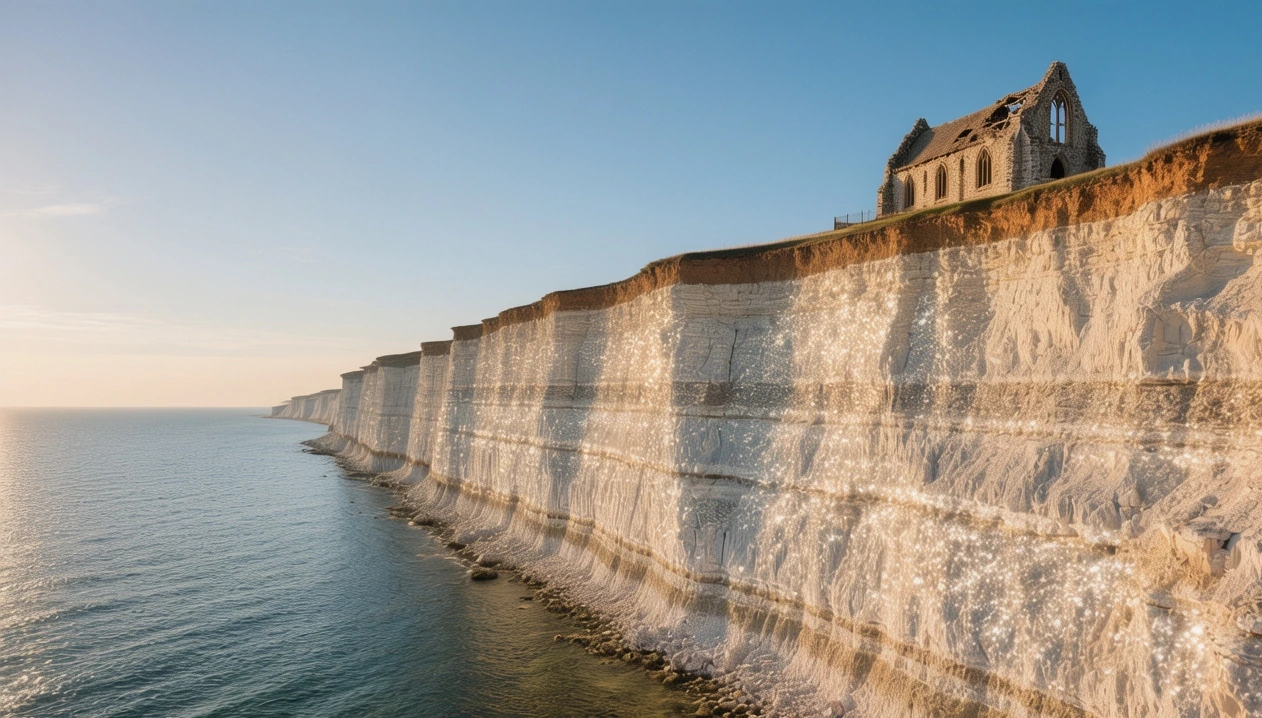
Stevns Klint UNESCO World Heritage: Where Ancient Cliffs Meet Cosmic History
I stand at the cliff edge just after nine in the morning. White chalk falls away forty meters to the Baltic below. Wind carries the sharp clean smell of salt and exposed stone. I spot the thin dark grey band running horizontally across the face — the fish clay layer. It marks exactly when the asteroid struck sixty-six million years ago. The moment the dinosaurs ended. I paid 50 DKK to park near Højerup Church. The main coastal path cost nothing to enter. I walked two kilometers before stopping. My boots crunched over loose flint and fossil shells. No crowds yet. Just the sea and the quiet weight of deep time.
Why Stevns Klint UNESCO World Heritage Matters
Stevns Klint stretches seventeen kilometers along Zealand's eastern coast. It was named a UNESCO site in 2014. The cliffs show the clearest, most accessible record anywhere of the Cretaceous-Paleogene boundary. That thin dark layer holds traces of the asteroid impact that wiped out seventy-five percent of all life on Earth. Below it lies white chalk formed on an ancient seabed. Above it sits harder limestone from the world that grew back. You can touch the transition with your own hand. Few places on Earth make such a vast shift in history so tangible.
It is not a polished theme park. Some visitors will find the landscape quiet and unassuming. There are no dramatic statues or reconstructed scenes. Much of the story stays invisible unless you know what to look for. The cliffs also erode steadily. Sections close without warning when ground becomes unstable. You cannot walk the full length in a single continuous stretch.
The Best Time to Experience Stevns Klint UNESCO World Heritage
Late May through early September brings the longest days and mildest weather. Daytime temperatures sit between 15°C and 22°C (59°F–72°F). Nights cool to 10°C–13°C (50°F–55°F). The trail stays open until late sunset. Arrive before 10:00 AM to claim parking and walk without crowds. July and early August see the most visitors. Popular spots fill up fast.
April, early May, and September offer fewer people and fresh light. Temperatures hover around 10°C–15°C (50°F–59°F). Spring brings wildflowers along the cliff top. Autumn leaves turn the inland edges gold. October through March brings shorter days and stronger wind. Temperatures drop to 2°C–7°C (36°F–45°F). The cliff path stays open year-round, but the visitor centre closes earlier and some sections may be roped off. Winter gives you nearly empty trails, but check conditions before setting out.
Approximate Budget for a 7-Day Trip
- Accommodation: 3,150 DKK – 5,250 DKK. Guesthouse or B&B near Store Heddinge sits at the lower end. Coastal holiday apartment runs 750–900 DKK per night. Staying in Copenhagen and day-tripping adds transport cost but more lodging options.
- Food & Drink: 1,540 DKK – 2,660 DKK. Café lunch nearby costs 95–165 DKK. Dinner at a local restaurant runs 170–280 DKK per person. Buying bread, cheese, and smoked fish from village markets cuts food spending nearly in half.
- Transport: 700 DKK – 1,470 DKK. Car rental from Copenhagen starts around 350 DKK daily plus fuel. Train plus bus from central Copenhagen takes longer but costs less — roughly 120 DKK round trip per person. Bicycle rental works well for the immediate area at 100–140 DKK per day.
- Attractions & Entry: 280 DKK – 560 DKK. Cliff path is free. Stevns Klint Experience costs 140 DKK per adult. Lighthouse and Cold War bunker carry separate fees around 60–85 DKK each.
- Miscellaneous: 420 DKK – 770 DKK. Covers parking fees, coffee, snacks, and small purchases.
Total estimated budget: 6,090 DKK – 10,710 DKK per person for 7 days.
One thing to watch: guided tours from Copenhagen charge premium rates — often 350 DKK or more per person just for the guide. You can take the train and bus yourself for less than half that price. The signage along the path is clear and informative enough that you do not need a guide.
Essential Stevns Klint Experiences
- Walk the Trampesti coastal trail. Follow the marked path along the cliff edge from Højerup toward Rødvig. Look down to spot the dark boundary layer. Keep children close — there are no barriers in some sections.
- See the K/Pg boundary from the beach. Descend to the shoreline where safe. The fish clay layer shows clearly from below. You can pick up loose fossils on the beach. Do not hammer or chip the cliff face itself.
- Visit Stevns Klint Experience. Start here before walking the trail. Exhibits explain the geology and history simply. The building sits partly inside the old limestone quarry. Skip if you are short on time — the outdoor trail holds the real thing.
- Stand at Højerup Old Church. The church sat right at the cliff edge for centuries. Part of the priest's house fell into the sea in 1928. The building still stands, close enough that you see the drop from the churchyard wall.
- Climb Stevns Lighthouse. The white tower marks the eastern point. Steps lead to a narrow viewing platform. The view stretches across the sea and along the white cliff line. It is small and fills up fast.
- Explore the Cold War bunker. Stevns Fortress sits hidden underground near the lighthouse. Tunnels and command rooms show a different layer of local history. It feels surprisingly separate from the geology focus elsewhere.
Hidden Gems Most Travelers Miss
- Boesdal Kalkbrud quarry. The old limestone pit lies just south of the main visitor centre. Exposed rock faces show every geological layer in vertical cross-section. Fewer visitors walk here.
- The northern trail section toward Klippinge. Most people walk only the central stretch near the church and lighthouse. Farther north the path runs through woodland and meadow with quieter views.
- Overrated spot: the main viewpoint platform near Højerup Church. It draws every tour group and feels crowded. Walk five minutes south along the edge for identical views with almost no one else there.
- Rødvig Harbour at sunset. The fishing harbor sits at the southern end of the trail. Wooden boats, old warehouses, and calm water reflect changing light. Stop for an ice cream or simple dinner before heading back.
- Fossil hunting at low tide near the boundary layer. When the tide pulls back, loose blocks reveal shells and small fossils from both Cretaceous and post-impact periods. Check tide times so you do not get stranded.
Cultural & Practical Tips
- Do not chip or hammer the cliff face. It is protected. You may examine loose stones and fossils found on the beach. Taking large specimens or digging into rock carries a fine.
- Parking fills quickly between 11:00 AM and 2:00 PM in summer. Arrive before 10:00 AM or after 3:00 PM to avoid waiting. The main lot near the church is small for how popular the site is.
- Stay behind marked safety lines. Erosion happens constantly. Ground can give way without warning. Several sections close temporarily each year after heavy rain or storm surge.
- Wear sturdy shoes. The path runs over grass, gravel, and uneven chalky ground. When damp it becomes slippery. Flip-flops and smooth-soled shoes make walking difficult.
- Bring water and sun protection. The cliff top offers almost no shade. Wind can be strong enough to make hats fly away. Pack accordingly even on mild-looking days.
- Do not expect full facilities everywhere. Restrooms sit near the main parking and visitor centre. Few other spots have them. Plan your stops accordingly.
Essential Visitor Information
Location & Access: Stevns Klint lies near Store Heddinge, approximately 65 km southeast of Copenhagen. Three ways to arrive: car via E20 then local roads (55–70 minutes); train from Copenhagen to Store Heddinge then local bus; or guided tour from central departure points. Main entry point is Højerup near the old church.
Tickets & Booking: Cliff path and beach access free, no ticket needed. Stevns Klint Experience 140 DKK adult, free for children under 12. Booking ahead recommended June–August but not mandatory. Lighthouse and bunker 60–85 DKK each.
Operating Hours: Cliff path open 24 hours daily year-round. Stevns Klint Experience 10:00 AM–5:00 PM June–September; 10:00 AM–4:00 PM Tuesday–Sunday October–May. Lighthouse and bunker have separate shorter schedules.
Visit Duration: Minimum 2–3 hours for main section. 5–6 hours lets you walk from church to lighthouse and down to the beach. A full day covers the longer trail and museum.
Family Suitability: Children welcome. The outdoor path suits older children best. Uneven ground and exposed edges make strollers difficult. No playground at the site. Facilities available near the visitor centre.
Timing: Best season: May or September. Best time: before 10:00 AM or after 4:00 PM. You avoid peak parking pressure and get softer light on the white faces.
Highlights: K/Pg boundary layer, Højerup Old Church, Stevns Lighthouse, Boesdal Quarry section, beach fossil zones.
Nearby & Day Trip: Rødvig fishing harbor 8 km south. Store Heddinge market town 6 km west. Fakse Limestone Quarry 20 km south. Copenhagen day trip possible — about one hour each way by car.
Conclusion: Travel with Depth, Not Just Sight
Stevns Klint does not shout its importance. It shows you a thin dark line in stone and asks you to imagine what it means. The end of one world. The slow beginning of another. You do not need to be a geologist to feel it. Walk slowly. Touch the layers. Think about the vast span of time they represent. What story will you tell when you stand on that cliff edge yourself?
Post a Comment