
Ribe: Where Viking Heritage Meets Medieval Danish Charm
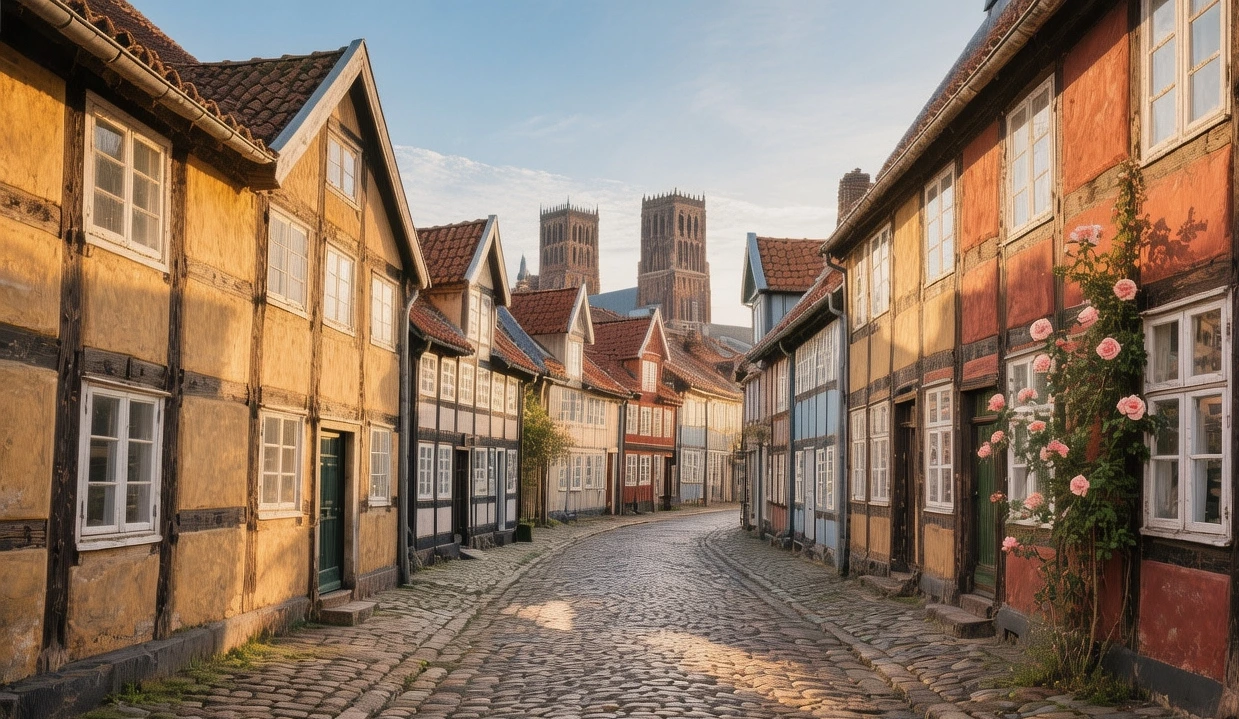
Early morning mist curls around the cobblestones of Denmark's oldest town as sunlight gilds the half-timbered facades—Ribe awakens with the gentle chime of cathedral bells, the distant call of wading birds from the nearby Wadden Sea, and the soft footsteps of early risers tracing pathways worn smooth by thirteen centuries of history. You breathe air scented with salt marsh and freshly baked rye bread, hear the murmur of Danish conversation echoing between gabled houses that lean conspiratorially toward one another, and feel the weight of time in every weathered beam and iron lantern bracket. Founded around 710 AD as a Viking trading post, Ribe spans approximately one square kilometer of meticulously preserved medieval streets, where the imposing Ribe Cathedral rises fifty-five meters above the marketplace, its Romanesque towers and Gothic additions telling a story of faith, commerce, and resilience [[15]][[22]]. The town's Viking Age museum displays artifacts from excavations revealing Ribe's role as a North Sea hub, while the cobbled alleys—some barely two meters wide—invite you to wander without destination. But Ribe matters because it offers a rare portal to early European urban life: not a reconstructed theme park, but a living town where history breathes in the present, where every corner whispers of merchants, monks, and mariners who shaped the North Sea world.
Why Ribe Embodies Denmark's Ancient Urban Soul
Ribe represents the enduring heartbeat of Danish urban history, solving a fundamental need to preserve authentic medieval fabric while creating a living community that honors its Viking origins without sacrificing modern vitality. When Frisian merchants established a trading post at Ribe around 710 AD, they selected a strategic location at the confluence of the Ribe River and the Wadden Sea, creating Scandinavia's first permanent town—a nexus where furs, amber, and silver flowed between the North Sea and Baltic regions [[15]][[20]]. The town's layout, still visible today, follows a distinctive radial pattern: narrow cobbled lanes radiating from the central marketplace, plots averaging ten meters wide and thirty meters deep, with timber-framed structures built on stone foundations to withstand the marshy terrain [[18]][[24]].
Ribe Cathedral, initiated around 1150 and expanded through the 1500s, showcases the evolution of ecclesiastical architecture: Romanesque granite ashlar walls, Gothic vaulted ceilings rising twenty meters above the nave, and a distinctive twin-tower façade that dominates the town's skyline. The cathedral houses Denmark's oldest astronomical clock, crafted in 1495, which still marks the hours with mechanical figures depicting day and night [[22]]. Beyond the cathedral, Ribe's 150+ protected buildings include the Town Hall from 1496, the Apothecary Museum in a 1600s merchant's house, and the Viking Age exhibition center displaying artifacts from excavations that uncovered workshops, dwellings, and trade goods from the 8th to 11th centuries. Ribe fulfilled a critical historical role: as Denmark's first mint, its earliest bishopric, and a model for urban planning that influenced towns across Northern Europe. Technical preservation efforts include underfloor heating systems that protect historic timber from moisture damage, specialized lime mortar matching medieval recipes for authentic restoration, and climate monitoring that maintains 19°C (66°F) and 50% humidity in museum spaces [[18]]. Today, managed by the Danish Agency for Culture and Palaces alongside local heritage organizations, Ribe stands as a testament to how continuity can coexist with change, how preservation can serve community, and how a single town can anchor national identity through millennium-spanning resilience.
The Best Time to Experience Ribe
Timing your visit to Ribe profoundly influences both atmospheric immersion and practical accessibility. The optimal window falls between May 26 and June 22, when southwestern Jutland enjoys extended daylight—sunset occurs around 9:55 PM—and temperatures range from 14°C to 21°C (57°F to 70°F), creating ideal conditions for exploring cobblestone streets, cathedral interiors, and the nearby Wadden Sea [[68]][[72]]. During this period, the town's gardens bloom with heritage roses and medicinal herbs, outdoor cafés operate along the marketplace, and summer crowds have not yet peaked. For photographers, visit between 6:00–8:00 AM when morning mist creates ethereal atmosphere around half-timbered facades, or 7:30–9:30 PM for dramatic golden-hour illumination on the cathedral's granite towers.
Ribe operates year-round as a living town, but key attractions follow seasonal hours: summer season (June–August) extends museum hours to 10:00 AM–5:00 PM daily; winter hours (November–February) reduce to 10:00 AM–3:00 PM. For current exhibitions, guided tour schedules, and event calendars, visit the official Ribe tourism website at www.visitribe.dk or the national portal at www.visitdenmark.com [[52]][[85]]. Avoid visiting during late November through early February, when temperatures drop to -2°C to 5°C (28°F to 41°F), daylight shrinks to seven hours, and the Wadden Sea's dramatic tides are less accessible. Also steer clear of Danish school holidays (week 7 in February, week 42 in October) when family crowds increase. Standard admission to Ribe's main attractions ranges DKK 80–120 for adults (€11–€16), with children under 18 often admitted free [[24]]. The marketplace cafés are particularly rewarding between 2:00–4:00 PM when afternoon light enhances the medieval atmosphere.
Approximate Budget for a 7-Day Trip
Exploring Ribe and southwestern Jutland requires moderate budgeting, as Denmark maintains higher price points than many European destinations. However, strategic planning—including staying in Ribe's historic center and utilizing regional transit passes—can optimize your experience. The following breakdown reflects mid-range preferences with cultural immersion priorities.
- Accommodation: €62–€110 per night for a double room in Ribe's historic center (walking distance to cathedral); budget B&Bs €35–€55 per night; boutique heritage hotels €125+ per night
- Food: €36–€62 per day total
- Breakfast: €6–€9 (Danish pastry and coffee from local bakery)
- Lunch: €11–€18 (smørrebrød open-faced sandwich or hearty soup at marketplace café)
- Dinner: €17–€30 (mid-range restaurant featuring traditional Jutland cuisine like pork roast or North Sea fish)
- Street food option: €5–€7 for pølser (Danish hot dogs) from marketplace stalls
- Transportation:
- Regional train (DSB) from Copenhagen to Ribe: €35 one-way, 3.5 hours via Esbjerg connection
- Local bus in Ribe: €3 per ride; bicycle rental €8 per day (ideal for exploring compact town)
- Car rental for Wadden Sea exploration: €45 per day including fuel
- Train to nearby towns (Esbjerg, Tønder): €6–€12 per trip
- Attractions:
- Ribe Cathedral admission: €11 (DKK 80) adults; children free [[24]]
- Ribe Viking Centre: €14 adults; €7 children
- Ribe Art Museum: €9 adults
- Wadden Sea National Park guided tour: €18
- Historic town walking tour: €8
- Miscellaneous:
- Heritage craft souvenirs: €12–€40
- Audio guide rental: €3
- Photography permit for professional use: €22
Total estimated budget for 7 days: €780–€1,180 per person (excluding international flights)
7 Essential Ribe Experiences
- Walk the Cobblestone Streets at Dawn: Arrive between 6:30–8:00 AM when Ribe's medieval lanes are quiet and mist softens the half-timbered facades. Start at the marketplace, then wander down Gråbrødre Street, noting the leaning gables, iron lantern brackets, and flower boxes that create postcard-perfect scenes. Allow 45 minutes for this contemplative circuit; wear sturdy shoes for uneven cobblestones.
- Explore Ribe Cathedral's Interior: Enter the cathedral through the south portal and observe the Romanesque granite columns, Gothic vaulted ceilings, and the 1495 astronomical clock with its moving figures. Climb the tower's 248 steps for panoramic views of Ribe's red-tiled roofs and the Wadden Sea beyond. Visit between 10:00 AM–12:00 PM when natural light illuminates the stained-glass windows; allow 60 minutes for full exploration [[22]].
- Visit the Ribe Viking Centre: Step into this living-history museum where reconstructed Viking Age buildings, costumed interpreters, and hands-on activities bring 8th-century Ribe to life. Try archery, craft with authentic tools, or watch blacksmithing demonstrations. Open daily 10:00 AM–5:00 PM (summer); allow 90 minutes for immersive engagement. The center's location near the original Viking harbor adds authenticity to the experience.
- Stroll the Marketplace at Midday: The central square, surrounded by historic buildings including the 1496 Town Hall, buzzes with local life between 11:00 AM–2:00 PM. Browse artisan stalls selling pottery, textiles, and amber jewelry; enjoy lunch at an outdoor café; watch the cathedral's clock figures perform at the hour. The marketplace embodies Ribe's continuous role as a community gathering place for over 1,300 years.
- Photograph Half-Timbered Architecture: Ribe's 150+ protected buildings offer exceptional photographic opportunities. Focus on details: carved door frames, wrought-iron signs, and the distinctive "Ribe red" paint on timber beams. Visit between 7:00–9:00 AM when soft light highlights textures without harsh shadows. Use a polarizing filter to manage reflections on cobblestones.
- Attend an Evening Cathedral Concert: Check www.visitribe.dk for Ribe Cathedral's acclaimed concert series, featuring choral, organ, and chamber music in a space designed for exceptional acoustics. Book tickets at least two weeks in advance; performances typically begin at 7:00 PM. Arrive 30 minutes early to explore the cathedral with fewer crowds, then settle into the nave where architecture and sound intertwine.
- Walk the Ribe River Path: Follow the paved promenade along the Ribe River from the cathedral to the Viking harbour reconstruction. The 1.2-kilometer route offers views of waterfowl, historic bridges, and the town's riverside setting. Best attempted between 4:00–6:00 PM for golden-hour photography. The path reveals how Ribe's geography shaped its development as a trading hub.
3 Hidden Gems Most Travelers Miss
- The Apothecary Museum's Herb Garden: Tucked behind a 1600s merchant's house on Von Støckens Plads, this intimate garden grows medicinal herbs used in medieval and Renaissance pharmacy. Most visitors overlook this tranquil space because it lacks prominent signage. Access: Enter through the museum's rear door; open Tuesday–Saturday 11:00 AM–3:00 PM (May–September); included with museum admission. Best visited between 10:00 AM–12:00 PM when garden volunteers provide informal explanations. The garden's heirloom varieties—wormwood, yarrow, and elder—offer sensory connections to Ribe's healing traditions.
- The Cathedral's Crypt Chapel: Beneath the main altar lies a dim, atmospheric space housing medieval burial monuments and fragments of Ribe's earliest stone church. Access requires requesting permission at the cathedral information desk; guided visits typically available Wednesday and Friday at 2:00 PM for small groups (maximum 12 people); free with cathedral admission. The crypt's cool stone walls and flickering candlelight create a profound sense of historical continuity. Photography is permitted without flash; allow 20 minutes for this contemplative experience.
- The Wadden Sea Tide Walk: Most tourists visit Ribe's town center without exploring the extraordinary coastal ecosystem just three kilometers west. Join a guided "mudflat walk" with certified rangers to experience the UNESCO World Heritage Wadden Sea at low tide. Access: Meet at Ribe Harbour; tours depart 90 minutes before low tide (check www.waddensea.dk for schedules); €18 per person. Best attempted between May and September when weather is most reliable. The experience—walking on exposed seabed, observing migratory birds, and learning about tidal dynamics—reveals the natural forces that shaped Ribe's maritime history.
Cultural & Practical Tips
- Photography Guidelines: Photography for personal use is permitted throughout Ribe's public spaces and most attractions, but flash and tripods are prohibited inside Ribe Cathedral to protect historic artworks. Some museum exhibitions restrict photography—observe signage. The cobblestone streets and half-timbered facades are ideal for photography; visit during golden hour for optimal light.
- Language: While signage and staff are English-friendly, learning Danish phrases enhances your experience: tak (tahk = thank you), undskyld (oon-skool = excuse me), hej (hi = hello/goodbye). The local Jutland dialect features distinctive vowel sounds; locals appreciate visitors' efforts to engage.
- Dress Code: Comfortable walking shoes are essential—cobblestones, uneven paths, and cathedral tower steps demand sturdy footwear. Layer clothing; coastal winds can drop temperatures 5°C quickly even in summer. Bring a waterproof jacket year-round for unpredictable North Sea weather.
- Accessibility: Ribe's historic center presents challenges: cobblestones can be difficult for wheelchairs, and many historic buildings have steps. Ribe Cathedral offers ramp access to the nave but tower climbs are not accessible. The Viking Centre has partial accessibility; request assistance in advance for specialized needs.
- Weather Considerations: Ribe's coastal location means rapid weather shifts. Check the forecast before visiting; fog can obscure cathedral views, while rain enhances the atmospheric quality of medieval streets. Summer (June–August) offers the most reliable conditions; spring and fall provide fewer crowds but pack layers for variable temperatures.
- Combining with Copenhagen: Ribe is a 3.5-hour train ride from Copenhagen Central Station via Esbjerg. Consider spending 2–3 nights in Ribe to fully explore the town and Wadden Sea. Purchase a regional rail pass for flexible travel; bicycles are ideal for navigating Ribe's compact, pedestrian-friendly center.
- Respectful Engagement: Ribe is a living town, not an open-air museum. Speak quietly in residential lanes, respect private property, and support local businesses by purchasing from artisans and cafés. The community values visitors who engage thoughtfully with Ribe's heritage while honoring its present-day life.
Conclusion: Travel with Reverence, Not Just Sightseeing
Ribe invites more than passive observation—it demands engagement with the layered narratives embedded in its cobblestones and timber frames: the ambition of Viking traders, the devotion of medieval monks, the resilience of a community that has weathered floods, fires, and centuries of change. When you stand in that marketplace watching sunlight gild half-timbered gables, you're not merely viewing a historic town; you're connecting with the urban origins of Denmark, the maritime networks that shaped Northern Europe, and the ongoing dialogue between preservation and life that keeps heritage vital. This isn't a place to rush through, checklist in hand, snapping photos before racing to the next attraction. Slow down. Trace the curve of a carved door frame with your eyes; listen to cathedral bells marking the hours as they have for 800 years; contemplate how a Viking trading post evolved into a living community. Travel here with curiosity about how places shape identity and how identity gives meaning to places. Support preservation by respecting the site, choosing experiences that employ local experts, and sharing not just images but understanding. The most transformative journeys leave you not just with memories of what you saw, but with deeper appreciation for continuity—and Ribe, with its blend of antiquity, authenticity, and enduring charm, offers precisely that invitation to those willing to wander, to wonder, and to simply be.