
Santorini Caldera Views: Where Volcanic Majesty Meets Aegean Twilight
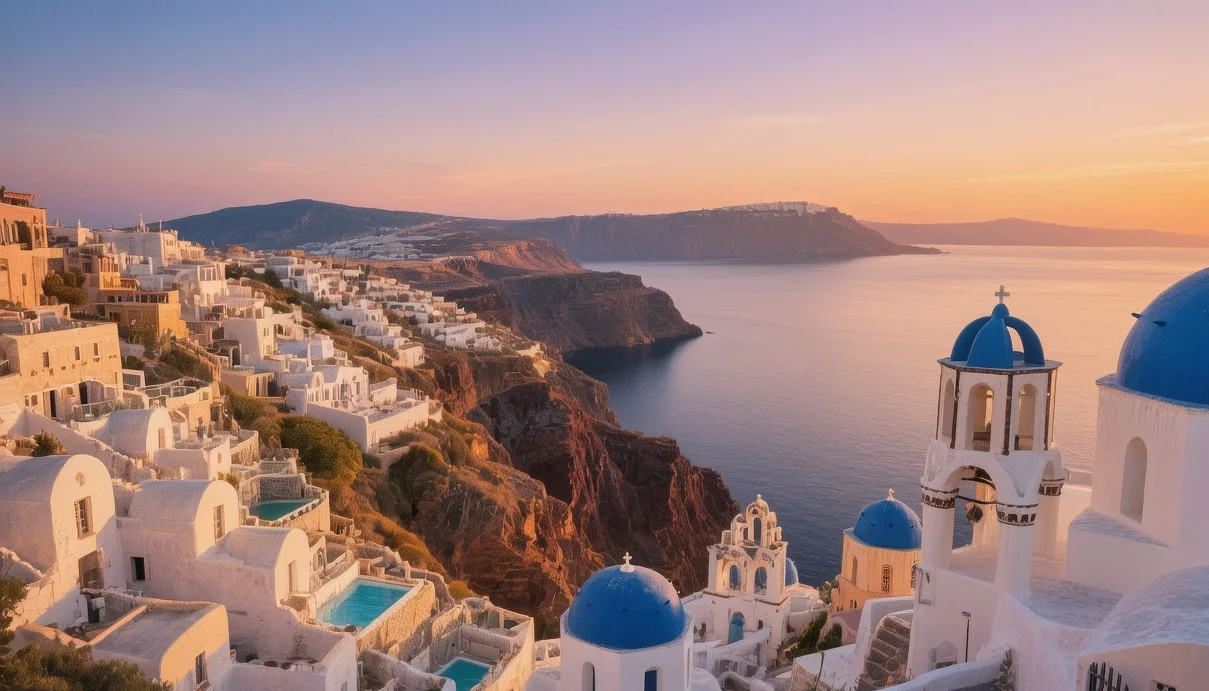
The golden hour spills across the caldera as you stand on Oia's wind-swept cliffs, where the last light of day paints the volcanic rim in shades of amber, rose, and lavender. The air carries the crisp scent of sea salt mingled with wild oregano and the faint mineral tang of volcanic stone—scents unchanged since the great Minoan eruption reshaped this landscape over three millennia ago. Before you, the caldera unfolds in breathtaking scale: a submerged volcanic crater measuring 12 kilometers long by 7 kilometers wide, its sheer cliffs rising 300 to 400 meters from the deep azure waters of the Aegean. Whitewashed Cycladic houses cascade down the slope like sugar cubes scattered by a gentle hand, their blue-domed churches catching the fading light. The only sounds are the soft lap of waves against volcanic rock far below, the distant chime of chapel bells, and the whispered conversations of travelers sharing this moment of collective wonder. This is not merely a photograph opportunity; Santorini caldera views matter because they offer a rare convergence of geological drama, architectural harmony, and atmospheric beauty—a place where earth, sea, and sky collaborate to create something that transcends description and touches the soul.
Why Santorini Caldera Views Embody Volcanic Poetry
The Santorini caldera views represent one of Earth's most spectacular natural theaters—a landscape that solved the fundamental human need to witness raw geological power transformed into serene beauty. Formed by the cataclysmic Minoan eruption around 1600 BCE—one of history's largest volcanic events—the caldera's 12-by-7-kilometer basin and 300-to-400-meter cliffs create a natural amphitheater where light, water, and stone perform an ever-changing spectacle. The volcanic rock—primarily layered tuff, pumice, and obsidian—provides a stable foundation for the iconic Cycladic architecture, while the caldera's west-facing orientation ensures that every sunset becomes a unique performance of color and shadow.
The caldera's visual impact stems from precise geological and architectural alignment: the villages of Oia, Fira, Imerovigli, and Firostefani cling to the western rim at elevations between 200 and 300 meters, positioning viewers at the optimal height to appreciate the caldera's full scale. The whitewashed buildings—painted with lime-based paint that reflects 80% of solar radiation—create a luminous foreground that contrasts dramatically with the deep blue sea and the reddish-brown volcanic layers visible in the cliff faces. This intentional aesthetic, developed over centuries, solves the practical need for heat reflection while creating an architectural language that enhances rather than competes with the natural drama.
Today, the caldera views fulfill multiple roles: they serve as a living laboratory for geologists studying volcanic processes, a muse for artists and photographers, and a contemplative space where visitors confront the sublime power of nature. The ongoing volcanic activity—evident in the hot springs near Nea Kameni and the subtle seismic movements monitored by the Institute of Geodynamics—reminds viewers that this beauty is dynamic, not static. Every glance across the caldera connects you to a landscape shaped by fire and water, where human habitation has learned to coexist with geological forces rather than dominate them—a lesson in humility and harmony that resonates far beyond this Greek island.
The Best Time to Experience Santorini Caldera Views
Timing transforms Santorini caldera views from beautiful to transcendent. The optimal windows stretch from May 18–June 12 and September 15–October 20, when temperatures hover between 18–25°C (64–77°F), atmospheric clarity allows visibility extending 40+ kilometers across the Aegean, and visitor numbers remain manageable enough for unhurried contemplation at popular viewpoints. During these shoulder seasons, you'll experience comfortable conditions for walking the cliffside paths while capturing photographs in the soft, directional light that reveals the caldera's layered volcanic strata.
Arrive precisely at 6:30–7:30 PM for sunset—the golden hour when the caldera's western cliffs glow amber, the sea reflects the sky's changing palette, and the iconic Oia sunset unfolds in a spectacle that has drawn travelers for centuries. The caldera viewpoints operate 24 hours as public spaces, but the most popular locations (Oia Castle, Skaros Rock, Prophet Elias Monastery) become crowded by 6:00 PM during peak season; arriving 60–90 minutes early secures optimal positioning. Winter months (November–February) offer minimal crowds and dramatic storm-washed skies, though temperatures drop to 10–14°C (50–57°F) with increased rainfall and occasional ferry cancellations.
Avoid July 15–August 31 unless absolutely necessary: temperatures regularly exceed 28°C (82°F), humidity climbs above 70%, and cruise ship schedules create crushing crowds at sunset viewpoints, making leisurely photography nearly impossible. Also skip Greek Orthodox Easter week and major public holidays when domestic tourism swells visitor numbers. For the most current information on ferry schedules, weather conditions, and special events, always check the official Greek tourism portal at https://calderaview-santorini.com/ before your visit [[4]].
Approximate Budget for a 7-Day Trip
Santorini offers exceptional value for travelers seeking iconic Mediterranean beauty, though costs vary significantly between caldera-view accommodations and inland options. The following breakdown reflects mid-range travel—comfortable boutique accommodations with partial caldera views, authentic taverna dining mixed with occasional upscale meals, and comprehensive island exploration—based on current pricing for a single traveler.
- Accommodation: €120–€300 per night in Oia, Imerovigli, or Fira with caldera views (€840–€2,100 total). Budget studios inland start at €60; luxury cave suites with private plunge pools run €500+.
- Food: €50–€80 per day total. Breakfast: €8–€12 (Greek coffee €4, bougatsa pastry €3.50, fresh fruit €4.50). Lunch: €15–€25 (Greek salad €10, grilled octopus €18, moussaka €14). Dinner: €25–€45 (seafood platter €35, lamb kleftiko €22, Assyrtiko wine €8/glass, dessert €8).
- Transportation: €120 total. Ferry from Athens: €45–€75 one-way (€90–€150 round-trip). Local bus day pass: €9. ATV rental: €25/day. Occasional taxi rides: €15–€30 each.
- Attractions: €95 total. Caldera boat tour with hot springs: €35. Wine tasting tour: €45. Ancient Akrotiri entry: €12. Sunset catamaran cruise: €85 (optional splurge).
- Miscellaneous: €130 total. Water/snacks €6/day, handmade jewelry €60–€150, local saffron €15, volcanic stone souvenirs €20, tips €30.
Total: €1,700–€2,600 for 7 days (excluding international airfare and Athens-Santorini ferry)
7 Essential Santorini Caldera View Experiences
- Watch sunset from Oia Castle: Arrive at the Byzantine castle ruins in Oia by 6:00 PM to secure a front-row position for the iconic caldera sunset. The western exposure offers unobstructed views across the 12-kilometer caldera basin. As the sun dips below the horizon, the volcanic cliffs glow in shades of gold and rose before the famous "green flash" sometimes appears. Stay 15 minutes after sunset to photograph the blue hour when village lights begin to sparkle against the darkening sea.
- Hike the Fira-to-Oia cliff path: Begin at 7:00 AM in Fira and walk the 10-kilometer caldera-edge trail through Firostefani and Imerovigli to Oia. The path gains and loses approximately 400 meters in elevation, offering constantly shifting perspectives of the volcanic basin. Morning light illuminates the cliff faces from the east, revealing the layered tuff and pumice strata. Allow 3–4 hours with stops for photographs; carry 2 liters of water and wear sturdy shoes with grip.
- Photograph the Three Blue Domes at golden hour: Position yourself at the viewpoint above Oia's famous trio of blue-domed churches at 6:30–7:30 PM. The iconic composition—white architecture, cobalt domes, and caldera backdrop—requires careful timing to avoid crowds. Use a telephoto lens (70–200mm) to compress the scene, or a wide-angle (24mm) to include the cascading village. Visit on weekdays for fewer tourists.
- Experience sunrise from Skaros Rock: Hike to the dramatic promontory of Skaros Rock in Imerovigli at 5:30 AM for a caldera sunrise—a less crowded alternative to Oia sunset. The 20-minute climb rewards you with 360-degree views: the caldera to the west, the Aegean to the east, and the volcanic islands of Nea and Palea Kameni below. Morning light creates dramatic shadows on the cliff faces ideal for photography.
- Sail the caldera at twilight: Book an evening catamaran cruise departing Fira or Vlychada harbor at 4:00 PM. The 5-hour journey circles the caldera, offering perspectives impossible from land: the full scale of the volcanic basin, the submarine slopes visible through clear water, and sunset viewed from the sea. Most tours include swimming stops at hot springs and a traditional Greek dinner onboard.
- Visit Prophet Elias Monastery at dusk: Ascend to Santorini's highest point (567 meters) at 6:00 PM for panoramic caldera views from above. The 18th-century monastery's bell tower provides a 360-degree vantage point where you can trace the entire volcanic rim. The elevation offers cooler temperatures and clearer atmospheric conditions for long-distance photography. Allow 45 minutes to explore the monastery grounds before sunset.
- Dine with a caldera view: Reserve a terrace table at a cliffside restaurant in Imerovigli or Firostefani for sunset dinner. Order the tasting menu (€55–€75) featuring local specialties: fava me koukia, tomato keftedes, and fresh catch of the day. While prices reflect the premium location, the experience of dining beneath the stars with the illuminated caldera as backdrop justifies the splurge for a special evening.
3 Hidden Gems Most Travelers Miss
- The Caldera Footpath from Emporio: On Santorini's southeastern coast, a lesser-known coastal trail begins near Emporio village and follows the caldera edge southward, offering dramatic views of the volcanic cliffs without Oia's crowds. The 3-kilometer path passes traditional windmills, abandoned cave houses, and secluded coves accessible only by foot. Access: Start at Emporio's southern edge; follow signs for "Perissa Coastal Path." Best visited at 4:00–6:00 PM when afternoon light illuminates the red volcanic layers. Bring water and wear sturdy shoes—the path is uneven and exposed.
- The Venetian Goulas Towers of Pyrgos: In the hilltop village of Pyrgos, five surviving Venetian-era watchtowers offer elevated caldera views from the island's interior. The tallest tower, Goulas, provides a 360-degree panorama including the caldera, Mount Profitis Ilias, and the distant islands of Ios and Sikinos. Access: Enter Pyrgos from the Fira road; follow signs to "Kasteli" (old fortress). Towers open daily 9:00 AM–6:00 PM; small donation requested. Visit at 5:00 PM when the village's whitewashed alleys glow golden and tour groups have departed.
- The Akrotiri Lighthouse viewpoint: At Santorini's southern tip, the 1892 Akrotiri Lighthouse stands on a volcanic promontory offering unobstructed caldera views to the north and open Aegean to the south. The location—far from Oia's crowds—provides a contemplative setting for sunset photography with the added drama of crashing waves against black volcanic rock. Access: Drive or take the bus to Akrotiri village; follow signs to "Faros" (lighthouse). Open 24 hours; no admission fee. Best visited at 6:00–7:30 PM when the lighthouse silhouette frames the setting sun.
Cultural & Practical Tips
- Photography etiquette: Personal photography is permitted throughout public caldera viewpoints. Respect private property—many terraces and pathways belong to hotels or restaurants. The best light for caldera photography occurs during the first and last hours of daylight; avoid shooting directly into the sun to prevent lens flare on the sea.
- Footwear and terrain: Caldera-edge paths feature uneven volcanic stone, loose gravel, and steep drop-offs. Wear sturdy, closed-toe shoes with excellent grip—avoid sandals or smooth-soled footwear. Many viewpoints lack railings; maintain a safe distance from cliff edges, especially in windy conditions.
- Hydration essentials: Carry at least 2 liters of water per person for caldera hikes; there are limited vendors along cliff paths. Fill bottles at public fountains in villages—Santorini tap water is safe for brushing teeth but bottled water is recommended for drinking due to mineral content.
- Local phrases: Kalimera (kah-lee-MEH-rah) = Good morning; Kalispera (kah-lee-SPER-ah) = Good evening; Efharisto (ef-hah-REE-stoh) = Thank you; Parakalo (pah-rah-kah-LOH) = Please/You're welcome; Yassou (YAH-soo) = Hello. Using these greetings earns warm smiles from Santorini's hospitality-focused residents.
- Sunset viewing strategy: Popular viewpoints (Oia Castle, Amoudi Bay) become crowded 90 minutes before sunset. Arrive early to secure positioning, or choose alternative locations like Skaros Rock or Prophet Elias Monastery for equally stunning views with fewer people. Bring a light layer—winds increase significantly at cliff edges after sunset.
- Weather awareness: Caldera viewpoints are exposed to strong meltemi winds, especially July–August. Secure hats, loose clothing, and camera equipment. Check wind forecasts before planning cliffside activities; gusts can exceed 40 km/h. Winter visits may experience sudden rain—volcanic stone becomes extremely slippery when wet.
- Respectful tourism: Santorini's beauty depends on preservation. Stay on marked paths to prevent erosion of fragile volcanic soil. Carry out all trash. Support local businesses rather than international chains. Your presence should honor the island's delicate balance between tourism and sustainability.
Conclusion: Travel with Wonder, Not Just Checklists
The Santorini caldera views demand more than a hurried photograph and a quick checkmark—they ask for your presence, your patience, your willingness to stand at the edge of a volcanic world and let its beauty unfold gradually. When you watch the sunset paint the cliffs in colors no pigment can replicate, or feel the sea breeze carry the scent of wild thyme across the caldera, you participate in a moment as old as human wonder. This is not passive tourism; it is active communion with a landscape shaped by fire, water, and time.
Responsible travel here means understanding that Santorini's beauty is fragile: every footprint on unmarked paths accelerates erosion, every discarded item mars the pristine vistas, every disrespectful action diminishes the experience for those who follow. Walk gently. Speak softly. Take only images; leave only gratitude. Support conservation efforts by choosing eco-conscious accommodations and respecting local guidelines that protect this volcanic treasure.
This is not a backdrop to be consumed but a meditation to be experienced—a place where geological drama and human artistry converge to create something transcendent. Slow down. Sit on a sun-warmed stone. Watch light change across the caldera. Let Santorini reveal its story gradually, as volcanic layers reveal their history to patient observers. The views will still be here tomorrow, but your opportunity to encounter them with wonder and respect exists only in this moment. Choose presence over haste, connection over completion, and carry not just photographs but a deeper appreciation for the enduring power of natural beauty.