Aegina Temple of Aphaia: Where Ancient Whispers Meet Aegean Light
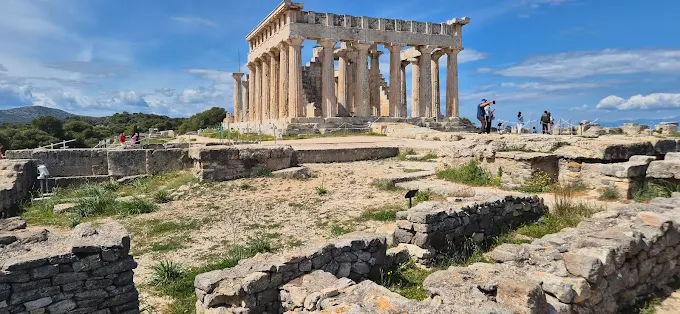
Temple of Aphaia: Where Ancient Sanctuary Meets Island Light
I stand beneath the eastern colonnade at twenty past ten on an April morning. Sunlight filters through pine branches and falls across weathered marble. The stone feels cool and rough under my fingertips. Thirty columns still stand or rise to full height, arranged in perfect symmetry around a central chamber. The air smells of pine resin and wild herbs. From this hilltop, the sea stretches blue in every direction — toward the mainland, toward the Saronic islands, toward open water. A wind blows steadily across the terrace. It carries no sound but birdsong and the distant hum of a boat far below. This temple sits alone, high above the shore. It has watched the sea for twenty-five hundred years. Standing here, you understand why people once climbed this hill to pray.
Why Temple of Aphaia Matters
The temple stands atop a steep hill on Aegina, built roughly between 500 and 490 BCE. Doric columns surround a central hall where the cult statue once stood. Its design marks a turning point in Greek architecture — harmony, proportion, and careful alignment that catches the light at specific times of year. Some scholars believe its orientation forms a deliberate triangle with the Parthenon and Temple of Poseidon at Sounion. Whether by design or coincidence, the alignment feels intentional. The sanctuary honoured Aphaia, a local goddess whose worship predates the arrival of later gods. Her story matters because it shows how older traditions persisted alongside new ones. Today visitors come expecting polished ruins and clear signage. They find instead weathered marble, uneven ground, and limited explanatory text. Restoration moves slowly. Some sections stand half-repaired while others remain as fallen blocks. That incompleteness frustrates some. It also means you walk among stones that have lain here for centuries, largely untouched. You see what remains, not what was rebuilt for visitors.
The Best Time to Experience Temple of Aphaia
Late April through June offers ideal conditions. Air temperatures range from 18°C to 26°C (64°F to 79°F). Wildflowers bloom across the slopes and pine scent fills the air. Light hits the columns well and shadows fall at angles that reveal the temple’s form. July and August bring heat from 27°C to 34°C (81°F to 93°F). The hilltop offers almost no shade. Arrive before nine in the morning or after five in the afternoon. Midday sun beats directly down and stone radiates heat. September through October brings 20°C to 28°C (68°F to 82°F). Sea breezes keep the air pleasant and crowds thin. This may be the most comfortable time to visit. November through March sees cooler days 12°C to 18°C (54°F to 64°F). Rain falls more often and site staff may close sections for safety. Fewer ferries run. The temple remains open but the climb proves harder in wet weather.
Approximate Budget for a 7-Day Trip
Prices reflect staying on Aegina or day-tripping from Athens. Costs peak July and August.
- Accommodation: On Aegina: €40–€80 per night. Weekly: €280–€560. Day trip from Athens: no accommodation cost
- Food & Drink: €12–€22 daily at Aegina Town or village tavernas. Weekly: €84–€154
- Transport: Ferry Piraeus→Aegina: €18–€25 one-way (40–70 min). Bus Aegina Town→Temple: €1.60 each way. Rental scooter: €15–€30 daily. Weekly: €158–€245
- Temple & Other Sites: Temple entry €6. Combined ticket with Archaeological Museum €8. Weekly: €12–€16
- Miscellaneous: Water, snacks, bus fare. Weekly: €25–€45
Total estimated cost: €559–€1,020 per person staying on Aegina. Skip the private taxi tours from port. They charge €40–€60 round trip when the public bus costs €1.60 each way and stops two hundred metres from the temple entrance. The walk uphill takes twenty minutes and costs almost nothing.
Essential Temple of Aphaia Experiences
- Walk the full perimeter of the temple. Step back from the columns and circle the entire foundation. Proportions shift as you move. Light strikes differently on each side. The building feels balanced from every angle. Skip visiting midday July–August; heat radiates from stone and offers no relief.
- Stand inside the central chamber at mid-morning. Light enters through the eastern doorway and falls across the inner foundations. Imagine the cult statue standing here, watching the sunrise. The view through the doorway frames sea and sky perfectly.
- Climb the hilltop beyond the temple. A short path leads upward to a viewpoint. Panoramic views stretch across the Saronic Gulf. On clear days you see Athens, the Peloponnese, and neighbouring islands all at once.
- Walk the ancient approach road. Stone steps and traces of the original path survive below the modern entrance. Imagine pilgrims climbing this hill from the shore below, carrying offerings to the goddess.
- Visit at sunset. The temple faces east but the hilltop glows gold as day ends. Columns turn warm against deepening blue. Most visitors leave by late afternoon. You may share the ruins with almost no one.
- Explore the small museum below the site. Fragments, statues, and pottery found here help explain what stood and what happened. Visit before climbing so you recognise what you see up top.
Hidden Gems Most Travelers Miss
- Remains of the earlier temple beneath the later one. Foundation blocks lie exposed near the north side. Few visitors notice them. These stones stood here before the marble temple you see today.
- Ancient retaining wall along the southern slope. Built to support the sanctuary terrace. Huge blocks fitted without mortar. You walk past it on the way up without realising its age.
- Quiet path through pine trees west of the temple. Leads to a natural clearing with sea views. No signs mark it. Sit in shade and look out across the water. Peaceful and almost entirely overlooked.
- The “perfect photo spot” marked on every map sits crowded and shaded by pines. Walk fifty metres uphill past the temple. The view opens fully and light hits the columns without obstruction. No crowds wait there.
Cultural & Practical Tips
- Wear sturdy shoes. The site sits on uneven, sloping ground. Ancient stone stays slippery when wet. No smooth pavement exists inside the sanctuary.
- Bring water. No drinking fountain sits near the temple. The climb uphill warms you fast in summer. Carry at least half a litre per person.
- Respect the ruins. Do not climb on columns or sit on fallen blocks. Stone shifts easily and pieces remain unstable. Stay on marked paths.
- Allow extra time on foot. The bus drops two hundred metres below the entrance. The final climb proves steep. Many visitors underestimate the effort and arrive breathless.
- Do not expect full signage. Few plaques explain what you see. Read briefly before visiting so you understand the layout and history. The experience improves when you recognise what stands before you.
Essential Visitor Information
Location & Access: Agia Marina region, Aegina island, Saronic Gulf. Approximately 13 km east of Aegina Town. Options: public bus from Aegina Town (€1.60, 30 min, then 20 min steep walk); rental scooter/car (20 min drive, free parking at entrance); taxi from port €25–€35 one-way.
Tickets & Booking: Adults €6. Reduced €3 (EU seniors 65+, students). Under 18 free. Combined ticket with Aegina Archaeological Museum €8. No advance booking; pay on arrival.
Operating Hours: Summer April–October: 8:00 AM–7:00 PM daily. Winter November–March: 8:30 AM–3:00 PM daily. Closed January 1, March 25, May 1, Easter Sunday, December 25–26.
Visit Duration: Minimum 1 hour. Recommended 1.5–2 hours to walk fully, climb viewpoints, and explore thoughtfully without rushing.
Family Suitability: Children welcome. Uneven ground and slopes. No stroller access. No restrooms or refreshments at the temple itself. Carry water and watch children closely on edges.
Timing: Best season: late April–June, September–October. Best time of day: 8:30 AM–10:30 AM or after 5:00 PM. Avoid midday June–August.
Highlights: Doric columned temple, sunrise alignment through east doorway, panoramic hilltop views, earlier temple foundations, ancient terrace walls.
Nearby & Day Trip: Agia Marina beach 3 km downhill. Aegina Town and port 13 km. Archaeological Museum 12 km. Monastery of Agios Nektarios 5 km. Day trip from Athens fits comfortably in one day with early ferry.
Conclusion: Travel with Wonder, Not Just Checklist
Temple of Aphaia stands apart from most ancient sites. It sits alone, high above the sea, built with care and aligned with the sun. No grand modern crowds gather here. No shops or cafes crowd the approach. You climb through pines to find marble columns standing quiet against the sky. Some things remain unfinished. Some stones lie fallen. That is part of the truth. Come early. Walk slowly. Stand where people stood twenty-five centuries ago. Look east through the doorway. And remember: the light that hits these columns today is the same light that priests watched long before.
Post a Comment