Poros Clock Tower: Where Time's Echo Meets Aegean Whispers
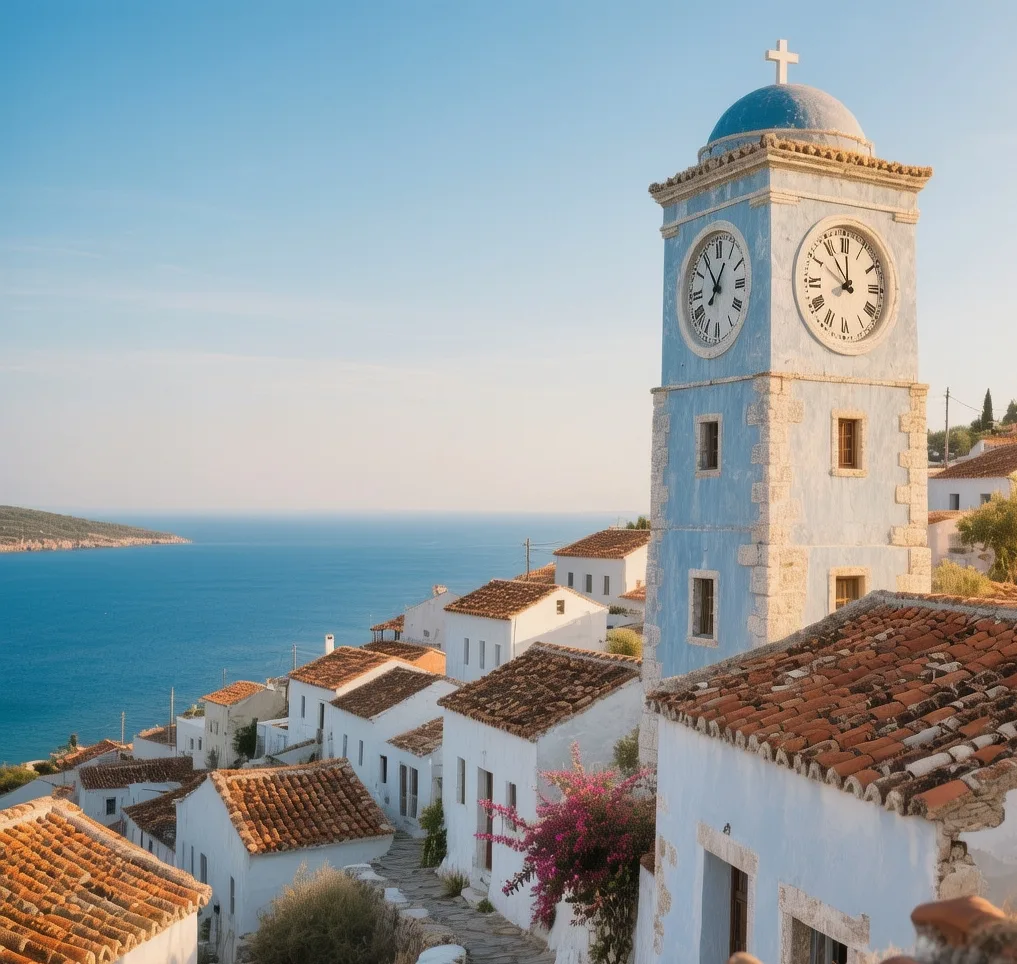
Poros Clock Tower: Where Harbour Landmark Meets Island Hill
I stand at the base of the clock tower at ten to eleven on a May morning. Sunlight warms the pale stone and casts sharp shadows down the stepped lane. The tower rises twenty-seven metres high, square and solid, capped with a domed roof and four clock faces that tell the hour from every direction. Whitewashed houses climb the slope around it, red tiles glowing between walls. Below, the harbour stretches calm and blue. A ferry drifts slowly through the channel, horn sounding once. The clock ticks steadily overhead. I count one hundred and thirty steps to the top. Each one curves slightly as it spirals upward. The climb feels steeper than it looks from below. But halfway up, the view opens across the water and the effort falls away.
Why Poros Clock Tower Matters
Built in 1927 from white stone quarried on the island, the tower stands as Poros’ most recognised landmark. It replaced an older church bell tower that once marked the harbour entrance. Donated by a local benefactor, it served practical purpose first — guiding sailors home and keeping town time. Today it anchors the skyline, visible from every ship approaching the straits. People come expecting a quick photo and easy climb. They find instead a narrow spiral staircase with no lighting, low ceilings, and steep worn steps. Some visitors feel disappointed. They saw the tower from the harbour and imagined broad terraces and clear paths. The reality proves tighter, darker, and more demanding. That honesty matters. The tower was built to last and to function, not to accommodate crowds. Climb it knowing what awaits, and you will appreciate the view all the more.
The Best Time to Experience Poros Clock Tower
Late April through June offers ideal conditions. Air temperatures range from 18°C to 26°C (64°F to 79°F). Stone stays cool enough to climb comfortably. Light hits the western and southern faces, making the tower itself look its best in photographs. July and August bring heat from 27°C to 33°C (81°F to 91°F). The stone absorbs warmth and the stairway grows hot inside. Arrive before ten in the morning or after six in the evening. Midday the tower feels uncomfortably warm. September through October brings 20°C to 28°C (68°F to 82°F). Light softens and the harbour glows golden. This may be your best time overall. November through March sees cooler days 12°C to 18°C (54°F to 64°F). Steps turn slippery when wet. Ferry schedules reduce and the tower may close without notice during storms.
Approximate Budget for a 7-Day Trip
Prices reflect Poros stay with the clock tower as a key stop. Costs peak July and August.
- Accommodation: €40–€75 per night near harbour or uphill. Weekly: €280–€525
- Food & Drink: €13–€23 daily at waterfront and village tavernas. Weekly: €91–€161
- Transport: Ferry Piraeus→Poros: €22–€30 one-way (1 hour). Local transport: walk everywhere or rent scooter €12–€25 daily. Weekly: €106–€205
- Clock Tower & Sites: Tower entry: roughly €3–€5. Other sites mostly free. Weekly: €6–€10
- Miscellaneous: Water, snacks, harbour fees. Weekly: €25–€45
Total estimated cost: €508–€946 per person. Skip the waterfront cafes directly below the tower. They charge nearly double what you pay one lane back. Walk two minutes uphill. Prices drop and views remain just as good.
Essential Poros Clock Tower Experiences
- Climb the spiral staircase to the top. One hundred and thirty worn stone steps wind upward. The stairway narrows near the bell chamber. Watch your head. Skip climbing if you feel claustrophobic or unsteady on steep stone.
- Step out onto the viewing platform. Four openings frame the harbour, the straits, the mainland, and the island hills. The view feels framed by the tower itself. You see ferries, sailboats, and rooftops all at once.
- Watch the harbour from above. Boats pass below at eye level. The channel narrows here and traffic moves steadily. You understand exactly why this tower guided sailors home.
- Photograph the tower from the ferry deck. Approaching from sea, the clock tower rises above all other buildings. It stands tall and clear against the hills. This perspective shows its true purpose.
- Walk the lanes uphill past the tower. Stone houses, bougainvillea, and quiet courtyards line the paths. The tower appears again and again between walls, always visible from somewhere.
- Return at sunset. The sun drops behind the mainland and the tower turns gold. Light catches the domed roof and each clock face glows. Most visitors have left. You may have the platform nearly to yourself.
Hidden Gems Most Travelers Miss
- Small terrace behind the tower. Two stone benches sit shaded beneath olive trees. The view overlooks the harbour without crowds. No sign points the way. Walk past the entrance and turn left.
- Original stone plaques near the base. Inscriptions show the tower’s completion year and benefactor’s name. Weathered and hard to read. Stand close and look up to see them clearly.
- Quiet lane descending west from the tower. Leads through old residential quarter down to a small beach. No shops, no crowds. Just stone walls and quiet. Worth walking down after your climb.
- The “famous photo spot” shown online sits at the bottom of the steps. Everyone lines up there. Walk twenty metres uphill instead. The tower rises fully framed between houses with no people in your shot.
Cultural & Practical Tips
- Wear flat, sturdy shoes. Steps stay worn, uneven, and often damp. No handrail lines the full spiral. You need secure footing all the way up.
- Bring small change. The ticket booth operates on an honour system or limited hours. Cash works best. Cards rarely accepted.
- Do not climb if you dislike enclosed spaces. The stairway narrows significantly near the top. Passing people coming down proves difficult. Go early or late to avoid meeting others on the stairs.
- Respect the bells and mechanism. The clock still functions. Do not touch or lean against the machinery. Loud bells ring on the hour — protect your ears and keep clear.
- Allow twenty minutes total. Climb takes five to seven minutes; descend takes longer. The platform stays small. Enjoy the view then step aside for others.
Essential Visitor Information
Location & Access: Poros Town hill, directly above the central harbour. Access via stone steps from the main waterfront lane or stepped lanes uphill from behind. Walk everywhere on Poros; no cars needed in town. Ferries arrive from Piraeus and nearby islands.
Tickets & Booking: Approximately €3–€5 per person. Children under 12 often free. No advance booking; pay at the entrance gate. Prices subject to change without notice.
Operating Hours: Roughly 9:00 AM–1:00 PM and 5:00 PM–8:00 PM daily summer. Winter hours shorter and often weather-dependent. Closed on public holidays and during rain.
Visit Duration: 15–25 minutes total. Climb up, view, descend. Longer if you pause on the terrace or walk the surrounding lanes.
Family Suitability: Children welcome but stairs narrow and steep. No stroller access anywhere. Young children must be carried or held tightly. No safety railings at the top openings.
Timing: Best season: late April–June, September–October. Best time of day: before 10:00 AM or after 6:00 PM. Avoid midday heat and crowds July–August.
Highlights: Panoramic harbour and straits view, historic stone architecture, clock mechanism and bells, sunset over the mainland, framed views from surrounding lanes.
Nearby & Day Trip: Poros Archaeological Museum 300 metres downhill. Askeli Beach 2 km. Russian Dockyard ruins 6 km. Galatas (mainland across channel) 5-minute ferry. Day trip to Hydra or Aegina possible with early departure.
Conclusion: Travel with Care, Not Just Speed
Poros Clock Tower stands tall and proud. It guided sailors home long before tourism arrived. It still marks the harbour today. The climb proves steep. The stairway feels tight. The bells ring loud. None of that detracts. That is exactly what makes it real. Come early. Wear sturdy shoes. Watch your head. And when you step out above the rooftops, look down at the boats passing below. For a moment you stand where every sailor once looked — up at the tower, knowing home lies just ahead.
Post a Comment