
Akdamar Island: Where Sacred Stone Carvings Meet the Turquoise Depths of Van
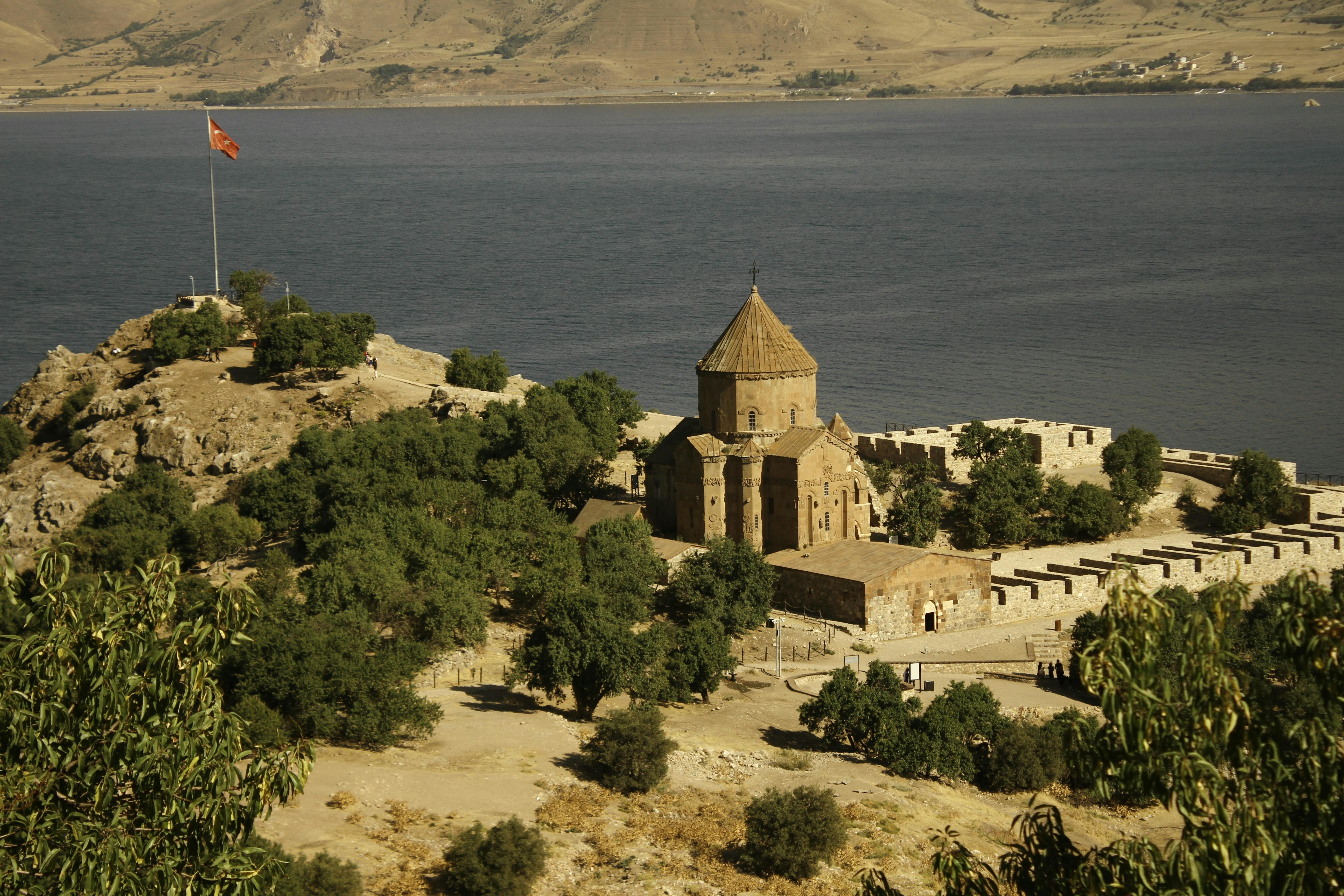
The morning ferry cuts through Lake Van's mineral-rich waters as you approach Akdamar Island, a tiny emerald speck floating in 3,755 square kilometers of shimmering turquoise. The air carries the distinctive scent of soda and salt—the lake's alkaline signature—mixed with wild thyme growing between ancient stones. You hear the gentle lap of waves against the island's rocky shore, the distant cry of gulls circling above, and the soft footsteps of fellow travelers ascending the stone path toward the Church of the Holy Cross. Before you rises a masterpiece of medieval Armenian architecture: pink volcanic tufa walls adorned with extraordinary bas-relief carvings depicting Adam and Eve, David and Goliath, Jonah and the whale, and intricate geometric patterns that seem to dance in the golden light. The central dome, rising 18 meters above the island, crowns a structure built between 915-921 CE by King Gagik I of Vaspurakan and architect Manuel—a testament to faith, artistry, and engineering sophistication that has survived centuries of neglect, earthquake, and political upheaval. This isn't merely a church—it's a stone manuscript telling stories of devotion, a cultural bridge connecting Armenian heritage with the landscape of eastern Anatolia, and a reminder that beauty can endure even when empires fade. Akdamar matters because it invites us to contemplate what we preserve, what we lose, and what we choose to remember across the vast sweep of human history.
Why Akdamar Island Embodies Sacred Artistry in Stone
The Church of the Holy Cross on Akdamar Island represents far more than medieval architecture—it embodies the extraordinary capacity of Armenian craftsmen to transform volcanic stone into a visual theology that speaks across centuries. Commissioned by King Gagik I of the Bagratuni dynasty and completed between 915-921 CE by the renowned architect Manuel (sometimes identified with Trdat, builder of Ani's cathedral), this structure solved fundamental challenges of island construction: creating a stable foundation on rocky terrain, engineering a dome capable of withstanding seismic activity, and designing a building that would serve both liturgical function and royal propaganda.
The technical achievements are remarkable. Constructed from locally quarried pink volcanic tufa—a soft stone when first cut that hardens upon exposure to air—the church features walls 1.1 meters thick that provide both structural stability and thermal regulation in Lake Van's extreme climate. The central dome, supported by four massive piers and transitioning from square base to circular drum through sophisticated squinch architecture, rises 18 meters above the island floor. The exterior bas-reliefs—carved with such precision that individual figures remain crisp after eleven centuries—demonstrate mastery of stone-cutting techniques: artisans worked from scaffolding, carving directly into the building's facade rather than creating separate panels for later installation.
What makes Akdamar unique is its iconographic program: over 200 distinct scenes carved into the exterior walls depict biblical narratives, saints, animals, and geometric motifs arranged in hierarchical bands that guide the viewer's eye upward toward the divine. Adam and Eve appear beside the entrance; David slays Goliath on the southern facade; Jonah emerges from the whale on the eastern wall. These carvings weren't merely decorative—they served as visual scripture for a largely illiterate population, teaching theology through stone. The church's restoration, completed in 2007 after decades of deterioration, preserved these carvings while adapting the interior as a secular museum—a complex decision that reflects ongoing conversations about heritage, memory, and cultural identity in eastern Anatolia.
The Best Time to Experience Akdamar Island
To experience Akdamar Island at its most enchanting, plan your visit between May 15–June 25 or September 10–October 15, when daytime temperatures range from 18-26°C (64-79°F) and Lake Van's waters glow with perfect turquoise radiance. During these windows, you'll enjoy comfortable conditions for the ferry crossing, island exploration, and photography without summer's intense heat or winter's bitter cold.
For optimal photography of the church's intricate stone carvings, arrive on the island at 8:30–10:00 AM when morning light strikes the eastern and southern facades, illuminating the bas-reliefs with soft, directional illumination. Alternatively, visit at 4:30–6:00 PM
Avoid the peak summer period of June 28–August 20 when temperatures can exceed 35°C (95°F) on the exposed island with minimal shade. The combination of heat, high UV radiation reflecting off the water, and crowded ferry schedules diminishes the contemplative experience. Winter months (November–March) bring harsh conditions: temperatures drop to -10°C to 0°C (14°F to 32°F), ferry services may be suspended due to weather, and the island's stone pathways become slippery. While winter visits offer dramatic atmospheric photography, access is unreliable and facilities limited.
For current information on ferry schedules, visiting hours, and regional tourism services, visit the official Turkish Ministry of Culture and Tourism website: www.ktb.gov.tr
Approximate Budget for a 7-Day Trip
Visiting Akdamar Island requires basing yourself in Van city, the regional capital located 45 kilometers from the Gevaş ferry terminal. The following budget assumes moderate travel style—comfortable local hotels, authentic regional dining, and a mix of public transportation and occasional private transfers. Prices are listed in euros for international travelers, though Turkey uses the Turkish Lira (₺).
- Accommodation: €26–€50 per night in Van city center near the lakefront. Budget pensions start at €21; boutique hotels with lake views run €52-78. Staying in Van provides better amenities while keeping the ferry terminal within a 45-minute drive.
- Food: €13-20 per day total. Breakfast: €3-5 for traditional Turkish breakfast with menemen, Van otlu peyniri (herb cheese), honey, and çay. Lunch: €4-7 for regional specialties like Van balık (pearl mullet), kaymak, and Turkish pide at local esnaf lokantası. Dinner: €6-10 for sit-down meals featuring Van kebab, baklava, and ayran.
- Transportation: Round-trip flight to Van Ferit Melen Airport from Istanbul: €60-128. Airport shuttle to city center: €3. Local dolmuş within Van: €0.45 per ride. Taxi to Gevaş ferry terminal: €14 round-trip. Ferry to Akdamar Island: €5 round-trip. Car rental: €33/day.
- Attractions: Akdamar Island entrance + ferry: €8. Van Museum: €4. Van Fortress (Van Kalesi): €5. Hoşap Castle: €3. Guided historical tour: €36.
- Miscellaneous: Handwoven Van kilim: €38-115. Van herb cheese (otlu peynir): €8/kg. Traditional copper jewelry: €16-48. Local honey: €6/jar.
Total 7-Day Budget: €405–€590 per person (excluding international flights to Turkey)
7 Essential Akdamar Island Experiences
- Examine the Exterior Bas-Reliefs at Dawn: Arrive on the island with the first ferry (departs Gevaş at 9:00 AM) and walk the perimeter of the church clockwise, studying the intricate stone carvings in morning light. Focus on the southern facade where David slays Goliath, the eastern wall featuring Jonah and the whale, and the northern side depicting saints and geometric patterns. Use a magnifying glass or phone zoom to appreciate the fine details: individual leaves, facial expressions, and interlaced borders. The carvings are most visible between 8:30–10:30 AM when directional light creates subtle shadows that emphasize depth.
- Photograph the Church Against Lake Van: Position yourself on the island's western shore at 5:00 PM to capture the Church of the Holy Cross silhouetted against the turquoise waters with distant mountains in the background. Use a polarizing filter to enhance the water's color and reduce glare. The pink tufa stone glows amber in late afternoon light, creating stunning contrast with the lake's deep blue. This iconic view is best captured in spring or autumn when atmospheric clarity is optimal.
- Explore the Interior Museum: Enter the church to find a carefully curated museum displaying Armenian artifacts, historical photographs, and explanatory panels about the building's construction and restoration. The interior's simple stone walls and central dome create a contemplative atmosphere. Note the acoustic properties: speak softly near the center to hear your voice resonate beneath the dome. Allow 30-45 minutes to absorb the exhibits and appreciate the architectural space.
- Walk the Island's Perimeter: Circle Akdamar Island's 0.7 km² shoreline to discover lesser-viewed angles of the church, ancient stone foundations of monastic buildings, and panoramic vistas across Lake Van. The path takes 20-30 minutes at a leisurely pace. Look for wild thyme and endemic plants growing between rocks. Best walked mid-morning (10:00–11:30 AM) when temperatures are moderate and light is still favorable for photography.
- Learn About the Restoration Process: Visit the informational displays near the entrance that document the church's 2007 restoration—a complex project involving international experts, local craftsmen, and sensitive decisions about preserving versus reconstructing damaged elements. Note the techniques used: laser scanning to document carvings, traditional stone-matching for repairs, and reversible conservation methods. Understanding this process deepens appreciation for the building's continued survival.
- Experience the Ferry Crossing: The 15-minute boat ride from Gevaş ferry terminal offers unique perspectives of the church approaching from the water—the view medieval pilgrims would have known. Stand on the ferry's starboard side for optimal photography as the island emerges from the lake's expanse. The crossing is smooth in calm weather but can be brisk when winds pick up; hold onto railings and secure loose items. Ferry schedules vary seasonally—confirm departure times the day before your visit.
- Contemplate the Iconographic Program: Spend time decoding the theological narrative woven through the exterior carvings: scenes of creation, redemption, and resurrection arranged to guide viewers from earthly struggles toward divine hope. Bring a guidebook or download a digital resource beforehand to identify key scenes. This intellectual engagement transforms a visual experience into a deeper understanding of medieval Armenian spirituality and artistic intention.
3 Hidden Gems Most Travelers Miss
- The Monastic Foundations: Scattered around the church, low stone walls and foundation outlines mark the remains of medieval monastic buildings—cells, refectory, scriptorium—that once housed the community serving the church. Most visitors focus solely on the main structure and overlook these subtle archaeological features. Access: Walk the grassy areas surrounding the church, looking for aligned stone courses barely visible above ground. Best examined mid-morning (9:30–11:00 AM) when low-angle light reveals the foundations' contours. No signage; bring a site map or ask the caretaker for guidance. Allow 15 minutes to explore respectfully.
- The Ancient Harbor Stones: On the island's southeastern shore, partially submerged stone blocks and a small stone jetty mark the medieval harbor where pilgrims once disembarked. These features are rarely highlighted but offer tangible connection to the island's historical function as a pilgrimage destination. Access: From the main landing, follow the shoreline path southeast for 100 meters. Look for dressed stone blocks extending into the water. Best viewed when lake levels are lower (late summer/early autumn). Bring water shoes if you wish to wade for closer inspection. No entrance fee; respect the fragile archaeological context.
- The Viewpoint Ridge: A short, unmarked trail ascending the island's central rise offers panoramic views of the church, Lake Van, and distant mountains—a perspective few visitors seek. The climb takes 5 minutes and rewards with photography opportunities showing the church's relationship to the broader landscape. Access: From the church's eastern side, follow the faint path upward (marked by occasional stone steps). Best visited late afternoon (4:00–5:30 PM) for optimal light. Bring a jacket—the elevation catches wind. No facilities; carry water and practice Leave No Trace principles.
Cultural & Practical Tips
- Respect the Sacred Space: While the church now functions as a secular museum, it remains a site of profound cultural and spiritual significance for Armenians worldwide. Speak quietly, avoid disruptive behavior, and dress modestly (shoulders and knees covered). Photography is permitted but be respectful of other visitors seeking contemplation.
- Ferry Logistics: Ferries to Akdamar Island depart from Gevaş ferry terminal, 35 kilometers south of Van city. The first ferry typically leaves at 9:00 AM; the last return departs the island at 4:00 PM. Schedules vary seasonally—confirm times at your hotel or the Van tourism office (+90 432 212 4567) the day before your visit. Arrive 30 minutes early to secure tickets.
- Essential Phrases: "Teşekkür ederim" (teh-shek-kür eh-deh-rim) = Thank you; "Akdamar Adası nerede?" (ak-da-mar ah-dah-suh neh-reh-deh) = Where is Akdamar Island?; "Ne kadar?" (neh kah-dar) = How much?; "Hoş geldiniz" (hosh gel-din-iz) = Welcome.
- Physical Preparedness: Exploring the island involves walking on uneven stone paths and gentle slopes. The site is partially accessible but not fully wheelchair-friendly due to historic stone steps. Wear sturdy, closed-toe shoes with good grip. Carry water and sun protection—the island offers minimal shade and Lake Van's high altitude intensifies UV exposure.
- Photography Guidelines: Tripods are permitted but must not obstruct pathways or other visitors. Drone photography requires advance permission from provincial authorities (contact: van.kultur@ktb.gov.tr). The best light for exterior carvings is morning (8:30–10:30 AM); for panoramic views, late afternoon (4:30–6:00 PM) offers optimal conditions.
- Weather Considerations: Lake Van's high altitude (1,640 meters) creates rapid weather changes. Summer days can exceed 35°C (95°F) while evenings cool to 18°C (64°F). Pack layers, sun protection, and a light jacket regardless of season. Sudden winds can affect ferry crossings—check conditions before departing.
- Understand the Context: Akdamar Island represents complex cultural heritage with significance for Armenian, Turkish, and Kurdish communities. Approach the site with curiosity about its multicultural history and respect for ongoing conversations about preservation and memory. Consider hiring a local guide who can provide nuanced historical context.
Conclusion: Travel with Reverence, Not Just Checklists
Akdamar Island invites you to do more than photograph pink stone against turquoise water. This is a place to stand where medieval artisans carved prayers into volcanic rock, where pilgrims once crossed sacred waters seeking blessing, where kings and architects collaborated to create beauty meant to outlast empires. When you trace the bas-relief of Adam and Eve with your eyes, when you feel the cool stone beneath your palm, when you gaze across Lake Van toward distant mountains that have witnessed millennia of human story, you participate in a meditation on memory and meaning that transcends any single lifetime.
Travel to Akdamar with reverence for the craftsmanship that shaped these stones, for the cultures that converged in this sacred space, for the resilience that preserved this site through centuries of change. Respect the fragility of the volcanic tufa—soft enough to carve into exquisite detail, hard enough to endure earthquakes, but vulnerable to careless touch and environmental stress. Understand that the contemplative silence you cherish depends on the restraint of every visitor who comes after you. Let the lake's vastness slow your pace, let the weight of history humble your expectations, and let the convergence of art, faith, and landscape remind you that the most profound journeys are those that deepen our connection to the enduring human impulse to create beauty in honor of something greater than ourselves.