
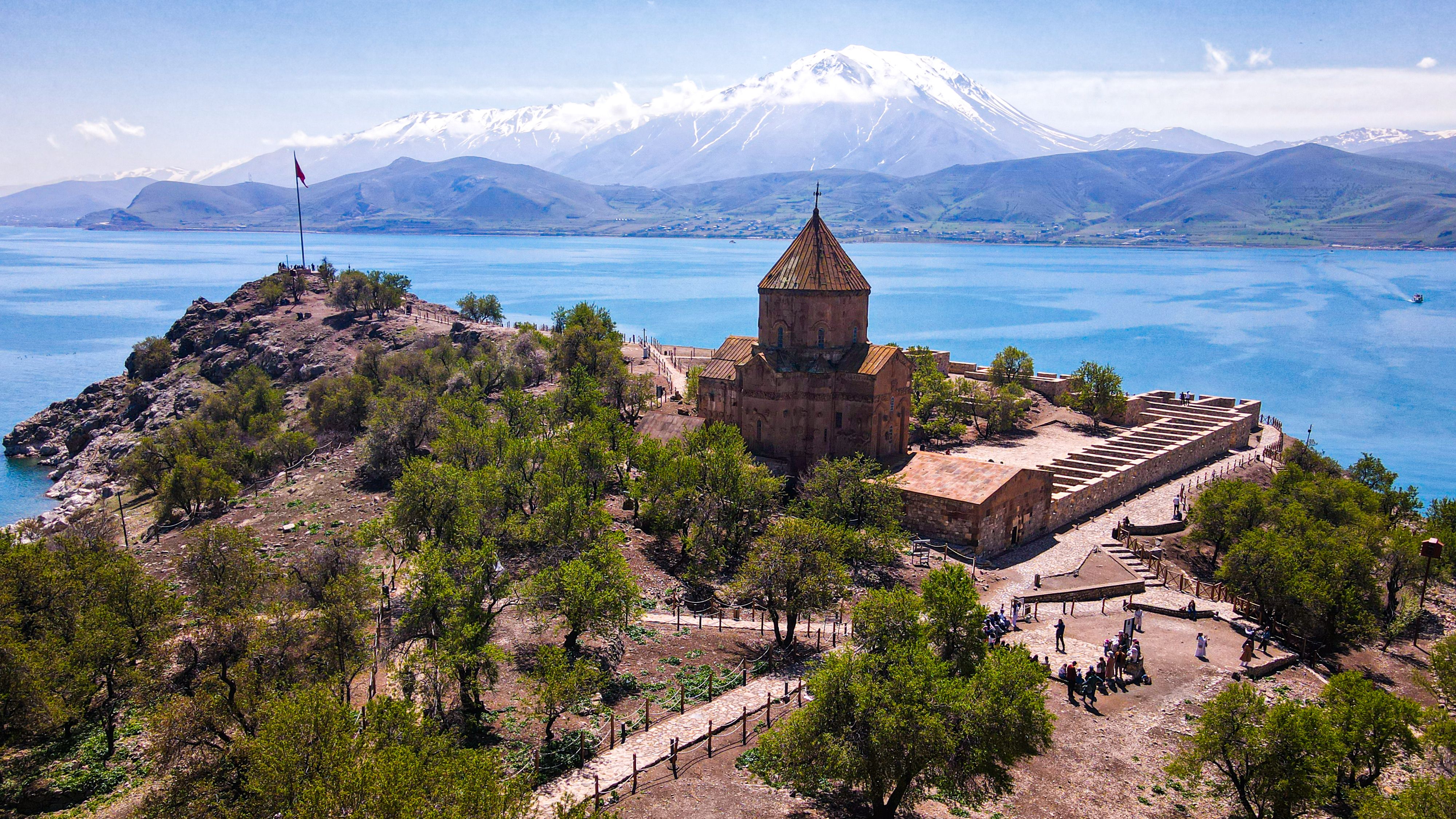
Lake Van: Where Ancient Armenian Stones Meet Turkey's Largest Inland Sea
The morning sun rises over the eastern horizon, casting a golden glow across 3,755 square kilometers of shimmering turquoise water as you stand on the shores of Lake Van, Turkey's largest body of water perched at 1,640 meters elevation in the rugged highlands of eastern Anatolia. The air carries a distinctive mineral scent—the sharp tang of soda and salt that defines this alkaline lake—mixed with the earthy aroma of wild thyme and distant woodsmoke from shepherd camps scattered across the volcanic plains. You hear the gentle lap of waves against pebble beaches, the distant call of gulls circling above Akdamar Island, and the whisper of wind through ancient stone ruins that have witnessed empires rise and fall. The water itself is remarkable: so alkaline that it feels silky on your skin, so buoyant that swimming feels effortless, and so mineral-rich that it supports only a few specialized species like the endemic pearl mullet and the famous Van cat with its heterochromatic eyes. This isn't merely a lake—it's a living museum where Urartian fortresses cling to volcanic hillsides, Armenian churches stand as silent witnesses to lost civilizations, and Kurdish villages maintain traditions unchanged for centuries. Lake Van matters because it embodies the complex cultural tapestry of eastern Anatolia, where natural wonder and human history converge in a landscape both harsh and breathtakingly beautiful.
Why Lake Van Embodies Cultural Convergence in a Harsh Landscape
Lake Van represents far more than a geological feature—it embodies humanity's enduring capacity to adapt to challenging environments while creating civilizations that left indelible marks on history. This endorheic soda lake, with no outlet and fed primarily by snowmelt from surrounding mountains, solved fundamental challenges for ancient settlements: providing water for irrigation in a semi-arid climate, creating natural defensive barriers for fortifications, and supporting specialized ecosystems that sustained unique food sources. The lake's high alkalinity (pH 9.7-9.8) and salinity (0.3%) result from dissolved volcanic minerals leaching into the closed basin over millennia, creating conditions that preserve organic materials remarkably well while limiting biodiversity to specialized species.
The engineering achievements around Lake Van are staggering. The Urartian civilization, which flourished from the 9th to 6th centuries BCE, constructed massive stone fortresses like Van Kalesi (Van Fortress) using precisely cut volcanic tufa blocks fitted without mortar. Their sophisticated irrigation systems channeled mountain streams through stone-lined canals to agricultural terraces, some of which remain in use today. The Armenian Church of the Holy Cross on Akdamar Island, built between 915-921 CE by architect Manuel, features intricate bas-relief carvings depicting biblical scenes, animals, and geometric patterns on its exterior walls—a masterpiece of medieval Armenian architecture that survived centuries of neglect. The church's central dome, rising 18 meters above the island, demonstrates sophisticated understanding of structural engineering in a seismically active region.
What makes Lake Van unique is its layered cultural heritage: Urartian cuneiform inscriptions carved into rock faces, Armenian monasteries perched on islands and peninsulas, Seljuk and Ottoman mosques in lakeside towns, and Kurdish villages maintaining ancient pastoral traditions. The lake itself acts as a natural time capsule: its alkaline waters have preserved underwater archaeological sites, while the surrounding volcanic landscape provides building materials that have endured for three millennia. This convergence of natural wonder and human ingenuity—where pearl mullet spawn in mineral-rich shallows, where Van cats with mismatched eyes prowl ancient ruins, where shepherds still practice transhumance as their ancestors did—creates a living landscape that speaks to both geological and cultural persistence across millennia.
The Best Time to Experience Lake Van
To experience Lake Van at its most enchanting, plan your visit between May 15–June 25 or September 10–October 15, when daytime temperatures range from 18-26°C (64-79°F) and the surrounding plains bloom with wildflowers or glow with autumn gold. During these windows, you'll enjoy comfortable conditions for exploring archaeological sites, swimming in the alkaline waters, and photographing the dramatic landscape without summer's intense heat or winter's bitter cold.
For optimal photography of Akdamar Island and the lake's turquoise waters, arrive at key viewpoints at 7:00–8:30 AM when morning light strikes the eastern shores, or 5:30–7:00 PM
Avoid the peak summer period of June 28–August 20 when temperatures can exceed 35°C (95°F) on the exposed plateau with intense sun reflecting off the water's surface. While the altitude provides some relief, the combination of heat and high UV radiation makes extended outdoor exploration uncomfortable. Winter months (November–March) bring harsh conditions: temperatures drop to -15°C to -5°C (5°F to 23°F), snow frequently covers the region, and some boat services to Akdamar Island may be suspended due to weather. The lake is beautiful in winter but requires special preparation and may have limited access to islands and remote sites.
Approximate Budget for a 7-Day Trip
Visiting Lake Van requires basing yourself in Van city, the regional capital, with day trips to lakeside attractions and islands. The following budget assumes moderate travel style—comfortable local hotels, authentic regional dining, and a mix of public transportation and occasional private transfers. Prices are listed in euros for international travelers, though Turkey uses the Turkish Lira (₺).
- Accommodation: €25–€48 per night in Van city center near the lakefront. Budget pensions start at €20; boutique hotels with lake views run €50-75. Staying in Van provides better amenities while keeping lakeside sites within 30-60 minutes drive.
- Food: €12-19 per day total. Breakfast: €3-5 for traditional Turkish breakfast with menemen, Van otlu peyniri (herb cheese), honey, and çay. Lunch: €4-6 for regional specialties like Van balık (pearl mullet), kaymak, and Turkish pide at local esnaf lokantası. Dinner: €6-10 for sit-down meals featuring Van kebab, baklava, and ayran.
- Transportation: Round-trip flight to Van Ferit Melen Airport from Istanbul: €58-125. Airport shuttle to city center: €3. Local dolmuş within Van: €0.45 per ride. Taxi to Akdamar ferry terminal: €12 round-trip. Car rental: €32/day.
- Attractions: Akdamar Island boat + entrance: €8. Van Museum: €4. Van Fortress (Van Kalesi): €5. Hoşap Castle: €3. Guided historical tour: €35.
- Miscellaneous: Handwoven Van kilim: €35-110. Van herb cheese (otlu peynir): €8/kg. Traditional copper jewelry: €15-45. Local honey: €6/jar.
Total 7-Day Budget: €395–€575 per person (excluding international flights to Turkey)
7 Essential Lake Van Experiences
- Visit Akdamar Island's Church of the Holy Cross: Take the morning ferry (departs 9:00 AM from Gevaş ferry terminal) to this UNESCO World Heritage Site. The 10th-century Armenian church features extraordinary bas-relief carvings depicting Adam and Eve, David and Goliath, and intricate geometric patterns. Spend at least 90 minutes exploring the island and examining the exterior carvings in detail. The interior museum displays Armenian artifacts and explains the church's restoration. Return ferry departs at 4:00 PM. Bring sun protection—the island offers minimal shade.
- Swim in the Alkaline Waters: Experience the unique sensation of Lake Van's soda-rich waters at one of the designated swimming areas near Edremit or Gevaş. The high pH (9.7-9.8) makes the water feel silky and exceptionally buoyant. Swim for 20-30 minutes maximum—the alkalinity can irritate skin with prolonged exposure. Rinse thoroughly with fresh water afterward. Best swimming conditions occur between 11:00 AM–3:00 PM when water temperatures reach 20-23°C (68-73°F) in summer.
- Explore Van Fortress (Van Kalesi): Climb to this massive Urartian citadel rising 100 meters above the lake, constructed in the 9th century BCE. The fortress features cuneiform inscriptions, rock-cut chambers, and panoramic views across the entire lake. Arrive at 8:30 AM when it opens to avoid midday heat. The climb takes 20-30 minutes via stone steps. Wear sturdy shoes and bring water. The site reveals three millennia of layered history from Urartian to Ottoman periods.
- Photograph the Pearl Mullet Fishing: Visit the lakeside villages of Gevaş or Tatvan during pearl mullet (inci kefalı) spawning season to witness traditional fishing methods. The endemic fish migrate to shallow freshwater streams in late spring. Position yourself at dawn (6:00–7:30 AM) when fishermen cast their nets. The scene combines cultural tradition, natural phenomenon, and stunning light on the water. Ask permission before photographing individuals.
- Taste Van's Famous Herb Cheese: Visit local producers in Van's old city to sample otlu peynir, a distinctive cheese made with wild herbs including wild garlic, thyme, and mint. The cheese is traditionally stored in goat-skin bags, giving it unique flavor. Many shops offer tastings; purchase vacuum-sealed portions to take home (€8-12 per kg). Best visited mid-morning (10:00 AM–12:00 PM) when shops are less crowded.
- Walk the Lakeside Promenade at Sunset: Stroll Van's 3-kilometer waterfront promenade starting at 6:00 PM to watch the sun sink behind the distant mountains. The path offers continuous views of the lake, passing cafes, tea gardens, and parks. Stop at one of the traditional çay bahçesi (tea gardens) for Turkish tea and watch locals play backgammon. The promenade is particularly beautiful during golden hour when the lake turns copper-gold.
- Visit Hoşap Castle: Drive 60 kilometers southeast of Van to this remarkably preserved medieval Kurdish castle perched on a rocky outcrop. Built in the 17th century, the fortress features stone towers, residential quarters, and a mosque. The site is less visited than Van Fortress, offering a more intimate experience. Arrive by 10:00 AM to explore before tour groups. Entry: €3. Allow 90 minutes to explore the complex thoroughly.
3 Hidden Gems Most Travelers Miss
- Çavuştepe Urartian Temple: Located 40 kilometers southeast of Van, this ancient Urartian temple complex dedicated to the god Haldi features remarkably preserved stone foundations, cuneiform inscriptions, and panoramic views of the Erek Valley. Most tourists skip it because it's not prominently signposted. Access: From Van, take the road toward Çavuştepe village; the site is 2 kilometers beyond the village. Entry: €3. Open 8:00 AM–6:00 PM. Best visited mid-morning (9:00–11:00 AM) when light illuminates the inscriptions. Bring water and sun protection—no facilities on-site. Allow 90 minutes to explore.
- Akhtamar's Underwater Ruins: Divers and snorkelers can explore submerged Armenian monastery ruins and ancient harbor structures visible in the clear alkaline waters near Akdamar Island. The exceptional visibility (15-20 meters) and preservation make this unique. Access: Arrange through licensed dive operators in Gevaş (contact: Van Diving Center +90 432 214 5678). Best conditions: June–September when water temperatures reach 22°C (72°F). Certification required for deep dives; snorkeling tours available for beginners (€35). The alkaline water preserves organic materials remarkably well.
- Traditional Van Cat Sanctuary: Visit the Van Cat Research Center 15 kilometers from Van city to see these rare cats with their distinctive heterochromatic eyes (one blue, one amber) and water-loving behavior. The sanctuary works to preserve this endangered breed. Access: Taxi from Van (€10) or local dolmuş to Van Kedi Evi. Open 9:00 AM–5:00 PM daily. Entry: €2. Best visited mid-afternoon (2:00–4:00 PM) when cats are most active. Photography encouraged; donations support conservation efforts. Learn about the breed's legends and genetic uniqueness.
Cultural & Practical Tips
- Respect Religious Sites: Akdamar Island and other monasteries are active cultural heritage sites. Dress modestly when visiting religious structures—shoulders and knees should be covered. Speak quietly and avoid disruptive behavior. Photography is permitted but be respectful during any religious services or ceremonies.
- Swimming Safety: Lake Van's alkaline water (pH 9.7-9.8) can irritate eyes and sensitive skin. Limit swimming to 20-30 minutes. Rinse thoroughly with fresh water immediately after swimming. Do not swallow the water. Those with open wounds or skin conditions should avoid swimming. The water is safe for most people but can cause mild irritation.
- Essential Phrases: "Teşekkür ederim" (teh-shek-kür eh-deh-rim) = Thank you; "Van Gölü nerede?" (van ghö-lü neh-reh-deh) = Where is Lake Van?; "Ne kadar?" (neh kah-dar) = How much?; "Hoş geldiniz" (hosh gel-din-iz) = Welcome.
- Altitude Considerations: Lake Van sits at 1,640 meters (5,380 feet) elevation. Some visitors may experience mild altitude effects. Stay hydrated, avoid excessive alcohol, and allow a day to acclimate before strenuous activities. The high altitude intensifies UV radiation—use SPF 30+ sunscreen even on cloudy days.
- Photography Guidelines: Photography is permitted throughout the region, but always ask permission before photographing people, especially in rural villages. Drone photography requires advance permission from provincial authorities (contact: van.kultur@ktb.gov.tr). The best light for landscape photography is early morning (7:00–9:00 AM) and late afternoon (5:00–7:00 PM).
- Weather Preparedness: The region experiences extreme temperature variations. Summer days can exceed 35°C (95°F) while nights drop to 15°C (59°F). Winter temperatures fall to -15°C (5°F). Pack layers, sun protection, and a warm jacket regardless of season. Sudden weather changes are common—always carry rain protection.
- Understand the Context: Lake Van region has complex cultural heritage including Armenian, Kurdish, Turkish, and Assyrian histories. Approach sites with respect for all communities. Listen to local guides' perspectives about the region's multicultural past. Support local businesses and artisans to contribute to the regional economy.
Conclusion: Travel with Reverence, Not Just Checklists
Lake Van invites you to do more than photograph turquoise waters against mountain backdrops. This is a place to stand where Urartian kings once ruled, where Armenian monks carved prayers into stone, where Kurdish shepherds still follow ancient migration routes, and where the earth itself tells stories of volcanic fire and tectonic shift. When you swim in waters so alkaline they feel like liquid silk, when you trace cuneiform inscriptions three thousand years old, when you watch pearl mullet leap in spawning runs that have continued since before recorded history, you participate in a continuity that transcends any single lifetime.
Travel to Lake Van with reverence for the cultures that shaped these shores, for the ecosystems that adapted to harsh conditions, for the resilience that preserved heritage through centuries of change. Respect the fragility of archaeological sites—soft volcanic stone erodes easily, and careless touch accelerates decay. Understand that the tranquility you cherish depends on the restraint of every visitor who comes after you. Let the vastness of the inland sea slow your pace, let the weight of history humble your expectations, and let the convergence of natural wonder and human achievement remind you that the most profound journeys are those that deepen our understanding of place, time, and our fleeting role in an ancient story.