
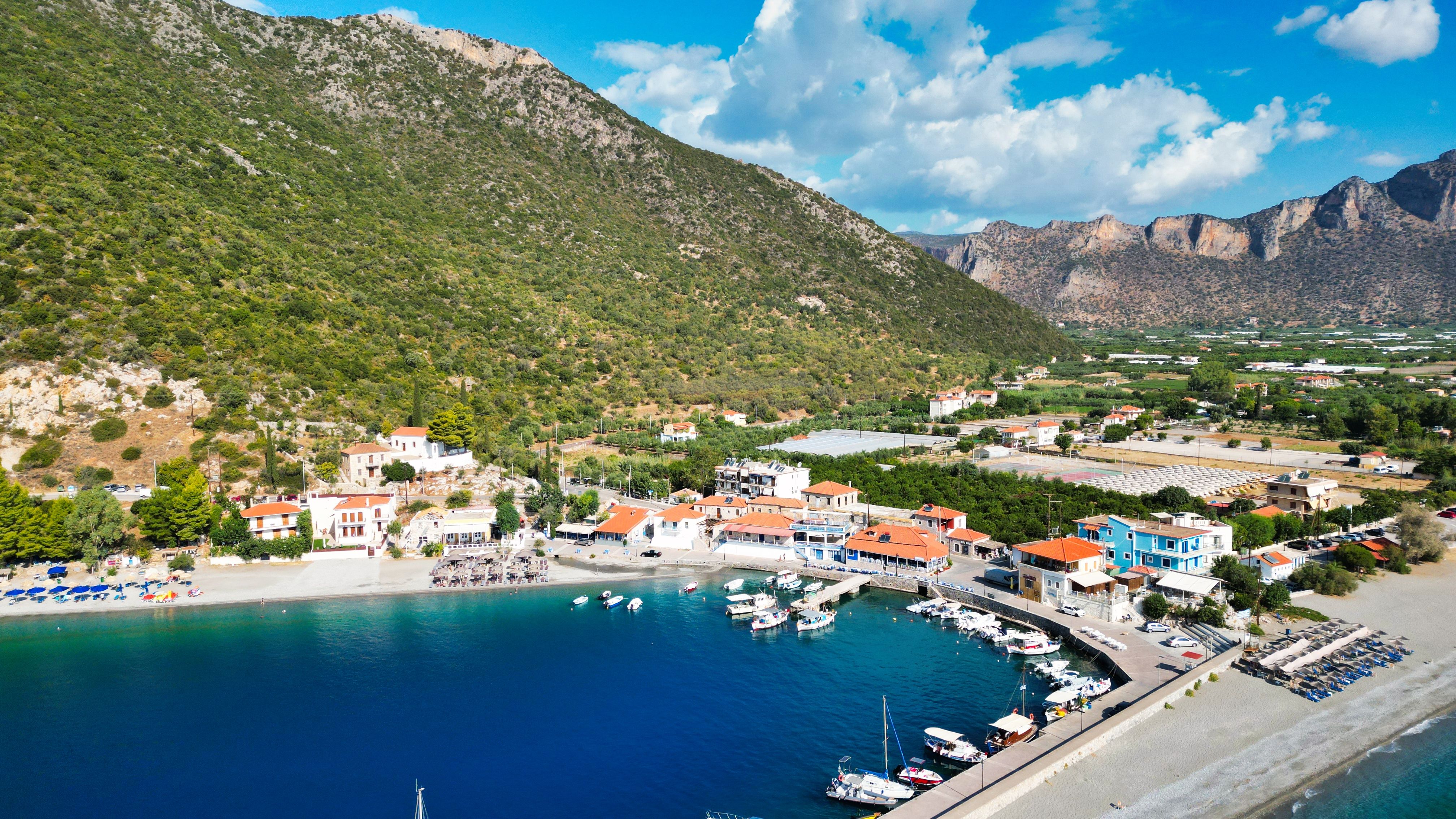
Assos Ancient Harbor: Where Aegean Waves Meet Temple of Athena
The late afternoon sun bathes weathered limestone in liquid gold as you descend the ancient stone steps toward Assos Ancient Harbor, where the azure waters of the Aegean Sea lap against a quay that has welcomed ships for over two millennia. The air carries the scent of salt spray, wild thyme from the hillside above, and the faint aroma of grilled fish from waterfront tavernas. You hear the gentle clink of glasses from seaside cafes, the soft lap of water against stone, and the distant cry of gulls circling above the Temple of Athena perched 238 meters above on the acropolis. Before you stretches a harbor where Aristotle once walked, where merchant vessels loaded with olive oil and wine departed for distant ports, and where fishing boats still return at dusk with their daily catch. The stone breakwater, extending 150 meters into the sea, protects a basin that has served as a sanctuary for sailors since the 6th century BCE. This isn't merely an archaeological site—it's a living landscape where ancient history meets contemporary Turkish coastal life, where the philosophical legacy of Aristotle converges with the timeless rhythm of the Aegean, and where travelers can trace the footsteps of antiquity while watching the sun sink into waters that have witnessed the rise and fall of empires.
Why Assos Ancient Harbor Embodies Mediterranean Continuity
Assos Ancient Harbor represents far more than a relic of maritime commerce—it embodies the extraordinary continuity of Mediterranean civilization where philosophy, trade, and natural beauty converge. Founded in the 10th century BCE by Greek colonists from Lesbos and reaching its zenith under the Temple of Athena's construction around 530 BCE, this harbor solved fundamental challenges of ancient maritime life: providing safe anchorage for vessels navigating the treacherous waters between the Aegean Sea and the Dardanelles Strait, facilitating trade routes connecting Asia Minor to mainland Greece, and supporting a thriving community that attracted thinkers like Aristotle, who established a school here between 348-345 BCE.
The harbor's engineering demonstrates sophisticated understanding of maritime architecture. The stone breakwater, constructed from local andesite blocks weighing up to 3 tons each, extends 150 meters from the shoreline, creating a protected basin of approximately 8,000 square meters. The quay features mooring stones carved directly into bedrock, spaced at 3-meter intervals to accommodate vessels up to 30 meters in length. Ancient warehouses, now visible as stone foundations, lined the harbor's northern edge, their thick walls designed to maintain cool temperatures for storing wine amphorae and olive oil. The harbor's natural depth of 4-6 meters allowed even large merchant ships to dock directly at the quay without need for lighters.
What makes Assos unique is its layered narrative: the harbor served successive civilizations—Greek, Persian, Roman, Byzantine, and Ottoman—each leaving architectural traces visible in the stonework. Today, the ancient harbor functions as both archaeological site and working fishing port, where traditional wooden caiques moor alongside pleasure craft, and where waterfront restaurants serve fresh catch while diners gaze toward the Temple of Athena's columns silhouetted against the sky. This convergence of ancient heritage and living culture—where philosophy meets fishing, where archaeology meets daily life—creates a destination that speaks to both the intellect and the senses.
The Best Time to Experience Assos Ancient Harbor
To experience Assos Ancient Harbor at its most enchanting, plan your visit between April 20–June 15 or September 10–October 25, when daytime temperatures range from 19-27°C (66-81°F) and the Aegean coast blooms with wildflowers or glows with autumn light. During these windows, you'll enjoy comfortable conditions for exploring the archaeological site, waterfront dining, and photography without summer's crowds or winter's chill.
For optimal photography of the harbor and Temple of Athena, arrive at 7:00–8:30 AM when morning light illuminates the eastern harbor facilities and the temple's columns glow amber against the blue sky. Alternatively, visit at 6:00–7:30 PM during golden hour when warm light transforms limestone into honey tones and long shadows emphasize architectural details while the setting sun creates spectacular reflections on the water.
Avoid the peak summer period of June 25–August 20 when temperatures can exceed 35°C (95°F) and the harbor area reaches maximum capacity with day-trippers from Istanbul and Çanakkale. While summer offers reliable weather and warm swimming conditions, the experience can feel rushed and accommodation prices surge 150-200%. Winter months (November–March) bring temperatures of 8-15°C (46-59°F) during the day but can drop to 3°C (37°F) at night; rain makes stone pathways slippery, and many waterfront restaurants close for the season.
Approximate Budget for a 7-Day Trip
Visiting Assos Ancient Harbor requires basing yourself in Behramkale village or nearby Ayvacık, with day trips to explore the archaeological site and surrounding Troad region. The following budget assumes moderate travel style—comfortable boutique hotels, authentic Aegean cuisine, and a mix of public transportation and occasional private transfers. Prices are listed in euros for international travelers, though Turkey uses the Turkish Lira (₺).
- Accommodation: €32–€58 per night in Behramkale village near the harbor. Budget pensions start at €26; boutique stone houses with sea views run €60-85. Staying in Behramkale provides immediate harbor access while Ayvacık offers more amenities 18 kilometers inland.
- Food: €16-24 per day total. Breakfast: €5-7 for traditional Turkish breakfast with menemen, local cheese, olives, honey, and çay. Lunch: €5-9 for fresh grilled fish, meze platters, and Turkish pide at waterfront tavernas. Dinner: €7-12 for sit-down meals featuring Aegean herbs, octopus, local wine, and baklava.
- Transportation: Round-trip flight to Çanakkale Airport from Istanbul: €60-128. Airport shuttle to Ayvacık: €8. Local dolmuş to Behramkale: €3 each way. Car rental from Çanakkale: €34/day. Taxi within region: €15-25 per trip.
- Attractions: Assos archaeological site (temple, theater, harbor): €10. Assos Museum: €5. Guided historical tour: €35. Boat excursion along coast: €20. Troy archaeological site day trip: €45.
- Miscellaneous: Handwoven Aegean textiles: €28-85. Local olive oil: €9/bottle. Ceramic pottery: €15-45. Regional guidebook: €11.
Total 7-Day Budget: €445–€640 per person (excluding international flights to Turkey)
7 Essential Assos Ancient Harbor Experiences
- Walk the Ancient Harbor at Dawn: Arrive at the harbor by 7:00 AM when fishing boats return with their nightly catch and the morning light illuminates the stone breakwater. Walk the 150-meter quay to examine ancient mooring stones carved into bedrock. The quiet early hours offer unparalleled photography opportunities before crowds arrive. Watch fishermen sort their catch—typically sea bass, red mullet, and octopus. Allow 45 minutes to fully appreciate the harbor's layout and imagine ancient merchant vessels loading cargo.
- Climb to the Temple of Athena: Ascend the 238-meter hill from the harbor to the Temple of Athena, constructed around 530 BCE. The 30-minute climb rewards with panoramic views across the Aegean Sea toward the Greek island of Lesbos. The temple's six surviving columns (from an original 6x13 colonnade) dominate the acropolis. Visit between 8:00–10:00 AM when morning light illuminates the Doric columns. Entry to the archaeological site (€10) includes both temple and harbor areas.
- Dine at Waterfront Tavernas: Experience fresh Aegean cuisine at family-run restaurants lining the harbor. Order grilled sea bass (levrek), octopus salad (ahtapot salatası), and local meze while watching fishing boats bob in the harbor. The best tables offer views toward the Temple of Athena. Visit for lunch between 1:00–3:00 PM when the catch is freshest. Expect to pay €12-18 for a full seafood meal with wine.
- Explore the Ancient Theater: Visit the well-preserved Hellenistic theater carved into the hillside between the harbor and acropolis. The structure seated approximately 5,000 spectators and offers spectacular views across the harbor basin. Examine the orchestra, seating tiers, and stage building foundations. Visit late afternoon (4:00–5:30 PM) when the stone glows amber in golden light. The theater's acoustics remain remarkable—speak softly from the stage and hear your voice carry to the upper seats.
- Swim at Ancient Harbor Beach: Cool off in the clear Aegean waters beside the ancient breakwater. The small beach area offers swimming with views of archaeological ruins. The water temperature ranges from 20-26°C (68-79°F) in summer. Bring water shoes as the bottom is rocky. Best swimming occurs mid-morning (10:00 AM–12:00 PM) before afternoon winds pick up. The combination of swimming and archaeology creates a unique experience.
- Walk the Ancient Road: Follow the stone-paved road that connected the harbor to the acropolis, visible in sections along the hillside. The 800-meter route reveals ancient drainage channels, cart ruts worn into stone, and remnants of shops and houses. Visit mid-morning (9:00–11:00 AM) when directional light emphasizes the road's construction details. Wear sturdy shoes—the ancient stones can be uneven and slippery.
- Watch Sunset from Harbor: Position yourself at the harbor's western edge at 7:00–8:30 PM to witness the sun sink into the Aegean while the Temple of Athena's columns silhouette against the sky. The harbor's tavernas fill with locals and travelers sharing this daily spectacle. Order Turkish wine or raki and meze to accompany the view. This is Assos at its most magical—where ancient stones meet eternal beauty.
3 Hidden Gems Most Travelers Miss
- The Ancient Necropolis: Tucked along the coastal path 400 meters west of the main harbor, rock-cut tombs from the Hellenistic period offer quiet contemplation away from crowds. Most visitors overlook this feature because it's not prominently signposted. Access: From the harbor, follow the coastal walking path westward for 10 minutes. Look for tomb chambers carved into limestone cliffs. Best visited late afternoon (5:00–6:30 PM) when light filters through openings. No entrance fee; allow 20 minutes to explore respectfully. The tombs reveal ancient burial practices and offer spectacular sea views.
- The Byzantine Church Ruins: Near the modern village cemetery, foundations and mosaic fragments mark a 6th-century CE Christian church built atop earlier pagan structures. Most tourists miss it because it's away from main circuits. Access: From Behramkale village center, walk northward for 300 meters following signs to "mezarlık" (cemetery). Best photographed mid-morning (10:00 AM–12:00 PM) when light illuminates mosaic details. This site reveals the religious transformation of Assos across millennia and offers peaceful reflection.
- The Secret Swimming Cove: A small, secluded beach accessible via an unmarked path 600 meters east of the ancient harbor offers crystal-clear waters and complete privacy. Local fishermen know this spot, but most tourists never discover it. Access: From the harbor's eastern edge, follow the coastal trail past the first small cove; look for a narrow path descending through olive trees. Best visited midday (12:00–2:00 PM) when the cove is shaded and water is calm. Bring your own refreshments—no facilities exist. The combination of privacy and natural beauty makes this worthwhile.
Cultural & Practical Tips
- Respect Archaeological Integrity: Assos is an active research site as well as a tourist destination. Stay on marked pathways to protect unexcavated areas. Do not touch or remove stones, pottery fragments, or other artifacts. Speak quietly to maintain the contemplative atmosphere that honors the site's significance.
- Photography Guidelines: Photography is permitted throughout the site, but tripods require care not to obstruct pathways or damage fragile surfaces. Drone photography requires advance permission from provincial authorities (contact: canakkale.kultur@ktb.gov.tr). The best light for harbor photography is early morning (7:00–9:00 AM) and sunset (7:00–8:30 PM).
- Essential Phrases: "Teşekkür ederim" (teh-shek-kür eh-deh-rim) = Thank you; "Assos limanı nerede?" (ah-sos lee-mah-nuh neh-reh-deh) = Where is Assos harbor?; "Ne kadar?" (neh kah-dar) = How much?; "Hoş geldiniz" (hosh gel-din-iz) = Welcome.
- Physical Preparedness: Exploring Assos involves walking on uneven stone paths and climbing steep hills. The climb from harbor to temple gains 238 meters elevation. Wear sturdy, closed-toe shoes with good grip. Carry at least 1.5 liters of water per person. The site is partially accessible but not fully wheelchair-friendly due to ancient stone steps and uneven surfaces.
- Weather Considerations: The Aegean coast experiences Mediterranean climate: summer temperatures can exceed 35°C (95°F) with intense sun; winter brings temperatures near freezing and occasional rain. The site offers minimal shade—bring sun protection, water, and layers regardless of season. Afternoon winds (meltemi) are common in summer; secure loose items.
- Understand the Context: Assos represents complex intersections of Greek philosophy, Roman commerce, and Turkish heritage. Approach the site with curiosity about ongoing archaeological research and respect for multiple cultural perspectives. Consider hiring a licensed guide who can explain Aristotle's connection to Assos and contextualize the harbor's commercial importance.
- Support Local Economy: Purchase fresh fish directly from fishermen at the harbor in the morning, buy local olive oil and honey from village shops, and dine at family-run tavernas. This helps sustain traditional livelihoods in a region facing economic pressures from mass tourism.
Conclusion: Travel with Reverence, Not Just Checklists
Assos Ancient Harbor invites you to do more than photograph ruins against an azure sea. This is a place to stand where Aristotle walked and taught, where merchant ships loaded with wine and olive oil departed for distant ports, where fishermen have returned at dusk for over two millennia. When you trace ancient mooring stones with your eyes, when you climb toward the Temple of Athena where philosophers contemplated existence, when you share fresh catch and Turkish wine while watching the sun sink into waters that witnessed empires rise and fall, you participate in a continuity that transcends any single lifetime.
Travel to Assos with reverence for the craftsmanship that shaped these stones, for the civilizations that rose and fell on this coast, for the ongoing work of preservation that keeps history alive. Respect the fragility of exposed archaeology—twenty-five centuries of weathering have softened edges, and every touch accelerates erosion. Understand that the contemplative atmosphere you cherish depends on the restraint of every visitor who comes after you. Let the harbor's beauty slow your pace, let its history humble your expectations, and let the convergence of philosophy, commerce, and natural splendor remind you that the most profound journeys are those that deepen our understanding of how human ambition and natural beauty can endure together across millennia.