Bairro Alto Nightlife: Where Fado Echoes Meet Cobblestone Vitality
Bairro Alto Nightlife: Where Street Bars Meet Lisbon’s Late-Night Culture
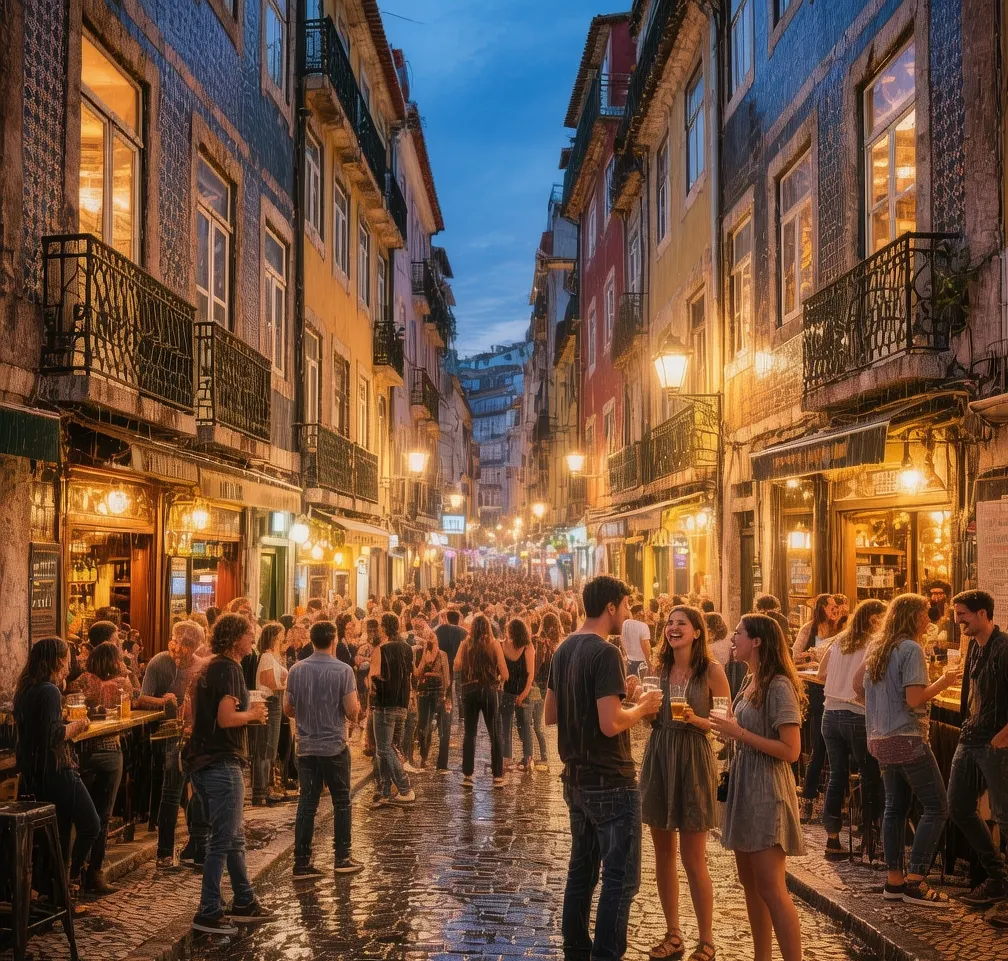
At 10:45 p.m., I pay €3 for a cold Super Bock on Rua da Atalaia and step back onto the cobblestones. The beer is simple, the plastic cup is slightly too thin, and the street already hums with conversation in Portuguese, English, French, and Spanish. This is Bairro Alto nightlife in its most familiar form: tiny bars, open doorways, loud groups, and no need for a fixed plan. I walk a few metres, find another bar, and keep moving. Most places are too small for a proper dance floor, so the pavement becomes the meeting point. By midnight, the crowd is much thicker. Drinks are still fairly affordable in ordinary bars, but prices rise quickly in places aimed at visitors. The neighbourhood is not polished, quiet, or especially easy to navigate after several drinks. That is part of its appeal, and also its main weakness. Bairro Alto nightlife works best when you treat it as a relaxed bar-hopping district, not a single venue or carefully staged club experience.
Why Bairro Alto Nightlife Matters
Bairro Alto is one of Lisbon’s oldest nightlife districts, but its appeal comes from how ordinary it feels. The neighbourhood developed as a residential and working area above the older parts of the city, with narrow streets arranged in a compact grid. During the day, many shutters stay down and the area can feel surprisingly quiet. After dark, small bars open and people move from one doorway to the next.
The social style is important. Instead of spending an entire evening inside one large venue, visitors often buy a drink, stand outside, and decide where to go next. That habit creates an informal atmosphere that feels more connected to Lisbon’s street life than to a traditional nightclub. Fado houses, Portuguese taverns, student bars, cocktail rooms, and small music venues sit close together, although the quality varies widely.
Bairro Alto nightlife also reflects Lisbon’s changing identity. Long-standing local venues share streets with international bars, short-term rentals, and businesses designed mainly for visitors. This mixture brings energy and choice, but it has also made parts of the district feel repetitive. Many bars look similar, and some rely heavily on cheap-shot promotions rather than good drinks. The neighbourhood is fun, but it is not a hidden local secret. Go for the street atmosphere and variety, not for perfect service or silence.
The Best Time to Experience Bairro Alto Nightlife
The strongest period for Bairro Alto nightlife runs from May 15 to June 30, when evening temperatures usually range from 17–27°C, or 63–81°F. The streets feel comfortable late at night, and Lisbon’s summer festival season adds extra activity. June can be crowded, especially around the Santo António celebrations, so accommodation prices may rise.
July 1 to August 31 is hotter, with nighttime temperatures commonly around 19–28°C, or 66–82°F. This is a popular period, but the district can become uncomfortable when narrow streets fill up. Start around 10:30 p.m. before the busiest period, which usually falls between midnight and 2:00 a.m.
September 1 to October 15 offers a good balance, with evenings around 16–26°C, or 61–79°F. It is often easier to move between bars than during peak summer. From November 1 to March 31, temperatures usually sit around 9–17°C, or 48–63°F. Rain can make the steep cobblestones slippery, though indoor bars are less crowded.
Thursday, Friday, and Saturday are the main nights. Sunday through Wednesday can be quiet, with many smaller bars opening later or closing early. Arrive around 10:00 p.m. for space, midnight for the full street scene, or after 1:30 a.m. if you want a slightly less crowded second phase.
Approximate Budget for a 7-Day Trip
This estimate covers one adult staying in Lisbon for seven days and enjoying Bairro Alto nightlife on three evenings. It assumes mid-range accommodation and a mixture of inexpensive meals and occasional restaurant visits.
- Accommodation: €560–€1,050 for seven nights in a budget hotel, guesthouse, or private room outside the most expensive central streets.
- Food: €245–€455 for bakeries, cafés, casual lunches, Portuguese dinners, and late-night snacks.
- Transport: €35–€75 for metro, buses, occasional taxis, and late-night rides between Bairro Alto and your accommodation.
- Attractions: €90–€180 for museums, viewpoints, a fado performance, and one paid day trip.
- Nightlife: €90–€210 for three evenings of beers, cocktails, small entry fees, and snacks.
- Miscellaneous: €70–€140 for coffee, water, luggage storage, and small purchases.
Estimated total: €1,090–€2,110 per person for seven days.
Bairro Alto beer prices can range from €2–€4 in ordinary bars, while cocktails commonly cost €6–€12. Tourist-focused venues may charge €7 or more for a basic beer, making those places poor value. A supermarket bottle or a drink at a traditional café before heading uphill is cheaper, but do not carry open alcohol into venues or treat public drinking rules casually. Taxis are also overpriced for short journeys when the route is walkable. Use the metro earlier in the evening and reserve rideshares for the trip home.
Essential Bairro Alto Nightlife Experiences
- Start on Rua da Atalaia: This street has a useful mix of small bars and is an easy place to begin before the crowds become dense.
- Walk Rua do Norte: Move slowly between the doorways rather than choosing the first bar you see. Prices and atmosphere change from one block to the next.
- Visit Pavilhão Chinês: The unusual interior is packed with old objects and collections. Go early because seating becomes difficult later.
- Listen to Fado at Tasca do Chico: The setting is informal and small, with performances that can feel far more personal than a large dinner show.
- Stop at Miradouro de São Pedro de Alcântara: A nighttime view over central Lisbon makes a useful break from the noise and narrow streets.
- Walk downhill to Cais do Sodré: When Bairro Alto begins to thin out, continue toward Pink Street or the riverside clubs.
- Skip the pub crawl if you dislike crowds: Organised tours can be sociable, but they often move quickly and include bars chosen for commission arrangements rather than quality.
Hidden Gems Most Travelers Miss
- Portas Largas: A long-running, welcoming bar with a mixed crowd and a less aggressive approach than some nearby venues.
- Galeria Zé dos Bois: A cultural space on Rua da Barroca with exhibitions, concerts, and a different rhythm from standard bar-hopping.
- Rua do Diário de Notícias: Walk beyond the loudest corners for smaller bars and a more residential feel.
- O Purista: A good choice for visitors who want a carefully prepared gin drink rather than a cheap shot.
- Miradouro de Santa Catarina: Known locally as Adamastor, this viewpoint is useful before the night begins and offers a more open setting.
- Cervejaria Trindade: The tiled interior is worth seeing, especially early in the evening when you can find a table.
- Pink Street: It is famous and convenient, but often overrated. Prices are higher, the street gets packed, and the photo opportunity can be better than the actual night out.
Cultural & Practical Tips
- Carry a valid photo ID. Clubs and some late-night venues may check it at the door.
- Wear shoes with firm soles. The pavement is uneven, and high heels are uncomfortable on the steep streets.
- Tourist mistake: accepting a cheap-shot offer without checking the final price. Ask what each drink costs before ordering a round.
- Tourist mistake: leaving your phone in a loose jacket pocket. Pickpockets can work crowded streets, especially when people are distracted or intoxicated.
- Keep your voice down when walking through residential lanes. Local residents live above the bars, and shouting outside at 3:00 a.m. causes real disruption.
- Do not assume every bar accepts cards. Small venues may require cash or have a minimum card payment.
- Portuguese is appreciated, but English is widely understood. A simple “obrigado” or “obrigada” is always useful.
Essential Visitor Information
Location & Access: The main Bairro Alto nightlife area sits around Rua da Atalaia, Rua do Norte, Rua da Barroca, and Rua do Diário de Notícias, Lisbon, Portugal. A useful central point is Rua da Atalaia, 1200-043 Lisboa. GPS coordinates are approximately 38.7138, -9.1432. The district is about 1 km from Praça do Comércio and 2 km from Cais do Sodré.
Three transport options are walking uphill from Baixa or Chiado, taking the metro to Baixa-Chiado and continuing on foot, or using the Elevador da Glória from Restauradores when operating. The funicular may be unavailable during maintenance, so walking is the safest assumption. Taxis and rideshares are practical late at night, though the narrow streets may require drop-off at the edge of the district.
Tickets & Booking: Entry to most Bairro Alto bars is free. Drinks usually cost €2–€4 for beer, €6–€12 for cocktails, and €5–€10 for basic wine servings. Fado venues may charge €10–€25, while clubs in nearby Cais do Sodré commonly charge €10–€20. Booking is not needed for casual bar-hopping, but reservations are sensible for fado, popular restaurants, and ticketed music events.
Operating Hours: Bars generally begin filling from 9:30 p.m. or 10:00 p.m. and may close around 2:00–3:00 a.m. on busy nights. Some venues stay open later, while clubs in other districts can continue until dawn. Sunday through Wednesday schedules vary more, especially outside the summer season.
Visit Duration: Allow at least two hours for a short walk through the main streets. Three to five hours suits a relaxed evening with several bars, food, and a viewpoint stop. Staying longer usually means moving downhill toward Cais do Sodré.
Family Suitability: The neighbourhood is suitable for families during the daytime, but late-night Bairro Alto is not a good choice for young children. Strollers can be difficult on steep cobblestones and crowded pavements. There are cafés and restaurants with toilets, but public facilities are limited once the evening gets busy.
Timing: Late spring and early autumn offer the most comfortable conditions. Start between 10:00 p.m. and 11:00 p.m. for easier movement, or arrive after midnight for the fullest street atmosphere. Avoid Friday and Saturday nights if you dislike noise and dense crowds.
Highlights: Rua da Atalaia, Rua do Norte, Pavilhão Chinês, Tasca do Chico, and Miradouro de São Pedro de Alcântara are the main stops for a first visit.
Nearby & Day Trip: Chiado, Praça Luís de Camões, Miradouro de Santa Catarina, and Cais do Sodré are all close by. A combined evening route from Bairro Alto to Pink Street is easy on foot, mostly downhill. A full day trip to Sintra or Cascais is feasible during the day, followed by Bairro Alto at night, but schedule a rest period before going out.
Conclusion: Travel with Local Rhythm, Not Just Late-Night Photos
Bairro Alto nightlife is less about finding one perfect bar and more about understanding Lisbon’s social rhythm. Start with dinner, walk uphill, choose drinks carefully, and let the streets guide the evening. The district can be noisy, crowded, and occasionally overpriced, but it also offers an easy way to meet people without booking a formal experience. Respect the residents, protect your belongings, and avoid the loudest tourist promotions. For the best balance, arrive around 10:30 p.m., visit two or three small bars, then walk downhill toward Cais do Sodré. Would you prefer a quiet fado evening or a full street-bar night?
Post a Comment