Tram 28: Where Vintage Engineering Meets Alfama's Soul
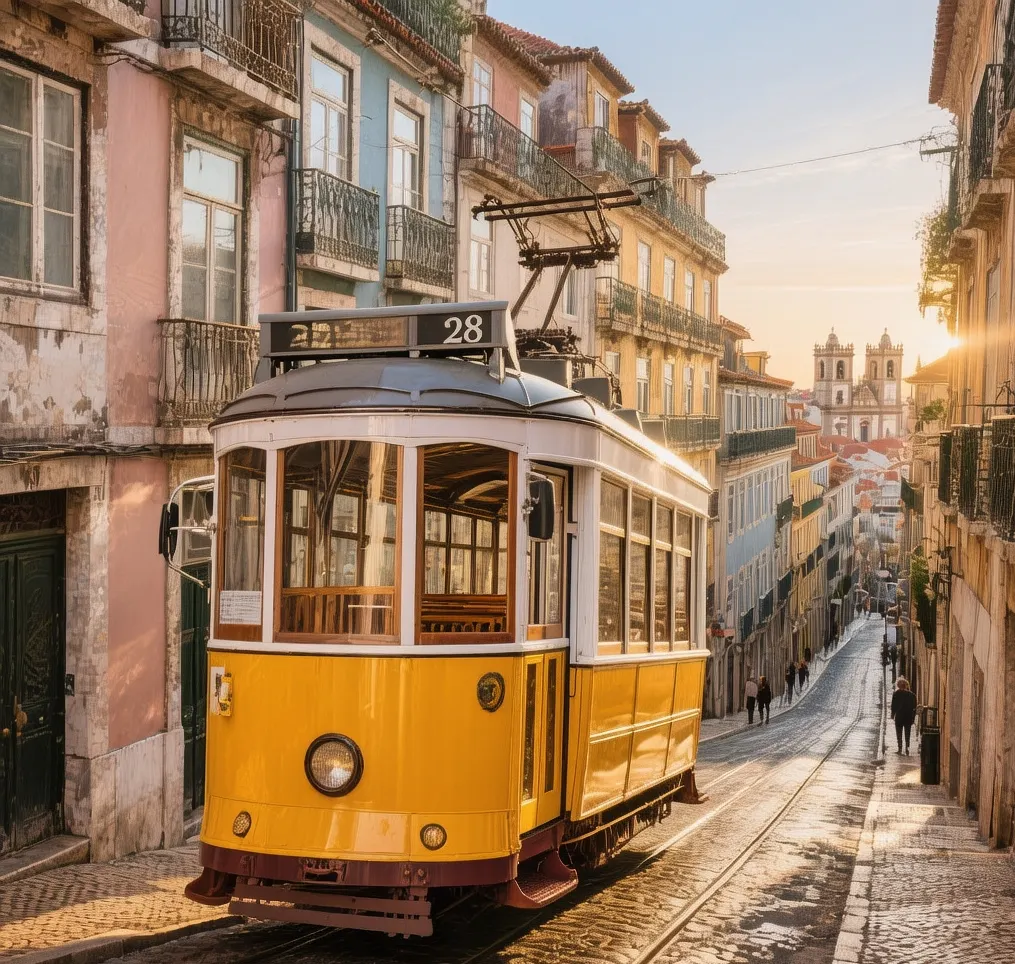
Tram 28: Where Historic Streets Meet Lisbon’s Everyday Rhythm
At 7:42 a.m., I pay €1.90 for a one-hour Carris and Metro ticket, step aboard at Martim Moniz, and grab a wooden seat beside the open window. The tram smells faintly of warm metal and old varnish. Its bell rings twice before the driver squeezes between parked cars and starts climbing toward Graça. This is Tram 28, Lisbon’s famous yellow electric tram, and the early ride feels much calmer than the scenes shown in most travel photographs. I pass tiled façades, laundry lines, steep corners, and cafés preparing for the morning. A few residents board with shopping bags, while visitors lean across the aisle for photographs. The complete journey takes roughly 45 to 60 minutes, depending on traffic and blocked tracks. It is a wonderful way to see several historic districts, but it is still public transport, not a private sightseeing tour. Seats are limited, delays happen, and crowded carriages attract pickpockets. Ride early, keep your bag close, and leave time to explore the stops on foot.
Why Tram 28 Matters
Tram 28 is part of Lisbon’s working transport system, not a vehicle built only for visitors. Its compact electric cars can handle hills, tight bends, and narrow streets that are difficult for larger buses. The route links Martim Moniz, Graça, Alfama, Baixa, Chiado, São Bento, Estrela, and Campo de Ourique, crossing several neighbourhoods with distinct histories and daily routines.
The line is especially valuable because it reaches parts of old Lisbon where walking can be tiring. From the tram window, you see the city at street level: groceries being unloaded, residents waiting at stops, schoolchildren heading to class, and delivery vans trying to pass through impossibly narrow lanes. That ordinary movement is what gives the journey its character.
The route also passes close to important landmarks, including Lisbon Cathedral, Portas do Sol, Santa Luzia, Basílica da Estrela, and the viewpoints around Graça. It makes a useful first orientation ride before returning to the areas that interest you most.
There is one major criticism. Tram 28 is now so popular that the experience can become uncomfortable rather than charming. Long queues form at the terminal stops, carriages fill quickly, and a standing passenger may see less than someone walking the same streets. Do not treat it as an essential box to tick at any cost. Early morning, careful planning, and short walks make the difference.
The Best Time to Experience Tram 28
The best period for Tram 28 runs from April 15 to June 15, when daytime temperatures usually range from 17–27°C, or 63–81°F. The weather is comfortable for walking, and the tram is generally less difficult than during the busiest summer weeks.
From June 16 to September 15, daytime temperatures commonly reach 25–33°C, or 77–91°F. July and August bring the longest queues, strongest sun, and heaviest visitor numbers. The cars are not air-conditioned, so a packed midday journey can feel hot and tiring.
September 16 to October 31 is another good window, with typical temperatures around 18–27°C, or 64–81°F. From November 1 to March 31, expect cooler weather between 11–18°C, or 52–64°F, along with occasional rain. Rain makes the steep pavement slippery but may reduce the crowds.
Board between 6:30 and 8:30 a.m. for the best chance of a seat. A second option is after 7:00 p.m., although evening service may have fewer departures and the route can finish earlier on some days. Avoid 10:00 a.m. to 5:00 p.m. on Friday, Saturday, and school-holiday dates.
Approximate Budget for a 7-Day Trip
This estimate covers one adult spending seven days in Lisbon and including one Tram 28 journey, several walking days, and a mixture of inexpensive and mid-range meals.
- Accommodation: €560–€1,050 for seven nights in a budget hotel, guesthouse, or private room outside the most expensive streets.
- Food: €245–€455 for bakery breakfasts, casual lunches, traditional restaurants, coffee, and snacks.
- Transport: €35–€75 for metro, buses, trams, airport travel, and occasional late-night rides.
- Attractions: €90–€180 for museums, churches, viewpoints, and one paid day trip.
- Miscellaneous: €70–€140 for bottled water, luggage storage, small purchases, and extra coffees.
Estimated total: €1,000–€1,900 per person for seven days.
A single Tram 28 ride costs €3.30 when bought from the driver. A one-hour Carris and Metro ticket costs €1.90 when loaded onto a reusable travel card, while a 24-hour pass costs about €7.25. The onboard fare is overpriced if you plan to use public transport more than once. Buy a travel card at a metro station instead. Taxis and tuk-tuks around Alfama are also expensive for short distances, so walk when the weather and hills allow it.
Essential Tram 28 Experiences
- Begin at Martim Moniz: Starting at the eastern terminus gives you the best chance of boarding and finding a seat, although the queue can still be long.
- Watch the climb into Graça: The tram rises through tight streets before reaching viewpoints and neighbourhood cafés around Graça.
- Get off at Portas do Sol: Walk to the viewpoint, then continue toward Santa Luzia and Lisbon Cathedral through Alfama.
- Explore the Sé area: Lisbon Cathedral and the streets around Rua da Alfândega are close to the route and worth seeing on foot.
- Pass through Chiado: The stops near Praça Luís de Camões provide access to cafés, shops, theatres, and Bairro Alto.
- Visit Basílica da Estrela: The church and nearby garden offer a slower end to the route, away from the densest crowds.
- Skip the full ride if you hate queues: Take Tram 12 or Tram 24 for shorter sections, then walk through Alfama and Graça at your own pace.
Hidden Gems Most Travelers Miss
- Jardim da Cerca da Graça: A green space with city views and room to sit after the steep climb through Graça.
- Rua dos Remédios: A quieter Alfama street with tiled buildings, small restaurants, and fewer large groups than the main viewpoints.
- São Vicente de Fora: The monastery and surrounding streets offer fine architectural details near the tram’s northern section.
- Feira da Ladra: Lisbon’s flea market takes place near the National Pantheon on Tuesdays and Saturdays.
- Jardim da Estrela: A useful place for a break after visiting the basilica, with shaded paths and benches.
- Rua de São Bento: This street has antique shops, traditional cafés, and a more everyday side of Lisbon.
- Portas do Sol: The viewpoint is famous for good reason, but it is often overrated at midday, when crowds, tour groups, and inflated café prices make a short stop less pleasant.
Cultural & Practical Tips
- Keep bags in front of you on crowded trams, especially when boarding or leaving at busy stops.
- Tourist mistake: standing in a long terminal queue at midday without checking another departure point. Walking one or two stops can sometimes save considerable time.
- Tourist mistake: using Tram 28 as a hop-on, hop-off service. Seats may be unavailable, and another full tram may not arrive quickly.
- Hold the handrail firmly. The driver brakes sharply, and the route includes steep climbs and sudden bends.
- Do not block the doors while taking photographs. Residents use this line for ordinary journeys.
- Validate your travel card before boarding and keep it available for inspection.
- Wear shoes with good grip. Several worthwhile stops involve steep streets and uneven paving.
Essential Visitor Information
Location & Access: Tram 28E runs between Martim Moniz, 1100-341 Lisboa, and Campo de Ourique, near Prazeres Cemetery, 1350-247 Lisboa. The eastern terminus is approximately 2 km from Praça do Comércio, while the full route covers about 7 km. GPS coordinates for Martim Moniz are approximately 38.7167, -9.1373.
Three transport options are the Green Metro Line to Martim Moniz, the Blue or Green Metro Line to Baixa-Chiado followed by a short walk, or a local bus to a stop along the route. Walking from Baixa is also practical, although the climb toward Graça is steep.
Tickets & Booking: An onboard ticket costs €3.30. A one-hour Carris and Metro ticket costs €1.90 when loaded onto a reusable travel card, and a 24-hour pass costs about €7.25. Booking is not required because this is public transport. A travel card must be bought and loaded before boarding if you want the lower fare.
Operating Hours: Service generally begins shortly before 6:00 a.m. and continues into the evening. The final departures vary by direction, day, maintenance, and service conditions, with later operation on some weekdays and earlier finishes on some weekends. Track obstructions, roadworks, and parked vehicles can cause delays or temporary changes.
Visit Duration: Allow 45–60 minutes for a direct end-to-end ride. A better plan is two to four hours, including stops at Portas do Sol, the Sé, Graça, and Basílica da Estrela.
Family Suitability: Older children usually enjoy the bells, hills, and sharp corners. Young children may find a packed standing journey tiring. Strollers are difficult during busy periods and may not be accepted when the tram is crowded. There is limited space for large luggage, and onboard toilets are not available.
Timing: Late spring and early autumn offer the best balance of weather and crowd levels. Ride before 8:30 a.m. for the most comfortable experience, or walk the route in sections during the afternoon and take the tram only for a short stretch.
Highlights: Graça, Portas do Sol, Miradouro de Santa Luzia, Lisbon Cathedral, Chiado, and Basílica da Estrela are the main places to see along the route.
Nearby & Day Trip: Nearby attractions include São Jorge Castle, the National Pantheon, Praça do Comércio, and the Time Out Market. A day trip combining Tram 28 with Alfama and Graça is easy. Sintra or Cascais is also possible on another day, but combining one of those trips with the full tram route would make for a tiring schedule.
Conclusion: Travel with Patience, Not Just Tram Photos
Tram 28 is worth riding when you treat it as part of Lisbon rather than a moving viewpoint. It connects old neighbourhoods, passes ordinary homes, and gives you a practical introduction to the city’s hills and narrow streets. The ride can be crowded, delayed, and less comfortable than expected, especially during summer afternoons. Start early, use a prepaid travel card, and get off at the places that interest you instead of staying onboard for the entire route. A short ride followed by walking often creates a better day than waiting an hour for a seat. Would you rather ride the full line or explore it stop by stop?
Post a Comment