Monserrate Palace: Where Romantic Architecture Meets Sintra’s Botanical Canopy
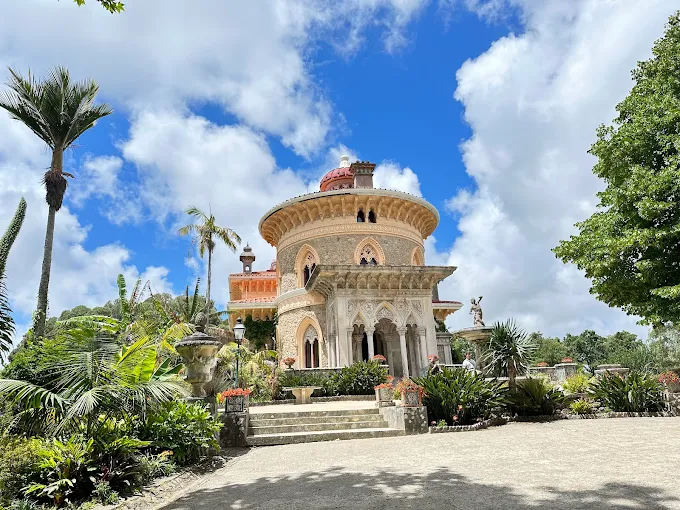
Monserrate Palace: Where Moorish Architecture Meets Sintra's Botanical Gardens
At 9:35 on a cool June morning, I pay €12 for entry and follow the shaded path from the ticket office toward Monserrate Palace. The air smells of damp soil, eucalyptus and clipped grass. A few minutes later, the pink facade appears through the trees, with carved arches, domes and delicate stone screens catching the early light. Monserrate Palace is one of Sintra's quieter major sights, sitting about four kilometres from the historic centre and far from the crowds around Pena Palace. The building itself is not huge, but the surrounding park covers enough ground to fill a relaxed half-day. I spend nearly an hour walking among ferns, palms, waterfalls and old garden structures before entering the palace. The interior is cool and mostly unfurnished, though its central hall, stonework and domed ceilings are impressive. Bring comfortable shoes. The park has steep paths, muddy sections and more walking than many first-time visitors expect.
Why Monserrate Palace Matters
Monserrate Palace matters because it shows how many influences came together in nineteenth-century Sintra. The present building was shaped by Francis Cook, an English merchant and art collector who acquired the estate in the nineteenth century. Architect James Knowles Jr. helped create the house seen today, combining Moorish, Gothic, Indian and Italian details into one unusual design.
The estate had an earlier history. A chapel and country house existed on the property before Cook's arrival, while William Beckford helped develop the landscape garden in the late eighteenth century. Cook later expanded the grounds and introduced plants from different parts of the world. The result is not a formal garden with one clear style. Instead, each section feels different. There is a fern valley, a Mexican garden, a Japanese garden, a rose garden, a waterfall and a ruined chapel hidden among the trees.
Inside, the main atrium is the palace's strongest feature. Its octagonal dome, marble columns and detailed stone latticework reward a slow look upward. The music room and galleries also show how the house was designed for entertaining rather than defensive power.
There is a drawback. Much of the original furniture was sold after the Cook family period, so the rooms can feel empty. Restoration work on the roof is also scheduled to continue into early 2027, with temporary coverings and scaffolding affecting parts of the exterior. Monserrate is still worth visiting, but people expecting a fully furnished royal residence may find the interiors less satisfying than the gardens.
The Best Time to Experience Monserrate Palace
The best period for Monserrate Palace runs from May 15 to June 30. Daytime temperatures usually range from 19°C to 25°C (66°F to 77°F), and the garden has enough moisture for the fern valleys and shaded paths to look fresh. Arrive close to opening time for cooler walking conditions.
July 1 to August 31 is warmer, with typical daytime temperatures of 24°C to 29°C (75°F to 84°F). Sintra often feels cooler than Lisbon, especially under the trees, but the exposed paths can become hot in the afternoon. Visit before 11:00 or after 15:30. The palace is usually less crowded than Pena, though buses can still arrive in groups.
September 1 to October 15 offers a good balance of mild weather and fewer visitors. Expect 21°C to 27°C (70°F to 81°F). Early autumn light works well for photographs, while the park remains comfortable for longer walks.
From November 1 to March 15, temperatures often sit between 13°C and 18°C (55°F and 64°F). Rain is more likely, and some garden paths can be slippery. This is the quietest season, but bring waterproof shoes and allow extra time for bus delays.
Late morning is practical if you are combining Monserrate with Quinta da Regaleira. Late afternoon is calmer, but do not arrive close to the final admission time because the palace and garden entrances close at different times.
Approximate Budget for a 7-Day Trip
A seven-day visit based in Lisbon or Sintra can include Monserrate Palace without stretching a moderate travel budget. The figures below are per person and assume shared accommodation, public transport and a mix of casual meals and local restaurants.
- Accommodation: €420 to €840 for seven nights in a budget hotel, guesthouse or private hostel room. Sintra saves commuting time, but rooms can cost more on Fridays, Saturdays and public holidays.
- Food: €210 to €350 for breakfasts, lunches, dinners, pastries, coffee and drinks. A daily food budget of €30 to €50 is realistic if you avoid eating every meal near the main tourist squares.
- Transport: €55 to €110 for Lisbon metro and trains, Sintra buses and local trips. The 435 bus connects Sintra station with Monserrate, while taxis and ride-hailing cars cost more but can save time.
- Attractions: €90 to €190 for Monserrate Palace, Quinta da Regaleira, Pena Palace, the Moorish Castle and one or two smaller sites.
- Miscellaneous: €50 to €100 for snacks, rain protection, small gifts, café stops and occasional ride-hailing journeys.
Total: €825 to €1,590 per person for seven days.
The private tuk-tuk rides advertised around Sintra can be overpriced for short journeys, particularly when traffic is heavy. The public bus is cheaper, while a shared Bolt or Uber can make more sense for three or four people. The café inside the Monserrate estate is convenient but not the cheapest place for a full meal. Bring a sandwich from Sintra if you want to keep costs down.
Essential Monserrate Palace Experiences
- Enter through the main atrium. Look up before moving through the rooms. The dome, columns and carved screens are easy to miss if you follow the group in front of you.
- Walk the Fern Valley. This shaded section has winding paths, giant ferns and a cooler atmosphere than the open lawns. It is one of the best areas for a slow walk.
- Find Beckford's Waterfall. The artificial waterfall is tucked into the park and fits naturally into the surrounding planting. It is a good place to pause during the warmer part of the day.
- Visit the ruined chapel. The roofless chapel and surrounding trees show the Romantic taste that shaped many Sintra estates. The path can be uneven after rain.
- Explore the Mexican and Japanese gardens. These areas demonstrate the range of plants and design ideas used across the estate. Allow more time than a quick photograph.
- Walk back through the park. Do not go straight from the ticket office to the palace and leave. The best parts of Monserrate are spread across the grounds.
- Skip the long garden route if the weather is poor. Heavy rain can make the sloping paths slippery, and several sections provide little shelter. See the palace first, then decide how much of the park feels comfortable.
Hidden Gems Most Travelers Miss
- The Scented Path: A quieter section close to the palace where herbs and flowering plants add another layer to the visit.
- The old chapel viewpoint: Look beyond the ruin rather than only at the stonework. The surrounding trees create some of the park's most interesting views.
- The natural forest area: This section feels less arranged than the formal gardens and gives a clearer sense of the Sintra hills.
- The water features near the fern valley: Small streams, ponds and damp stone details are easy to pass when following the main route.
- The former stable café: The building is useful for a short break and offers a glimpse of the estate's working side.
- The upper garden paths: Many visitors stay near the palace and miss the higher routes, which are quieter but more demanding underfoot.
- The palace's central hall: The exterior gets most of the attention, but the interior stone screens and ceiling details are the real highlight.
- The main palace lawn: It is pleasant but somewhat overrated compared with the fern valley and chapel area. Spend less time here if your schedule is tight.
Cultural & Practical Tips
- Wear shoes with firm soles. Sandals and smooth trainers are poor choices for the steeper garden paths.
- Carry a light jacket even in summer. The shaded areas can feel cool, while the open lawns receive strong sun.
- Do not confuse the palace closing time with the park closing time. The palace closes earlier, so visit the interior before taking a long garden walk.
- Tourists often board the first available Sintra bus without checking the route. Confirm that you are taking the 435 or 1253 toward Monserrate, not a service heading only toward the historic centre.
- Do not plan Pena Palace, Quinta da Regaleira and Monserrate in a rushed half-day. Travel between the sites takes longer when buses are full or roads are congested.
- Keep food sealed in your bag. The park is wooded, and leaving scraps on benches attracts animals and creates extra litter.
- Ask before photographing staff, guides or local residents. A quiet, respectful approach fits the atmosphere of the estate better than rushing through with a large group.
Essential Visitor Information
Location & Access: Park and Palace of Monserrate, 2710-405 Sintra, Portugal. GPS: 38.79125, -9.41956. The estate is about 3.5 kilometres from Sintra's historic centre, approximately four kilometres from Sintra railway station and around 30 kilometres from Lisbon. By public transport, take the 435 bus from Sintra station or the 1253 service toward Monserrate. By car, follow the EN375 through the Colares direction; parking is available near the entrance. A taxi or ride-hailing car is the fastest option from central Sintra.
Tickets & Booking: The combined park and palace ticket costs €12 for adults aged 18 to 64, €10 for visitors aged 6 to 17, €10 for visitors over 65 and €33 for a family ticket covering two adults and two youths. Children under six enter free. Booking is not usually required on quieter weekdays, but advance purchase is sensible during July, August, weekends and school holidays.
Operating Hours: The park is generally open from 09:00 to 19:00, with last admission at 18:00. The palace usually opens from 09:30 to 18:00, with the last ticket sold at 17:00 and final admission around 17:30. The ticket office closes from 12:00 to 13:00, although automatic ticket machines may operate. Hours can change during restoration work or seasonal events.
Visit Duration: Allow at least 90 minutes for a quick visit. Two to three hours is better if you want to see the palace, fern valley, waterfall, chapel ruin, Mexican garden and Japanese garden without hurrying.
Family Suitability: Monserrate works well for children who enjoy gardens, water features and unusual buildings. The main palace route is manageable, and accessible facilities are available. A stroller can be used near the entrance and palace, but steep and uneven garden paths make a lightweight stroller more practical. Wheelchair access is possible in selected areas, though parts of the park and the upper palace levels are restricted.
Timing: May, June, September and early October offer the best conditions for exploring the gardens. Arrive before 10:00 for cooler temperatures and fewer groups. If visiting in winter, choose the middle of the day and avoid the park after heavy rain.
Highlights: The central atrium, the palace's carved stone screens, Fern Valley, Beckford's Waterfall, the ruined chapel, the Mexican Garden and the Japanese Garden are the main sights.
Nearby & Day Trip: Quinta da Regaleira is about three kilometres away, Sintra National Palace is roughly four kilometres away, and the Moorish Castle and Pena Palace sit higher in the Sintra hills. Cabo da Roca is around 15 kilometres by road, while Praia da Adraga is about 10 kilometres away. A full day combining Monserrate with Quinta da Regaleira and Cabo da Roca is possible by car, but public transport requires careful planning and may feel rushed.
Conclusion: Travel with Curiosity, Not Just a Palace Photograph
Monserrate Palace rewards visitors who slow down. The pink building is the obvious attraction, but the park gives the estate its real character. Ferns, waterfalls, chapel ruins and distant garden paths make the visit feel larger than the palace itself. It is a useful alternative to Sintra's crowded headline sights, although restoration work and uneven paths may affect your experience. Wear good shoes, arrive early and leave at least two hours for the grounds. If your schedule allows only one garden palace in Sintra, would you choose Monserrate for its architecture or its plants?
Post a Comment