
Conimbriga Roman Ruins: Where Imperial Mosaics Meet Portuguese Rolling Hills
Morning light slants across the geometric polychrome mosaics of Conimbriga, igniting the blood-red and deep-blue tesserae that have remained buried in the Portuguese soil for two millennia. You walk along the ancient cardo maximus, feeling the coarse, sun-warmed limestone beneath your boots—the exact same stone that once echoed with the leather sandals of Roman legionaries. The air smells of wild thyme, crushed quartz dust, and the distant scent of eucalyptus drifting from the surrounding hills. Spanning an impressive 15 hectares (37 acres), the sprawling urban footprint unfolds before you: a dense, meticulously planned grid of towers, courtyard houses, and subterranean crypts. Swallows dart through the fractured arches of the monumental baths, their calls piercing the heavy silence. Conimbriga matters because it stands as the largest, most deeply stratified Roman settlement in Portugal—a rare, unbroken timeline where you can physically trace the evolution from a primitive Iron Age settlement to a flourishing, sophisticated imperial municipality without ever leaving the ground.
Why Conimbriga Roman Ruins Embody Urban Continuity
Conimbriga embodies urban continuity because its architecture represents a masterclass in adaptive engineering, directly solving the problem of transforming a rugged, indigenous hilltop into a modernized Roman city. During the early imperial period, local elites sought to project their newfound alliance with Rome, requiring massive civic infrastructure upgrades. Under the direction of imported Roman engineers, the site evolved from modest circular huts into a sprawling metropolis featuring complex hydraulic systems. The crowning achievement of this engineering feat is the massive defensive wall, constructed during the turbulent third century to protect against indigenous uprisings and barbarian incursions. Stretching 1,500 meters (4,921 feet) in length, the fortification features 18 projecting semi-circular towers designed to deflect projectiles. These walls measure 2 meters (6.5 feet) thick at the base, built from locally quarried granite and mortared rubble. Furthermore, the city solved the critical challenge of water scarcity by constructing an elevated aqueduct system channeling fresh spring water from the distant mountains directly into the heart of the public baths. The thermal complex itself showcases advanced Roman heating technology: the hypocaust system, a subterranean network of brick pillars that allowed hot furnace gases to circulate beneath the suspended floor, raising interior temperatures to a luxurious 30°C (86°F) for bathers.
The Best Time to Experience Conimbriga Roman Ruins
To experience the Conimbriga Roman ruins in their most evocative state, plan your visit between April 5 and May 18. During this specific window, the surrounding Ceira valley erupts in vivid green, and temperatures remain a comfortable 17°C–22°C (63°F–72°F)—perfect for extended walking across the exposed, shadeless stone pathways. Arrive precisely between 9:00 and 10:30 AM. At this early hour, the angled sunlight casts deep, dramatic shadows within the shallow mosaic trenches, making the intricate geometric patterns pop with striking three-dimensional clarity. You should firmly avoid July 20 through August 25; summer heat pushes temperatures to an oppressive 35°C (95°F), the site lacks sufficient canopy cover, and large tour buses disgorge dense crowds that entirely erode the solemn, isolated atmosphere. For up-to-date information on excavation closures, special reenactment schedules, and ticket reservations, consult the official monument website at www.conimbriga.pt. Checking this resource ensures you avoid unexpected disruptions caused by active archaeological fieldwork and secure the unhurried, deeply personal encounter with antiquity that this sprawling site fundamentally demands.
Approximate Budget for a 7-Day Trip
Estimating costs for a deep cultural immersion into the Conimbriga Roman ruins requires factoring in the incredibly favorable pricing of the surrounding Beira Litoral region. This budget reflects a mid-range traveler prioritizing historical engagement and regional gastronomy, basing themselves in the nearby town of Condeixa-a-Nova rather than the more expensive city of Coimbra.
- Accommodation: €60–€85 per night (a restored rural quinta or family-run guesthouse in Condeixa-a-Nova, located just five minutes by car from the ruins, featuring terracotta floors and garden views)
- Food: €35 per day (Breakfast €4 for a strong bica espresso and a freshly baked pastel de nata; Lunch €11 for a hearty prato do dia featuring cozido à portuguesa at a local tavern; Dinner €20 for grilled cabrito [kid goat] paired with a robust Dão wine)
- Transportation: €18 total (€3 each way on the Rodoviária do Centro bus connecting Condeixa-a-Nova to Coimbra; €12 for a round-trip taxi ride directly to the ruins' entrance gate)
- Attractions: €18 total (€8 for the combined Conimbriga ruins and Monographic Museum ticket; €10 for admission to the National Museum Machado de Castro in Coimbra, which houses many original artifacts from the site)
- Miscellaneous: €25 total (a bottle of estate-produced olive oil from a local mill, a replica Roman terracotta oil lamp from the museum gift shop, and traditional regional cork crafts)
Total: €576–€781
6 Essential Conimbriga Roman Ruins Experiences
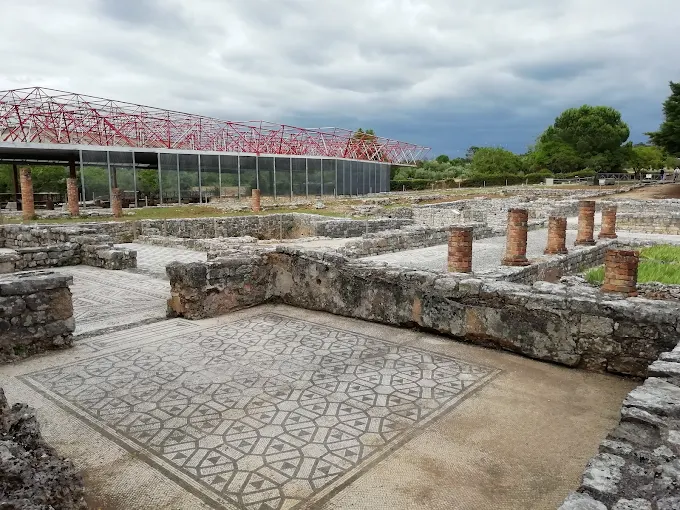
- Trace the Polychrome Mosaics of the House of the Fountains: Kneel at the edge of the protective raised walkway to examine the intricately laid tesserae. Feel the visual weight of the mythological hunting scenes depicted in stark black, white, and terracotta. Notice how the ancient craftsmen used angled stone cuts to create the illusion of flowing water and animal movement in the central courtyard basin.
- Walk the Perimeter of the Defensive Walls: Follow the undulating limestone fortifications toward the northern gates. Run your hands along the rough, mortared stone facing the exterior, then step inside a semi-circular turret to observe the precisely angled embrasures—the narrow vertical slits designed for archers to shoot while remaining entirely shielded from incoming projectiles.
- Descend into the Subterranean Crypts: Locate the steep stone stairs near the civic forum and descend into the damp, dimly lit lower chambers. Listen to the heavy silence; smell the distinct, earthy odor of wet clay. These vaulted spaces served as massive subterranean cisterns, storing rainwater runoff channeled from the forum roofs through complex filtration shafts.
- Stand in the Octagonal Peristyle of the House of the Cantaber: Walk into the center of this massive, colonnaded garden courtyard. Look up to imagine the shaded porticos that once protected the wealthy inhabitants from the harsh summer sun. Observe the precisely calculated geometric spacing of the collapsed column bases, which dictated the strict visual rhythm of the aristocratic household.
- Inspect the Hypocaust Heating System: Enter the ruins of the public baths and peer through the iron grates into the suspended floor cavity. Visualize the roaring furnaces in the adjacent service rooms where slaves continuously fed wood fires, watching the hot gases churn beneath the raised brick pillars to evenly distribute heat across the frigidarium floor.
- Study the Protective Glass Canopies: Look up from the mosaics to appreciate the modern architectural intervention protecting them. The sleek, angled glass shelters were meticulously engineered to deflect direct UV rays while allowing natural ventilation, representing a brilliant dialogue between modern conservation science and ancient artistry.
3 Hidden Gems Most Travelers Miss
- The Aqueduct Ruins of Alcabedque: Located two kilometers (1.2 miles) southeast of the main ticket gate, this hidden gem is overlooked because it requires a dedicated hike along an unmarked dirt trail through olive groves. To find it, exit the parking lot and turn left onto the rural path following the ancient water channel. You will discover a stunning, multi-arched granite aqueduct spanning a shallow valley, entirely devoid of crowds. Visit in the late afternoon when the golden light turns the moss-covered stone a vivid emerald.
- The Unexcavated Residential Quarter: Situated just beyond the northern defensive wall, this overgrown field is missed because it lacks the dramatic, reconstructed mosaics of the central city. Walk along the crude wooden fence line and look down at the ground; you will see hundreds of fragmented terracotta roof tiles and shattered pottery shards pushing through the soil. It offers a visceral, untouched glimpse into the chaotic, violent destruction of the city by invading forces.
- The Flavian Forum Southern Nymphaeum: Tucked into a corner of the museum courtyard, this partially reconstructed fountain is ignored by tourists rushing to enter the indoor exhibit halls. The semi-circular niche still features original, highly polished marble veneer panels. Touch the cold, flawlessly smooth stone to feel the exact texture that Roman citizens would have brushed against as they gathered to socialize and draw fresh water.
Cultural & Practical Tips
- Remain strictly on the designated gravel paths and raised wooden walkways; stepping on the exposed mosaics transfers damaging oils from your skin to the fragile limestone mortar, accelerating the irreversible degradation of the ancient art.
- Wear sturdy, closed-toe shoes with thick rubber soles; the entire site is paved with uneven, tripping hazards like exposed roots, loose rubble, and deeply eroded Roman flagstones that can easily twist an ankle.
- Bring a wide-brimmed hat and carry at least one liter of water per person; the ruins offer virtually zero shade, and the intense reflection off the white limestone pathways rapidly accelerates sun exposure and dehydration.
- Master a few essential Portuguese phrases: say "Bom dia" (good morning, pronounced "bom dee-ah") to the ticket attendants, and use "Muito obrigado" (thank you very much, pronounced "moy-toh oh-bree-gah-doo") when leaving the museum.
- Use a polarizing filter on your camera lens when photographing the mosaics; the filter dramatically cuts the harsh glare bouncing off the polished stone tesserae, allowing the saturated reds and blues of the ancient pigments to appear vividly in your final images.
- Check the weather forecast precisely before departing; sudden, heavy downpours are common in the spring months, and the site has absolutely no indoor shelter outside of the main museum building at the far end of the complex.
Conclusion: Travel with Historical Empathy, Not Just Sightseeing
The Conimbriga Roman ruins demand far more than a passive, camera-ready stroll across ancient stones; they require a profound, active engagement with the physical remnants of a lost society. When you choose to kneel beside a mosaic—tracing the precise cuts of a tessera and imagining the skilled hands that placed it two millennia ago—you honor the silent laborers who built this empire. Mindful travel here means resisting the urge to simply tick the site off a broader itinerary. It means sitting on the edge of the massive defensive walls, feeling the relentless wind sweeping off the Portuguese hills, and contemplating the desperate, violent circumstances that forced the wealthy residents to ultimately abandon their homes. By treating these fragile foundations with deep respect and staying on the protective paths, you actively participate in their survival for future generations. Let the shattered columns and faded frescoes remind you that civilizations are inherently fragile. In a landscape defined by ruin, the greatest privilege you can claim is the patience to listen to the stories the broken earth still desperately wants to tell.