
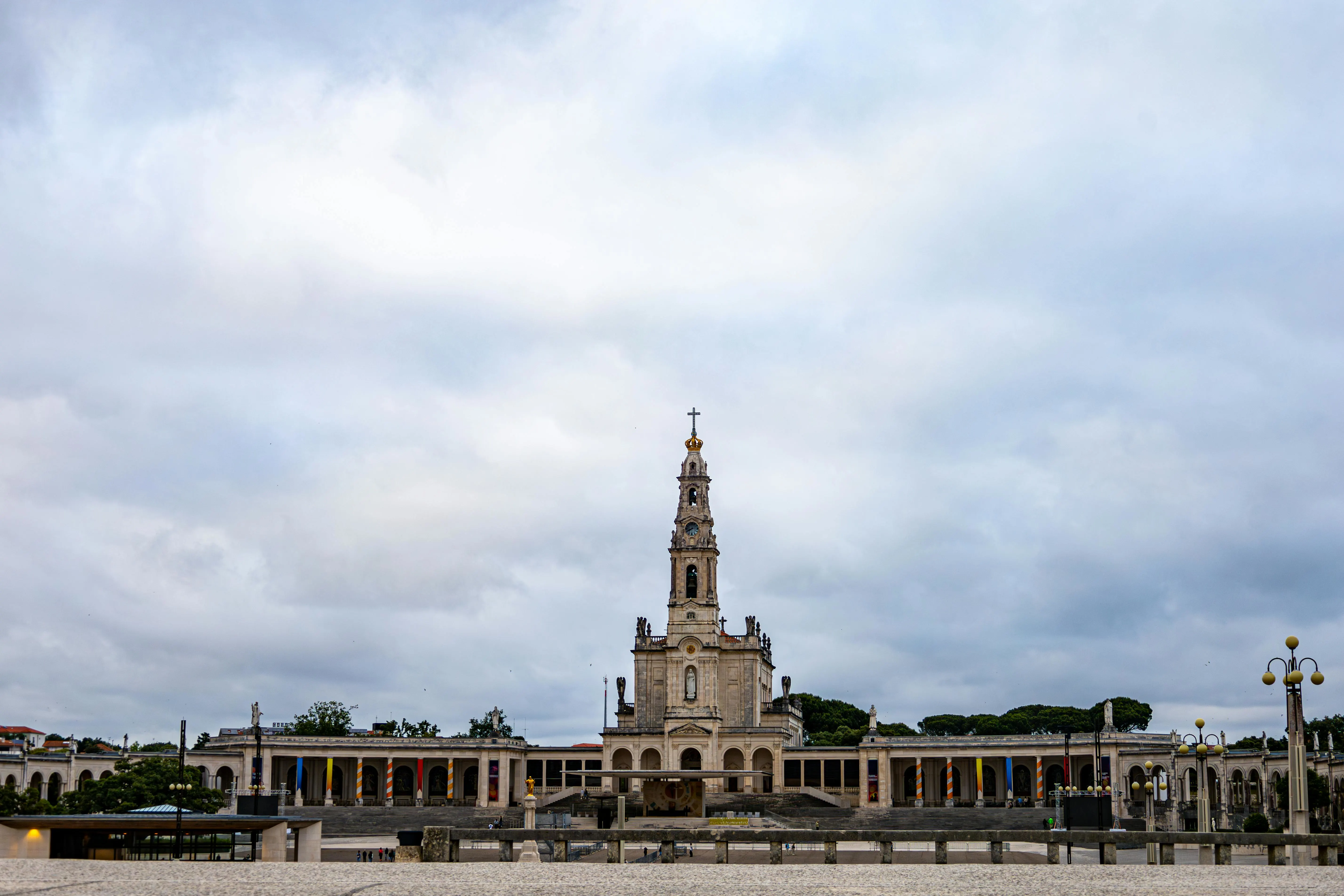
Fátima Sanctuary: Where Devotional Grandeur Meets the Estremaduran Horizon
Dusk settles over the Fátima sanctuary, painting the immense, white limestone plaza in shades of bruised violet and muted gold. You stand at the edge of the colonnade, listening to the rhythmic shuffle of thousands of pilgrims converging toward the Chapel of Apparitions—a low, unadorned structure marking the exact spot where three shepherd children reported seeing celestial visions. The air smells faintly of burning beeswax, damp earth, and crushed eucalyptus carried on the evening breeze from the surrounding rural countryside. Spanning a staggering 86,400 square meters (930,000 square feet), the open esplanade feels less like an architectural space and more like a vast, geological extension of the land itself. Candlelight flickers in organized rows, casting dancing, elongated shadows against the stark white pillars. The Fátima sanctuary matters because it transforms a remote, rocky pasture into one of the most significant centers of modern Christian pilgrimage, channeling immense human devotion into a monumental exercise in architectural harmony and spiritual endurance.
Why Fátima Sanctuary Embodies Devotional Grandeur
The Fátima sanctuary embodies devotional grandeur by solving a profound logistical problem: how to physically accommodate millions of fervent believers without overwhelming the delicate, rural geography of the Cova da Iria. Following the reported apparitions in the early twentieth century, the site evolved from a makeshift wooden altar into an engineered marvel of mid-century ecclesiastical design, largely directed by the Dutch architect Gerardus Samuel van Krieken. The defining structural achievement is the massive colonnade, a continuous, neoclassical barrier stretching 192 meters (630 feet) on each side of the central axis. Constructed from reinforced concrete clad in local Estremoz marble, these 202 half-columns and 140 full columns act as a visual funnel; they solve the spatial problem of crowd control by guiding massive flows of humanity toward the focal point while providing shelter from the harsh summer sun. The crown jewel of the complex, the Basilica of Our Lady of the Rosary, stands at the eastern terminus. Its central tower rises precisely 65 meters (213 feet), dwarfing the surrounding plains. Inside, the sheer weight of the devotion is physically manifested in the 15 altars dedicated to the mysteries of the Rosary, intricately carved from Italian limestone. Every architectural measurement here is designed to dwarf the individual, deliberately invoking a sense of smallness against the scale of faith.
The Best Time to Experience Fátima Sanctuary
To experience the Fátima sanctuary without the overwhelming crush of high-season pilgrimage, plan your visit between April 18 and May 10. During this narrow window, the surrounding Estremaduran hills are brilliantly green, and daytime temperatures hover between 17°C and 22°C (63°F–72°F)—ideal for spending hours walking the open, shadeless plaza. Arrive precisely between 7:00 and 8:30 PM. As twilight deepens, the day-tripper crowds dissipate; the evening candlelight procession begins, filling the immense plaza with a haunting, communal silence broken only by the rhythmic recitation of the rosary in dozens of languages. You should strictly avoid May 12 through May 14. This period marks the anniversary of the first apparition, drawing upwards of half a million people; the infrastructure becomes dangerously overcrowded, and the profound spiritual atmosphere degrades into a logistical struggle. For live streams of the evening chapel, precise Mass schedules, and updated visitor guidelines, consult the official shrine website at www.santuario-fatima.pt. Checking this resource ensures you secure the contemplative, deeply personal encounter with the sanctuary that its sacred nature fundamentally demands.
Approximate Budget for a 7-Day Trip
Estimating costs for a culturally immersive pilgrimage to the Fátima sanctuary requires factoring in the town’s highly focused, budget-friendly infrastructure, which caters primarily to religious travelers rather than luxury tourists. The following budget reflects a mid-range traveler prioritizing meaningful engagement over material comfort.
- Accommodation: €45–€70 per night (a simple, private room in a family-run residential house located within a ten-minute walking radius of the sanctuary esplanade)
- Food: €30 per day (Breakfast €3 for a coffee and a sweet pastel de nata; Lunch €10 for a prato do dia featuring grilled cod with boiled potatoes and cabbage; Dinner €17 for a hearty portion of leitão assado [roast suckling pig] at a local churrasqueira)
- Transportation: €25 total (€13 for a round-trip Rede Expressos bus ticket from Lisbon to Fátima; €12 for local taxis to the nearby village of Aljustrel)
- Attractions: €0 (Access to the Fátima sanctuary plaza, chapels, and basilicas is completely free of charge to all visitors)
- Miscellaneous: €35 (a hand-carved olive wood rosary from an approved religious vendor, traditional beeswax candles for the chapel, and a bound volume of the sanctuary’s official historical account)
Total: €415–€560
6 Essential Fátima Sanctuary Experiences
- Join the Evening Candlelight Procession: Gather near the Chapel of Apparitions precisely at 9:30 PM during the warmer months. Hold the thin, beeswax candle provided by the sanctuary attendants; feel the hot wax drip onto your fingers as the vast, silent sea of flame sways in unison. The communal chanting creates a deeply physical vibration in your chest that resonates across the open plaza.
- Kneel at the Chapel of Apparitions: Approach the exact heart of the Fátima sanctuary. The chapel features a simple glass-enclosed niche marking the precise location of the reported visions. Run your fingers along the cool, rough-hewn limestone base; observe the thousands of faded photographs and handwritten petitions tucked into the surrounding iron grilles by hopeful pilgrims.
- Touch the Berlin Wall Fragment: Walk to the western edge of the colonnade to find a jagged, concrete slab encased in glass. This piece of the fallen Berlin Wall was placed here to symbolize the collapse of oppressive ideologies, directly linking the spiritual message of the Fátima sanctuary to modern geopolitical triumphs.
- Explore the Basilica of the Holy Trinity: Enter the modern, circular basilica at the southern end of the plaza between 10:00 AM and noon. The immense space holds 8,633 people. Look up at the massive, asymmetrical skylight; the raw concrete and sparse decorations create a stark, theatrical contrast to the ornate older basilica across the square.
- Walk the Shepherds' Way: Begin at the sanctuary and follow the three-kilometer (1.8-mile) paved path through the olive groves to the village of Aljustrel. This shaded route traces the daily footsteps of the three shepherd children, terminating at their preserved, humble whitewashed cottages.
- Descend into the Basilica Crypt: Enter the older Basilica of Our Lady of the Rosary and walk down the shallow steps into the subterranean burial chambers. The air drops several degrees; the dimly lit space houses the tombs of the visionaries, Francisco and Jacinta Marto, marked by heavy bronze reliefs depicting their pastoral lives.
3 Hidden Gems Most Travelers Miss
- Valinhos Pathway: Located 600 meters (1,968 feet) from the main sanctuary, this dirt and stone trail is a hidden gem often missed because tourists default to the paved Shepherds' Way. To access it, walk past the Aljustrel houses and follow the signs into the dense eucalyptus woods. It features four small limestone chapels marking the locations of the later apparitions. It is entirely devoid of crowds and best visited at dawn.
- The Shepherd Children's Well (Cabeço): Situated at the end of the Valinhos path, this rocky outcrop is overlooked because it requires a short, steep climb over uneven terrain. Here, an angel reportedly appeared to the children before the Marian visions. The site offers sweeping, panoramic views of the sanctuary plaza below. Wear sturdy shoes, as the limestone is deeply eroded and slippery.
- The Museum of the Sanctuary: Tucked beneath the main colonnade, this official archive is ignored by visitors focused solely on the outdoor plazas. Access is through an unassuming door near the Holy Trinity Basilica. Inside, climate-controlled glass cases display the original, tattered clothing worn by the shepherd children, offering a chilling, tangible connection to the historical events.
Cultural & Practical Tips
- Maintain absolute silence in the central esplanade and chapels; the Fátima sanctuary enforces strict quiet zones out of respect for private prayer, and loud conversations are met with immediate, stern shushing from the resident attendants.
- Dress modestly when approaching the chapels and basilicas—cover your shoulders and knees. Despite the warm temperatures, the sanctuary is a highly active religious site, and inappropriate clothing will result in being denied entry to the indoor spaces.
- Learn basic Portuguese phrases to show respect: say "Bom dia" (good morning, pronounced "bom dee-ah") and "Com licença" (excuse me, pronounced "com lee-sen-sa") when navigating the tightly packed candlelight crowds.
- Photography is strictly forbidden inside the Chapel of Apparitions and during the prayer segments of the candlelight procession; security guards will physically intervene if you raise a camera or phone during these sacred moments.
- Pack a wide-brimmed hat and high-SPF sunscreen; the central plaza spans nearly a kilometer of completely shadeless white marble, which aggressively reflects the sun, drastically increasing the risk of heat exhaustion during the summer.
- Be vigilant with your belongings in the bustling areas near the bus station; while the sanctuary itself is exceptionally safe, the peripheral commercial zones are heavily trafficked by transient crowds, making them prime territory for opportunistic pickpockets.
Conclusion: Travel with Reverence, Not Just Spectatorship
The Fátima sanctuary stands as a powerful testament to the human need for physical spaces of collective hope, requiring far more from visitors than passive architectural observation. When you choose to lay down your camera and fully participate in the silent, shuffling rhythm of the candlelight procession, you honor the deep, vulnerable faith that built this immense plaza. Mindful travel here means resisting the urge to treat the site as a mere historical curiosity; it means acknowledging the raw emotional weight of the handwritten petitions pressed against the chapel glass. By respecting the strict rules of silence and modesty, you actively protect the fragile, contemplative atmosphere that millions of pilgrims depend upon for solace. Let the sheer scale of the white limestone colonnades remind you that some places demand the surrender of your ego. In a world addicted to digital noise, the greatest privilege the Fátima sanctuary offers is the rare, uncompromising space to simply stand in the dark, hold a flame, and listen.