
Kos Asklepieion: Where Ancient Healing Meets Aegean Serenity
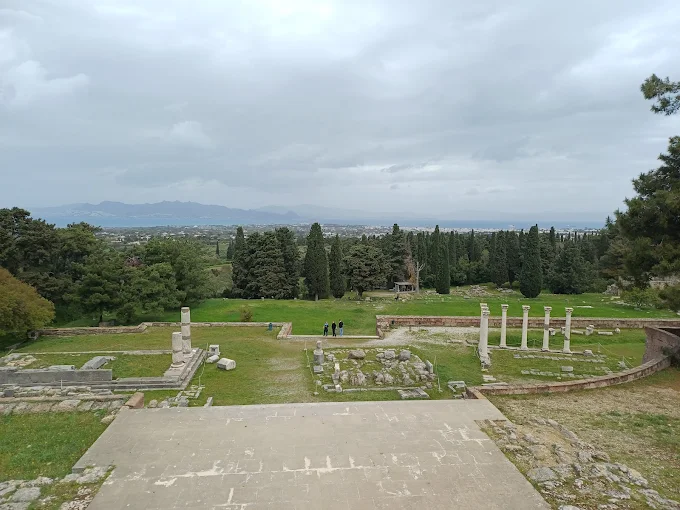
Golden afternoon light spills across weathered marble columns as you ascend the sacred terraces of Kos's most revered archaeological site—the Asklepieion awakens with the gentle rustle of cypress trees in the breeze, the distant cry of seagulls wheeling above the turquoise Aegean, and the soft murmur of visitors discovering a sanctuary where medicine was born over two millennia ago. You breathe air scented with wild thyme and pine, feel the cool stone beneath your palm as you trace ancient inscriptions dedicated to Asclepius, the god of healing, and watch sunlight illuminate the three-tiered complex where Hippocrates once taught the art of medicine to students from across the ancient world. This extraordinary archaeological treasure, founded around 370 BCE on a hillside overlooking Kos town, spans approximately 10,000 square meters of preserved ruins where Doric temples, healing springs, and sacred groves converge in perfect harmony [[15]][[22]]. The sanctuary's distinctive white marble and grey limestone construction, weathered by centuries of Mediterranean sun, creates a timeless silhouette against the deep blue sea and lush cypress forest. But the Asklepieion matters because it preserves not just ancient stones, but the very birthplace of Western medicine—a testament to how healing, spirituality, and natural beauty converged to create one of antiquity's most influential sanctuaries, reminding us of the enduring connection between wellness, wisdom, and the Aegean landscape.
Why Kos Asklepieion Embodies Ancient Medical Heritage
The Asklepieion of Kos represents the pinnacle of ancient healing architecture, solving a fundamental need to create a sanctuary where physical treatment, spiritual ritual, and natural therapy could converge while establishing a model for medical education that shaped Western medicine for centuries. When the sanctuary was founded around 370 BCE during the height of Classical Greece, physicians faced a profound challenge: how to treat illness in an era before modern pharmaceuticals while honoring the divine aspects of healing that ancient cultures revered. The solution was visionary: construct a three-tiered sanctuary on a hillside with panoramic views, where patients could receive herbal treatments, surgical procedures, and dream incubation rituals in spaces designed to promote both physical recovery and spiritual renewal.
The sanctuary's design showcases ancient engineering at its finest: the lower terrace featured a Doric temple dedicated to Asclepius with columns rising six meters high, the middle terrace housed treatment rooms and a sacred spring with water channeled through stone aqueducts, and the upper terrace offered panoramic views for contemplation and recovery [[18]][[24]]. Construction employed local Kos limestone for foundations and imported Parian marble for decorative elements, creating a distinctive aesthetic that has become iconic of Hellenistic architecture. Technical innovations include sophisticated drainage systems that protected foundations from erosion, hypocaust heating in treatment rooms for therapeutic warmth, and acoustic design in the temple that amplified healing chants and prayers. The Asklepieion fulfilled a dual purpose: medically, it served as the teaching ground where Hippocrates and his students developed the foundations of clinical observation and ethical practice; spiritually, it became a pilgrimage destination where seekers from across the Mediterranean came for healing and hope. Today, managed by the Greek Ministry of Culture alongside the Ephorate of Antiquities of the Dodecanese, the sanctuary stands as a testament to how ancient wisdom can inspire modern medicine, how ruins can educate without reconstruction, and how a single hillside can anchor the history of healing through centuries of change.
The Best Time to Experience Kos Asklepieion
Timing your visit to the Asklepieion profoundly influences both atmospheric immersion and practical accessibility. The optimal window falls between May 15 and June 20, when Kos enjoys extended daylight—sunset occurs around 8:45 PM—and temperatures range from 20°C to 27°C (68°F to 81°F), creating ideal conditions for exploring ancient terraces, climbing to the upper sanctuary, and photographing marble ruins against the Aegean backdrop [[68]][[72]]. During this period, wildflowers bloom among the cypress trees, outdoor interpretive panels remain fully accessible, and summer crowds remain manageable before peak season. For photographers, visit between 6:30–8:30 AM when soft morning light illuminates the marble columns with minimal crowds, or 7:00–9:00 PM for dramatic golden-hour shots where ancient stone glows against twilight skies.
The Asklepieion operates seasonally with varying hours: summer season (June–September) extends opening hours to 8:00 AM–8:00 PM daily; winter hours (November–February) reduce to 8:30 AM–3:30 PM. For current opening times, ticket information, and visitor resources, Avoid visiting during late November through early March, when temperatures drop to 8°C to 15°C (46°F to 59°F), daylight shrinks to nine hours, and winter rains can make ancient stone pathways slippery and dangerous. Also steer clear of mid-July to mid-August when cruise ship crowds peak and midday heat exceeds 30°C (86°F), making terrace exploration less comfortable. Standard admission costs €8 for adults, €4 for students and seniors, with children under 18 admitted free [[24]]. The sanctuary's upper terrace café is particularly rewarding between 2:00–4:00 PM when afternoon light enhances the panoramic Aegean views from the ancient healing grounds.
Approximate Budget for a 7-Day Trip
Exploring the Asklepieion and Kos island requires moderate budgeting, as Greece offers excellent value compared to many European destinations. Strategic planning—including staying in Kos town or nearby villages and utilizing local transportation—can optimize your experience. The following breakdown reflects mid-range preferences with cultural and wellness immersion priorities.
- Accommodation: €45–€85 per night for a double room in Kos town (10-minute drive to Asklepieion); budget guesthouses €25–€45 per night; boutique sea-view hotels €95+ per night
- Food: €28–€48 per day total
- Breakfast: €4–€7 (Greek coffee, bougatsa pastry, or village bakery items)
- Lunch: €8–€14 (Greek salad, grilled octopus, or moussaka at taverna)
- Dinner: €14–€25 (fresh fish, lamb kleftiko, or mezze platter at seaside restaurant)
- Taverna option: €6–€10 for souvlaki, tzatziki, and Greek coffee
- Transportation:
- Ferry from Piraeus to Kos: €35–€55 one-way (8–10 hours)
- Local bus to Asklepieion: €3 per ride from Kos town
- Car rental for island exploration: €35 per day including fuel
- Taxi from Kos town to Asklepieion: €15 one-way
- Attractions:
- Asklepieion admission: €8 adults; €4 students/seniors [[24]]
- Guided sanctuary tour: €12 per person
- Kos Archaeological Museum: €6 adults
- Neratzia Castle entry: €4
- Thermae beach thermal springs: €5
- Miscellaneous:
- Local craft souvenirs and herbal products: €8–€35
- Audio guide rental: €3
- Photography permit for professional use: €20
Total estimated budget for 7 days: €620–€950 per person (excluding international flights)
7 Essential Kos Asklepieion Experiences
- Ascend the Sacred Terraces at Sunrise: Arrive at opening time (8:00 AM) and climb the ancient stone pathway connecting the three sanctuary levels. The morning light reveals the Doric columns of the lower temple and illuminates the panoramic views across the Aegean. Allow 45 minutes for this contemplative ascent; wear sturdy shoes as ancient stone steps can be uneven. Listen for the wind moving through cypress trees and imagine the footsteps of ancient patients who once sought healing on these sacred grounds.
- Explore the Lower Temple of Asclepius: Step into the ruins of the Doric temple dedicated to the god of healing, where columns rising six meters once supported a roof adorned with votive offerings. Visit between 10:00 AM–12:00 PM when natural light illuminates the marble foundations and carved inscriptions. Allow 30 minutes for full appreciation; interpretive panels explain how ancient physicians combined prayer, herbal remedies, and surgical techniques in this sacred space [[22]].
- Discover the Sacred Spring: Locate the middle terrace's healing spring where water once flowed through stone channels to treatment rooms. Visit between 1:00–3:00 PM when lighting is optimal for appreciating the ancient hydraulic engineering. Allow 20 minutes; the cool, echoing chambers reveal how sanctuary designers harnessed natural water sources for therapeutic purposes—a practice that influenced medical architecture for centuries.
- Climb to the Upper Terrace for Panoramic Views: Ascend to the sanctuary's highest point where ancient patients recovered while gazing across the Aegean toward Turkey. Visit between 5:00–7:00 PM when visibility is clearest and light is warmest. The upper terrace offers unparalleled perspectives of how the sanctuary integrates with Kos's landscape, helping you visualize why this hillside was chosen for healing and contemplation.
- Photograph Marble Against Aegean Blue: Position yourself at designated viewpoints between 7:00–9:00 AM when soft light highlights the texture of weathered marble against the deep blue sea. Use a polarizing filter to manage reflections; a wide-angle lens captures the scale of the three-tiered complex. The iconic view—white marble, grey limestone, blue water, green cypress—defines the Asklepieion's timeless beauty.
- Attend a Guided Medical History Tour: Join expert-led walks that explain Hippocratic medicine, ancient surgical techniques, and the sanctuary's role in medical education. Tours typically occur at 11:00 AM and 4:00 PM daily in summer; book in advance. The experience provides deeper context for what you're witnessing, revealing how a single sanctuary shaped the foundations of Western medical practice.
- Walk the Cypress Grove Path: Follow the shaded pathway through ancient cypress trees that once provided contemplative space for recovering patients. Visit between 2:00–4:00 PM when dappled light filters through the canopy. Allow 30 minutes; the grove's serene atmosphere reveals how sanctuary designers integrated nature into the healing process—a principle that continues to influence therapeutic architecture today.
3 Hidden Gems Most Travelers Miss
- The Abaton Dream Incubation Chamber: Tucked behind the main temple ruins, a small underground chamber where ancient patients practiced dream incubation—sleeping in sacred spaces to receive healing visions from Asclepius. Most visitors focus solely on the upper terraces without exploring this atmospheric space. Access: From the lower temple, follow signs toward "Abaton"; accessible during regular hours; included with admission. Best visited between 11:00 AM–1:00 PM when the space is least crowded. The chamber's interpretive panel explains ancient dream therapy practices, creating a tangible connection to holistic healing traditions that predate modern medicine.
- The Ancient Surgical Instruments Display: Beyond the main exhibition area, a small collection of replica surgical tools used by Hippocratic physicians reveals the sophistication of ancient medical practice. Most tourists admire the ruins without exploring these educational displays. Access: Inquire at the visitor entrance for the instruments exhibit; typically available Tuesday–Saturday 10:00 AM–2:00 PM; included with admission. Best visited between 10:00 AM–12:00 PM when guides are available. Observing replica scalpels, forceps, and bone saws reveals the technical skill of ancient surgeons and the empirical approach that defined Hippocratic medicine.
- The Herbal Garden Reconstruction: Behind the sanctuary's eastern wall, a reconstructed garden features medicinal plants mentioned in Hippocratic texts—chamomile, sage, thyme, and poppy. Most visitors don't know this tranquil space exists. Access: Follow signs from the middle terrace toward "Φαρμακευτικός Κήπος" (Medicinal Garden); accessible daily 8:00 AM–sunset; free. Best visited between 11:00 AM–1:00 PM when herbalists provide informal explanations. The garden's interpretive panels explain how ancient physicians combined botanical knowledge with spiritual practice, creating a tangible connection to holistic healing traditions.
Cultural & Practical Tips
- Photography Guidelines: Photography for personal use is permitted throughout the Asklepieion, but drones require special permission from the Greek Ministry of Culture—contact +30 22420 28333 in advance. The marble ruins and Aegean views are ideal for photography; visit during golden hour for optimal light. Respect other visitors when capturing candid moments.
- Language: While signage includes English, learning Greek phrases enhances your experience: efharistó (ef-ha-ree-STO = thank you), parakaló (pa-ra-ka-LO = please/you're welcome), yasou (YA-soo = hello). Greek pronunciation emphasizes the second-to-last syllable.
- Footwear: Sturdy walking shoes with good grip are essential—exploring ancient stone pathways involves uneven surfaces, loose gravel, and weathered steps. The main terrace circuit involves moderate climbing; allow 90 minutes for full exploration.
- Hydration: Bring water, especially during summer months when temperatures exceed 30°C (86°F). The sanctuary has limited shade on upper terraces, and climbing ancient steps in midday heat can be exhausting. A refillable water bottle and sun hat are essential.
- Weather Considerations: Kos's island location means strong meltemi winds during July and August. Check the forecast before visiting; winds can make exploring exposed terraces challenging. Spring (April–June) and fall (September–October) offer the most reliable conditions with comfortable temperatures.
- Combining with Athens: The Asklepieion is accessible via ferry from Piraeus (8–10 hours) or flight to Kos (45 minutes from Athens). Purchase a Kos transport pass for flexible travel. Consider spending 3–4 nights on Kos to fully explore the sanctuary alongside the island's beaches, villages, and other archaeological sites.
- Respectful Engagement: The Asklepieion is a protected archaeological monument and active heritage site. Stay on marked paths, never climb on unstable ruins, and respect the site's historical significance. The community values visitors who engage thoughtfully with the sanctuary's heritage while honoring its preservation.
Conclusion: Travel with Healing, Not Just Sightseeing
The Asklepieion invites more than passive observation—it demands engagement with the layered narratives embedded in marble, cypress, and sea: the wisdom of Hippocrates who taught that healing requires both science and compassion, the resilience of stone masons who shaped local rock into sacred spaces, and the ongoing stewardship that keeps heritage alive for future generations. When you stand on those ancient terraces watching white marble meet turquoise waters, you're not merely viewing ruins; you're connecting with the birthplace of Western medicine, a testament to how healing traditions can inspire modern practice, and a reminder that the most meaningful places honor both body and spirit. This isn't a place to rush through, checklist in hand, snapping photos before racing to the next attraction. Slow down. Feel the cool marble beneath your palm; listen to the wind whispering through cypress branches; contemplate how a single hillside could shape the destiny of medicine for two millennia. Travel here with curiosity about how places shape wellness and how wellness gives meaning to places. Support preservation by respecting the site, choosing experiences that employ local guides, and sharing not just images but understanding. The most transformative journeys leave you not just with memories of what you saw, but with deeper appreciation for healing—and the Asklepieion, with its seamless fusion of ancient wisdom and Aegean serenity, offers precisely that invitation to those willing to wander, to wonder, and to simply connect across time.