Moorish Castle: Where Ancient Battlements Meet Sintra Mountain Clouds
Moorish Castle: Where Medieval Stone Walls Meet Sintra's Atlantic Hills
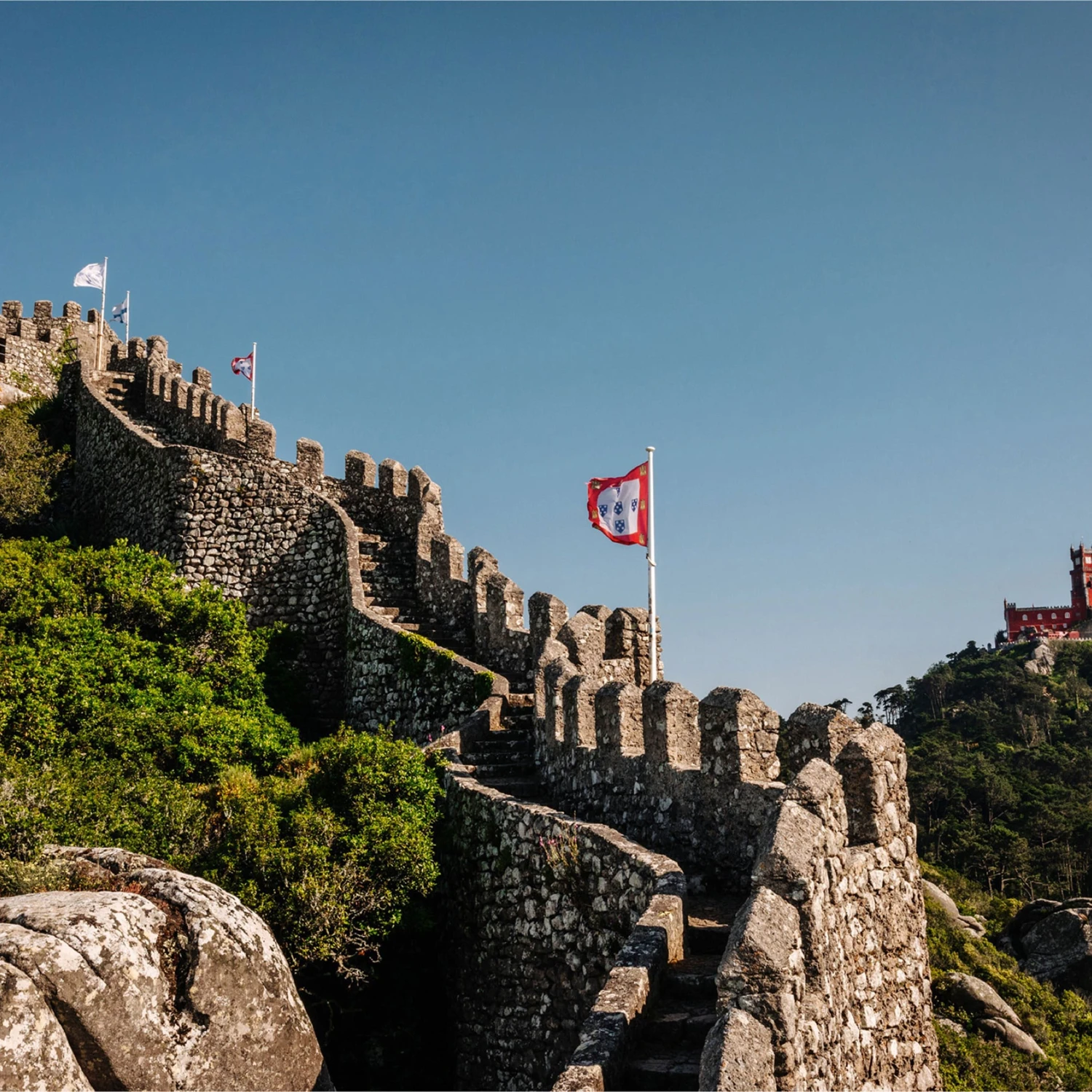
At 9:20 on a clear October morning, I pay €12 for admission and begin climbing the first set of stone steps at the Moorish Castle in Sintra. The walls feel cold under my hand, and the scent of wet pine rises from the hillside. From the entrance, the fortress looks more like a long stone trail than a single building. That is the appeal. The Moorish Castle stretches across the Sintra hills, with towers, battlements, cisterns and sections of wall connected by steep paths. I spend nearly two hours walking from the Islamic settlement to the Castle Keep, stopping often to look over Sintra and the distant Atlantic. The site sits close to Pena Palace, but it offers a completely different experience. There are no decorated royal rooms here. The focus is stone, wind, views and military history. Wear proper shoes. The steps are uneven, some walls are narrow, and the climb is harder than photographs suggest.
Why the Moorish Castle Matters
The Moorish Castle matters because it preserves evidence of Islamic rule in the Sintra region. The first fortification was established during the period when Muslim forces controlled much of the Iberian Peninsula, most likely between the eighth and tenth centuries. Its hilltop position allowed defenders to watch the surrounding valleys, the road towards Lisbon and the Atlantic-facing landscape.
Christian forces captured the castle during the twelfth-century Reconquista. After that change, the fortress became part of the Christian Kingdom of Portugal. Its strategic importance gradually faded as the population moved to easier ground and newer centres of power developed elsewhere. Earthquakes, neglect and changing military needs left the walls in poor condition.
The castle gained a new life during the nineteenth century, when King Ferdinand II supported restoration work across Sintra. The repairs were shaped by Romantic ideas about medieval ruins. Some sections are original, while others were rebuilt or stabilised to create the dramatic route visitors follow today. The result is a historical site that mixes archaeology with nineteenth-century restoration.
It is not a conventional castle visit. There are no grand apartments, royal bedrooms or complete halls to explore. Visitors who prefer furnished palaces may find the Moorish Castle sparse. The steep route can also be tiring, especially after visiting Pena Palace. Still, the walls, towers and views make the castle one of the strongest historical stops in Sintra for travellers who enjoy walking.
The Best Time to Experience the Moorish Castle
The most comfortable period runs from May 15 to June 30. Daytime temperatures usually range from 19°C to 25°C (66°F to 77°F), while the shaded forest paths remain cooler. Morning visits are best because the stone can become warm and exposed sections offer little shelter later in the day.
July 1 to August 31 is the busiest and warmest period, with typical daytime temperatures of 24°C to 30°C (75°F to 86°F). The hilltop can feel cooler than Lisbon, but direct sun on the ramparts is strong. Arrive before 10:00 or after 16:00. Midday crowds gather around the main viewpoints and the route between the castle and Pena Palace.
September 1 to October 15 brings temperatures of approximately 21°C to 27°C (70°F to 81°F). This is one of the best periods for walking, with softer light and slightly fewer visitors. Clear mornings often provide the sharpest views towards the coast.
From November 1 to March 15, expect temperatures between 13°C and 18°C (55°F and 64°F). Rain makes the granite steps slick, and mist may hide the best views. The quieter atmosphere is appealing, but waterproof shoes and a light rain jacket are essential.
The first hour after opening is usually the calmest. Late afternoon can also work, but leave enough time to complete the rampart route before the final admission period. Wind increases quickly on the higher towers.
Approximate Budget for a 7-Day Trip
A seven-day trip based in Lisbon or Sintra can include the Moorish Castle, Pena Palace, Quinta da Regaleira and several smaller sights. The following figures are per person and assume shared accommodation, public transport and a mixture of casual meals and restaurants.
- Accommodation: €420 to €840 for seven nights in a budget hotel, guesthouse or private hostel room. Sintra is convenient for early visits, but weekend rates can be higher than in Lisbon.
- Food: €210 to €350 for breakfasts, lunches, dinners, pastries, coffee and drinks. Spend less by eating away from the main square and buying picnic supplies before heading uphill.
- Transport: €55 to €110 for Lisbon trains, local buses and occasional ride-hailing trips. The 434 bus connects Sintra station with the Moorish Castle and Pena area.
- Attractions: €90 to €190 for the Moorish Castle, Pena Palace, Quinta da Regaleira, Sintra National Palace and another paid sight.
- Miscellaneous: €50 to €100 for water, snacks, sunscreen, small purchases and occasional taxis.
Total: €825 to €1,590 per person for seven days.
The standard Moorish Castle ticket costs €12 for adults, which is reasonable compared with several nearby palaces. Private tuk-tuk rides are often overpriced, especially when traffic slows the climb. Take bus 434 instead, or split a ride-hailing fare with other travellers. Food at the hilltop café is also more expensive than in central Sintra, so carry water and a simple snack.
Essential Moorish Castle Experiences
- Walk the outer walls. Follow the main battlement route for views over Sintra, Pena Palace and the surrounding hills. Take your time on the narrow stair sections.
- Climb the Castle Keep. The highest points provide the clearest views, but the final steps are steep and exposed. Hold the rail where one is available.
- Visit the Islamic settlement. Archaeological remains inside the walls reveal that this was more than a military outpost. Look for the foundations and storage areas along the lower route.
- Find the medieval cistern. The cistern helped the fortress withstand periods of siege and shows how practical the original settlement had to be.
- See the Church of São Pedro de Canaferrim. The small church sits within the castle grounds and reflects the site's later Christian history.
- Stand in the Arms Square. This open area offers a useful break from the steps and helps visitors understand the layout of the fortress.
- Skip the full wall route if heights trouble you. Several sections have low parapets, exposed drops and narrow stairs. You can still enjoy the entrance area, church and lower paths without climbing every tower.
Hidden Gems Most Travelers Miss
- The Door of Betrayal: A discreet passage in the fortification that reveals how access points were built for defence and escape.
- The medieval necropolis: Tombs near the church provide a quieter connection to the people who lived and worshipped here.
- The former stables: This lesser-seen area shows the practical side of the castle rather than its military image.
- The second ring of walls: Many visitors remain near the highest rampart and miss the lower defensive line winding through the hillside.
- Forest trails below the entrance: The paths towards Santa Maria and Seteais offer a calmer descent through Sintra's wooded slopes.
- The lower view towards Sintra town: The highest tower gets most of the attention, but the lower wall often gives a clearer view of the old town and National Palace.
- The archaeological interpretation area: Displays and recovered objects help explain the settlement's changing use across the centuries.
- The main Pena viewpoint: The view is famous and worthwhile, but it can feel overrated when crowded. Move along the wall for a quieter angle.
Cultural & Practical Tips
- Wear walking shoes with good grip. Smooth soles are risky on damp granite and uneven stairs.
- Bring water, especially from June through September. The castle route is exposed, and drinking points are limited.
- Do not climb onto walls or sit on narrow parapets for photographs. Several drops are serious, and wind can catch you without warning.
- Many tourists underestimate the distance between Sintra station and the castle. The uphill walk is possible, but it takes longer and feels harder in hot weather.
- Do not try to fit the Moorish Castle, Pena Palace and Quinta da Regaleira into a rushed morning. Queues, bus waits and steep paths quickly use up your time.
- Check the return bus before entering. Services can be crowded after lunch, and missing one may mean a long wait on the hill.
- Leave large bags at your accommodation if possible. Narrow passages and repeated stair climbs are awkward with heavy luggage.
Essential Visitor Information
Location & Access: The Moorish Castle is at 2710-405 Sintra, Portugal. GPS: 38.79007, -9.39612. It is approximately 3.5 kilometres from Sintra railway station, 1.5 kilometres from Pena Palace and about 30 kilometres from Lisbon. By train, travel from Lisbon Rossio, Oriente or Entrecampos to Sintra, then take bus 434. By taxi or ride-hailing car, travel from central Sintra to the castle entrance. On foot, the Santa Maria Trail covers about 1.77 kilometres from São Pedro de Sintra, while the Seteais Trail is approximately 2.41 kilometres. Private vehicles are not permitted on the final access road to the monument.
Tickets & Booking: Adult admission costs €12. Youth tickets for ages 6 to 17 cost €10, and visitors over 65 pay €10. A family ticket for two adults and two youths costs €33. Children under six enter free. Booking is not essential on quiet weekdays, but it is recommended on summer weekends, public holidays and school breaks.
Operating Hours: The castle generally opens daily from 09:30 to 18:00, with the last ticket and final admission at 17:30. The ticket office closes from 12:00 to 13:00, although automatic ticket machines may remain available. Opening hours can change during maintenance or special events. The site normally closes on January 1 and December 25.
Visit Duration: Allow at least 60 minutes for the entrance area, church, lower walls and main viewpoints. Two hours is a better minimum for the full route. History enthusiasts and walkers may spend three hours or more, especially if they continue on a marked trail.
Family Suitability: Older children usually enjoy the towers, walls and open views. The site is less suitable for toddlers who want to walk independently because of steep stairs and exposed edges. The entrance area has basic facilities and toilets, but stroller access is limited. A baby carrier is more practical than a stroller. Visitors using wheelchairs may access selected lower areas, while the ramparts and towers are not suitable for most mobility devices.
Timing: May, June, September and early October offer the best balance of mild weather and manageable visitor numbers. Arrive before 10:00 for cooler temperatures and shorter queues. Avoid the highest walls during thunderstorms, heavy rain or strong wind.
Highlights: The outer ramparts, Castle Keep, Islamic settlement, Church of São Pedro de Canaferrim and views towards Pena Palace and Sintra town are the main sights.
Nearby & Day Trip: Pena Palace is about 1.5 kilometres away by walking route, Sintra National Palace is roughly 3.5 kilometres away, Quinta da Regaleira is around 4 kilometres away and Monserrate Palace is about 6 kilometres away. A day trip from Lisbon is feasible by train and bus, but seeing the Moorish Castle, Pena Palace and Quinta da Regaleira on the same day requires an early start and careful timing.
Conclusion: Travel with Perspective, Not Just a Castle View
The Moorish Castle is best understood as a walk through Sintra's layered past. Its value is not in furnished rooms or royal decoration, but in the walls, steep terrain and evidence of the people who defended, occupied and restored the site. The route can be tiring, and the exposed battlements are not suitable for everyone, yet the experience feels more direct than a palace visit. Start early, wear shoes with grip and leave time for the full rampart route. If you visit only one hilltop site in Sintra, would you choose the castle for its history or Pena Palace for its colour?
Post a Comment