
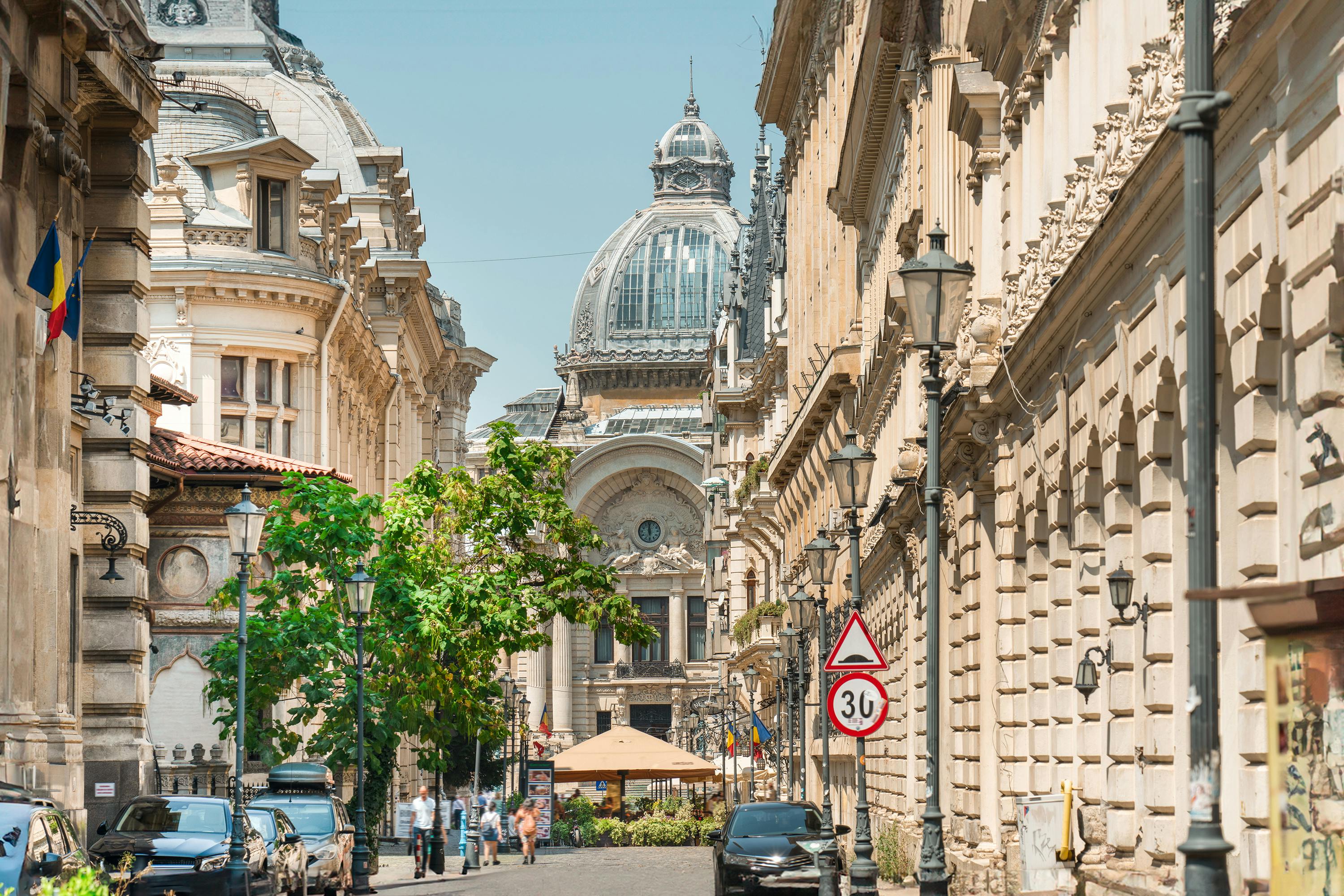
Old Town Bucharest: Where Cobblestone History Meets Romanian Urban Soul
Golden light spills across the weathered cobblestones of Lipscani Street as morning mist lifts from Bucharest's historic heart, revealing a labyrinth of restored merchant houses, neoclassical façades, and art nouveau details that have witnessed five centuries of commerce, conflict, and cultural reinvention. You stand before the ornate entrance of Curtea Veche—the Old Princely Court built in 1459 by Vlad the Impaler—where the scent of fresh covrigi (traditional Romanian pretzels) mingles with espresso from sidewalk cafés and the distant chime of church bells from Stavropoleos Monastery. This is Centrul Vechi, Bucharest's Old Town, a 1.2-square-kilometer district where Ottoman merchants once traded silk and spices beneath Ottoman-era arcades, where 19th-century bankers conducted business in Belle Époque palaces, and where today's visitors trace the footsteps of poets, revolutionaries, and dreamers who shaped Romania's identity. The air hums with the gentle murmur of café conversations, the rhythmic clatter of tram wheels on nearby boulevards, and the soft rustle of leaves from plane trees planted along pedestrian lanes. Standing here, with the colorful façades of Hanul lui Manuc rising behind you and the modern skyline of Bucharest visible beyond the historic rooftops, you understand why this quarter has anchored urban life for over 500 years: it reminds us that some of humanity's most enduring public spaces are those that welcome both preservation and evolution, that transform stone and timber into stages for the daily theater of human connection.
Why Old Town Bucharest Embodies Urban Resilience
Old Town Bucharest represents one of Southeastern Europe's most compelling narratives of urban survival—a historic district that solved the fundamental challenge of preserving medieval street patterns while adapting to centuries of political upheaval, wartime destruction, and post-communist transformation. First documented in records from 1459, when Vlad III Dracula established his princely residence at Curtea Veche, the quarter evolved as Bucharest's commercial heart, where Armenian, Greek, Jewish, and Romanian merchants built narrow townhouses with ground-floor arcades for trade and upper floors for residence. The district's distinctive layout—irregular cobblestone streets following medieval property lines, courtyards hidden behind ornate gates, and buildings constructed with thick brick foundations to withstand seismic activity—reflects the organic growth of a trading hub at the crossroads of Ottoman, Habsburg, and Russian influences.
The technical mastery behind Old Town Bucharest's enduring appeal lies in its adaptive reconstruction. After suffering significant damage during World War II bombing and Ceaușescu's 1980s urban renewal projects, the quarter underwent extensive restoration beginning in 2005, using traditional materials and techniques to preserve historic authenticity while integrating modern infrastructure. Buildings were reinforced with steel frames concealed behind original façades, cobblestones were relaid using 19th-century patterns, and underground utilities were upgraded without disturbing archaeological layers. The district's 1.2 square kilometers now feature over 300 protected historic structures, including the 1724 Stavropoleos Monastery with its exquisite Brâncovenesc stone carvings and the 1808 Hanul lui Manuc—the last remaining caravanserai in Europe—whose interior courtyard still echoes with the footsteps of travelers who once sought refuge within its walls.
Today, Old Town Bucharest fulfills multiple needs: preserving one of Romania's finest examples of historic urban fabric, hosting cultural events that celebrate the city's multicultural heritage, and providing visitors with a tangible connection to the daily rhythms of European urban life across centuries. The quarter welcomes approximately 400,000 visitors annually, serving as both a living museum of architectural evolution and a vibrant public space where past and present converge in the simple act of gathering.
The Best Time to Experience Old Town Bucharest
The optimal window for visiting Old Town Bucharest stretches from May 15 through September 30, when temperatures in the city range from 19–29°C (66–84°F) during daytime hours, creating ideal conditions for exploring cobblestone streets and outdoor cafés. For the clearest light and most comfortable walking conditions, plan your visit between June 10 and September 15, when humidity levels drop and afternoon thunderstorms become less frequent. Early morning walks between 8:00–9:30 AM offer the dual advantage of softer light for photography and significantly fewer crowds, as most tour groups arrive after 10:00 AM.
Late spring (May through June) brings blooming plane trees along pedestrian lanes and pleasant temperatures for outdoor exploration, though mornings can dip to 13–17°C (55–63°F). Autumn (mid-September through October) offers comfortable temperatures of 15–23°C (59–73°F) and dramatically fewer visitors after the summer peak, with golden light enhancing the colorful historic façades.
Avoid visiting during Romanian national holidays—particularly June 1 (Great Union Day) and December 1 (Great Union of 1918)—when domestic tourism peaks and the quarter can become congested with festival crowds. Also skip the last week of December if you prefer quiet exploration, as the Christmas market attracts large crowds despite cold weather. Winter visits (November through March) offer a different atmosphere with fewer crowds and occasional snow creating a fairy-tale ambiance, but outdoor cafés operate on reduced schedules and some exterior areas close for maintenance.
Approximate Budget for a 7-Day Trip
Exploring Old Town Bucharest and the broader Romanian capital requires modest financial planning, as Romania remains significantly more affordable than Western European destinations while offering exceptional cultural and historical value. The following budget assumes a comfortable mid-range travel style with quality accommodations, regional Romanian cuisine, and comprehensive exploration of the Old Town, nearby attractions, and surrounding experiences over seven days.
- Accommodation: €42–€78 per night for a double room in Old Town or nearby sectors (boutique guesthouses and three-star hotels); historic building pensions €55–€92 per night; budget hostels from €24–€38 per person
- Food: €22–€35 per day (breakfast €5–€8 at accommodation with coffee, pastries, and eggs; lunch €8–€12 for traditional Romanian dishes like sarmale or mămăligă with brânză at Old Town restaurants; dinner €9–€15 for grilled meats, ciorbă soup, or freshwater fish at regional restaurants)
- Transportation: Train or flight to Bucharest varies by origin; local metro/bus day pass €3; taxi from airport to Old Town €25 one-way; parking near Old Town €4 per day if driving
- Attractions: Old Town walking tour free; Curtea Veche museum entry €3 (14 RON); Stavropoleos Monastery entry free (donations appreciated); National Museum of Romanian History €4 (18 RON); Village Museum entry €4; nearby Bran Castle day trip €35 transport + €12 entry
- Miscellaneous: Authentic Romanian crafts and souvenirs €11–€30; local wine and țuică €6–€11 per evening; travel insurance €23 for the week; guidebook €10; bottled water and market snacks €12
Total estimated cost for 7 days: €470–€700 per person (depending on accommodation choices and dining preferences)
5 Essential Old Town Bucharest Experiences
- Join the Morning Historical Walking Tour: Reserve the 9:00 AM guided tour of Old Town Bucharest (free or €10 for premium), when angled morning light illuminates the historic façades and cobblestone details. The 90-minute tour reveals the quarter's evolution from medieval market to modern cultural hub: original 15th-century foundations at Curtea Veche, the Brâncovenesc stone carvings at Stavropoleos Monastery, and the Belle Époque architecture along Strada Lipscani. Stand at the intersection of Strada Smârdan and Strada Franceză to appreciate the layered history visible in building styles from Ottoman, neoclassical, and communist eras. Photography without flash is permitted throughout; bring a wide-angle lens to capture the vertical drama of narrow streets. Book at least 48 hours in advance via www.bucharesttourism.com.
- Explore Curtea Veche Archaeological Site: Dedicate 45 minutes to the ruins of Vlad the Impaler's 15th-century princely court (entry €3 / 14 RON), where excavated foundations reveal the layout of medieval Bucharest's political heart. The site features informational panels in Romanian, English, and French explaining the historical significance of each excavated structure. Visit between 10:00–11:30 AM when natural light illuminates the stone foundations and artifact displays. The experience provides tangible connection to the origins of Bucharest as a principality capital; allow extra time for the adjacent museum showcasing medieval pottery, coins, and tools.
- Visit Stavropoleos Monastery at Quiet Hours: Experience one of Bucharest's most exquisite examples of Brâncovenesc architecture by visiting the small Orthodox monastery (free entry, donations appreciated) between 2:00–4:00 PM, when afternoon light filters through the courtyard to illuminate the intricate stone carvings and frescoes. The 1724 church features a harmonious blend of Romanian folk motifs and Ottoman decorative elements, while the peaceful courtyard offers a rare moment of tranquility amid the bustling Old Town. Dress modestly (shoulders and knees covered); photography permitted without flash in exterior areas only. Allow 30 minutes for contemplative exploration of the church interior and museum collection of religious artifacts.
- Dine at a Historic Restaurant: Sample traditional Romanian cuisine at one of Old Town's restored historic restaurants—Caru' cu Beer (founded 1879) or Hanul lui Manuc (1808)—where vaulted ceilings, original woodwork, and live folk music create an immersive dining experience. Reserve a table for 7:00–8:30 PM to enjoy dishes like sarmale (cabbage rolls), mămăligă with brânză (polenta with cheese), and grilled mititei (spiced meat rolls) paired with local Fetească Neagră wine. The experience combines culinary heritage with architectural appreciation; arrive early to explore the building's historic details before dinner service begins.
- Photograph the Quarter at Blue Hour: Position yourself at the intersection of Strada Lipscani and Strada Covaci at 8:00–9:00 PM in summer, when the setting sun has faded but artificial lighting creates a magical ambiance. The composition—colorful historic buildings illuminated by warm streetlights with cobblestone streets leading toward church spires—captures the essence of Bucharest's urban charm. Bring a tripod for long exposures; the quarter's pedestrian zones provide stable footing for camera setup. Visit on weekdays for minimal foot traffic; the courtyard of Hanul lui Manuc offers a secluded vantage point for atmospheric shots.
3 Hidden Gems Most Travelers Miss
- Macca-Vilacrosse Passage: This covered glass-roofed arcade, located off Strada Calea Victoriei near the Old Town's northern edge, features 19th-century iron-and-glass architecture housing artisan shops, cafés, and jazz bars rarely visited by international tourists. Access via the unmarked entrance at number 9 on Strada Eugeniu Carada; the passage is open daily 10:00 AM–10:00 PM with free entry. The site is overlooked because the entrance is subtle and unmarked from main tourist routes, but the reward is intimate exploration of Bucharest's Belle Époque commercial heritage. Best visited between 3:00–5:00 PM when natural light filters through the glass roof to illuminate the ornate ironwork. No facilities inside the passage; combine with visits to nearby antique shops and art galleries.
- Hanul Gabroveni Historic Inn: This restored 18th-century merchant inn, located at number 55 on Strada Gabroveni, features original stone arches, wooden balconies, and a peaceful courtyard rarely visited by international tourists. Access via the small doorway marked "Hanul Gabroveni"; open daily 9:00 AM–6:00 PM with free entry (donations appreciated). The site is overlooked because most visitors focus exclusively on the more famous Hanul lui Manuc, but the reward is authentic insight into Ottoman-era commercial architecture and quiet contemplation away from crowds. Visit between 2:00–4:00 PM when dappled sunlight illuminates the courtyard's stone paving. No facilities; bring water if staying longer than 20 minutes.
- Şelari Street Artisan Workshops: This narrow cobblestone lane, running parallel to Strada Lipscani, houses traditional craftspeople practicing leatherworking, icon painting, and woodcarving using techniques passed down through generations. Access via the entrance at the western end of Strada Şelari; workshops are open Tuesday–Saturday 10:00 AM–5:00 PM with free observation (purchases optional). The street is overlooked because it lacks prominent signage from main tourist routes, but the reward is witnessing living craftsmanship and purchasing authentic handmade souvenirs directly from artisans. Best visited between 11:00 AM–2:00 PM when artisans are most active. Photography permitted with permission; approach craftspeople respectfully and ask before photographing their work.
Cultural & Practical Tips
- Respect the Living Neighborhood: Old Town Bucharest remains a residential and commercial district, not merely a tourist attraction. Maintain respectful noise levels, dispose of waste in designated bins, and avoid obstructing pedestrian pathways with photography equipment. The quarter hosts local events and daily commerce—trust staff guidance about temporary restrictions.
- Learn Basic Romanian Phrases: While many Old Town businesses speak English, knowing a few Romanian phrases enhances your experience: "Bună ziua" (BOO-nah ZEE-wah) means "Good day"; "Mulțumesc" (mool-tsoo-MESK) means "Thank you"; "Vă rog" (vah ROHG) means "Please"; "Unde este toaleta?" (OON-deh yes-teh twah-LEH-tah) means "Where is the restroom?"
- Prepare for Cobblestone Walking: Old Town's historic streets feature uneven cobblestones that can be challenging for wheeled luggage or mobility devices. Wear sturdy, comfortable footwear with good traction; avoid high heels or smooth-soled shoes. Many historic buildings lack elevators; confirm accessibility with accommodations in advance.
- Carry Cash (Romanian Lei): While larger restaurants and shops accept cards, market vendors, small cafés, and parking attendants often operate on cash only. The currency is Romanian leu (RON), with an approximate exchange rate of 4.9 RON to €1. ATMs are available throughout Bucharest city center but not inside historic buildings.
- Photography Guidelines: Tripods are permitted in public squares but not in narrow alleyways where they obstruct pedestrian flow. Flash photography is discouraged inside churches and museums to protect artifacts and frescoes. Drone use requires written permission from Bucharest municipal administration—contact info@bucharesttourism.com at least two weeks in advance.
- Weather Preparedness: Bucharest weather changes rapidly—pack layers even in summer, including a lightweight waterproof jacket. Afternoon thunderstorms are common from June through August; if you hear thunder while exploring outdoor areas, seek shelter in a café or covered arcade. Check the forecast at the Bucharest tourist information center before starting your visit.
- Safety Awareness: Old Town is generally safe but practice standard urban precautions: keep valuables secure, avoid poorly lit streets late at night, and be aware of pickpockets in crowded areas. The tourist police (+40 21 317 11 11) patrol the quarter and can assist with emergencies or directions.
Conclusion: Travel with Presence, Not Just Passage
Old Town Bucharest endures not because it showcases architectural grandeur, but because it invites us to participate in the simple, profound act of urban life—a quarter where five centuries of human connection have taught that historic spaces thrive when they welcome both preservation and evolution, both stranger and neighbor. When you stand on those cobblestones, tracing the footsteps of merchants, artists, and families who have shared this space across generations, you participate in a continuum of community that stretches from medieval markets to your own moment of presence. But with that privilege comes responsibility: to tread lightly on historic surfaces, to respect the delicate balance between tourism and daily life, to let the quarter's authentic rhythm remind you that true travel is not about collecting sights but about connecting with place. The cobblestones will continue to echo with footsteps long after we've departed—let our presence here be measured not in photographs taken, but in the presence we carry forward, the respect we show to living heritage, and the willingness to slow down long enough to hear what community has to teach.