
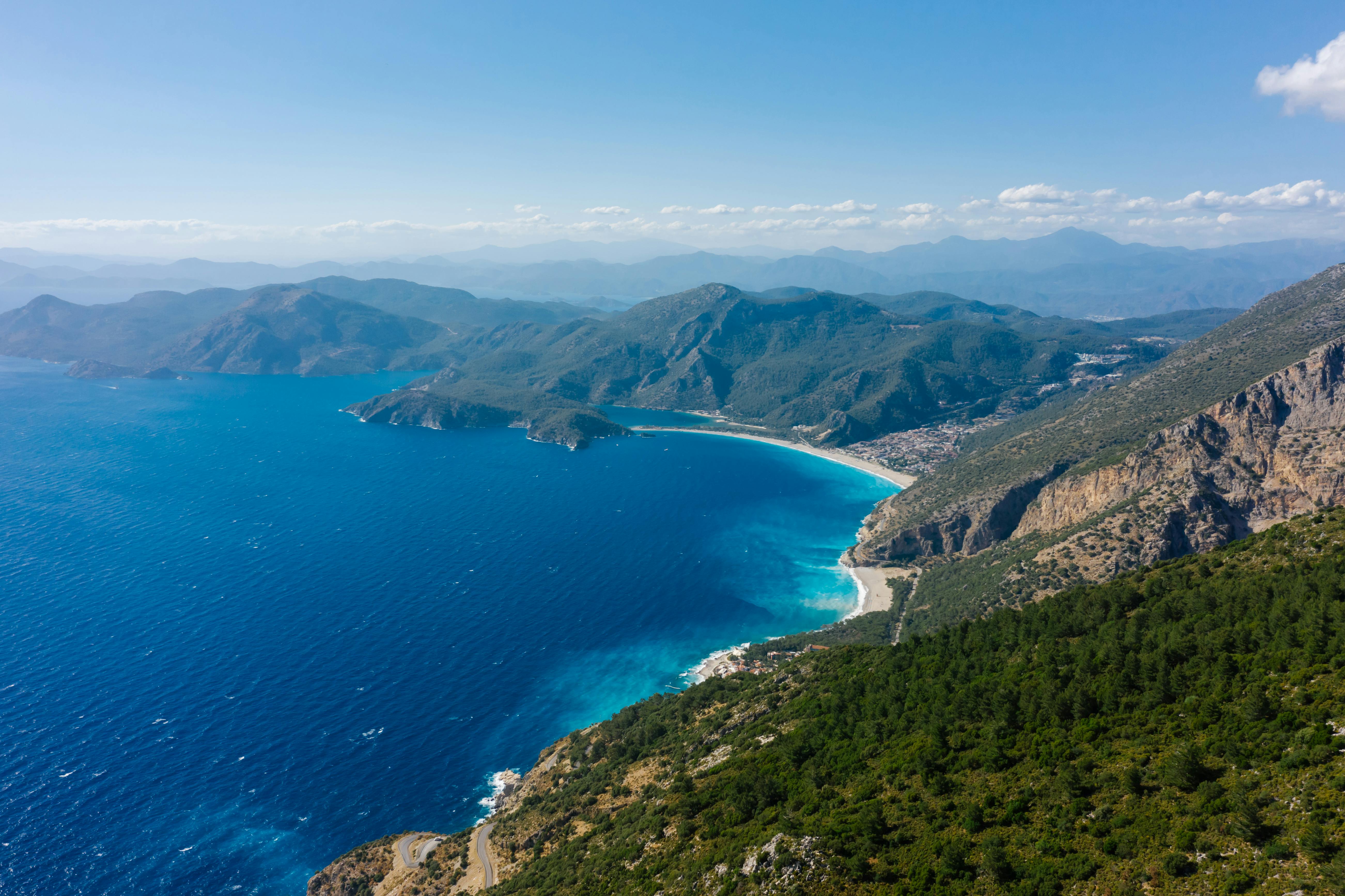
Ölüdeniz Blue Lagoon: Where Turquoise Serenity Meets Mountain Majesty
First light breaks over the Taurus Mountains, painting the calm waters in shades impossible to name—somewhere between aquamarine and sapphire, with hints of jade dancing beneath the surface. You stand at the edge of Ölüdeniz Blue Lagoon, where the Mediterranean creates nature's most perfect swimming pool: a protected bay spanning approximately two thousand meters across, shielded from ocean currents by a narrow sandbar and surrounded by peaks rising eighteen hundred meters skyward. The air carries the scent of pine resin and salt, while the gentle lap of water against white pebbles creates a rhythm as old as time itself. Paragliders drift silently from Babadağ Mountain's heights, their colorful canopies dotting the sky like exotic birds surveying this turquoise paradise below. This place matters because it represents one of the Mediterranean's last pristine sanctuaries—a natural wonder protected since 1985 as a special environmental reserve, where crystal-clear waters maintain visibility depths of thirty meters and temperatures hover between twenty and twenty-eight degrees Celsius, offering an almost spiritual connection to the sea's purest form.
Why Ölüdeniz Blue Lagoon Embodies Natural Perfection
The Ölüdeniz Blue Lagoon represents a geological masterpiece that solves the eternal beachgoer's quest for perfectly calm, crystal-clear waters regardless of open sea conditions. This natural wonder—designated as a Special Environmental Protection Area in 1985—features a unique dual-beach system: the main Ölüdeniz Beach facing the open Mediterranean, and the iconic Blue Lagoon (Kelebekler Vadisi side) separated by a tombolo—a narrow sandbar formed by centuries of sediment deposition. The lagoon's sheltered position creates water conditions so tranquil that the name "Ölüdeniz" literally translates to "Dead Sea," referring not to salinity but to the water's remarkable stillness even when waves crash on the outer beach.
The lagoon spans approximately one point five kilometers in length with depths ranging from one meter at the shoreline to twelve meters at its deepest point, making it ideal for swimmers of all abilities. The seabed consists of fine white pebbles and sand rather than rocks or seaweed, creating that signature transparency that reveals every gradation of blue beneath. Water temperatures remain remarkably stable due to the enclosed nature: averaging 20–22°C (68–72°F) in May, rising to 26–28°C (79–82°F) in August, then gradually cooling to 22–24°C (72–75°F) in October. This thermal consistency stems from the lagoon's limited water exchange with the open sea, creating a natural solar heating system.
Beyond recreation, the lagoon fulfills critical ecological functions: it serves as a nursery ground for marine species including sea bream, groupers, and occasionally loggerhead sea turtles (Caretta caretta) that nest on nearby beaches. The surrounding pine forests of Pinus brutia prevent soil erosion and filter freshwater runoff, maintaining the delicate salinity balance that gives the water its distinctive color. In 2006, Ölüdeniz achieved Blue Flag status—meeting stringent international criteria for water quality, environmental management, and safety—making it one of Turkey's most certified beaches. The site attracts over two million visitors annually while maintaining conservation standards through controlled development: no construction is permitted within the protected zone, boat access is limited to designated areas, and daily visitor capacity is monitored during peak season to prevent ecological degradation.
The Best Time to Experience Ölüdeniz Blue Lagoon
Timing your visit to Ölüdeniz Blue Lagoon dramatically affects water conditions, crowd levels, and overall experience quality. The optimal window stretches from May 15–June 22 and September 10–October 15, when air temperatures range between 24–29°C (75–84°F) and water temperatures reach comfortable 22–26°C (72–79°F). During these shoulder seasons, the lagoon maintains its legendary tranquility, visibility exceeds thirty meters, and visitor numbers stay manageable at approximately three to four thousand daily rather than the eight to ten thousand seen in peak summer. Arrive at the lagoon between 8:30–10:00 AM when morning light creates the most spectacular turquoise hues and before tour boats from Fethiye arrive in force.
Avoid July 20 through August 25 absolutely: temperatures soar to 34–40°C (93–104°F), the lagoon reaches maximum capacity with sunbed occupancy exceeding ninety-five percent by 10:00 AM, and the famous calm waters become crowded with hundreds of swimmers, diminishing the serene atmosphere. Midday visits between 12:00–4:00 PM during peak season prove uncomfortable—the intense sun creates burn risks within fifteen minutes of exposure, finding available space becomes nearly impossible, and entrance queues can exceed forty-five minutes. Winter months (November through March) bring cooler air temperatures of 12–17°C (54–63°F) and water temperatures dropping to 17–19°C (63–66°F), making swimming challenging though the lagoon remains stunningly beautiful for photography and coastal walks.
The swimming season officially extends from May through October, with water remaining comfortably swimmable into mid-October for most visitors. For current lagoon conditions, Blue Flag status updates, and visitor capacity information, consult the official resource: www.kulturportali.gov.tr—Turkey's Ministry of Culture and Tourism portal provides comprehensive information about Ölüdeniz Natural Park, entrance fees, and environmental protection regulations. Note that the lagoon operates as a nature reserve with entrance fees (approximately €6–€8) and daily visitor limits during peak season to preserve ecological integrity.
Approximate Budget for a 7-Day Trip
Visiting Ölüdeniz Blue Lagoon offers flexibility for various budgets, from budget-conscious backpackers to luxury seekers. This budget assumes moderate comfort—mid-range accommodation with mountain or sea views, fresh Turkish and Mediterranean cuisine, local transportation, lagoon entrance fees, and selective adventure activities like paragliding. Prices reflect 2026 rates for travelers seeking authentic Aegean experiences without ultra-luxury pricing.
- Accommodation: €45–€85 per night in Ölüdeniz or nearby Hisarönü (boutique hotels with pool and breakfast; budget pensions from €25, luxury resorts from €150)
- Food: €28–€42 per day (breakfast €5—Turkish kahvaltı spread with cheeses, olives, tomatoes, honey, börek; lunch €9–€13—gözleme, grilled chicken sandwich, or meze platter at beachside cafes; dinner €14–€24—fresh sea bass, lamb şiş kebab, or calamari with local wine)
- Transportation: €68 total (Dalaman Airport to Ölüdeniz via shuttle: €10 each way; local dolmuş to Fethiye: €2 per ride; taxi to Babadağ paragliding launch: €15; bicycle rental: €8/day; optional boat trip to Butterfly Valley: €25)
- Attractions: €125 total (Ölüdeniz Blue Lagoon entrance: €7; paragliding tandem flight: €85; Lycian Way hiking guide: €20; Saklıkent Gorge tour: €18; boat trips and water sports: €35)
- Miscellaneous: €48 (beach towel €10, reef-safe sunscreen €9, Turkish evil eye charm €8, local olive oil products €12, travel insurance prorated €9)
Total: €510–€720 for 7 days (excluding international flights to Dalaman)
7 Essential Ölüdeniz Blue Lagoon Experiences
- Swim in the protected lagoon at sunrise: Arrive by 8:30 AM when the lagoon opens and experience the water in its purest state—before crowds arrive and winds pick up. The morning light transforms the turquoise water into liquid gemstone, and visibility reaches its maximum. Enter from the designated swimming area where depths remain under one meter for the first twenty meters, perfect for wading and photography. The water temperature feels refreshingly cool at 22–24°C even in summer. Spend at least one hour floating in the calm waters, observing how the color shifts from pale aqua near shore to deep sapphire in deeper sections.
- Paraglide from Babadağ Mountain: Book a tandem flight (€85–€110 including hotel transfer and video) for the ultimate Ölüdeniz perspective. The launch site sits at 1,900 meters altitude on Babadağ Mountain, offering a twenty to thirty-minute flight over pine forests before landing directly on the beach. Flights operate daily from 10:00 AM–5:00 PM depending on wind conditions. The experience reveals the lagoon's true scale and the dramatic contrast between turquoise water, white pebble beach, and emerald mountains. Morning flights offer the smoothest air and clearest visibility.
- Explore the main beach at sunset: While the Blue Lagoon closes around 6:00 PM, the main Ölüdeniz Beach remains accessible and transforms into a social hub as temperatures cool. Walk the two-kilometer stretch of white pebbles, watching paragliders land against the setting sun. The beach offers free public access with sunbed rentals available for €10–€15. Stay for dinner at one of the beachfront restaurants serving fresh catch of the day while waves create a gentle soundtrack.
- Hike to Butterfly Valley viewpoint: Follow the Lycian Way trail from Ölüdeniz (marked with red and white blazes) for approximately forty-five minutes to reach the clifftop viewpoint overlooking Kelebekler Vadisi (Butterfly Valley). The trail climbs three hundred meters through pine forest, offering spectacular aerial views of the lagoon and the secluded valley beach accessible only by boat. Bring water and wear sturdy shoes—the path includes rocky sections. Visit between 9:00–11:00 AM when morning light illuminates the valley's white cliffs and turquoise water.
- Take a boat tour to nearby islands: Join a full-day gulet cruise (€25–€35 including lunch) departing Ölüdeniz harbor at 10:00 AM. These traditional wooden boats visit five to six locations including Butterfly Valley, Cold Water Bay (Soğuk Su), and Aquarium Bay. Swim in secluded coves inaccessible by land, enjoy a home-cooked Turkish lunch onboard, and snorkel in crystal-clear waters. The captain anchors in protected bays perfect for beginners. Return around 5:00 PM, giving you time to freshen up before dinner.
- Snorkel the lagoon's eastern edge: Rent snorkel equipment (€8 per day) and explore the rocky outcrops at the lagoon's eastern boundary where marine life congregates. The clear water reveals sea bream, octopus, sea urchins, and occasionally small groupers. The best visibility occurs between 9:00 AM–12:00 PM before boat traffic stirs sediment. Bring water shoes for rocky entries and respect the protected marine environment—never touch or remove anything from the seabed.
- Photograph the iconic sandbar: Climb to the elevated viewpoint on the western side of the lagoon for the classic Ölüdeniz photograph showing the sandbar separating the calm lagoon from the open sea. The best lighting occurs during golden hour (6:00–8:00 PM in summer) when warm light bathes both beaches. This viewpoint requires a fifteen-minute hike from the main beach but rewards with panoramic views encompassing the entire bay, Babadağ Mountain, and distant Greek islands on clear days.
3 Hidden Gems Most Travelers Miss
- Cold Water Bay (Soğuk Su Koyu): Located three kilometers west of Ölüdeniz along the Lycian Way, this secluded cove features natural freshwater springs emerging from underwater caves, creating refreshingly cool pools even in peak summer. Access requires either a boat taxi from Ölüdeniz harbor (€15 round-trip, departs twice daily at 10:00 AM and 2:00 PM) or a challenging forty-minute hike along coastal cliffs. The bay has zero facilities—bring everything including water, food, and sun protection. Visit between 3:00–6:00 PM when day-trippers depart and you'll experience near-exclusive access to this natural phenomenon. The temperature contrast between spring water (18–20°C) and sea water (26–28°C) creates a unique swimming experience.
- The ancient Lycian rock tombs: While thousands focus on the beach, few notice the carved tomb facades in the cliffs above Ölüdeniz village. These fourth-century BCE burial chambers belong to the ancient city of Oenoanda's necropolis. Access requires asking locals for "kaya mezarları" (rock tombs)—the path begins behind the Ölüdeniz mosque and climbs steeply for ten minutes. The tombs feature relief carvings and inscriptions in Lycian script, offering a tangible connection to the civilization that first appreciated this coastline. Visit at sunset when golden light illuminates the carved details and you can photograph the tombs with the lagoon as backdrop.
- Kidrak Bay's wild beach: Five kilometers east of Ölüdeniz, this undeveloped beach remains unknown to most tourists because it requires a twenty-minute drive on unpaved roads or a one-hour coastal hike. The beach features fine golden sand (rare in this region), tamarisk shade, and complete absence of commercial facilities. Local dolmuş buses don't serve this route—you'll need a rental car (€35/day) or scooter (€20/day). The beach attracts Turkish families on weekends but remains nearly empty on weekdays. Bring a cooler with refreshments and enjoy the unspoiled beauty where the only sounds are waves and cicadas. The water clarity exceeds thirty meters, making it exceptional for snorkeling.
Cultural & Practical Tips
- Respect the nature reserve regulations: Ölüdeniz Blue Lagoon operates as a protected area with strict rules: no camping, no drones without permits, no removal of stones or shells (fines up to ₺2,000/€60), and no swimming in restricted conservation zones marked by buoys. Sunbeds are limited to designated areas to protect the seabed. Always follow lifeguard instructions and respect red flag warnings.
- Carry cash in Turkish Lira: While hotels and restaurants accept cards, lagoon entrance fees, sunbed rentals, water taxis, and small vendors prefer cash. Learn "Ne kadar?" (neh kah-dar—how much?) and "Teşekkür ederim" (teh-shek-kür eh-deh-rim—thank you). Most vendors accept 10–15% below asking price for equipment rentals.
- Protect against intense sun: The combination of Mediterranean sun, water reflection, and white pebbles creates extreme UV exposure. Use reef-safe sunscreen (SPF 50+), wear UV-protective sunglasses and a wide-brimmed hat, and seek shade between 12:00–3:00 PM. Dehydration risks are high—carry at least two liters of water per person daily.
- Learn essential Turkish phrases: "Merhaba" (mehr-hah-bah—hello), "Lütfen" (lü-tfen—please), "Deniz harika" (deh-niz har-ee-ka—the sea is wonderful), "Hesap lütfen" (heh-sap lü-tfen—bill please), and "İngilizce biliyor musunuz?" (in-gi-liz-je bi-li-yor mu-su-nuz—do you speak English?). Even basic efforts earn warm responses and often result in locals sharing insider recommendations.
- Understand paragliding safety: Only book with certified operators displaying SHGM (Turkish Civil Aviation Authority) licenses. Reputable companies include Planet Paragliding and Extreme Paragliding, both operating from Babadağ. Flights are weather-dependent—afternoon meltem winds can cancel flights after 3:00 PM. Book morning slots for highest success rate. Insurance is mandatory and included in tandem flight prices.
- Plan for seasonal variations: May–June offers wildflower blooms, comfortable temperatures, and manageable crowds but occasional rain showers. July–August guarantees hot weather and full facility operations but maximum crowds and highest prices. September–October provides warm seas, fewer tourists, and reduced rates but some facilities close after October 15. November–April sees minimal beach activity though the landscape remains stunning for hiking.
- Use public transportation efficiently: Dolmuş (shared minibuses) run frequently between Ölüdeniz and Fethiye from 7:00 AM–11:00 PM, costing €2 per ride and taking approximately thirty minutes. They're safe, air-conditioned, and offer authentic local experiences. For remote beaches, rent a scooter (€20/day) or car (€35/day) from Ölüdeniz center. Always confirm the last return dolmuş time when exploring distant areas.
Conclusion: Travel with Reverence, Not Just Checklists
The Ölüdeniz Blue Lagoon doesn't yield its deepest magic to those racing between photo opportunities. It rewards the visitor who takes time to notice how morning light transforms water into liquid turquoise, who pauses to watch paragliders dance with mountain winds, who understands that this protected sanctuary represents nature's fragile perfection requiring our respect and care. When you float in these calm waters, feeling the gentle embrace of a sea sheltered by mountains and sandbars, you're participating in an experience that has captivated travelers since Lycian sailors first sought refuge in this bay over two millennia ago.
Responsible travel here means honoring the lagoon's protected status—using reef-safe sunscreen to preserve marine ecosystems, respecting visitor capacity limits designed to prevent degradation, supporting local businesses rather than international chains, and leaving no trace beyond footprints that tide will erase. This natural wonder has survived centuries while maintaining its pristine character—a balance worth preserving for future generations. Come not just to capture the perfect photograph, but to understand that paradise isn't a commodity to consume—it's a relationship to nurture, one gentle wave, one respectful choice, one moment of pure presence at a time.