
Pergamon: Where Ancient Acropolis Meets the Aegean Horizon
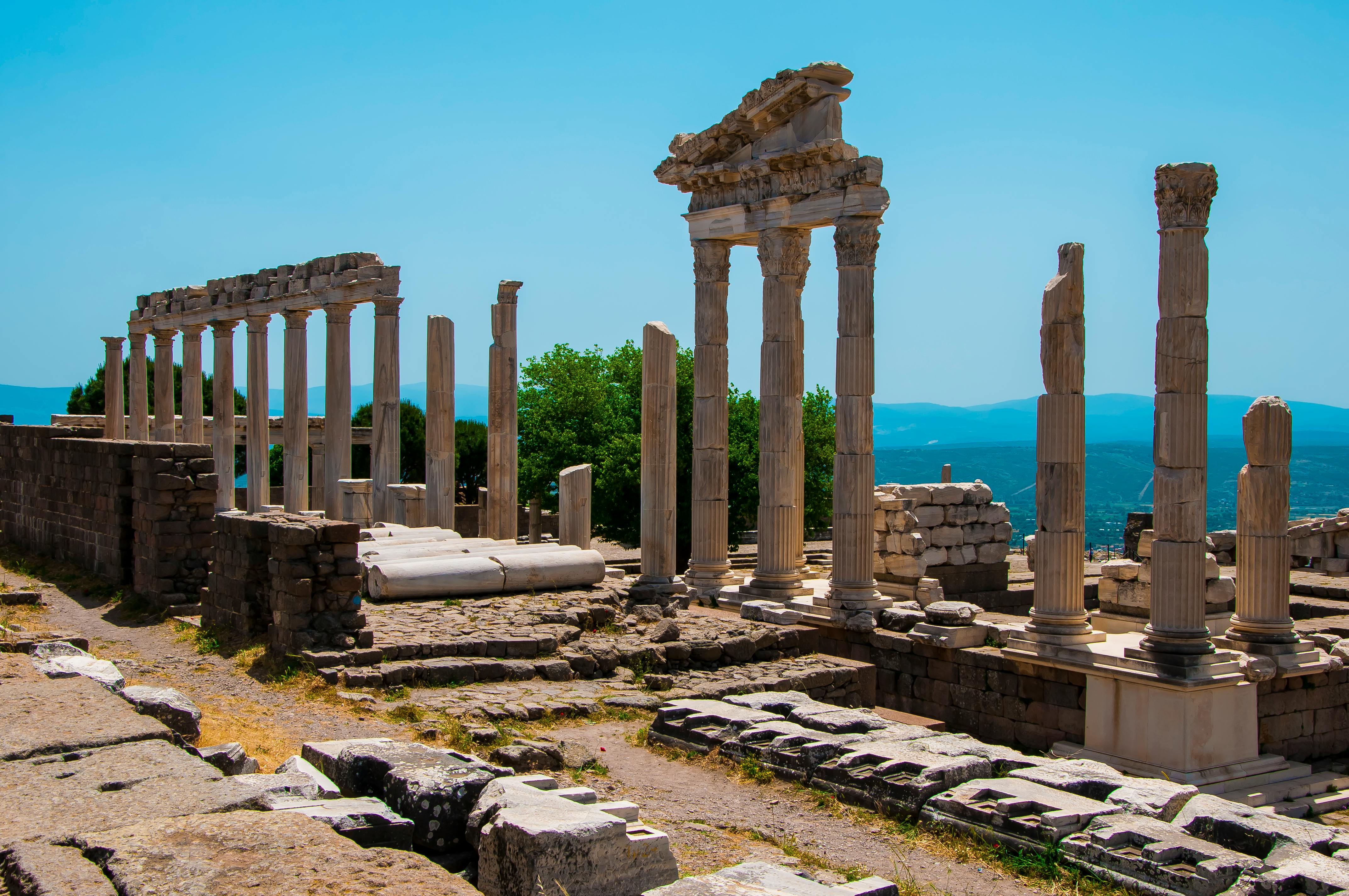
The late afternoon sun bathes weathered marble in liquid gold as you ascend the steep pathways of Pergamon, where the ruins of one of antiquity's greatest cities cling to a dramatic hillside rising 335 meters above the Caicus Valley. The air carries the scent of wild thyme, sun-baked limestone, and the faint aroma of olive groves that have flourished in this fertile valley for millennia. You hear the whisper of wind through ancient columns, the distant call of shepherds guiding flocks through the valley below, and your own footsteps on stone pathways worn smooth by centuries of pilgrims, scholars, and travelers. Before you stretches an archaeological masterpiece: the world's steepest ancient theater carved into the mountainside with seating for 10,000 spectators, the monumental Temple of Trajan perched at the acropolis summit, and the foundations of the legendary Library of Pergamon that once rivaled Alexandria's collection of 200,000 scrolls. This UNESCO World Heritage Site matters because it embodies the extraordinary achievement of Hellenistic civilization—a place where architecture defied gravity, where scholarship flourished alongside spiritual devotion, and where travelers can walk the very ground that shaped the intellectual and artistic foundations of the ancient world.
Why Pergamon Embodies Hellenistic Grandeur
Pergamon represents far more than archaeological ruins—it embodies the extraordinary synthesis of political ambition, artistic innovation, and intellectual achievement that defined the Hellenistic period at its zenith. Founded as a fortified settlement in the 8th century BCE and reaching its apex under the Attalid dynasty (281-133 BCE), this acropolis city solved fundamental challenges of ancient urban planning: creating defensible fortifications on steep terrain, engineering monumental architecture on unstable slopes, and establishing a cultural center that could rival Athens and Alexandria in influence.
The engineering achievements are staggering. The Great Theater, carved directly into the mountainside with a gradient of 45 degrees—the steepest of any ancient theater—features 78 rows of seating rising 36 meters vertically, accommodating 10,000 spectators with acoustics so precise that whispers from the stage carry to the highest rows. The Temple of Trajan, constructed on a massive artificial terrace measuring 90 by 50 meters, demonstrates sophisticated understanding of structural engineering: foundations were reinforced with interlocking stone blocks and hydraulic mortar to stabilize the building on the steep slope. The famous Library of Pergamon, though now reduced to foundations, once housed 200,000 scrolls and pioneered the use of parchment (pergamentum) when Egypt restricted papyrus exports.
What makes Pergamon unique is its layered narrative: the acropolis features distinct zones reflecting different aspects of Hellenistic life—the sacred precinct with temples to Athena and Zeus, the royal palace complex demonstrating Attalid power, the theater serving both entertainment and civic assembly, and the lower city with residential quarters and the renowned Asclepion healing center. This convergence of political power, religious devotion, intellectual pursuit, and medical innovation—where stone defies gravity, where scholarship rivals empire, where healing arts flourish alongside philosophy—creates a destination that invites travelers to contemplate how ancient civilizations achieved greatness through the integration of diverse human endeavors.
The Best Time to Experience Pergamon
To experience Pergamon at its most atmospheric, plan your visit between April 15–June 10 or September 20–October 25, when daytime temperatures range from 19-27°C (66-81°F) and the Caicus Valley blooms with wildflowers or glows with autumn gold. During these windows, you'll enjoy comfortable conditions for climbing the steep acropolis pathways, exploring exposed ruins, and photography without summer's intense heat or winter's chill.
For optimal photography of the theater and temple ruins, arrive at 7:30–9:00 AM when morning light strikes the eastern acropolis facades, illuminating marble columns with soft, directional illumination. Alternatively, visit at 5:00–6:30 PM during golden hour when warm light transforms limestone into amber tones and long shadows emphasize the theater's dramatic gradient. The stone's appearance shifts dramatically throughout the day—from pale gray at dawn to warm copper at sunset—making timing crucial for capturing its full sculptural beauty.
Avoid the peak summer period of June 25–August 20 when temperatures can exceed 38°C (100°F) on the exposed acropolis, making the steep climb uncomfortable and causing harsh overhead light that flattens architectural details. While summer offers reliable weather, intense sun diminishes the visual drama of the ruins and the climb becomes physically demanding. Winter months (November–March) bring temperatures of 6-14°C (43-57°F) during the day but can drop to 1°C (34°F) at night; rain makes ancient stone pathways extremely slippery, and occasional fog reduces visibility across the valley.
Approximate Budget for a 7-Day Trip
Visiting Pergamon requires basing yourself in Bergama town or nearby İzmir, with day trips to explore the acropolis, Asclepion, and surrounding archaeological sites. The following budget assumes moderate travel style—comfortable local hotels, authentic Aegean cuisine, and a mix of public transportation and occasional private transfers. Prices are listed in euros for international travelers, though Turkey uses the Turkish Lira (₺).
- Accommodation: €26–€48 per night in Bergama town center. Budget pensions start at €21; boutique hotels with acropolis views run €50-75. Staying in Bergama provides immediate site access while İzmir (100 kilometers away) offers more amenities and flight connections.
- Food: €12-19 per day total. Breakfast: €3-5 for traditional Turkish breakfast with menemen, local cheese, olives, and çay. Lunch: €4-6 for regional specialties like Bergama köfte, fresh Aegean fish, and Turkish pide at local esnaf lokantası. Dinner: €6-10 for sit-down meals featuring olive oil dishes, baklava, and ayran.
- Transportation: Round-trip flight to İzmir Adnan Menderes Airport from Istanbul: €58-125. Airport shuttle to Bergama: €10. Local dolmuş within Bergama: €0.45 per ride. Taxi to Pergamon sites: €5 round-trip. Car rental: €32/day.
- Attractions: Pergamon Acropolis entrance: €12. Asclepion entrance: €8. Bergama Museum: €5. Guided archaeological tour: €35. Red Basilica (Kızıl Avlu): €6.
- Miscellaneous: Handwoven Bergama carpets: €40-120. Local olive oil: €8/bottle. Replica ancient artifacts: €15-45. Regional guidebook: €11.
Total 7-Day Budget: €395–€575 per person (excluding international flights to Turkey)
7 Essential Pergamon Experiences
- Climb to the Great Theater at Dawn: Arrive at the acropolis at 7:30 AM when the site opens and morning light illuminates the world's steepest ancient theater. Ascend the 78 rows of seating to experience the extraordinary 45-degree gradient and test the acoustics by speaking softly from the stage. The view from the top row reveals the entire Caicus Valley stretching toward the Aegean Sea. Allow 45 minutes to fully appreciate the engineering sophistication and photograph the dramatic landscape. Bring water and wear sturdy shoes—the climb is steep and stone steps can be uneven.
- Explore the Temple of Trajan Summit: Visit the acropolis highest point to examine the foundations of the Temple of Trajan, constructed on a massive artificial terrace measuring 90 by 50 meters. The surviving columns and reconstructed elements demonstrate Roman imperial architecture adapted to Pergamon's steep terrain. Visit between 9:00–11:00 AM when directional light emphasizes architectural details. The summit offers panoramic views across the valley—bring a camera and allow 30 minutes to absorb the setting.
- Walk the Library Foundations: Examine the remains of the legendary Library of Pergamon, once second only to Alexandria with 200,000 scrolls. Though reduced to stone foundations, interpretive panels explain how scholars here pioneered parchment production and advanced textual criticism. Visit mid-morning (10:00 AM–12:00 PM) when light illuminates the excavation area. Reflect on how intellectual achievement flourished alongside political power in this ancient center of learning.
- Visit the Asclepion Healing Center: Descend to the lower city to explore the Asclepion, one of antiquity's most renowned medical centers where patients sought healing through dream interpretation, hydrotherapy, and herbal remedies. The complex features a sacred way lined with shops, a circular treatment temple, and sophisticated water channels. Entry: €8. Allow 60-90 minutes to explore the extensive ruins and imagine ancient medical practices. Best visited late morning when light illuminates the sacred way.
- Photograph the Athena Temple Precinct: Position yourself at the Temple of Athena, the acropolis's oldest major sanctuary dating to the 3rd century BCE. The reconstructed stoa (colonnade) frames dramatic views across the valley and provides excellent photography opportunities. Visit at 5:00–6:30 PM when golden light illuminates the marble columns. The precinct's elevated position offers perspective on how Pergamon's planners integrated sacred architecture with defensive strategy.
- Explore the Red Basilica (Kızıl Avlu): Visit this massive Roman temple complex in Bergama's lower town, originally dedicated to Egyptian gods and later converted to a Christian basilica. The red brick structure measures 260 by 100 meters, making it one of Anatolia's largest ancient buildings. Entry: €6. Open 8:00 AM–7:00 PM. The underground tunnels and river channels demonstrate sophisticated hydraulic engineering. Allow 45 minutes to explore this less-visited but impressive site.
- Walk the Ancient Processional Way: Follow the sacred pathway connecting the lower city to the acropolis, lined with remnants of shops, fountains, and public buildings. The 1.2-kilometer route offers insight into daily life in Hellenistic Pergamon. Look for stone foundations, pottery fragments, and drainage channels that reveal urban planning sophistication. Best explored late afternoon (3:00–4:30 PM) when softer light emphasizes textures. Wear sturdy shoes—the ancient stones can be uneven.
3 Hidden Gems Most Travelers Miss
- The Ancient Water Tunnel System: Beneath the acropolis, a network of stone-lined tunnels and channels once carried spring water from mountain sources to fountains, baths, and the Asclepion throughout Pergamon. Most visitors overlook this engineering marvel because it's not prominently signposted. Access: From the Asclepion entrance, ask staff about "su tünelleri" (water tunnels); guided access may be available by appointment. Best examined mid-morning when guides are available. This feature reveals the sophisticated infrastructure that sustained a city of 200,000 inhabitants on steep terrain.
- The Heraion Sanctuary: On the acropolis's northern slope, the partially excavated sanctuary dedicated to Hera features stone foundations, altar remains, and panoramic views rarely photographed. Most tourists focus on the theater and temple, missing this quieter sacred space. Access: From the main acropolis pathway, follow the unmarked trail northward for 200 meters. Best visited late afternoon (4:00–5:30 PM) when side-lighting emphasizes stonework. No entrance fee beyond acropolis ticket; allow 20 minutes for quiet contemplation of this lesser-known sanctuary.
- The Ancient Quarry Site: Approximately 1 kilometer northeast of the acropolis, the limestone quarry that provided building materials for Pergamon's monuments still displays tool marks, partially extracted blocks, and ancient worker graffiti. This industrial archaeology offers tangible connection to the labor that built the city. Access: From Bergama town, follow signs toward "antik taş ocağı" or ask locals for directions. Best photographed midday when overhead light reveals tool marks. No entrance fee; bring water and sun protection for the exposed site.
Cultural & Practical Tips
- Respect Archaeological Integrity: Pergamon is an active research site as well as a tourist destination. Stay on marked pathways to protect unexcavated areas. Do not touch or remove stones, pottery fragments, or other artifacts—every piece contributes to ongoing scholarship. Speak quietly to maintain the contemplative atmosphere that honors the site's significance.
- Physical Preparedness: Exploring Pergamon involves climbing steep stone pathways with gradients up to 45 degrees, navigating uneven surfaces, and ascending over 300 meters elevation. The acropolis is not wheelchair-accessible. Wear sturdy, closed-toe shoes with excellent grip. Carry at least 2 liters of water per person—there are limited facilities on the steep slopes.
- Essential Phrases: "Teşekkür ederim" (teh-shek-kür eh-deh-rim) = Thank you; "Pergamon nerede?" (per-gah-mon neh-reh-deh) = Where is Pergamon?; "Ne kadar?" (neh kah-dar) = How much?; "Hoş geldiniz" (hosh gel-din-iz) = Welcome.
- Photography Guidelines: Photography is permitted throughout the site, but tripods require care not to obstruct pathways or damage fragile surfaces. Drone photography requires advance permission from provincial authorities (contact: izmir.kultur@ktb.gov.tr). The best light for architectural photography is early morning (7:30–9:30 AM) and late afternoon (5:00–7:00 PM).
- Weather Considerations: The Caicus Valley experiences Mediterranean climate: summer temperatures can exceed 38°C (100°F) with intense sun; winter brings temperatures near freezing and occasional rain. The acropolis offers minimal shade—bring sun protection, water, and layers regardless of season. Afternoon winds are common; secure loose items.
- Understand the Context: Pergamon represents complex intersections of Greek, Roman, and Turkish heritage. Approach the site with curiosity about ongoing archaeological research and respect for multiple cultural perspectives. Consider hiring a licensed guide who can explain the Attalid dynasty's achievements and contextualize Pergamon's role in Hellenistic civilization.
- Combine with Regional Sites: Enhance your Pergamon visit with nearby attractions: the Asclepion healing center, the Red Basilica in Bergama town, and the coastal city of Ayvalık (45 minutes drive). A regional perspective enriches understanding of Pergamon's strategic and cultural significance in ancient Anatolia.
Conclusion: Travel with Reverence, Not Just Checklists
Pergamon invites you to do more than photograph ancient columns against a dramatic valley. This is a place to stand where Hellenistic architects defied gravity to create beauty, where scholars pioneered knowledge that shaped Western thought, where physicians developed healing arts that influenced medicine for centuries. When you climb the theater's steep rows, when you trace library foundations that once held 200,000 scrolls, when you gaze across the Caicus Valley that witnessed empires rise and fall, you participate in a meditation on human achievement that transcends any single lifetime.
Travel to Pergamon with reverence for the craftsmanship that shaped these stones, for the civilizations that rose and fell on this hill, for the scholars who continue to unlock its secrets. Respect the fragility of exposed archaeology—two millennia of weathering have softened edges, and every touch accelerates erosion. Understand that the contemplative silence you cherish depends on the restraint of every visitor who comes after you. Let the acropolis's grandeur humble your expectations, let its history slow your pace, and let the convergence of architecture, scholarship, and spiritual devotion remind you that the most profound journeys are those that deepen our understanding of how human ambition and intellectual curiosity can create beauty that endures across millennia.