Rila Monastery: Where Frescoed Arcades Meet Balkan Spirituality
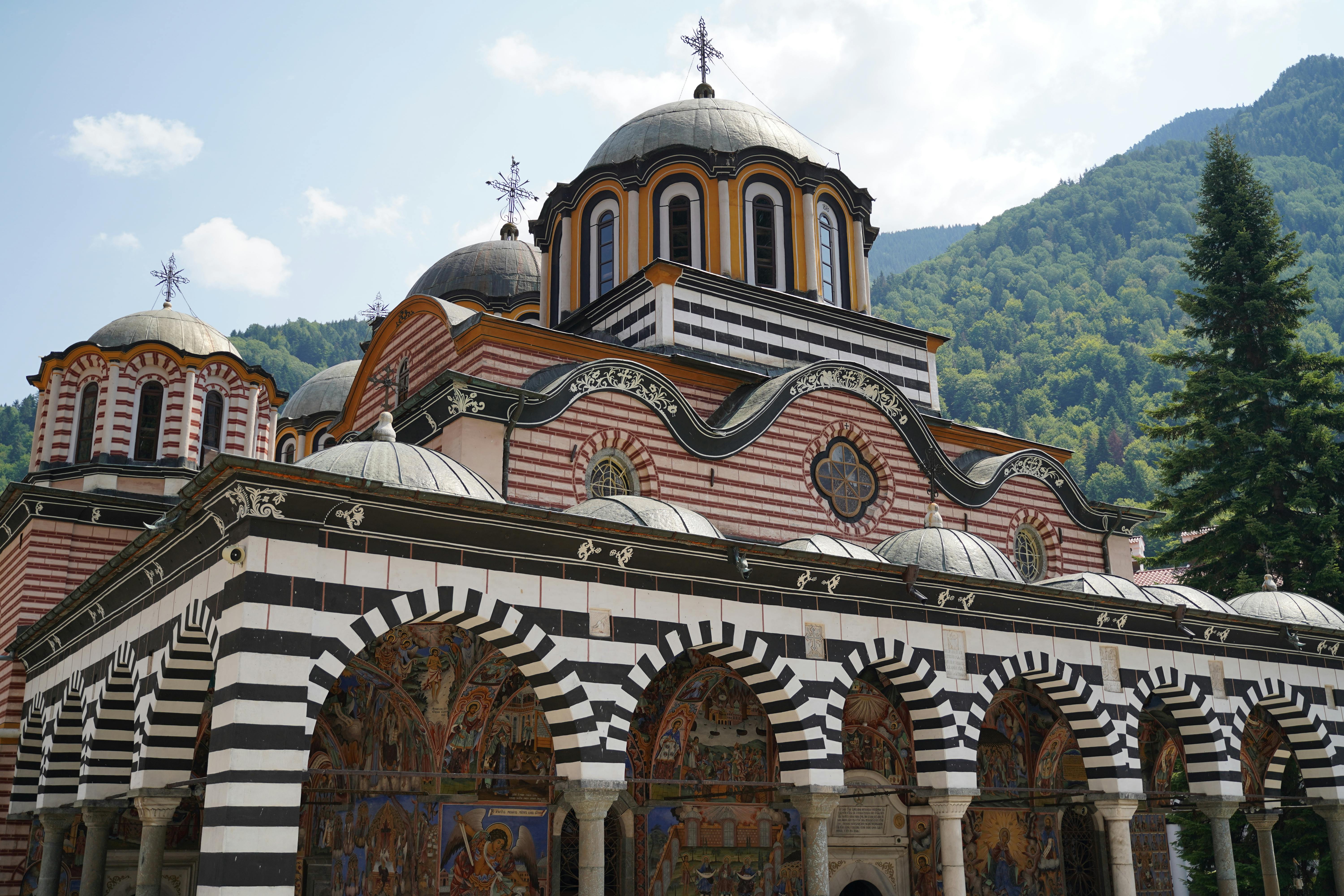
Rila Monastery: Where Byzantine Fortress Walls Meet Bulgaria's Spiritual Heart
At 8:05 AM on a Tuesday in September, I walked through the main gate of Rila Monastery and stopped. The courtyard opened in front of me, surrounded by arched galleries painted in black and white stripes. The Church of the Nativity stood in the center, its walls covered floor to ceiling in frescoes. A monk crossed the flagstones carrying a loaf of bread. I paid nothing to enter the courtyard. The monastery grounds are free. The museum charges 8 BGN. I sat on a stone bench and watched the light climb the striped arches. Within an hour, tour buses from Sofia would fill the parking lot. That early morning hour, before the crowds and the cameras, showed me why this place has drawn pilgrims for over a thousand years.
Why Rila Monastery Matters
Rila Monastery sits in a valley of the Rila Mountains, about 120 kilometers south of Sofia in southwestern Bulgaria. It is the largest and most famous Eastern Orthodox monastery in the country and a symbol of Bulgarian national identity. Saint John of Rila, a hermit canonized by the Orthodox Church, founded the monastery in the 10th century. His ascetic dwelling and tomb became a holy site and were transformed into a monastic community that grew in power and influence from the 13th to the 14th century. After a devastating fire, the feudal lord Hreljo rebuilt and fortified the monastery in its present location around 1334-1335. UNESCO designated Rila Monastery a World Heritage Site in 1983.
During the Ottoman occupation, Rila flourished in part because of its isolation from Ottoman power centers. In the 18th and 19th centuries, it became a cradle for the Bulgarian National Revival. The monastery supported book publishing, maintained a library and archives, and ran educational institutions. The main sections standing today were constructed in the early to mid-19th century in an irregular polygon shape. Within its walls are hundreds of dormitory rooms, archives, and museums. The relics of St. John of Rila are on display.
Here is the honest criticism. Rila Monastery is popular. Nearly a million visitors explore it each year. In summer, the courtyard fills with coach groups by mid-morning, and the atmosphere shifts from spiritual to commercial. Some visitors describe it as feeling more like a museum than a living monastery. It is both. Monks still live and pray here, but you will share the space with thousands of tourists on any given day in July.
The Best Time to Experience Rila Monastery
May, June, and September are the best months. Daytime temperatures in the valley range from 18-26°C (64-79°F). The surrounding mountains are green, and the light through the courtyard arches is soft in the early morning. September brings fewer crowds than June and similar weather.
July and August are peak season. Temperatures reach 28-32°C (82-90°F) in the valley. Tour buses from Sofia arrive by mid-morning, and the courtyard can feel crowded. Arrive at opening time (7:00 AM) or after 4:00 PM to have space. The museum extends its hours to 7:30 PM from June through September.
October offers mild temperatures of 15-22°C (59-72°F) and autumn colors. The crowds thin out considerably after the first week. Rain becomes more frequent, and the cobblestones get slippery. Fewer services operate at nearby guesthouses.
November through March means cold temperatures of 0-10°C (32-50°F) and occasional snow. The monastery stays open year-round, including public holidays. Winter visits are quiet. The grounds are largely yours. Museum hours shorten to 8:30 AM to 4:30 PM. Bundle up and wear shoes with grip on the cobblestones.
Arrive before 10:00 AM on weekdays regardless of season. Coach groups typically arrive by mid-morning. The softest light for photography is in the first two hours after opening.
Approximate Budget for a 7-Day Trip
Rila Monastery itself costs little to visit. Your budget depends on how you structure a broader Rila Mountains trip. Here is a realistic breakdown for one person:
- Accommodation: 350-700 BGN (180-360 EUR) for 7 nights. Guesthouses in Rila town or nearby villages average 50-80 BGN per night. Budget hotels in Blagoevgrad cost less.
- Food: 280-420 BGN (145-215 EUR). A meal at a local tavern runs 15-30 BGN. A traditional bakery behind the monastery serves homemade mekitsi, dough fritters that make a cheap and filling snack. Supermarket supplies cost about 10 BGN daily.
- Transport: 250-450 BGN (130-230 EUR). Renting a car costs 40-70 BGN per day plus fuel. There are no direct public buses from Sofia to the monastery. You must take a bus to Rila or Kocherinovo, then arrange a local taxi or shared van for the final 20 kilometers. The first leg costs about 15 leva (around 8 EUR) each way.
- Attractions: 50-100 BGN (25-50 EUR). The monastery courtyard is free. The combined museum ticket costs €12 for adults and covers all five expositions. Individual tickets range from €2.50 to €4.50. Guided tours cost €15 per person.
- Miscellaneous: 100-150 BGN (50-77 EUR) for parking, coffee, and unexpected costs.
Total: 1,080-1,870 BGN (550-955 EUR) for 7 days.
One overpriced trap: organized day tours from Sofia. These charge 80-150 BGN per person and include four to five hours of driving for about two to three hours at the monastery. You can take the public bus to Rila, arrange a shared taxi to the monastery, and stay overnight for less money. The monastery itself has no entry fee, so the parking ticket is the only mandatory cost for self-drivers.
Essential Rila Monastery Experiences
- Walk the courtyard early in the morning. The striped arches and frescoed galleries are best experienced before 10:00 AM when the light is soft and the coach groups have not arrived. The courtyard is free and accessible outside of active religious services.
- Visit the Church of the Nativity. The main church sits in the center of the courtyard. Its exterior is covered in frescoes, including a self-portrait of the painter Zahari Zograf tucked into a corner. The interior holds an ornate wooden iconostasis and the relics of St. John of Rila.
- Climb Hreljo's Tower. This 23-meter stone tower dates to 1334-1335 and is the oldest structure in the complex. The tight stairwell leads to a vaulted chapel on the top story. From the top, you get the best view of the colorful courtyard and surrounding mountains.
- See Rafail's Cross in the museum. The combined museum ticket (€12) covers five expositions. The highlight is Rafail's Cross, an intricately carved wooden masterpiece featuring 104 religious scenes. The monk Rafael took 12 years to complete it. The museum also displays manuscripts, jewelry, and traditional costumes.
- Hike to the Cave of St. Ivan of Rila. About 4 kilometers from the monastery, this small cave is where the founder spent years in solitude. The hike takes about an hour each way. The cave is a pilgrimage destination, and the final steps inside are uneven. Wear sturdy shoes.
- Stay overnight in the monastery. The monastery offers simple guest rooms for pilgrims and travelers. This lets you experience the courtyard at dawn and dusk when day-trippers have left. Accommodation is basic, but the atmosphere is unmatched.
- Skip the monastery if you cannot handle crowds. In July and August, the courtyard fills with thousands of visitors. If you want silence and contemplation, come in winter or stay overnight and wake early.
Hidden Gems Most Travelers Miss
- The bakery behind the monastery. A small traditional bakery serves homemade mekitsi, fried dough fritters that are cheap, warm, and filling. Most visitors walk past without noticing.
- Zahari Zograf's self-portrait. Look for the tiny painted man holding a brush tucked into a corner of the church frescoes. It is an artist's signature hidden in plain sight.
- The Tower of Hreljo's chapel. Most visitors climb the tower for the view and skip the vaulted chapel on the top story. The small space offers quiet and a different perspective on the complex.
- The museum's weaving collection. Beyond Rafail's Cross, the museum displays handwoven national costumes, carpets, and jewelry that show daily life in the region.
- The overrated gem: guided tours inside the monastery. At €15 per person for a 50-minute tour, these add up. The monastery is small and easy to explore independently. A good guidebook covers the same history for less.
Cultural and Practical Tips
- Wear modest clothing. This is an active monastery. Knees, shoulders, and elbows should be covered. A light scarf for women is useful for the church.
- Bring cash. The museum ticket desk and some stalls may not accept cards. The nearest ATM is in Rila town.
- Tourist mistake to avoid: Arriving midday in summer without a plan. Coach groups fill the courtyard by 10:30 AM. Come at opening time or stay overnight and visit early the next morning.
- Tourist mistake to avoid: Assuming you can reach the monastery by direct public bus. No direct service operates from Sofia. You must take a bus to Rila or Kocherinovo and then arrange a local taxi or shared van for the final 20 kilometers.
- Photography is restricted inside the church. Exterior photography is permitted. No flash inside, and no photos during services.
- Wear closed shoes. The stone paths are slick after rain or morning dew, and the steps to the cave are uneven.
- Check museum hours. From October through May, the museum runs 8:30 AM to 4:30 PM. From June through September, hours extend to 7:30 PM. There is no closing day.
Essential Visitor Information
Location and Access: Rila Monastery sits in the Rila Mountains valley about 120 kilometers south of Sofia, at Rila Monastery, 2643 Rilski Manastir, Bulgaria. GPS coordinates are approximately 42.1333° N, 23.3400° E. By car, drive south on the E79 International Route from Sofia, about 2 hours. Parking is free at the west gate. By bus, take a service from Sofia's Ovcha Kupel bus terminal to Rila or Kocherinovo (about 90 minutes, 15 leva), then arrange a local taxi or shared van for the final 20 kilometers. By organized tour, direct buses depart from Alexander Nevski Cathedral in Sofia once daily, costing $16-22 and taking about 3 hours.
Tickets and Booking: The monastery courtyard and church are free to enter. The combined museum ticket costs €12 for adults and covers all five expositions. Individual tickets range from €2.50 to €4.50. Children under 7 are free for the Icon Gallery. Guided tours cost €15 per person in English or French and last about 50 minutes. Tickets are sold only on the monastery grounds. There is no online booking system. Pre-booking is not required.
Operating Hours: The monastery complex gates open daily from 7:00 AM to 8:00 PM year-round. Museum hours run 8:30 AM to 4:30 PM from October through May, and 8:30 AM to 7:30 PM from June through September. There is no closing day. The monastery is open throughout the year, including public holidays.
Visit Duration: Minimum 1.5-2 hours to walk the courtyard, visit the church, and see one or two museum expositions. Recommended 2-3 hours for the church and all museums. A full day allows time for the hike to St. Ivan's Cave and a meal at a nearby restaurant.
Family Suitability: Suitable for families with children. The courtyard is flat and paved. Strollers can navigate the main areas. The climb to Hreljo's Tower involves steep, narrow stairs and is not suitable for young children. No baby-changing facilities. Public restrooms are available on the grounds.
Timing: Best season is May-June or September-October for comfortable temperatures and fewer crowds. Best time of day is before 10:00 AM on weekdays to avoid coach groups and capture soft light for photos.
Highlights: The Church of the Nativity with its frescoes and iconostasis, Hreljo's Tower, Rafail's Cross in the museum, the striped courtyard arches, and the Cave of St. Ivan of Rila.
Nearby and Day Trip: The Cave of St. Ivan of Rila (4 kilometers) is a pilgrimage site and hike. The Seven Rila Lakes (about 1.5 hours by car) offer glacial lakes and alpine hiking. Boyana Church in Sofia (about 2 hours) is a UNESCO site with medieval frescoes. The town of Rila (20 kilometers) has guesthouses and restaurants. All are feasible as day trips if you have a car.
Conclusion: Travel with Stillness, Not Just a Checklist
Rila Monastery rewards travelers who arrive early and sit still. The courtyard costs nothing to enter, which means the only real investment is your attention. Walk the striped arches, study the frescoes, and climb Hreljo's Tower. Stay overnight if you can. The monastery has survived fires, Ottoman rule, and communist repression. It still hosts monks who pray here daily. It asks nothing except that you respect the silence. What will you notice when you stop treating a thousand-year-old spiritual site as just another photo stop?
Post a Comment