
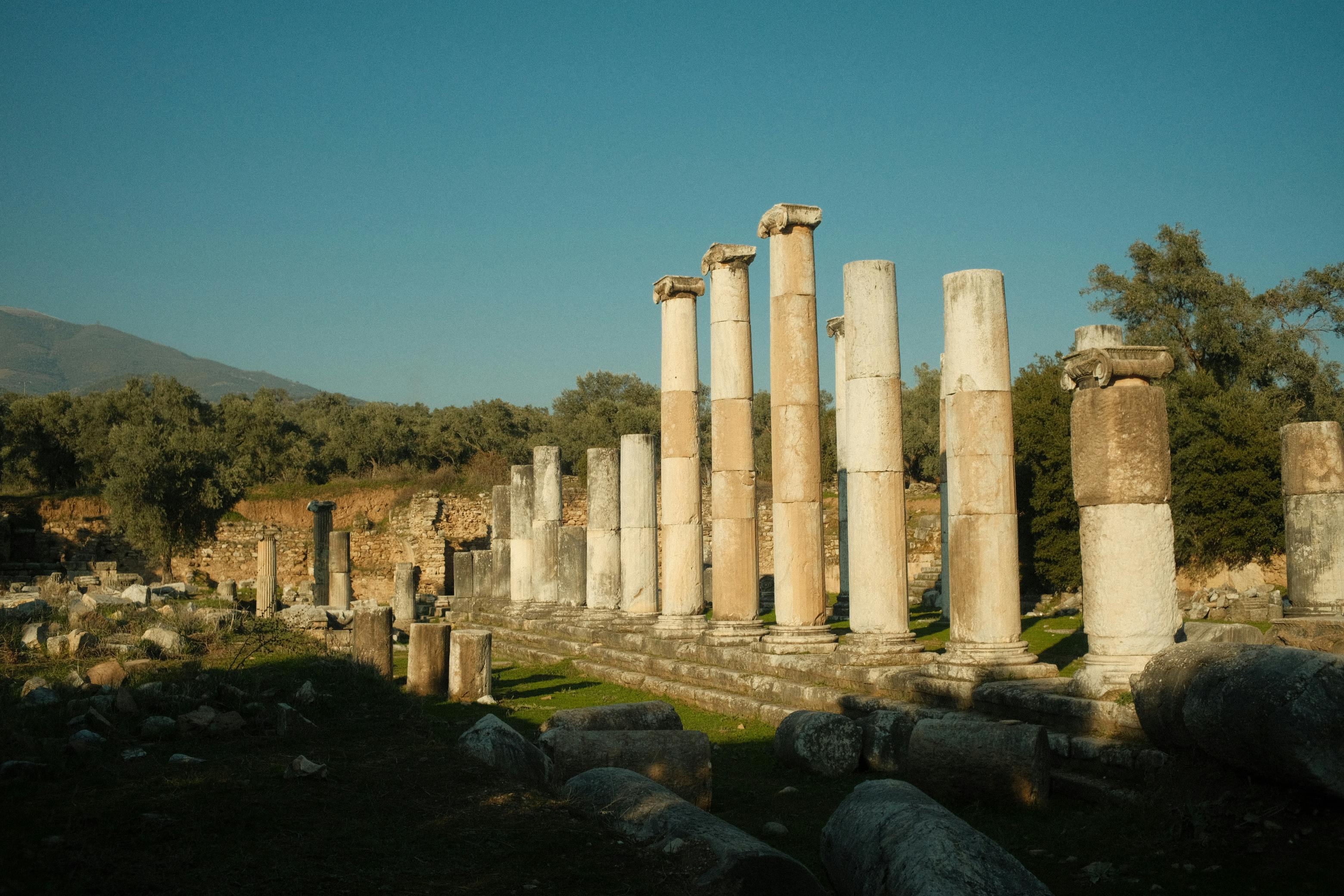
Temple of Artemis Ruins: Where Ancient Wonder Meets Anatolian Marsh
Dawn breaks over the Cayster River delta, painting the marshland in shades of amber and rose. You stand on ground that once supported one of humanity's most audacious architectural achievements—the Temple of Artemis, a marble colossus that stretched one hundred fifteen meters long and forty-six meters wide, its one hundred twenty-seven columns reaching eighteen meters toward the heavens. The air carries the scent of wet reeds and wild mint, while red-winged blackbirds trace arcs above the waterlogged plains. Only a single reconstructed column now pierces the sky where ancient pilgrims once marveled at a structure so magnificent it earned its place among the Seven Wonders of the Ancient World. Scattered fragments of carved relief lie half-buried in the earth—torn drapery, lion paws, the curve of a breast—reminders that this sanctuary to the goddess of the hunt once drew worshippers from across the Mediterranean. This place matters because it teaches us that even the grandest human endeavors succumb to time, yet their memory continues to shape our understanding of beauty, devotion, and loss.
Why the Temple of Artemis Embodies Transcendent Ambition
The Temple of Artemis at Ephesus represented more than religious devotion—it embodied the competitive spirit of ancient Greek city-states vying for prestige through architectural splendor. King Croesus of Lydia financed the grandest iteration around 550 BCE, commissioning the Cretan architect Chersiphron and his son Metagenes to design a structure that would eclipse all others. The temple solved a critical need: providing a pan-Hellenic sanctuary where merchants, pilgrims, and politicians could conduct business under divine protection while displaying their wealth through votive offerings. The building's sheer scale—twice the size of the Parthenon—demonstrated Ephesus's emergence as a commercial powerhouse controlling trade routes between East and West.
Engineers faced extraordinary challenges constructing on marshy ground: they laid foundations of charcoal and compacted sheep's wool to stabilize the waterlogged soil, a technique that preserved the structure for nearly a millennium. The temple employed innovative features including a raised platform accessed by steps and an inner sanctuary (adyton) housing the cult statue—a wooden effigy of Artemis adorned with bronze, gold, and precious stones. The roof utilized terracotta tiles, while the columns featured intricate carvings depicting Amazons, lions, and mythological scenes. Each column base bore relief sculptures, and thirty-six columns displayed elaborate fluting that caught sunlight in mesmerizing patterns.
The temple's destruction reveals the fragility of human achievement: Herostratus burned it in 356 BCE seeking immortal fame—a goal he achieved despite authorities executing him and forbidding mention of his name. Rebuilt with even greater splendor, the temple fell again to Gothic invaders in 268 CE, then suffered final destruction when Christian mobs led by Saint John Chrysostom dismantled it in 401 CE to build churches. Today's sparse remains—one re-erected column, foundation trenches, and scattered fragments excavated by British archaeologist John Turtle Wood between 1863 and 1874—testify to both ancient grandeur and the relentless passage of time. The site's proximity to the silting harbor explains Ephesus's eventual decline, as the Cayster River deposited sediment that pushed the sea three kilometers away, strangling the city's maritime commerce.
The Best Time to Experience the Temple of Artemis
Visiting the Temple of Artemis ruins requires strategic timing to balance weather, crowds, and atmospheric conditions. The optimal window stretches from April 20–May 25 and September 10–October 18, when temperatures range between 18–26°C (64–79°F) and the surrounding marshland bursts with wildflowers or autumn colors. Arrive at 7:30–9:00 AM when the site opens—the morning mist rising from wetlands creates ethereal photography conditions, and you'll experience near-solitude before tour groups arrive from cruise terminals.
Avoid July and August absolutely: temperatures climb to 32–38°C (90–100°F), humidity from the marshes makes conditions oppressive, and biting insects proliferate near standing water. The midday heat between 11:00 AM and 4:00 PM proves brutal with minimal shade—the single column offers no shelter, and the exposed foundations reflect heat like an oven. Winter months (December through February) bring frequent rain that floods the low-lying site, making pathways muddy and treacherous, while temperatures drop to 6–12°C (43–54°F) with biting winds sweeping across the plain.
The temple sits outside Selçuk's main archaeological zone, requiring separate access. combined ticket options with Ephesus proper, and seasonal schedule changes. Note that the Temple of Artemis remains free to visit year-round, unlike the paid Ephesus archaeological park, making it accessible regardless of budget constraints.
Approximate Budget for a 7-Day Trip
Exploring the Temple of Artemis and surrounding Selçuk region offers exceptional value for history enthusiasts. This budget assumes moderate comfort—clean boutique accommodations, authentic local dining, public transportation with selective private tours, and full exploration of Ephesus's archaeological treasures. Prices reflect 2026 rates for culturally curious travelers prioritizing experiences over luxury.
- Accommodation: €40–€75 per night in Selçuk town center (family-run pensions with traditional Turkish breakfast and courtyard gardens; budget hostels from €20, upscale boutique hotels from €120)
- Food: €22–€32 per day (breakfast €4—Turkish tea, fresh bread, honey, olives, tomatoes; lunch €7–€9—lentil soup, pide boat, or grilled chicken dürüm; dinner €11–€19—fresh meze platter, lamb shish kebab, or stuffed calamari with local Şirince wine)
- Transportation: €55 total (İzmir Adnan Menderes Airport to Selçuk via İZBAN train: €2.50 each way; local dolmuş to Ephesus: €1.20 per ride; bicycle rental for marshland exploration: €8/day; taxi to Şirince village: €12; optional day trip to Pamukkale: €30)
- Attractions: €68 total (Ephesus archaeological site: €28; Ephesus Museum: €6; House of Virgin Mary: €12; Basilica of St. John: €8; Temple of Artemis: free; Şirince wine tasting tour: €14)
- Miscellaneous: €45 (handwoven kilim pillow €12, evil eye necklace €6, Turkish coffee and cezve set €18, guidebook €8, travel insurance prorated €12)
Total: €420–€580 for 7 days (excluding international flights to İzmir)
7 Essential Temple of Artemis Experiences
- Walk the sacred processional way: Approach the temple from the eastern side where ancient pilgrims once walked the marble-paved road lined with shops selling votive offerings. Stand where the road widened into a plaza, imagining festival processions carrying the goddess's statue through crowds of worshippers. The original pavement stones remain visible beneath grass—trace their path at sunset when long shadows recreate the ancient atmosphere.
- Examine the solitary column's base: Circle the single re-erected column slowly, noting the drum sections stacked during 1970s reconstruction. The base sits on the original foundation blocks—look for the characteristic charcoal and wool layer visible in cross-section. Touch the weathered marble (gently) to feel two millennia of sun, rain, and wind erosion. Notice how the column appears impossibly tall against the flat landscape, hinting at the visual impact of 127 such pillars.
- Locate the foundation trenches: Walk the perimeter marked by low stone walls outlining the temple's massive footprint. Count your paces—one hundred fifteen meters north to south, forty-six meters east to west—to grasp the scale that amazed ancient travelers. The rectangular foundation reveals the peripteral design (columns surrounding the structure on all sides) with doubled colonnades on the eastern facade for dramatic entrance effect.
- Study the sculpted column fragments: Scattered around the site lie broken column drums bearing relief carvings. Find the pieces showing draped female figures (likely Amazons) and floral motifs. These decorated columns stood in the inner row, visible only to initiates entering the sanctuary. Kneel to examine chisel marks still visible on some surfaces—the handiwork of Ionian stonemasons who signed their work with pride.
- Visit the site museum display: A small shelter near the entrance houses fragments too delicate for outdoor exposure: carved lion heads from water spouts, pieces of the cult statue's drapery, and votive inscriptions. The display includes John Turtle Wood's original excavation drawings showing how he mapped the site before modern archaeological methods existed. Spend twenty minutes here to contextualize what you're seeing in the marsh.
- Photograph at blue hour: Return thirty minutes after sunset when the sky turns indigo and the single column becomes a stark silhouette against twilight. The marsh reflects remaining light, creating mirror-like conditions perfect for long-exposure photography. Bring a tripod—this is when the site transforms from archaeological ruin to mystical landscape, and you'll likely have it entirely to yourself.
- Explore the wetland ecosystem: The temple's marshy setting isn't incidental—Artemis was goddess of wilderness and wild places. Walk the paths through reed beds behind the temple where herons hunt and wild boar occasionally emerge at dusk. This landscape explains why ancient Greeks chose this location: a liminal space between land and water, civilization and wilderness, perfectly suited to a deity who roamed both realms.
3 Hidden Gems Most Travelers Miss
- The Serapis Temple foundations: Located 400 meters northwest of the Artemis temple across a dirt road, these lesser-known ruins mark a Roman temple dedicated to the Egyptian-Greek god Serapis. Most visitors never venture here, but the site offers intact foundation walls and a partially reconstructed entrance. Access requires asking locals for "Serapis Tapınağı"—few signs exist. Visit at 5:00 PM when shepherds bring flocks through the area, recreating the pastoral atmosphere that has characterized this landscape for millennia. The temple's orientation aligns with the Artemis temple, revealing ancient urban planning principles.
- Byzantine cistern beneath the hill: Behind the Temple of Artemis, climb the low hill (Ayasoluk Tepesi) to discover a sixth-century cistern carved into bedrock. This vaulted chamber collected rainwater for the temple complex and later Christian settlements. Entry requires permission from the Basilica of St. John guard—politely ask if you can see "the old water place." Bring a flashlight; the interior remains dark and cool even in summer heat. The cistern's acoustics create haunting echoes, and carved crosses on the walls mark its conversion from pagan to Christian use.
- Artemis statue workshop site: Near the modern village of Çamlık, three kilometers east of the temple, archaeologists identified a workshop where sculptors carved the temple's decorative elements. Look for scattered marble chips and half-finished column fragments in an olive grove—ask any farmer for "heykel atölyesi" (statue workshop). This site reveals the industrial scale of temple construction: evidence of stone-cutting platforms, water channels for cooling saws, and worker housing foundations. Visit during olive harvest (October–November) when farmers often share homemade food and stories about discoveries they've made while tending trees.
Cultural & Practical Tips
- Respect the wetland environment: The marsh surrounding the temple serves as critical habitat for migratory birds and rare plant species. Stay on marked paths to avoid crushing nesting sites or trampling archaeological layers still buried beneath soil. Turkish environmental authorities impose fines up to ₺1,500 (approximately €45) for habitat destruction.
- Dress for variable conditions: Even in summer, marshland creates microclimates—temperatures drop 5–8°C after sunset, and humidity makes conditions feel cooler than thermometer readings suggest. Layer clothing: light long sleeves protect from sun and insects while allowing temperature regulation. Sturdy closed-toe shoes prevent ankle injuries on uneven ground and protect against snake bites (rare but possible).
- Carry Turkish Lira in small denominations: While the temple itself is free, nearby vendors selling water, snacks, and souvenirs prefer cash. Learn "Kaç para?" (kach pah-rah—how much?) and "Çok pahalı" (chok pah-hah-luh—too expensive) for polite bargaining. Most sellers accept 10–15% below asking price.
- Understand photography restrictions: Drone photography requires written permission from the Ministry of Culture (apply in Selçuk municipal office three days in advance). Handheld photography faces no restrictions, but avoid photographing military installations visible on distant hills—Turkish law prohibits this strictly. When photographing local shepherds or farmers, always ask "Fotoğraf çekebilir miyim?" first.
- Protect against insects: The marsh breeds mosquitoes from April through October. Apply DEET-based repellent (available at Selçuk pharmacies for €4–€6) to exposed skin, especially at dawn and dusk. Wear light-colored clothing—dark colors attract biting insects. If you suffer severe reactions to insect bites, carry antihistamines and know the nearest clinic location (Selçuk State Hospital: +90 232 892 1015).
- Learn essential Turkish phrases: "Teşekkür ederim" (teh-shek-kür eh-deh-rim—thank you), "Lütfen" (lü-tfen—please), "Affedersiniz" (af-feh-der-si-niz—excuse me), and "İngilizce biliyor musunuz?" (in-gi-liz-je bi-li-yor mu-su-nuz—do you speak English?). Even basic efforts earn warm responses and often result in locals offering directions, tea, or insider tips about lesser-known sites.
- Plan for limited facilities: The Temple of Artemis site has no restrooms, cafes, or shade structures. Use facilities in Selçuk town center before visiting, or pay €0.50 to use restrooms at the nearby Basilica of St. John. Carry two liters of water per person—there are no refill stations, and the marsh water isn't safe to drink despite appearing clean.
Conclusion: Travel with Wonder, Not Just Checklists
The Temple of Artemis ruins demand a different kind of attention than the crowded splendors of Ephesus proper. Here, you must conjure grandeur from absence, imagining marble columns rising from foundations now home to wildflowers and lizards. This act of imaginative reconstruction—of seeing what once was in what remains—transforms you from passive tourist to active participant in history's ongoing narrative. The site rewards those who sit quietly on warm stone, watching swallows wheel above marsh reeds, contemplating how a structure that inspired awe for nearly a millennium could vanish so completely that Victorian archaeologists struggled to prove it ever existed.
Responsible travel to this sacred ground means recognizing that every fragment you see survived earthquakes, invasions, deliberate destruction, and the slow work of weathering. These stones aren't merely photo opportunities—they're witnesses to human devotion, artistic ambition, and the cyclical nature of civilizations. Support local conservation by purchasing guides certified through Turkey's Ministry of Culture, buying crafts from Selçuk artisans rather than mass-produced imports, and respecting barriers erected to protect fragile foundations from erosion.
Leave only footprints that wind will erase by evening. Take only photographs and the humbling understanding that even wonders of the ancient world eventually return to earth. The Temple of Artemis teaches patience—the patience to see beauty in ruins, meaning in fragments, and continuity in change. Come not to check a box, but to stand where pilgrims stood two thousand years ago, gazing upward in awe, and to carry that sense of wonder forward into your own time.