
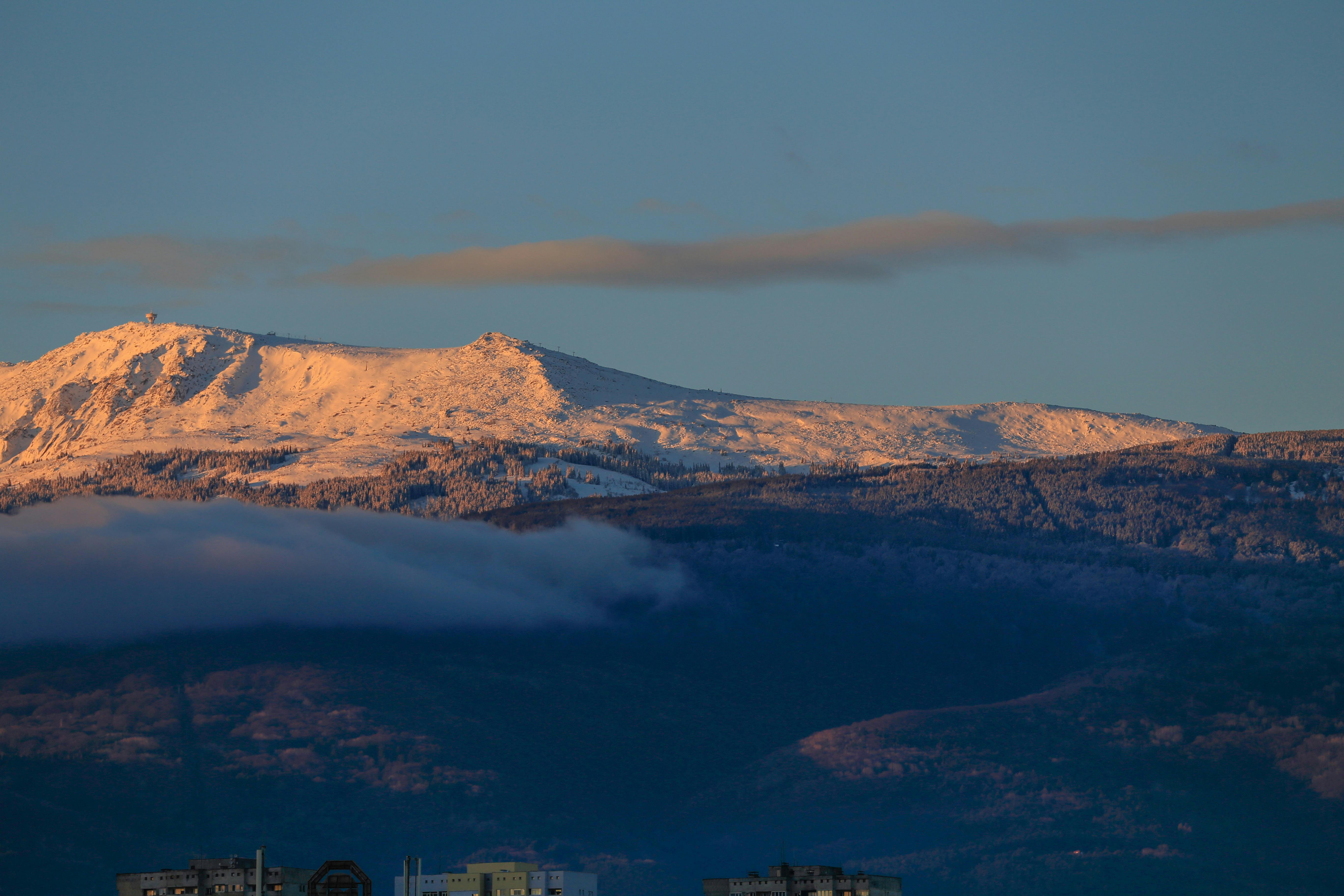
Vitosha Mountain: Where Alpine Wilderness Meets Urban Energy
The bus drops you at 1,810 meters (5,938 feet), and the air changes instantly—crisp, thin, and smelling of pine resin and damp granite. You step off the asphalt and onto a stone path leading toward Cherni Vrah, the "Black Peak," whose 2,292-meter (7,520-foot) summit pierces the clouds above Sofia . Behind you, the Bulgarian capital sprawls like a topographical map, its golden-domed Alexander Nevsky Cathedral a tiny jewel in the haze. Ahead, ancient spruce forests give way to alpine meadows where wild goats scramble across "stone rivers"—massive ribbons of rounded boulders that cascade down the slopes, frozen in time since the last Ice Age . This is Vitosha, the Balkans' oldest nature park, established in 1934 . A dormant volcanic massif that rises sentinel over a million people, it solves a problem few cities can claim: how to offer true wilderness just a tram ride from the parliament building. Here, Sofia doesn't just neighbor nature—it marries it.
Why Vitosha Embodies Accessible Alpine Grandeur
The mountain began as a volcano—its laccolithic dome formed by magma pushing through sedimentary rock during the Mesozoic era, then folding and uplifting over millennia . Today, this geological marvel spans 19 kilometers (12 miles) long by 17 kilometers (11 miles) wide, its concentric plateaus rising in tiers like a giant's staircase . Vitosha solved an ancient human need: access to refuge. For four thousand years, since Thracian times, the people at its base have relied on its forests, waters, and slopes for survival and spiritual renewal . The mountain still holds secrets: Bulgaria's longest cave, Duhlata, snakes 18,200 meters (11.3 miles) through its karstic underbelly near the village of Bosnek . At the summit, a meteorological station built in 1935 still operates, now serving as a hiker's shelter and mountain rescue headquarters . The "Great Bulgarian Forest" (Magna Silva Bulgarica) once blanketed these slopes; remnants survive in the Bistrishko Branishte reserve, where ancient conifers grow thick as whispers. Vitosha isn't merely a park—it is a living archive of Balkan natural history, preserved for the very reason it matters: because urban dwellers need wilderness to remind them they are still animals.
The Best Time to Experience Vitosha Mountain
Your ideal visit depends entirely on your passion. For hikers, target May 18–June 12 or September 15–October 15, when daytime temperatures average 18°C to 22°C (64°F to 72°F) and the trails are snow-free . For skiers, the season runs from early January through March, with peak conditions from January 15 to February 28, when snow cover reaches 85 centimeters (33 inches) and temperatures range from -5°C to 3°C (23°F to 37°F) . The best time of day for panoramic photos is 7:30–8:30 AM, when the rising sun illuminates Sofia's valley. Avoid June 15–July 15, the wettest period with 106 mm (4.2 inches) of rain, and November 15–December 20, when snow cover is unreliable yet temperatures hover near freezing . For up-to-date lift status .
Approximate Budget for a 7-Day Trip
Sofia remains one of Europe's most affordable capitals. This budget assumes four days exploring the city and three dedicated to Vitosha adventures, mixing comfort with value. Prices in Bulgarian Lev (BGN), where 1 BGN = approximately €0.51 or $0.55.
- Accommodation: 80–150 BGN per night – Stay in the Dragalevtsi neighborhood at the foot of Vitosha, a 15-minute drive from Sofia center. Vitoshko Lale Hotel offers mountain-view balconies from 80 BGN per night .
- Food: 40–60 BGN per day – Breakfast: 6-10 BGN for banitsa and coffee; Lunch: 15-20 BGN for kapama (stewed meat) at mountain hut Aleko; Dinner: 20-30 BGN for traditional tavern fare in Sofia.
- Transportation: 30–100 BGN total – Taxi from Sofia center to Aleko Hut: 30-40 BGN each way ; Bus 66 from Sofia: 1.60 BGN each way ; Ski lift pass (Vitoshko Lale 1): 40 BGN for night skiing .
- Attractions: 50–100 BGN total – Full-day ski pass: 50 BGN ; Boyana Church (UNESCO): 10 BGN; National History Museum: 10 BGN; Vitosha Nature Park: Free entry .
- Miscellaneous: 60 BGN – Ski rental at Aleko Hut: 30 BGN per day; souvenir rose oil product: 20 BGN; mulled wine at mountain bar: 8 BGN.
Total estimated budget for 7 days (excluding flights): 800–1,400 BGN (approx. €410–720 / $440–770).
7 Essential Vitosha Mountain Experiences
- Summit Cherni Vrah at Dawn: Start from Aleko Hut at 5:00 AM in July. The 2.5-hour climb gains 528 vertical meters (1,732 feet) along a well-marked path. At the 2,292-meter peak, watch the sun lift over Sofia's valley as the meteorological station's wind vane creaks in the alpine breeze. You are standing on the highest of Vitosha's 12 peaks above 2,000 meters .
- Walk the Golden Bridges Stone River: Located 4 kilometers (2.5 miles) from Aleko, this "stone river" features millennia-worn sienite boulders tumbling down the mountainside . Visit in late October when the surrounding deciduous forest explodes into gold, orange, and crimson. The sound is extraordinary—a hollow clatter of stones shifting underfoot, like walking on frozen waves.
- Night Ski on Vitoshko Lale 1: From Wednesday to Saturday between December 20 and March 15, the Vitoshko Lale 1 lift operates from 18:30 to 22:00 . For 40 BGN, you can carve down illuminated slopes with Sofia's glittering lights spread below. No rental available on-site, so bring your own gear or rent at Aleko Hut before 5:00 PM .
- Hike to Boyana Waterfall through Ancient Forest: Start at Boyana Church (a UNESCO site) and follow the Vladayska River upstream. After one hour of moderate climbing, you reach the 15-meter cascade, which thunders hardest in May during snowmelt. The trail passes through primeval forest reminiscent of the Magna Silva Bulgarica—the "Great Bulgarian Forest" that once cloaked the Balkans .
- Explore Duhlata Cave with a Guide: At 18,200 meters (11.3 miles), this is Bulgaria's longest cave system, tucked into Vitosha's southern flank near Bosnek village . You must arrange a guide through the Bulgarian Caving Federation (contact in advance). The entrance is a inconspicuous hole in a karst field—inside, 200+ meters of galleries await, some still unexplored.
- Photograph the "Stone River" at Golden Hour: The boulder fields near Zlatnite Mostove appear surreal in low-angle light. Arrive at 4:30 PM in autumn. The spheres of granite—weathered by millennia into perfect curves—cast long shadows across each other, creating a lunar landscape that seems unrelated to the lush forest surrounding it. This is the park's most photographed spot for a reason.
- Dine at the Vitoshko Lale Tavern: After a day on the slopes, warm up in the traditional tavern at the mountain's base in Dragalevtsi . Order kavarma (clay pot stew with mushrooms and cheese) and a shot of rakia. The panoramic windows face the slopes you just skied—a perfect closing scene to a mountain day.
3 Hidden Gems Most Travelers Miss
- The Torfeno Branishte Peat Reserve: While hikers rush to Cherni Vrah, they walk right past this 7.84-square-kilometer (3-square-mile) protected bog near the summit . Boardwalks allow you to traverse a rare alpine peatland ecosystem, home to carnivorous sundews and cotton grass. The silence here is profound—no ski lifts, no cafes, just the squelch of wet sphagnum. Access via a signed turnoff 500 meters before the peak.
- The Simeonovo Gondola Wreckage: As of 2025, the iconic Simeonovo gondola lift is closed indefinitely for restoration . But the abandoned lower station has become an unofficial urban exploration site. Graffiti-covered cable cars sit rusting among the trees. It is eerie, beautiful, and completely overlooked because most tourists head straight to Aleko. Do not enter restricted areas, but photograph from the perimeter—a monument to Soviet-era infrastructure.
- Momina Skala Hut's Secret Soup Kitchen: Everyone knows Aleko Hut. But hike 45 minutes west (toward the Kamendel Plateau) and you will find Momina Skala, a smaller, family-run mountain hut . They serve a bean soup (bob chorba) that locals swear is the best on the mountain. No website, no reservation—just show up before 2:00 PM, knock on the wooden door, and hope Mama is cooking. She usually is.
Cultural & Practical Tips
- Taxi Strategy: Use Yellow, OK Taxi, or Green Taxi apps—they offer fixed prices before departure. A ride from Sofia center to Aleko Hut costs 15–20 BGN (€8–10) . Never hail street taxis for the mountain trip; they will overcharge. For return trips, ask a restaurant at Aleko to call a cab, or walk down to the main road where bus 66 runs hourly.
- Layered Clothing is Non-Negotiable: The mountain creates its own weather. A sunny 25°C (77°F) day in Sofia can be a foggy 8°C (46°F) at Cherni Vrah with wind chill. Wear a moisture-wicking base layer, insulating mid-layer (fleece or wool), and waterproof shell. Even in July. Gloves are advisable above 1,800 meters.
- Essential Bulgarian for the Mountain: "Na gore!" (nah GOH-reh)—shouted "Going up!" on a narrow trail, the equivalent of "on your left." "Hare" (HAH-reh) means "Let's go"—useful for impatient hiking companions. For thank you, "Blagodarya" (blah-go-DAH-rya).
- Respect the Stone Rivers: The "stone rivers" (Zlatnite Mostove) are protected geological features. Do not remove rocks or stack cairns. The boulders' unique spherical erosion took 10,000 years—you can touch but not take .
- Photography Etiquette at the Summit: The peak is narrow. Do not set up a tripod on the small platform near the meteorological station—it blocks rescue access. Take your panorama from the eastern ridge 50 meters below, where you have room and an unobstructed view of Sofia. Early morning (before 9:00 AM) means no crowds.
- Mobile Network Reality: A1 and Vivacom have 4G coverage up to Aleko (1,810m). Above that, service vanishes. Download offline Google Maps or the Maps.me trail layer for Vitosha before leaving Sofia. The trails are color-coded in reality, but the digital backup is reassuring.
- Avoid the Sunday Rush: Every Sunday from 10:00 AM to 3:00 PM, Sofia residents swarm Aleko Hut for family hikes and picnics. The bus is packed, the tavern has queues, and the trails feel like city sidewalks. Visit on weekdays, or go early (first bus at 7:00 AM) and descend before noon.
Conclusion: Travel with Connection, Not Just Conquest
Vitosha is not a mountain to conquer; it is a mountain to join. You will see Sofia's residents doing what they have done for four thousand years: walking its stone rivers, skiing its winter slopes, and sitting at its huts sharing bread and rakia. The 2,292-meter summit rewards you not because you "made it," but because from that height, you see the city below—and realize that wilderness and urban life need not be enemies. Stay on the marked trails, carry your trash down, and keep your voice low in the Torfeno Branishte peat bog. These small acts of respect are not rules; they are reciprocation for the gift of clean air, ancient stone, and a mountain that has watched over Sofia since the Thracians first looked up and wondered. Slow down. Look up. Listen to the clatter of boulders shifting beneath your feet. This is not a postcard—it is a relationship.