
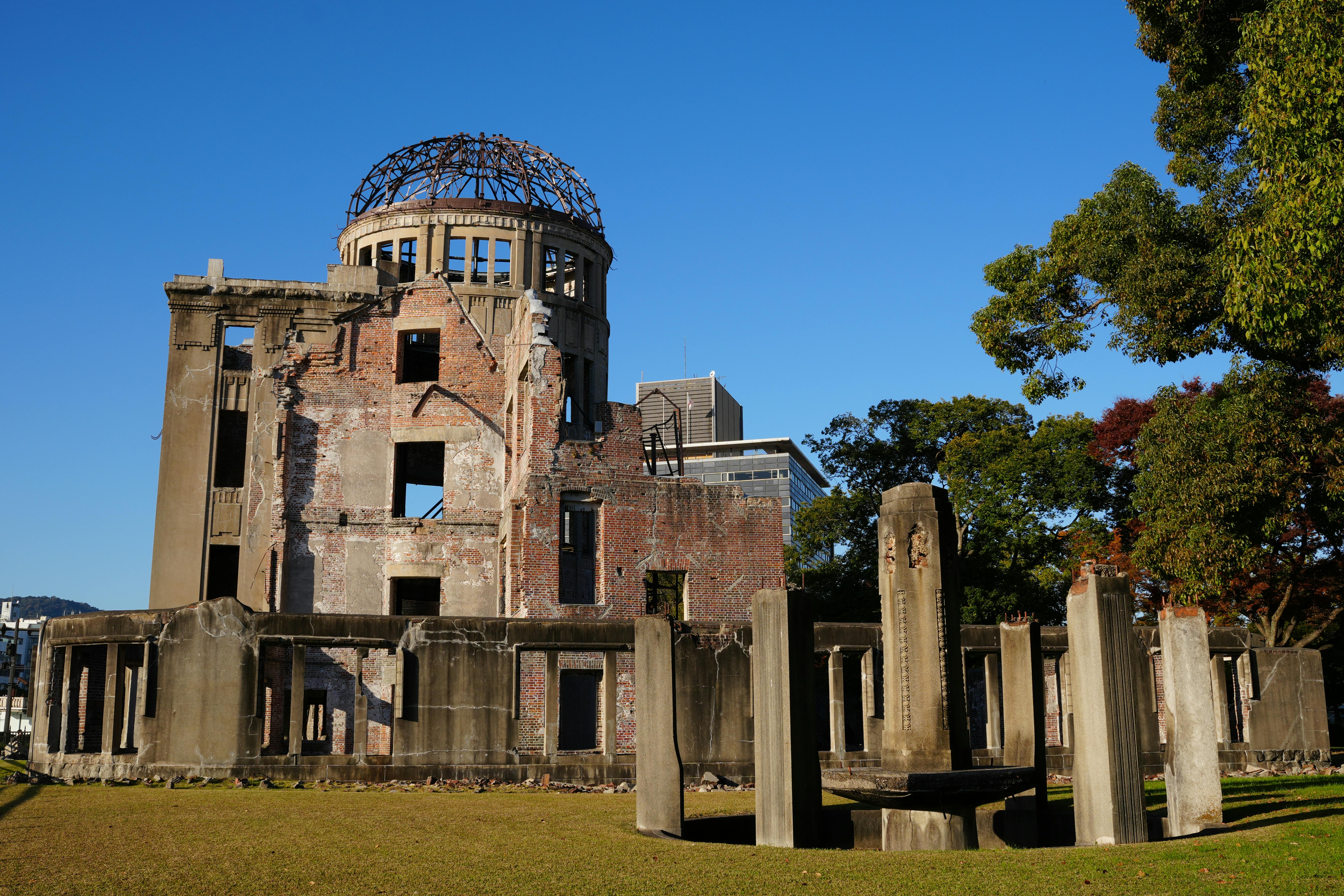
Atomic Bomb Dome: Where Genbaku Ruins Meet Humanity's Unbroken Promise
The tram doors slide open, and the announcement—"Genbaku Dōmu-mae"—lands like a stone dropped into still water. You step onto the pavement, and across the Motoyasu River, amid the sweeping lawns of a modern city, stands a skeleton. Its exposed steel ribs twist toward the sky, frozen at 8:15 AM on the morning of August 6, 1945. This is the Atomic Bomb Dome, or Genbaku Dōmu, the skeletal ruins of the former Hiroshima Prefectural Industrial Promotion Hall—preserved exactly as it was left after the world's first wartime atomic bombing . The structure is a UNESCO World Heritage Site, described as "a stark and powerful symbol of the most destructive force ever created by humankind" that simultaneously "expresses the hope for world peace and the ultimate elimination of all nuclear weapons" . You are not here for fun. You are here to witness.
Why the Atomic Bomb Dome Embodies Preserved Devastation Against Eternal Hope
The Dome solves an impossible architectural paradox: how do you preserve destruction without glorifying it? The building was originally the Hiroshima Prefectural Industrial Promotion Hall, completed in April 1915 and designed by the Czech architect Jan Letzel . It was a marvel of early 20th-century European design—three stories of brick and mortar topped with an elegant copper-clad oval dome . On August 6, 1945, the U.S. B-29 bomber Enola Gay released the atomic bomb "Little Boy." It detonated approximately 580 meters (1,900 feet) above the city. The hypocenter was a mere 160 meters (525 feet) southeast of this building . Because the blast came from almost directly above, the vertical force pushed straight down. The walls exploded outward and the roof was set ablaze, but the building's steel frame and the skeleton of the dome remained standing amidst the ashes . Everyone inside was killed instantly. In the aftermath, there were debates about whether to raze the painful scar, but the standing structure became a witness. In 1966, the Hiroshima City Council adopted a resolution to preserve the monument for posterity . UNESCO added it to the World Heritage List in December 1996 .
The Best Time to Experience the Atomic Bomb Dome
The Dome is accessible 24 hours a day, free of charge, and stands in the open-air Peace Memorial Park . However, the quality of your experience shifts dramatically by season and time of day. For a quiet, reflective view—and to photograph the Dome mirrored in the Motoyasu River—visit at sunrise (6:00–7:00 AM) or late afternoon (3:00–4:00 PM). The Peace Memorial Museum, located next to the park, has specific operating hours based on the season: March to July it's open 7:30 AM–7:00 PM; August is extended to 8:00 PM (9:00 PM on August 5th and 6th); September to November is 7:30 AM–7:00 PM; and December to February is 7:30 AM–6:00 PM . The climate is most comfortable for extended park walks during spring (March–May: 8–19°C / 46–66°F) and autumn (September–November: 15–23°C / 59–73°F). August is heavy with heat and humidity but marks the anniversary of the bombing—the annual Peace Memorial Ceremony takes place on August 6th . Avoid: The December 30th and 31st closure of the museum, and school holidays when the museum gets congested .
Approximate Budget for a 7-Day Trip
This budget assumes a 7-day trip based in Hiroshima for 2-3 days, including the Peace Memorial Park & Museum, plus a side trip to Miyajima Island. Prices are in ¥ (JPY), roughly ¥150 ≈ $1 USD.
- Accommodation: ¥7,000–¥20,000 per night ($47–$133) — Budget: Hostels and capsule hotels near Nagarekawa (¥6,000–¥9,000). Mid-range: WeBase Hiroshima is less than 1 km from the Dome, offering shared spaces and modern amenities . Splurge: Mitsui Garden Hotel is an 12-minute walk from the Dome .
- Food: ¥3,500–¥6,500 per day ($23–$43) — Breakfast: ¥600–¥1,000 (konbini). Lunch: ¥1,200–¥2,000 (Hiroshima-style okonomiyaki). Dinner: ¥2,000–¥3,500 (fresh Seto Inland Sea oysters, seasonal).
- Transportation: ¥600–¥1,500 per day ($4–$10) — Hiroden streetcar (Tram) Line 2 or 6 from Hiroshima Station to Genbaku Dome-mae: ¥220 (approx 20 minutes) . JR Ferry to Miyajima: ¥200. Hiroshima Peace Pass (includes tram/bus/ferry): approx ¥1,000–¥1,500.
- Attractions: ¥200–¥2,500 total ($1.30–$17) — Atomic Bomb Dome: FREE . Peace Memorial Museum: ¥200 (adults), ¥100 (high school), free for junior high and under . Miyajima's Itsukushima Shrine: ¥300.
- Miscellaneous: ¥2,000–¥5,000 ($13–$33) — Senbazuru paper crane kit: ¥500–¥1,000. Museum audio guide: ¥500 . Local Momiji Manju cakes: ¥800–¥1,500.
Total (7 days, excluding international flights): ¥70,000–¥175,000 ($467–$1,167)
7 Essential Atomic Bomb Dome Experiences
- Stand Across the Motoyasu River at Dusk: Walk to the riverbank directly west of the Dome. Here, the skeletal building reflects in the calm water. Sit on the low stone wall and watch as the sun sets behind the structure. The lighting is subtle; it doesn't try to hide the horror, but it softens the sharp edges of the steel.
- Visit the Peace Memorial Museum (Start in the East Building): The museum is emotionally overwhelming. The path begins in the East Building to understand Hiroshima before the bomb—its culture, industry, and daily life before August 6th . Then, walk into the Main Building. Here, you'll see personal belongings: a tricycle that belonged to a three-year-old victim, a melted lunchbox, a watch frozen at 8:15 AM. Budget at least 1.5 to 2 hours .
- Find the Hypocenter (Shima Hospital Plaque): Walk out of the park past the Flame of Peace. A five minute walk brings you to a small, unmarked brass plaque on the wall of the Shima Hospital—the precise hypocenter . It feels jarringly ordinary: a quiet corner of a living city. Stand here and look up at the 580 meters between you and where the bomb exploded.
- Contemplate the Flame of Peace (Tomo no Hi): In the center of the park, an eternal flame burns continuously. It was lit in 1964 and will burn until the last nuclear weapon on Earth is destroyed. Look through the flame toward the cenotaph and the Dome—all three align perfectly. The cenotaph's epitaph reads: "安らかに眠って下さい 過ちは 繰返しませぬから" — "Please rest in peace, for we shall not repeat the error."
- Fold a Paper Crane at the Children's Peace Monument: The statue of Sadako Sasaki, a girl who died from radiation-induced leukemia at age 12, stands draped in thousands of colorful paper cranes sent from around the world. Fold your own crane (kits are sold at the museum shop) and leave it at the base. It is a tangible, small act of hope in a place defined by immense tragedy .
- Walk the "Path of Remembrance": The park features specific "windows" in the walkways where you can see the Dome framed by the greenery. Follow the path that leads to the Honkawa Elementary School Peace Museum—a smaller, less-visited museum preserved inside a functioning school that was heavily damaged by the blast.
- Visit the Rest House (The Taishoya Kimono Shop): Between the Dome and the museum sits the Rest House, built in 1929. A survivor, Eizo Nomura, was in the basement when the bomb exploded, and he lived into his 80s. Go downstairs; the preserved basement holds photos and a palpable stillness that most tourists miss.
3 Hidden Gems Most Travelers Miss
- The "Unmarked" Hypocenter (Shima Hospital): As noted above, while thousands visit the Dome, few make the short walk to the actual hypocenter plaque. Coordinates: 34° 23′ 41″ N, 132° 27′ 13″ E. There is no grand monument here. Just the fact of location. It is a quiet intersection where life continues, a stark contrast to the formal park .
- Schmoe House (The Floyd Schmoe Community Center): Shocked by the atomic bombings, a U.S. citizen and Quaker named Floyd Schmoe built houses in Hiroshima. The Schmoe House was built as a community center in 1951. Since 2012, it has served as an annex of the Peace Memorial Museum, displaying stories of international support for Hiroshima after the bombing. It is located at 1-2-43 Eba-nihommatsu, a short streetcar ride away, and is entirely overlooked by tourists. Admission is free.
- The "Original" Rest House Basement: Visitors use the Rest House for bathrooms and souvenirs, but few descend the stairs to the basement. The basement has been preserved nearly exactly as it was at the time of the bombing—concrete walls, exposed beams, and a palpable stillness. This was where Eizo Nomura survived the blast. It is not advertised. You have to find the small staircase near the restrooms. You will likely have the space entirely to yourself.
Cultural & Practical Tips
- Photography Etiquette: You may photograph the Dome's exterior freely. However, inside the Peace Memorial Museum, flash photography and tripods are strictly prohibited. Some areas have "no photo" signs out of respect for the victims' families. Pay close attention. Outside, a polarizing filter helps with river reflections.
- How to Get There: From JR Hiroshima Station (South Exit), take the Hiroden Streetcar (Tram) Lines 2 or 6 westbound to "Genbaku Dome-mae". The ride is about 20 minutes and costs ¥220 . You can also take a bus to the Kamiya-cho stop . The Dome is impossible to miss.
- Essential Japanese Phrases: "Heiwa" (hay-wah) — "Peace." "Genbaku Dōmu wa doko desu ka?" (gen-bah-koo doh-moo wah doh-koh dess-kah?) — "Where is the Atomic Bomb Dome?" "Sumimasen, shashin o totte moraemasu ka?" (sue-mee-mah-sen, shah-shin oh toht-teh moh-rah-eh-mahs-kah?) — "Excuse me, can you take my picture?" (ask politely).
- Museum Reservations are Recommended: Due to high visitor volumes, the Peace Memorial Museum now requires timed-entry tickets for the early morning (7:30–8:30 AM) slot. Book online through the official website before you go .
- Parking: There is no general parking lot for cars at the Dome itself. Parking is reserved for tour buses. If driving, use paid municipal parking lots in the surrounding city center .
- Combine with Miyajima for the Emotional Arc: The "optimal" Hiroshima experience involves heavy emotional weight in the morning, followed by healing beauty in the afternoon. Take the ferry to Miyajima Island after lunch. Seeing the "floating" torii gate of Itsukushima Shrine at high tide—nature and spirituality enduring—helps restore your faith in the world .
Conclusion: Travel with Remembrance, Not Just Observation
You cannot "enjoy" the Atomic Bomb Dome. You cannot take a giddy selfie. But you can witness. You can stand at the riverbank, look at the skeletal windows, and read the names of the 140,000 souls extinguished at 8:15 AM on a hot summer morning. You can walk the path to the hypocenter and stand in the intersection where the world changed forever. The Dome is not a ruin; it is a verb. It actively reminds you of the consequence of cruelty. When you finally board the streetcar to go to Miyajima—or back to your hotel—you carry that weight with you. That is the entire point. You leave with a heavy heart, and because of that heaviness, you commit to a warmer, lighter, more peaceful future. A world without hibakusha. A world without mushroom clouds. That is the promise embedded in the metal frame. May we keep it.