
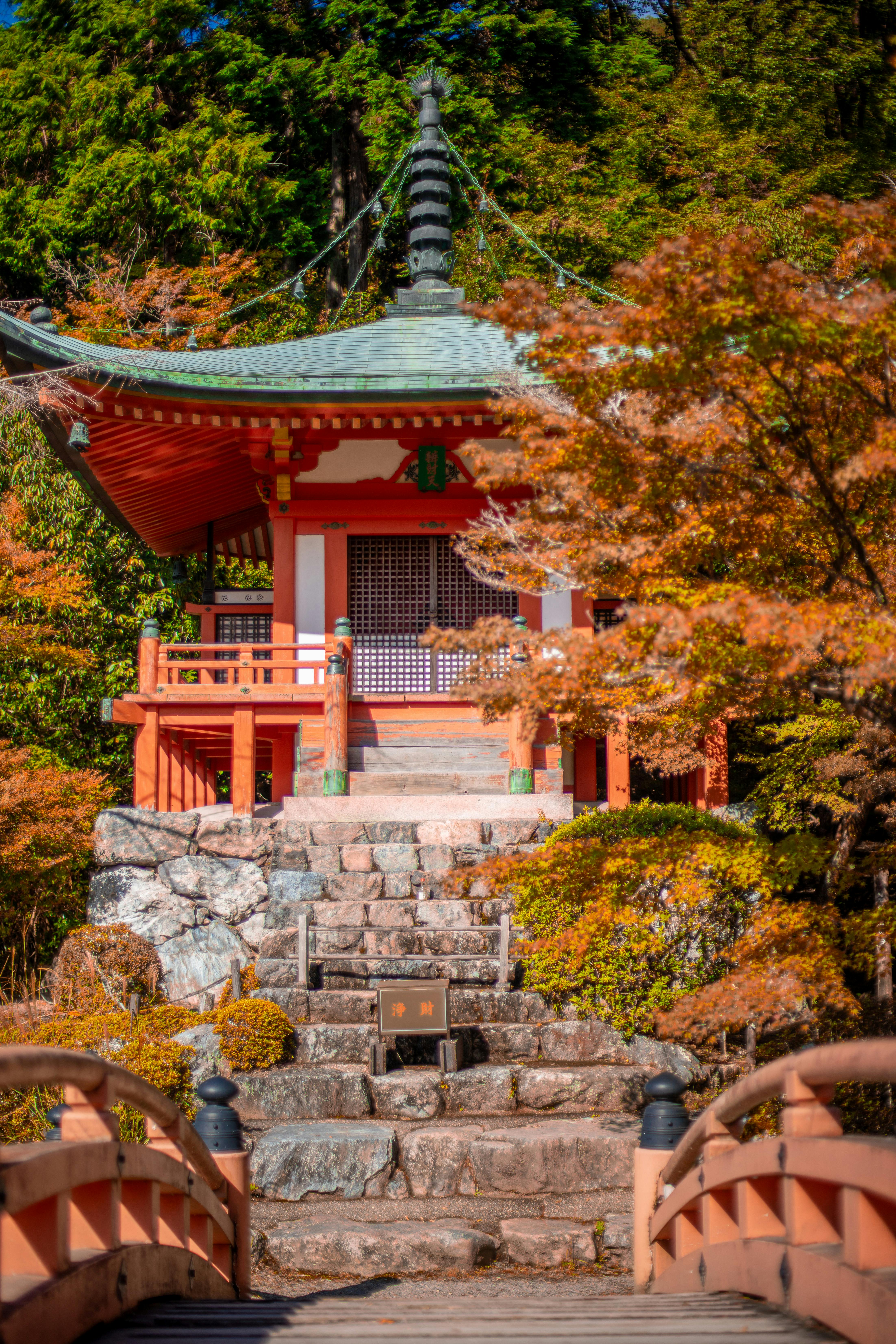
Daigo-ji Temple: Where Hideyoshi's Cherry Blossoms Meet Millennia of Sacred Silence
The stone path winds upward through a tunnel of ancient cryptomeria—your only companions the rustle of wind and distant call of a jungle crow. Then, suddenly, the trees part, and you gasp. Before you rises the five-story pagoda, its weathered wooden eaves stacked like a prayer against the Kyoto sky. This is Daigo-ji Temple (醍醐寺), founded in 874 CE by the revered monk Shōbō (Rigen Daishi), a sprawling World Heritage complex that sprawls across the eastern slopes of Mount Daigo. The name "Daigo" translates to "the ultimate essence of ghee"—a metaphor for the highest form of Buddhist teaching, drawn from five stages of enlightenment described in ancient sutras. Unlike Kyoto's street-level temples, Daigo-ji demands you earn its secrets: a one-hour climb to Kami-Daigo (Upper Daigo) rewards pilgrims with the source of Daigo spring water, flowing cold and pure for twelve centuries. Here, nature and architecture don't just coexist—they perform a slow, meditative dance that has drawn emperors, shoguns, and poets for over a millennium.
Why Daigo-ji Embodies Resurrected Grandeur Under Falling Petals
Daigo-ji solves a historical puzzle: how to rebuild after devastation while honoring what came before. The lower temple (Shimo-Daigo) was reduced to ash and rubble during the Ōnin War (1467–1477), a decade of civil war that turned Kyoto into a battlefield. Everything burned—except the five-story pagoda. That structure, completed in 951 CE, miraculously survived the inferno. Today, it stands as the oldest surviving building in Kyoto and the oldest five-story pagoda in all of Japan. The rest of Daigo-ji might have remained ruins if not for Toyotomi Hideyoshi (1537–1598), the unifier of Japan, who fell in love with the site. In 1598, the aging warlord held his legendary "Daigo no Hanami" (Daigo Cherry Blossom Viewing) here, personally planting over 700 cherry trees in a single season. He ordered the reconstruction of the main hall (Kondo) and the opulent Sanbo-in subtemple, whose garden remains the quintessential example of Momoyama period landscaping. Daigo-ji thus embodies two eras: Heian resilience (the pagoda) and Momoyama exuberance (the gardens and cherry groves).
The Best Time to Experience Daigo-ji
Daigo-ji is famous for two breathtaking seasons. For cherry blossoms (sakura), target late March 28–April 10, when over 1,000 trees—including the 700 Hideyoshi planted—erupt in pale pink and white. Night illuminations (late March–early April, 6:00–8:30 PM) transform the grounds with projection mapping on the pagoda and Bentendo Hall (¥1,000–¥1,500 special ticket). Peak foliage season runs mid-November to early December (November 15–December 3), with temperatures averaging 8–15°C (46–59°F). In autumn, the pond at Bentendo Hall reflects the maples in perfect symmetry—best photographed before 10:00 AM. Summer (June–August: 24–33°C / 75–91°F) offers fresh green ao-momiji and dramatically fewer tourists. Winter (December–February: 2–10°C / 36–50°F) brings the possibility of snow dusting the pagoda's five roofs—a photographer's secret. Avoid: Late March weekends (domestic cherry blossom crowds peak) and Golden Week (April 29–May 5)
Approximate Budget for a 7-Day Trip
This budget assumes mid-range travel with a focus on cultural sites. Prices are current for 2025–2026 using ¥1 ≈ $0.0067 USD (¥150 ≈ $1).
- Accommodation: ¥8,000–¥20,000 per night ($53–$133) — Stay near Daigo Station (Tozai Line) or Yamashina area. Urban Hotel Kyoto offers rooms from ¥6,800 ($45) per night. Budget capsule hotels: ¥4,000–¥7,000. Mid-range ryokan: ¥15,000–¥25,000.
- Food: ¥3,500–¥6,000 per day ($23–$40) — Breakfast: ¥600–¥1,000 (konbini onigiri). Lunch: ¥1,200–¥2,000 (shōjin ryōri at temple or soba). Dinner: ¥2,000–¥3,500 (local izakaya). Try persimmon leaf sushi (kakinoha-zushi) near Daigo Station.
- Transportation: ¥500–¥1,200 per day ($3–$8) — Subway Tozai Line from Kyoto Station to Daigo Station: ¥330 (25 minutes). Return: ¥660. One-day subway pass: ¥900. Keihan Bus #22/22A from Sanjo: ¥230 to Daigo-ji-mae .
- Attractions: ¥1,000–¥1,800 total ($7–$12) — Lower Daigo (Sanbo-in + Kondo + Reihokan Museum): ¥600–¥1,000 (regular season). Cherry blossom season: ¥1,000–¥1,500. Upper Daigo (Kami-Daigo): ¥400. Combined ticket available .
- Miscellaneous: ¥2,000–¥5,000 ($13–$33) — Mitarashi dango (grilled mochi): ¥400. Omamori charms: ¥500–¥1,000. Tea ceremony at special events: ¥1,000–¥1,500.
Total (7 days, excluding international flights): ¥70,000–¥155,000 ($467–$1,033)
6 Essential Daigo-ji Experiences
- Stand Before the Oldest Pagoda in Kyoto at Opening Hour: Arrive by 9:00 AM (8:30 AM during cherry blossom season). The 951 CE five-story pagoda rises 38 meters (125 feet)—touch its weathered wooden pillars and feel the weight of a millennium. For the classic reflection shot, position yourself at Benten Pond between 9:30–10:00 AM when the morning light illuminates both the pagoda and the cherry or maple canopy overhead.
- Climb to Kami-Daigo for the Sacred Spring: Allow 45–60 minutes for the steep but shaded hike from the lower grounds to Upper Daigo. The path passes through cedar forest, past the original pagoda, and ends at the source of Daigo no Mizu (醍醐水), a spring that has flowed for 1,200 years. Drink from the wooden ladle—legend says it brings wisdom. The Upper Daigo area includes the Kannon-do Hall and a small teahouse (open 10:00 AM–2:00 PM).
- Sit in Contemplation at Sanbo-in Garden: Built by Toyotomi Hideyoshi for his 1598 cherry blossom party, Sanbo-in (三宝院) is the masterpiece of Momoyama landscape design. The Kano school paintings on the sliding doors depict plum trees and Chinese sages in gold leaf. Sit on the wooden veranda and watch koi fish circle the central pond for 15 minutes minimum. The garden is designed for shakkei (borrowed scenery)—the distant Higashiyama mountains are framed perfectly by the clipped hedges.
- Attend the Cherry Blossom Night Illumination (Late March–Early April): During the limited March 25–April 8 evening period, Tokyo-based studio Naked transforms Daigo-ji with projection mapping on the five-story pagoda and Kondo Hall. The path from Niomon Gate is lined with lanterns; Bentendo Hall shimmers with digital light reflected in the pond. Tickets: ¥1,000–¥1,500 (purchase in advance). Food stalls sell sakura latte, Kyoto-style oden, and hot tea. The experience is crowded but unforgettable.
- Hunt for the "Cheeky Sparrow" Spot at Bentendo: The pond beside Bentendo Hall offers the temple's most photogenic angle—the octagonal hall floating above water, backed by seasonal blossoms. Insider tip: Local visitors report that small sparrows near the snack stalls are notorious thieves. Secure your sakura mochi tightly. The best photos come from crouching low at the pond's edge to capture both the hall and its perfect reflection; visit on a windless morning (check the weather app).
- Visit the Reihokan Museum's Hidden Treasures: Most tourists skip the Reihokan (Treasure Hall), but it houses over 150,000 artifacts, including National Treasures like the wooden statue of Shōbō (the founder) and Heian-period mandalas. The rotating exhibitions change every three months—ask the ticket attendant which treasures are currently on display. Photography is prohibited inside, but the cloistered courtyard garden is free to photograph.
3 Hidden Gems Most Travelers Miss
- Bentendo Hall's Back Corridor: The crowds cluster in front of Bentendo Hall, but a narrow wooden corridor wrapping around the building's rear offers a completely different perspective. Here, 750-year-old wisteria vines (blooming late April–early May) hang down to the pond's edge, framing the pagoda through purple flowers. Unmarked and accessible only via a side path past the small souvenir stall; look for the wooden steps descending behind the hall. Open daylight hours; free with admission.
- The Unmarked Grave of Toyotomi Hideyoshi's Concubine: Tucked behind Sanbo-in, past a small moss garden and through a narrow bamboo gate, lies a modest stone stupa marking the grave of Yodo-dono (1567–1615), Hideyoshi's favorite concubine and mother of his heir. No sign, no tourist path—the grave is intentionally humble, reflecting her tragic end at the Siege of Osaka. Most visitors, including guided tours, walk directly past the turnoff (a stone lantern on the western edge of Sanbo-in's outer garden).
- Persimmon Leaf Sushi at Daigo Station's Back Street: A 10-minute walk from the temple's main gate, a small, unmarked shop called Suzuki (open 11:00 AM–3:00 PM, closed Wednesdays) serves kakinoha-zushi (柿の葉寿司)—sushi pressed onto rice and wrapped in pickled persimmon leaves, a Nara specialty rarely found in Kyoto. The owner speaks no English but will hand you a laminated photo menu. Expect to pay ¥1,200–¥1,800 for a set. The shop's wall is covered in hand-drawn maps from regulars—add your hometown to the collection.
Cultural & Practical Tips
- Photography Rules: Tripods are banned inside Sanbo-in's garden (the wooden veranda cannot support them). Handheld photography permitted in all outdoor areas. No flash inside Sanbo-in buildings, the Reihokan Museum, or Kondo Hall. The Pagoda's base allows tripods before 10:00 AM—arrive early. For night illuminations, check tripod restrictions each year; 2025 allowed monopods only.
- Essential Japanese Phrases: "Daigo no mizu wa doko desu ka?" (dai-goh no mee-zoo wah doh-koh dess-kah) — Where is the Daigo spring water? "Kami-Daigo e no michi wa dochira desu ka?" (kah-mee-dai-goh eh no mee-chee wah doh-chee-rah dess-kah) — Which way to Upper Daigo? "Kore wa nan no ki desu ka?" (koh-reh wah nahn noh kee dess-kah) — What tree is this?
- Crowd Strategy: During cherry blossom peak (March 30–April 5), Daigo-ji receives over 15,000 visitors daily. Arrive at 8:15 AM for the 8:30 AM opening. Alternatively, visit on a weekday in late November for autumn foliage (crowds are 60% smaller). The climb to Kami-Daigo remains uncrowded even during peak seasons—most visitors never ascend past the pagoda.
- Footwear & Mobility: The Upper Daigo hike involves uneven stone paths, exposed roots, and 200+ steps. Wear hiking shoes or sturdy trail runners—no sandals. Allow 90 minutes round trip including time at the spring. The lower grounds (Sanbo-in, Kondo, Bentendo) are wheelchair accessible via paved paths. Strollers are difficult on the Upper Daigo trail.
- Rainy Season (June–mid-July): The moss gardens of Sanbo-in transform into luminous emerald carpets during light rain. The Japanese consider samidare (early summer rain) a refined aesthetic pleasure—crowds vanish. Bring umbrella and waterproof shoes. The Reihokan Museum is a good shelter; plan interior visits during heavier downpours.
- Esoteric Buddhism Note: Daigo-ji is the head temple of the Shingon-shū Daigo-ha sect, a branch of Esoteric (Vajrayana) Buddhism. You may hear monks chanting shōmyō (声明)—a form of syllabic chant dating to the 8th century. If you encounter a ritual, stand quietly and do not photograph. The hibutsu (hidden Buddha) statue of Yakushi Nyorai is only revealed on special occasions—check the official website for viewing dates.
Conclusion: Travel with Patience, Not Just Ambition
Daigo-ji requires something rare in modern tourism: effort. The heat of the climb, the scramble for the 8:30 AM ticket booth, the patience to sit on a wooden veranda and watch koi circle for fifteen minutes with no phone in hand—these are not obstacles. They are the temple's filter. Hideyoshi understood this when he planted 700 cherry trees in the twilight of his life, knowing he would never see them bloom from a wheelchair. He came to Daigo-ji not as a conqueror but as a pilgrim, a dying man seeking beauty one last time. When you drink from the Daigo spring—cold, sweet, unchanged since 874—you taste the same water that cooled Hideyoshi's fevered brow. The pagoda has survived fires, wars, and a thousand typhoons not because it is indestructible but because generation after generation decided it mattered. Now that decision passes to you. Sit. Breathe. Let the petals fall where they may. The temple will remember your footsteps long after the gravel is raked smooth again.