Doi Suthep Temple Where Mountain Peak Meets Golden Spire
Doi Suthep Temple Where Mountain Peak Meets Golden Spire
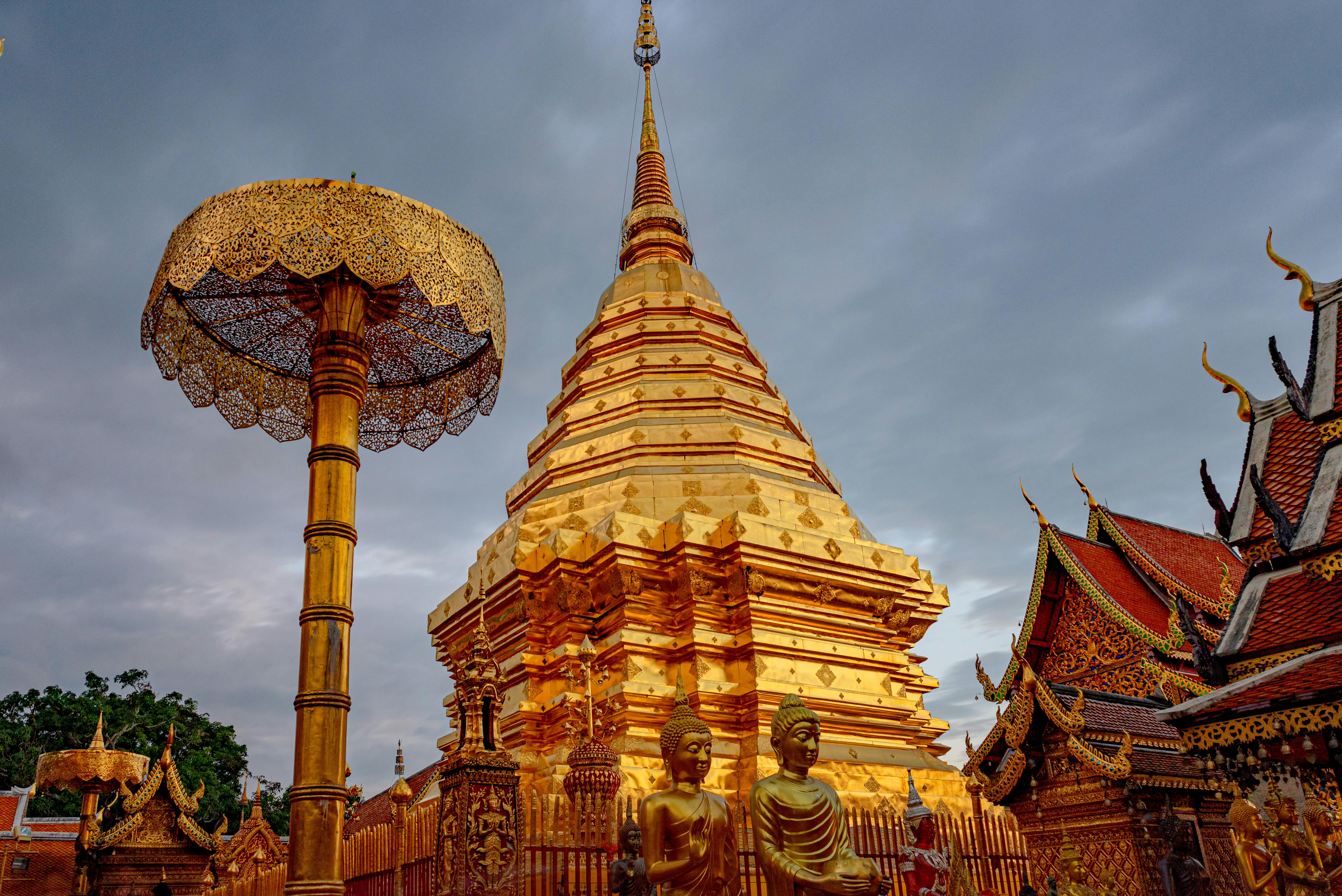
I begin the 309-step climb at 7:30 AM. The air grows cooler with every flight. The stone staircase curves upward through dense forest. Golden Naga statues guard both sides. At the top, Wat Phra That Doi Suthep unfolds. The central golden chedi rises 24 meters high. It glows bright even under soft cloud cover. King Ku Na built the first structure here in 1386. A sacred relic of the Buddha lies buried beneath it. The mountain stands 1,073 meters above sea level. You see all of Chiang Mai spread below—rooftops, trees, and distant hills. The view changes as light shifts across the valley floor.
Why Doi Suthep Matters
This is northern Thailand’s most sacred mountain sanctuary. The site was chosen following an ancient legend: a white elephant carrying the Buddha relic climbed the slope, stopped at this peak, and lay down—signaling where the temple should be built. For over 600 years it has stood as the spiritual anchor of Chiang Mai. The Lanna-style architecture—graceful multi-tiered roofs, gilded surfaces, and panoramic open terraces—reflects distinct regional traditions. The mountain forest surrounding the temple remains an important ecological and recreational space. That said, crowds press hard by mid-morning. The staircase can feel crowded and tiring. Some restoration work lacks the subtlety of original craftsmanship. And on misty days, the famous valley view disappears completely.
The Best Time to Experience Doi Suthep
November through February offers the most stable conditions. Daytime highs at the temple sit between 22°C and 28°C (72°F–82°F)—noticeably cooler than the city below. Arrive 7:00–8:30 AM for clear views and empty terraces. March through May brings heat haze; the valley often blurs by midday. June to October sees frequent mist and cloud cover—magical when it parts, but you may see nothing at all. Late afternoon, 4:00–6:00 PM, offers golden light and thinner crowds. Weekends stay busy throughout the day. Check the sky from the city before climbing; a clear morning often turns cloudy by afternoon.
Approximate Budget for a 7-Day Trip
Figures are per person in Thai Baht and approximate USD.
- Accommodation: Guesthouse or mid-range Chiang Mai — 1,100 THB ($31) per night × 6 nights = 6,600 THB ($183)
- Food & Drink: Khao soi, market meals, mountain snacks — 450 THB ($13) daily × 7 days = 3,150 THB ($88)
- Transport: Shared songthaew up/down, city travel — 250 THB ($7) daily × 7 days = 1,750 THB ($49)
- Temple & Experiences: Entry, cable car, small donations — 600 THB ($17) total
- Miscellaneous: Water, offerings, rest stops — 800 THB ($22)
Total: ~12,900 THB ($359) for one person. Skip the overpriced private tours sold city-wide. They charge 600–1,000 THB per person. Shared songthaews from the base cost 50–60 THB round-trip. Also avoid the first-row souvenir stalls at the temple entrance; identical flower and incense sets cost half as much at stalls halfway down the staircase.
Essential Doi Suthep Experiences
- Climb the Naga staircase — 309 steps flanked by serpent railings. The ascent takes 10–15 minutes and builds anticipation. It connects you to centuries of pilgrims who walked this same path. Skip climbing if you have limited mobility; a cable car runs parallel for a small fee.
- Circumambulate the golden chedi — Walk clockwise around the central spire. Four sanctuaries face the cardinal directions. Each holds different Buddha images and decorative details. The gold leaf covering the chedi shimmers differently as sunlight moves across it.
- Valley viewpoint terrace — The open west-facing platform overlooks all of Chiang Mai. Early morning light stays clearest. Bring binoculars if you have them; you see distant temples and mountain ridges.
- Worship and observe rituals — Locals come to pray, offer flowers, and light incense. Sit quietly and watch rather than rushing past. You may see monks chanting or devotees making merit.
- Forest trail walk — Shaded paths extend from the temple grounds into Doi Suthep–Pui National Park. The air feels fresh and cool. Birdlife stays active early morning. Trails connect to further viewpoints and waterfalls.
- Sunset descent — Most visitors leave by late afternoon. The terrace empties. The city lights flicker on below. The descent feels peaceful and entirely different from the morning climb.
Hidden Gems Most Travelers Miss
- The terrace behind the northern viharn. Benches sit under trees with filtered sunlight. Almost no one pauses here, yet it faces the chedi without obstruction.
- Small forest shrine halfway down the back trail. Dedicated to the guardian spirit of the mountain. It feels quiet and deeply local.
- Early morning monk’s well near the lower gate. Before 8:00 AM, monks gather to collect water and prepare for the day. It offers a glimpse of daily monastic life away from crowds.
- The main viewpoint near the top of the stairs is always packed and often overrated. The far western edge of the terrace gives the same view with space to stand alone.
Cultural & Practical Tips
- Ignore anyone claiming the temple is "closed" or offering "special VIP access." Entry is open to all. These are common scams. Walk straight to the ticket booth.
- Cover shoulders and knees. Scarves are available but limited. Carry your own shawl to save time and expense.
- Remove shoes in all sacred areas. Line them up neatly. No bags or personal items belong inside the main halls.
- Walk clockwise around the chedi. This follows centuries of tradition. Do not cut across the central platform.
- Stay behind railings. Do not touch statues or climb on the chedi. Restoration is ongoing; fragile surfaces exist throughout.
- Bring water and a light layer. The temperature drops 4–6°C (7–11°F) compared to the city. Mist can chill you quickly.
- Last shared songthaews descend around 6:30 PM. Confirm departure times on arrival; schedules shift seasonally.
Essential Visitor Information
Location & Access: Wat Phra That Doi Suthep, Doi Suthep–Pui National Park, Chiang Mai. Three options: shared songthaew from Huay Kaew Road base — 15–20 minutes, 50 THB round-trip; private taxi or motorbike rental; hike up the Monk’s Trail from the city — 2–3 hours, steep in sections.
Tickets & Booking: Temple entry 50 THB adult. Cable car one-way 50 THB / return 90 THB. No advance booking needed. Donation boxes throughout the grounds.
Operating Hours: Daily 6:00 AM–6:00 PM. Terraces stay open slightly longer until dusk.
Visit Duration: Minimum 1.5 hours. Recommended 2–3 hours to include forest trails and quiet viewing.
Family Suitability: Children welcome. Stroller access is limited due to stairs and slopes. Restrooms at top and bottom of the site.
Timing: Best season: November–February. Best time of day: 7:00–8:30 AM or 4:00–6:00 PM.
Highlights: Naga staircase, golden chedi circumambulation, valley panorama, forest trails, sunset descent.
Nearby & Day Trip: Bhubing Palace — 30 minutes further up; Huay Kaew Waterfall — 15 minutes down; Chiang Mai Old City — 30 minutes return; Queen Sirikit Botanic Garden — 40 minutes. All fit comfortably in one day.
Conclusion: Travel with Ascent, Not Just Arrival
Doi Suthep looks like a temple on a mountain. It is also a journey upward. The climb, the cooler air, the changing light—they all matter as much as the spire itself. For over six centuries people have walked these steps. Slow down when you climb. Breathe the forest air. What will you carry back down with you when you return to the city?
Post a Comment